BEETHOVEN: Piano Concerto in G, Op. 52; Piano Sonata No. 14 in c, Op. 27, “Moonlight”; Piano Sonata No. 31 in A-flat, Op. 110 – Dejan Lazic, piano/ Australian Chamber Orchestra – Channel Classics multichannel SACD 30511, 69:35 [Distr. by Harmonia mundi] ***:
The newly discovered version of the Fourth Piano Concerto in an arrangement for string quintet and piano is part of the impetus behind this new recording, attempting to take the traditional orchestral version and marry it to the insights (some 80 markings in the score by the composer) found in the chamber music version to create a sort of hybrid synthesis in interpretative imagination. Lazic does do some interesting things with the piece, and he details his reasoning in the excellent notes, but I can’t say that it sounds much different from other chamber orchestra recordings that also make use of period style. The Aussies here use around 40 modern instruments, certainly large-scale enough from Beethoven’s standpoint, and making a generous and fully impressive noise, but I am not convinced that Lazic has latched onto the inner substance of the work. It sounds too effete in many ways, too “classical” in nature, almost as if Mozart had written it. One can easily make that statement about the first two concertos, maybe even the C-minor, but the last two certainly defy that logic. This overall is a somewhat tame account, treated with kid gloves, instead of Beethoven’s most noble and heroic effort in the genre.
The same criticism spills over into the “Moonlight” sonata as well. Though the notes make specific mention of the fact that this sonata is a quasi-fantasia, the rendition sounds curiously earthbound and leaden. The drunken stumbling of the second movement, where Beethoven’s off-beat rhythms should impute a sense of staggering around a room in not-so-subtle inebriation, are here squared-off and smoothed over. The last movement fares better, but too late at that point, though Lazic does resist the temptation to make it nothing but a barn-burning race to the finish. For an interpretation of nuance and sheer genius, one only needs to listen to Wilhelm Kempff’s glorious reading on DGG.
But then suddenly Lazic seems to find his Beethoven shoes and gives a wondrous account of the amazing penultimate sonata of the composer’s. His transition among the many tempo and section divisions is not only apt and natural, but explanatory as well, and this reading is easily one of the best I have ever heard. Maybe now that we move away from the early Beethoven to the last of the great thirty-two Lazic is allowing his real instincts to take over without too much analysis, and the music flows from his fingers with an ease and fluidity that I just don’t hear on the rest of this album.
I like Dejan Lazic; he is a thinker as well as an emotive pianist, and one can be sure that his interpretations will be well-considered and reasonable. I loved his recent arrangement of the Brahms’s Violin Concerto for piano and orchestra. But based on this recording I am not totally convinced that Beethoven is his composer, though time may prove me wrong. See the recently-reviewed recording with Ax and Tilson Thomas. Of the recent sonatas, aside from the aforementioned Kempff, try Paul Lewis on BIS or Andras Schiff on ECM. Channel’s surround sound, as usual, is spectacular.
— Steven Ritter
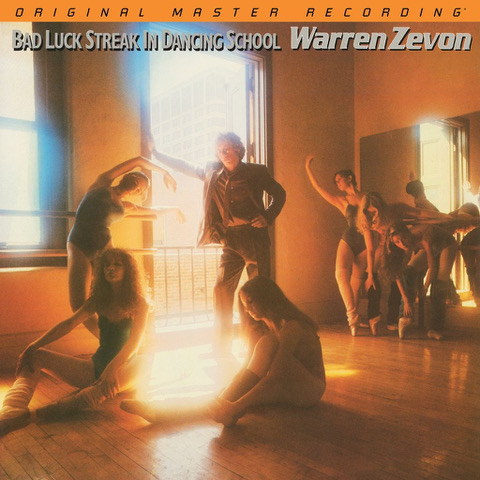
Warren Zevon – Bad Luck Streak In Dancing School – Mobile Fidelity Sound Lab
Mobile Fidelity Sound Lab releases an excellent 2-LP audiophile vinyl of rock iconoclast Warren Zevon.