BRAHMS: Concerto for Violin, Cello and Orchestra in A Minor, Op. 102 – John Corigliano, violin/Leonard Rose, cello/New York Philharmonic Orchestra/Bruno Walter
Pristine Audio PASC158, 32:26 [available as downloads or CD-R from www.pristineclassical.com] ****:
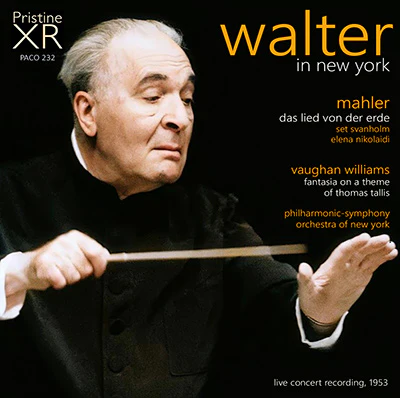
The Carnegie Hall performance of the 1887 Brahms Double Concerto (2 February 1951) features three inspired collaborators: New York Philharmonic concertmaster John Corigliano (1901-1975), solo cello virtuoso Leonard Rose (1918-1984), and Romantic conductor Bruno Walter (1876-1962). Although Walter might be prone to relaxed, sentimental realizations of the Brahms repertory, his after-burners are on full this day, no maudlin colors to be found. Rather, from first to last, Walter takes his cue from his gifted soli, driving the ensemble as a re-writing of Mozart’s Sinfonia Concertante with a dark, sonorous vengeance, pointed and expressive at every turn.
The resurgence of the 1950s work of Leonard Rose continues to yield musically rich fruits. His studied, resonant tone and full-blooded approach to the A Minor Concerto ignites John Corigliano, and together they urge the towering, first movement Allegro into convulsions of potent, idiomatic expression. If the secondary, lyrical theme of the massive Allegro ponders and muses affectionately, the outer tunes shimmer with rocketry, barely within the limits of digital control. The sharp ear will catch how both violin and cello invert the A-E-F permutation of the Brahms frei aber einsam motif, crucial to his own Third Symphony. But the facility–some might construe it as glibness–of the playing, so well matched are Rose and Corigliano, passes through the academic or “inward” nature of the piece with uncanny abandon. Before we know it, Walter takes us to the final first movement peroration, a colossus of restatement, the underlying strings and tympani marching like a relentless clock. A few fitful claps announce a riveted audience.
The D Major Andante plays as it was intended, music of reconciliation between Brahms and Joseph Joachim. The opening phrases accept a sympathetic softening of tempo and dynamic to evince the autumnal affect of a man who seeks peace of mind in his late years. A stately, martial pulse underlies this song of valediction, nobly done. The dark aura from the orchestra more than once effects the tone of the composer’s Alto Rhapsody. Any number of triadic progressions inform the Hungarian Rondo, wherein Corigliano urges the music forward over a more resigned cello part. Suddenly the two catch fire, and Walter’s febrile forces enter the colorful fray emphatically. Rose digs into his strings with a decisive fervor, the Philharmonic’s strings in resonant empathy. The ritornello becomes playful in the bassoon, flute, and assorted winds, leading to the syncopations and lassu section of the movement that takes its new urgency from the interplay of the soloists. The last two minutes of this concerto celebrate the sonic art we associate with Rose and Walter, the Brahms style of nostalgia and classical stoicism, the figures rising to a fever pitch of acceptance. And then the audience can go crazy.
— Gary Lemco