English jazz tribute band with an unexpected inspiration.
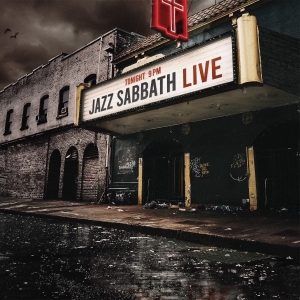
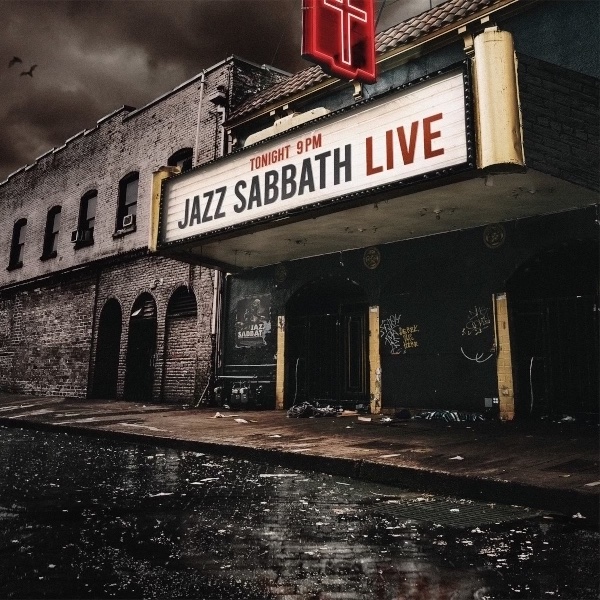
Jazz Sabbath – Jazz Sabbath Live – [TrackList follows] – Blacklake BL411406; CD 1: 41:35; CD 2: 39:13 [2/20/26] ****:
(Jacque T’Fono [Jack Tustin] – upright bass; Juan Take [Arthur Newell] – drums; Milton Keanes [Adam Wakeman] – piano)
Imagine if you will, this scenario. An English jazz band forms in the late 1960s. They write a batch of compositions. They are nicked (stolen) by a new group called Black Sabbath, who turn the jazz material into hard rock music.
That’s the purported – and very fictional – backstory for the trio Jazz Sabbath.
The reality is Jazz Sabbath was created by keyboardist/guitarist Adam Wakeman, son of keyboardist Rick Wakeman (prog rockers Yes and a lengthy solo career). The younger Wakeman toured in both Black Sabbath (2004–2017, 2025) and Sabbath singer Ozzy Osbourne’s band (2004–2025). On a lark one night in 2013 Wakeman played some Sabbath songs as improvised jazz in a hotel bar. That idea gelled over time and Jazz Sabbath initially appeared in a YouTube mockumentary in early 2020 quickly followed by their first release.
In theory, a jazz threesome performing only Ozzy-era Black Sabbath shouldn’t be anything but a goof. But this is bona fide jazz, not some horrible hybrid. Sabbath devotees might recognize some themes but overall this is music for jazz listeners not rock fans.
The double album Jazz Sabbath Live – available as a limited-edition two-LP; two-CD; digital download; streaming files; and tape cassette – is the group’s fourth full-length and first live project, taped at the Paradox jazz club in Tilburg, The Netherlands on March 20, 2025. The live trio consists of Wakeman (credited as Milton Keanes) on acoustic piano; upright bassist Jack Tustin (AKA Jacque T’Fono); and drummer Arthur Newell (his punny moniker is Juan Take).
The show commences with the title track from Black Sabbath’s 1970 debut. The original rock version is riff heavy and uses a tritone known as the diabolus in musica, due to tonal qualities suggesting Satanic connotations. Jazz Sabbath maintain a foreboding menace by utilizing the opening, ominous riff transposed from electric guitar to acoustic piano but shift to a brighter and up-swinging perspective about halfway through the six-minute rendition.
Magic – black or otherwise – permeates “The Wizard,” also from Black Sabbath’s first LP. The Sabbath cut kicks off with bluesy harmonica and then adds a sludgy heavy-metal riff. Jazz Sabbath deftly modify the harmonica starting point into a drum intro and spin the theme into a sprightly eight-minute arrangement miles away from Sabbath’s sludge-blues treatment.
Yet another from the first Sabbath record is “Behind the Wall of Sleep,” about waking from a nightmare to a sunny morning. Wakeman converts the baleful primary motif into something hearty and robust while keeping a bit of a threatening timbre. This nearly ten-minute translation has lots to recommend: a memorable bass solo, rhythmic interplay and a head-nodding nimbus.
Another highlight from the concert’s first half is “Iron Man” – not inspired by the comic book superhero – from Black Sabbath’s 1970 sophomore LP Paranoid. The Bad Plus transformed this into a jazz composite on 2004’s Give which was punchy and aggressive with avant-garde percussive elements. Jazz Sabbath, on the other hand, switch “Iron Man” into an object decidedly different: it begins as a ballad and then boldly proceeds into a bopping approach closer in spirit to Oscar Peterson or Dave Brubeck.
Jazz Sabbath furnish a noteworthy, eight-minute adaptation of the title track from Paranoid during the concert’s second half. Wakeman crafts a pensive opening and then the trio traverses blues-tinted territory. Wakeman slows back down and provides a solo reminiscent of some of his father’s solo material, and the song’s second half goes fully into a jaunty romp.
Another high point of the live show’s latter half is the spacious “Rat Salad,” named after someone’s unkempt hair, which clocks in at a hefty 12 minutes. Black Sabbath’s two-minute instrumental is based on a much-longer drum solo used as a time filler for early Sabbath gigs, akin to Spinal Tap’s infamous ‘jazz odyssey.’ Thankfully Jazz Sabbath’s intuitive and fast-paced rendering is not all percussive. Newell does offer a drum introduction and later a three-minute solo, but the piano and bass have lots of improvisational instances.
If you’re looking for some jazz from an unusual source in a standard jazz style, Jazz Sabbath might be something to check out. The album can be streamed on Bandcamp and YouTube.
—Doug Simpson
Jazz Sabbath Live
TrackList:
CD 1:
Black Sabbath
The Wizard
War Pigs
Behind the Wall of Sleep
Iron Man
Fairies Wear Boots
CD 2:
Hole in the Sky
Paranoid
Into the Void
Rat Salad
Children of the Grave