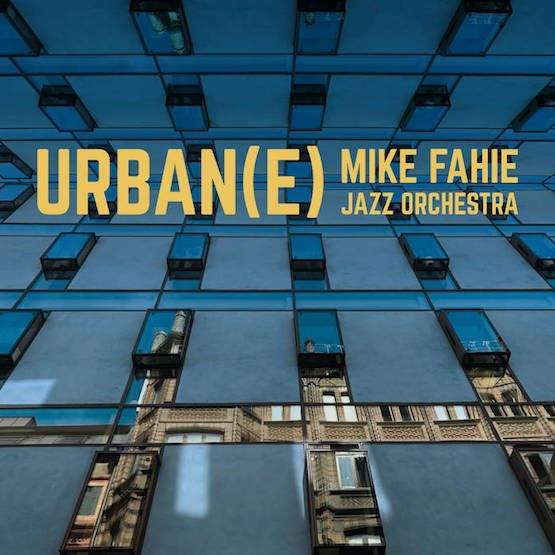
Mike Fahie Jazz Orchestra : Urban(e) – Greenleaf Music 1077 : 8/2020 68:38 ****
Saxophones. Aaron Irwin, Anton Denner, Chet Doxas, Quinsin Nachoff, and Carl Maraghi; trumpeters Brian Pareschi, David Smith, Sam Hoyt, Brad Mason; trombonists Matthew McDonald, Nick Grinder, Daniel Linden, and Jennifer Wharton; guitarist Jeff Miles; pianist Randy Ingram; bassist Pedro Giraudo and drummer Jeff Davis. Mike Fahie conductor, trombone and Euphonium.
Mike Fahie has chosen an ambitious project for his debut recording with his eponymous Jazz Orchestra, a jazz retelling of some well known Classical music pieces. These adaptations range from “straight” (the bonhomous waltz from Tchaikovsky’s 6th symphony) to ‘crooked” (the jarring Allegro from Bartok’s first string quartet. Mostly the emphasis is on the melody. This works powerfully on Debussy’s Fille aux cheveux de lin. For me this piece highlights the extraordinary arranging talents of this trombonist/com[poser and showcases the band at its best. The trombone solo is a center point of the recording in every way.
It is also possible to borrow chord progressions, while adapting the thicker Romantic era chromaticism to a more chaste Jazz language. Somehow Fahie makes the famous Chopin “chord prelude’ serve as a jazz chart. 12 measures long and based on quarter note chord changes, Fahie captures the stately pace of the original and then frames two magnificent solos; the first by pianist Randy Ingram and the second by Baritonist Carl Maraghi. A vamp at the end showcases the delicate drumming of Jeff Davis. “Nessun Dorma” is an obvious melody for Jazz treatment and the real trick here is to keep the harmonic framework from excessive sweetness. The ensemble flutes and flutters modesty and dreamily while Chet Doxas has the enviable task of mulling over the Puccini lyric. An odd-of-time all-in instrument scramble is a welcome interlude before the real musical drama unfolds, the alto and the ensemble coming to terms over the Puccinian argument. A fine piece.
The Firebird has long inspired Jazz treatments and this is one of the best that I have heard. The heavy lifting is done by a brawny tuba plus euphonium. A dreamy fanfare of wavering brass introduces the famous plangent song of the newly awakened firebird. Ingram shares a longish meditation with the softest drumming before the band comes in announcing the sunrise theme with solemnity that shows nuances of Maria Schneider’s delicate atmospheric touch. Quinsin Nachhoof rides a long solo over a mostly modal set of changes with occasional nods to the now fully awakened firebird. The tuba and euphonium have a mid piece colloquy which seems to be a discussion about the Firebird theme. There is a commendable degree of thoughtful change of pace and dynamics, making this the most accomplished piece on the set. I think anyone interested in how Stravinsky can be integrated into a jazz setting should listen to this.
Next up is Bartok String Quartet no 1. If any piece should allow for instrumental reshaping it would be this composer who was so interested in the folk instruments of Hungary. Fahie draws on the electric guitar of Jeff Miles, a shredder of the first rank, which plays off a trio reed voices and then bends and scrapes its way into and then off Bartok theme before launching into a straight 4/4 rock vamp with the band punching along. The guitar wails and thrashes with aplomb. It’s really too much of a good thing. The whole treatment put me in mind of the great British Baking Show as the famously severe judge tastes the too exotic concoction placed before him: “The idea of candied cherries, sweet potatoes, truffle oil, and mascarpone cheese seemed like a good idea, but it didn’t work out at all. I really don’t want to eat that again”. Surely some listers will like the guitar’s high-spirits and those who make it through will find much of Bartok’s rhythmic gusto and angular style has been realized, albeit in an over-the-top fashion.
In that most gloomy of symphonies, the Sixth, Peter Tchaikovsky wrote one placid and sun-drenched movement, the Allegro con grazia. An unexpected choice for a big band treatment. However, the arrangement here adds some puckish humor, the slightly ragged theme bubbles along like a merry-go-round. This might be the straightest extended treatment of a complicated Classical movement on the cd, with the longish solos, somewhat out of character in the case of the brilliant alto, playing over the waltz changes. Overall an ingenious working out of a classical theme.
“Seufzen, Tranen, Kummer, Not” from Bach Cantata 221 poses a real challenge. To an arranger. It would be ill-advised to play the four part chorale chords straight through. It would not only be too constraining but everything that would come after would sound half-baked. Fahie carefully reduces the Choral to two voices in Bachian counterpoint and then uses the top line as a melodic idea to organize the piece, which floats free from the changes but dwells on the melodic shape. The band and a modest guitar frame a space for well developed and intertwining solos by the leader and David Smith on trumpet
Overall, this a very well realized project. It is to be hoped that there will be a follow-up. Perhaps dedicated to a single composer (this worked very well in the Freya Quartets Faure project.) A Puccini record would be a great idea. Or even better: we have long awaited the jazz arranger who is ready to engage with the Shostakovich Chamber music, which is streaming out for Jazz discovery. Fahie and his capable band have the goods for just such a project.
—Fritz Balwit
Please see more information at Mike Fahie/Greenleaf Website: