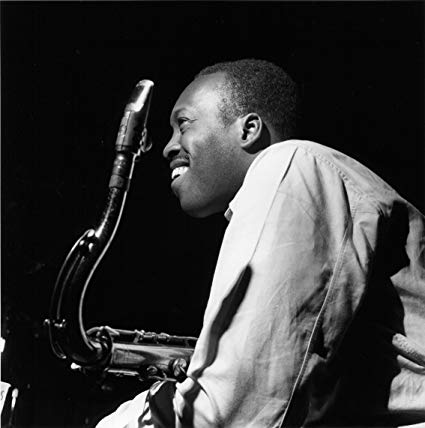
The Complete Hank Mobley Blue Note Sessions: 1963-1970 – Mosaic MD8-268 – 8 CD – *****
(Artists include: Hank Mobley – tenor sax; James Spaulding, Jackie McLean – alto sax; Donald Byrd, Lee Morgan, Freddie Hubbard, Blue Mitchell, Woody Shaw, Dizzy Reece – trumpet; Curtis Fuller, Slide Hampton – trombone; Herbie Hancock, Barry Harris, Andrew Hill, Harold Mabern, McCoy Tyner, John Hicks, Cedar Walton, Lamont Johnson, Vince Benedetti – piano; Butch Warren, John Ore, Paul Chambers, Larry Ridley, Bob Cranshaw, Walter Booker, Ron Carter, Mickey Bass, Alby Cullaz – bass; Philly Joe Jones, Billy Higgins, Leroy Williams – drums)
This past year has been a positive one for honoring the musical legacy of tenor saxophonist, Hank Mobley. Hank was voted into the Downbeat magazine Hall of Fame, which was long overdue. His Mosaic Records Blue Note 1950s Sessions box set sold out. Now Mosaic has just released a fully remastered (from the Hi Res files of the original analog masters by Malcolm Addey at his studio in New York City!) eight CD set. This box set has material from 1963, all the way through his Thinking of Home session from 1970. All together this set includes 12 recorded sessions of hard bop heaven.
Mobley’s legacy as a significant tenor saxophonist has had a complicated journey. Once dubbed “the middleweight champion of the tenor sax” for his round lyrical tone, the term took on a somewhat pejorative meaning from jazz elitists over the years. Mobley was not a trendsetter with his playing nor his compositions, like his contemporaries Sonny Rollins or John Coltrane. He had the misfortune of reaching his peak during a period dominated by these tenor titans, as well as Wayne Shorter, and Dexter Gordon.
Mobley’s temperament also did not aid his legacy. He was shy to the point of avoiding contact with other musicians when playing live at clubs. He would often sit in his car between sets.
During his prime he recorded solely for Blue Note Records. That turned out to be a mixed blessing. Blue Note fully supported their roster of artists by supplying them with rehearsal time, unlike other labels like Prestige, who limited their musicians to single day sessions. That made Prestige albums many times just jam sessions with limited new material. Blue Note had arguably the most famous hard bop sidemen, that recorded as leaders themselves. Simply peruse the artists listed with this review, and you can see Mobley had available the best the East Coast could offer. Blue Note recorded so many sessions with Mobley as de facto leader that the label had an excess of material. Many of Mobley’s material sat “in the can” for years, with five of these twelve albums not to be released on LP (and later CD) until 1979-1985, well past the hey day of hard bop, and when the label had gone thru lean years.
Hank resented the fact that Blue Note did not release his albums in a timely fashion, and indicated so in his only major interview (Downbeat, 1973). He wondered whether it would take his death (like Lee Morgan, who passed away in 1972) to get his material out to the public. Sadly, that almost turned out to be the case, as Mobley’s recorded output as a leader came to an end in 1972, when he recorded an album with Cedar Walton. He developed health problems, and became homeless while living in Philadelphia, where he passed away in 1986.
Luckily, we have his Blue Note albums to treasure. His tenor playing is “in the pocket,” and his compositions are hip, swinging, and demonstrate why hard bop is so intoxicating. It combines the best of blues, gospel inflections, and brass/sax blends. There are catchy themes, sophisticated harmonies coupled with drummers like Philly Joe Jones and Billy Higgins, who had the ability to both spur on the horns, while not to over react to the mood being set. The strength of a Mobley session is easier to groove to, than to describe. Listening to Hank interact with trumpeters like Lee Morgan, Donald Byrd, and Woody Shaw, while Herbie, Cedar, McCoy or Harold comp or lead is “comfort food for the soul.”
Whether it is a full brass section on an adventurous “Slice of the Top” session, the classic No Room for Squares and Straight No Filter albums, or the Thinking of Home session where Hank begins to explore more modal avenues, it’s all here in remastered glory. Hank was a hip genius with song titles. When you see titles such as “Ace, Deuce,Trey,” “The Hippity Hop,” “Cute ‘N Pretty,” “A Caddy for Daddy,” and “Flirty Gerty,” you can tell what is coming- precise timing, shifting accents, and a groove that just won’t quit.
For lovers of hard bop from the premier jazz label of this genre, this is music to treasure. A large part of this material is hard to track down now. It’s all here, with a 16 page essay from jazz historian, Bob Blumenthal, and archival photos from Blue Note label co-owner, Francis Wolff. There will only be 2500 sets available through Mosaic Records. If you love hard bop, this is a must purchase. It’s time again to bring Hank Mobley the acclaim he is due.
Album Index:
No Room for Squares
The Turnaround
Dippin’
A Caddy for Daddy
Hi Voltage
Reach Out
The Flip
Third Season
Far Away Lands
Straight No Filter
A Slice of the Top
Thinking of Home
—Jeff Krow