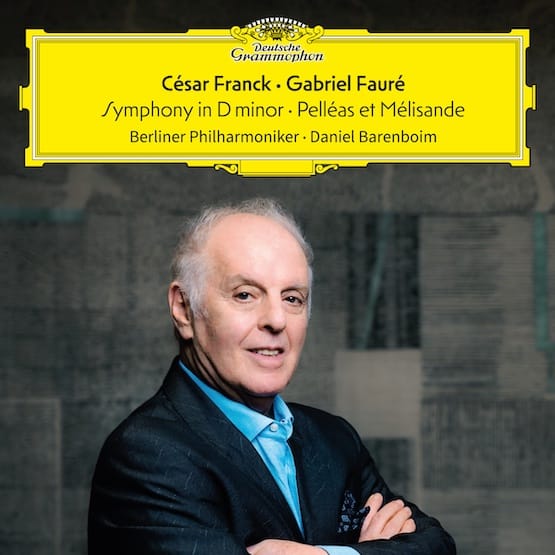
FRANCK: Symphony in D Minor; FAURÉ: Pelléas et Mélisande, Op. 80 – Berlin Philharmonic Orchestra/ Daniel Barenboim – DG 486 6008 (64:50) (10/24) [Distr. by Universal] ****:
Daniel Barenboim leads the Berlin Philharmonic in live concert from June 2023, very much aware of his having assumed a mantle once borne by Wilhelm Furtwaengler. Barenboim and Berlin share a long history, some thirty years of association and even beyond, since Barenboim first appeared with the BPO in 1969. Add to this intimacy a kind of valedictory sense of the occasion, given that Barenboim has had to balance his conducting with a term of rehabilitation from a neurological condition, vasculitis. The disc omits the Wagner Wesendonck Lieder that featured vocalist Elīna Garanča.
It was in January 2024 that Pristine Audio released the 1945 reading from Vienna of Wilhelm Furtwaengler in the Franck 1888 Symphony in D Minor, the model of the Romantic cyclic symphony, which incorporates Beethoven structural gambits from the Fifth Symphony and the Quartet in F Major, Op. 135. Barenboim, either from physical necessity or a desire to follow the Furtwaengler approach, takes a determined, gradual pace for the entire Franck creation, often lingering on the phraseology in order to highlight his regal participants: Albrecht Meyer, oboe; Emanuel Pahud, flute; and Dominic Wollenweber, cor anglais. Somehow, the fluid motion of the Franck proceeds without having become drowned in molasses, and the combination of exquisite, Belgian lyricism and volcanic, German monumentality finds a convincing balance. The delicacy of the BPO in the second movement Allegretto remains a marvel, a tribute to the diaphanous textures of which this veteran ensemble is capable.
The suite from Fauré’s Pélleas et Mélisande (1898) derives from his desire to set Maurice Maeterlinck’s tragic drama as (psychological) incidental music, a project selected by fellow composers, Sibelius and Schoenberg, though their conceptions focus more on the drama. Beauty of tone and transparency of effect dominate the four movements slowly Barenboim traverses, with Pahud’s flute and Meyer’s oboe much in color evidence from the first, the darkly magical Prelude: Quasi adagio. La fileuse, Mélisande at the spinning wheel, weaves its own spell in this rendition, in which the harp and oboe Meyer add significant, melancholy color to the winds and brass. The famous Sicilienne glorifies Pahud’s flute, again with the lovely accompaniment of the uncredited harpist. The last scene, La mort de Mélisande: Molto adagio, proves emotionally affecting, given the Berlin audience’s awareness of their conductor’s frailty: somber and nobly processional, vague enough for us to wonder whether our protagonist died of a broken heart or by the birth of her child by Pelléas, another ouroboros riddle of life and death for the ages. Unfortunately for collectors of live concerts, no audience applause survives.
–Gary Lemco
More information through Amazon