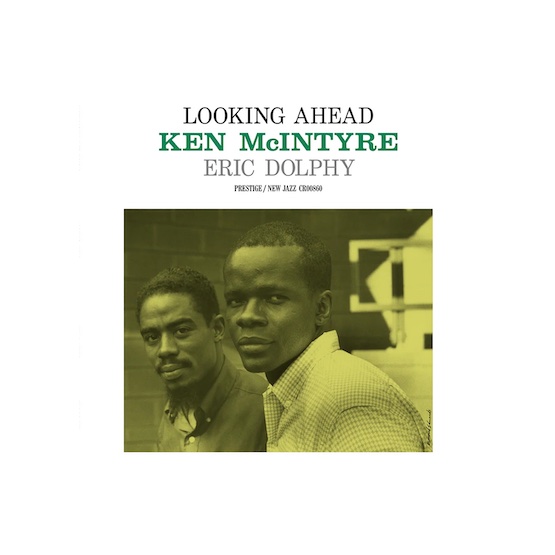
A seminal collaboration between two early 60’s jazz icons gets a vinyl upgrade!
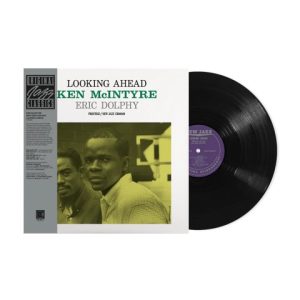
Ken McIntyre With Eric Dolphy – Looking Ahead – Prestige/New Jazz Records NJLP 8247 (1961)/Craft Recordings CR00860 [7/25/2025] 180-gram vinyl, 44:27 ****1/2:
(Ken McIntyre – alto saxophone, flute; Eric Dolphy – alto saxophone, flute, bass clarinet; Walter Bishop Jr. – piano; Sam Jones – double bass; Arthur Taylor – drums)
Like many jazz artists of the early 60’s, Ken McIntyre was fluent on several instruments. His specialty was the alto saxophone, but he also played the clarinet, flute, oboe, bassoon, double bass, clarinet, drums and piano. Perhaps his greatest accomplishment was as an educator. McIntyre founded the first African American music program in the U.S. and taught for over 20 years. He recorded with Charlie Haden, Nat Adderley, Chico Hamilton, Archie Shepp and Cecil Taylor to name a few. McIntyre recorded a dozen albums as a band leader with an emphasis on avant–garde interpretation. The collaborations with Eric Dolphy were significant in the development of this sub-genre.
As part of the Original Jazz Classics series, Craft Recordings has released a 180-gram vinyl of the 1961 Prestige/New Jazz Looking Ahead debut. Joining the two reed players are Walter Bishop Jr. (piano), Sam Jones (double bass) and Arthur Taylor (drums). The album consists of five originals and a cover. Side A opens (“Lautir”) with an unison dual alto intro. McIntyre has the first solo which swings and is very groove oriented. Dolphy follows with jaunty flute runs before handing it off to Bishop. This arrangement feels more like hard bop with a steady rhythm. “Curtsy” is more freewheeling, with both on alto. McIntyre is up first with a smooth resonance. Dolphy’s tonality is grittier and pushes it to a more extreme translation. The two exchange with alacrity and passion behind a lockstep rhtyhm section. Bishop’s soloing is lively and articulate. On “Geo’s Tune” McIntyre establish a harmonic blend. McIntyre executes a high-octane solo framed by an African-infused tempo. Bishop sustains the momentum and Dolphy explodes with sonic bursts. Both saxophonists interact with nimble drum breaks. The lone cover is the Gershwin film tune, “They All Laughed”, popularized by Ginger Rogers and Fred Astaire in the 1937 feature, Shall We Dance. The more relaxed groove is a nice change of pace and this jam saunters along at a medium pace. Again the contrasting tonality of the altos is palpable.
Side B is notable as McIntyre switches to flute. There are two longer tracks arranged differently. “Head Shakin’” starts off with a cool blues vamp. Bishop executes his most eloquent solo. His touch is subtle and provides a bouncy, at times ‘done ’n’ dirty” vibe. Dolphy injects both energy and tonal stretching (alto) that channels traditional blues motifs with a variety of intonation. McIntyre’s flute is lithe and soars with glowing elocution (with an impressive higher register) as the rhtyhm section provides rhythmic counterpoint before the quintet reprises the introduction. McIntyre unfurls a lyrical flute run in waltz-time (“Dianna”) that the rhtyhm section helps to glide along. According to the liner notes (Ira Gitler), McIntyre considered the flute a more conventional form of expression, but it works here. Dolphy sparkles on bass clarinet with muscular soulful accents that are unique, veering into free-form expression. The accessible 3/4 time signature (with clarinet on counterpoint) brings this historic project to a satisfying conclusion.
This is a welcome addition to the Original Jazz Classics series. The AAA lacquers were cut from the Rudy Van Gelder master tapes by Kevin Gray (Coheraent Audio) and pressed on 180-gram vinyl at RTI.
Highly recommended!
—Robbie Gerson
Ken McIntyre With Eric Dolphy – Looking Ahead
TrackList;
Side A:
Lautir;
Curtsy;
Geo’s Tune;
They All Laughed
Side B:
Head Shakin’;
Dianna