Giving a vibes master his long overdue credit…
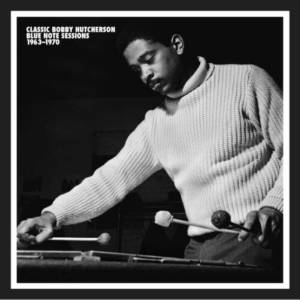
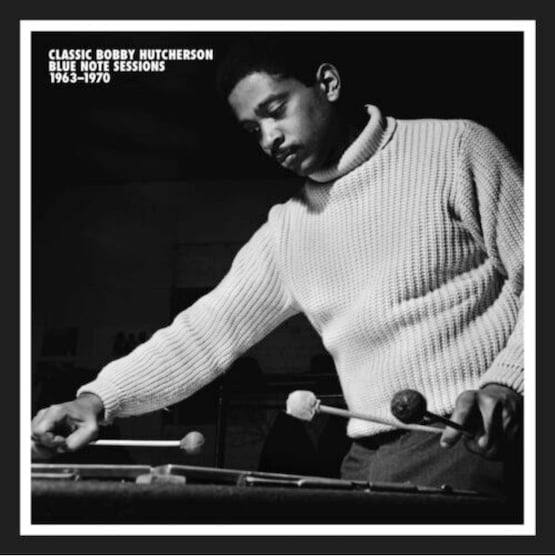
Bobby Hutcherson – Classic Bobby Hutcherson Blue Note Sessions, 1963-1970 – Mosaic MD7-278 – 7 CD – ****1/2
(Artists include – Bobby Hutcherson – vibraphone, marimba, drums; Joe Henderson – tenor sax; Sam Rivers – soprano and tenor sax, bass clarinet, flute; James Spaulding – alto sax, flute; Harold Land – tenor sax, flute, oboe;
Freddie Hubbard – trumpet; Duke Pearson, Andrew Hill, Herbie Hancock, McCoy Tyner, Chick Corea, or Stanley Cowell – piano; Grant Green – guitar; Bob Cranshaw, Richard Davis, Ron Carter, Herbie Lewis, Albert Stinson, Reggie Workman, Reggie Johnson, or John Williams – bass; Al Harewood, Joe Chambers, Billy Higgins, or Mickey Roker – drums)
The 1960-1970 decade was arguably the prime, golden period for the iconic jazz label, Blue Note Records. Ranging from bebop, soul jazz, hard bop, modal, or entry into fusion, the label covered it all. The embarrassment of riches was so top heavy that the label owners were recording so many sessions monthly (at least in the first half of that decade) that many recordings were set aside for later issue. Some set dormant for nearly the balance of that decade. With rising stars, and veterans like Jackie McLean, Hank Mobley, Lee Morgan, Horace Silver, and Stanley Turrentine, to just name a few, the saxophonists, trumpeters, and pianists seemed to get the most label attention. Others like guitarist, Grant Green, seemed to break out of the pack, but they were largely the exception.
Some instrumentalists like vibraphonist, Bobby Hutcherson, initially provided their talents as sidemen, to add spice and texture behind the lead front line horns or pianists. After backing trombonist, Grachan Moncur III and saxophonist, Jackie McLean on their album, One Step Beyond, as well as two Eric Dolphy issues, it became time for Bobby to lead his own sessions for label owner, Alfred Lion. Between 1963 and 1970. Hutcherson recorded eleven primary albums for the label that are now covered in a long overdue Mosaic Records box set, released this month.
Born in Los Angeles in 1941, Hutcherson became the leader of a second generation of vibes artists, following Lionel Hampton and Milt Jackson. His career began in the late 1950s, while still a teenager. Initially he recorded for the L.A. based label, Pacific Jazz, adding his touch to recordings by Gerald Wilson, Les McAnn, and Curtis Amy. His use of space, rhythmic attack, lightning-fast four mallet runs, and creative ideas, caught the eye and ears of Blue Note when he relocated to the East Coast.
Blue Note made sure that Bobby was presented with the cream of the crop of their roster. Take a gander above to see a “who’s who” of now iconic names- especially the royalty of rhythm section pianists, bassists and drummers.
Hutcherson’s talents covered the gamut of jazz genres, and he was well suited to enter the avant garde leanings that emerged in the mid ’60s. His compositions combined a complementary love for piano and saxophone, that with his mallets, could bring in sparkling lines with his assertive attack.
Here are some of the highlights of this marvelous set:
Beginning with The Kicker, recorded at the end of 1963, Blue Note had their rising tenor saxophonist, Joe Henderson aboard along with guitarist, Grant Green; pianist, Duke Pearson; bassist, Bob Cranshaw; and drummer. Al Harewood. There is the beautiful ballad, “If Ever I Should Leave You,” with a sumptuous Henderson solo. “For Duke P” was written for Pearson, noted for being in the A& R position at the label. “Step Lightly,” written by Joe is classic Blue Note, blues driven and 14 minutes of hard bop heaven.
Dialogue from April, 1965, follows next. It shows Bobby moving in a new direction, searching for a more wide open, freer expression. A perfect spot to add Sam Rivers on saxophones, bass clarinet, and flute, and Andrew Hill on piano. “Catta” has a repetitive vamp from Hill, and Bobby improvising over a mamba motif. “Idle While” is a Joe Chambers penned waltz, with Rivers on flute, and Freddie Hubbard on muted trumpet. The title track finds Hutch on both vibes and marimba, with group interaction, each providing “commentary input.”
Soon after, Components, was recorded. Hubbard is back along with saxophonist, James Spaulding, and the first appearance of Herbie Hancock on piano. The album features Hutcherson’s most well known song, “Little B’s Poem,” written for Bobby’s son. It’s a sprightly waltz, with flute and vibes. The title track is in two sections in 4/4 time, featuring Freddie Hubbard’s fiery trumpet, and Spaulding’s only alto sax solo on this date. “West 22nd Street Theme,” is a blues with a classic Blue Note feel, while “Air” is noted for wild counterpoint.
Happenings, recorded in Feb. 1966, uses a quintet for the first time. Bobby is the primary soloist and composed almost all of the tracks. “Bouquet,” now a well known Hutcherson ballad, is recorded as a slow waltz, and was inspired by a move to California. It’s both inspiring and contemplative. “Maiden Voyage,” now a Herbie Hancock classic, is its second recording, following a year later from Hancock’s release. With Bobby’s haunting vibraphone, it has a similar free flowing feel. “The Omen” opens the avant “free” door wide open, heavy with percussion. There is a bit of everything on this album, certainly full of “happenings.”
We’re back to a quintet on Stick-Up, from July, 1966. It’s the exit of Joe Henderson as a sideman for Bobby, while bringing in McCoy Tyner into the fold, as a sideman. Hutcherson reciprocates on Tyner’s album Time for Tyner. Bobby’s childhood friend, Herbie Lewis, is added on bass, while drum stalwart, Billy Higgins, is on the drum chair. “Una Muy Bonita,” opens with a catchy theme, and provides toe tapping opportunities. “8/4 Beat,” has Tyner taking center stage on this modal track. “Summer Nights” is a languid ballad, its title indicating its roots. “Verse” blends a reflective opening with a much more assertive Henderson following, combined with Higgins helping signal a change in feel.
Oblique, (note all the single word titles) from a year later, has Bobby only fronting a rhythm section. Hancock and Chambers return, and Albert Stinson joins in as the new bassist. This session was unreleased for 13 years, after Liberty Records purchased Blue Note. The album features “Theme From Blow-Up,” written for the Antonioni film. Bobby reprised it many times in the future, when he worked with saxophonist, Harold Land. Most of the album tracks are composed by drummer, Joe Chambers. We enter “free territory” again, and counterpoint is explored often. Bobby showed a real affinity for moving into newly explored jazz motifs, now coming more fully into vogue in the jazz world, beginning in the mid 60s. However, tracks like the ballad, “Till Then,” show his feet (and hands) remain fully in both worlds.
Patterns, from March, 1967, brought back Bobby to New York. Joe Chambers returns, bringing creative pianist, Stanley Cowell, and soon to be famous, Reggie Workman, on bass. James Spaulding also is back, and helps make “Effi” special with his flute. Spaulding’s “A Time to Go,” was written for Martin Luther King, and recorded less than a month before King’s assassination. Reggie Workman’s bass solo stands out, as does Cowell’s piano.
Total Eclipse, from the following July, brings saxophonist, Harold Land into Bobby’s Blue Note world. The two would play together into the 1970s. Chick Corea continues the pattern of future piano super stars to accompany Bobby.
The title track finds Land improvising extensively, and he shows he clearly belongs in the Blue Note pantheon of saxophonists of that period. Hutcherson wrote all the tunes, with the exception of Corea’s “Matrix.” Land provides the bop heat in that reading. “Pompeian” is a beautiful waltz, highlighting Harold’s flute prowess.
Spiral, from four months later in November, 1968, has the same group returning, except Stanley Cowell is back on piano. This album wasn’t released until a decade later. Stanley’s moody, “The Wedding March” is a stand out, and shows how well the quartet plays as an ensemble. The title track from Chambers is off to the modal races. This Mosaic release includes the unreleased, “Photon in a Paper World.” Written by Cowell, it became a staple in Stanley’s future career.
Medina followed in August, 1969. The exact same group as in Spiral appears here. After playing in Europe the month before, the quintet is in full bloom. Composed of mostly modal free expression compositions, Cowell and Land help take lead. Cowell’s “Orientale,” is a lyrical joy, led by Land’s flute. The final two tracks, “Medina,” and “Ungano,” both written by Joe Chambers, has the former with many shifts, and the latter, with a Latin vibe, more accessible.
The final album in this set, San Francisco, from July, 1970, finds Bobby fully relocated in the Bay Area, finding the small coastal town of Montara a peaceful retreat from the big city. Along with Harold Land, there is a changing
of the guard with Jazz Crusader, Joe Sample on acoustic and electric piano, John Williams on bass, and the great Mickey Roker, on drums. “Goin’ Down
South,” is a funk fest with Bobby on tambourine and marimba. I agree with the set’s erudite liner note writer, Bob Blumenthal, that “Prints Tie” evokes Miles Davis’ groundbreaking, In a Silent Way. It has the same mood setting of calming mysteriousness, especially provided by Joe Sample’s piano.
The group goes back to more standard, all acoustic instrumentation, on Joe Sample’s track, “Jazz.” “Ummh” shows Bobby and Company can “funkifize” with repeated licks. The electric bass of John Williams stirs the pot over Land’s soulful solo. “Procession” is a blues ballad feature with Joe Sample’s comping piano, and Hutcherson helping bring the tune to a climactic height, while Harold, on oboe, helps pay a visit to the Middle East.
Bobby Hutcherson continued to record a wide range of albums for Blue Note (until 1977), as well as Columbia, Contemporary, Landmark, and others, well into the the 2000s. He returned to a re-established version of Blue Note in June, 2014 on Enjoy the View. Bobby passed away in August, 2016, after an extended battle with emphysema.
His prime period with Blue Note in the 1960s, both as a leader and sideman, helped bring the vibraphone as a lead instrument into the forefront. Ranging from bebop, blues, modal, and early fusion, Bobby Hutcherson broke ground for others to follow. This Mosaic box set provides long due honors to this master musician.
I would be remiss if I didn’t mention the superb acoustics on this box set. The CDs were mastered from hi-res files of the original analog masters using current 24 bit/192 hKz technology. The results are exemplary, and these are now the best versions now available of this material. In addition, the 16-page full size Mosaic booklet has archival Blue Note photos of the musicians featured on these sessions.
—Jeff Krow
Classic Bobby Hutcherson Blue Note Sessions, 1963-1970
Album List:
The Kicker
Dialogue
Components
Happenings
Stick-Up
Oblique
Patterns
Total Eclipse
Spiral
Medina
San Francisco
More information through Mosaic Records