BORODIN: In the Steppes of Central Asia; SAINT-SAENS: Piano Concerto No. 2 in G Minor, Op. 22; FRANCK: Symphonic Variations; SCRIABIN: Le Poeme de l‘extase, Op. 54 – Artur Rubinstein, piano/New York Philharmonic/Dimitri Mitropoulos
Guild GHCD 2355, 63:44 [Distrib. by Albany] ****:
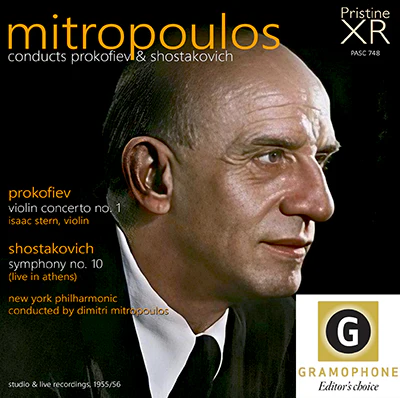
The complete Carnegie Hall concert of 19 April 1953 from the New York Philharmonic features conductor Dimitri Mitropoulos (1896-1960) with pianist Artur Rubinstein (1887-1982) in French (and Belgian) and Russian repertory. Though had collaborated on the Tchaikovsky Concerto for RCA Victor during Mitropoulos’ tenure with the Minneapolis Symphony, his subsequent appointment with the Philharmonic made Mitropoulos a CBS artist, which precluded further commercial inscriptions. Rubinstein went on to record the Saint-Saens G Minor, his only staple from this composer’s five concertos, with Alfred Wallenstein and later, Eugene Ormandy. Rubinstein enjoyed a thorough and consistent triumph with this display piece–which he first took on in 1905–which ranges from Bach imitation to the rogueries of the Parisian beer hall. This live concert had been issued some years ago through the pirate AS Disc label, but this Guild transfer by Peter Reynolds recommends itself without reservation.
It is no small coincidence that Mitropoulos had studied with Saint-Saens in Paris, and he championed the composer’s works with his usual, feverish commitment. If the Saint-Saens glows with natural panache, especially in the two latter movements–the scherzando (after Chopin’s E Major Scherzo) that gleans its own applause from the rapt audience–and the wild tarantella, whose final pages threaten to burst into happy flames, the Franck pulsates with a measured, athletic sense of form. The last section, a kind of voluptuous tango or rumba, provides no end of color effects from Rubinstein and the fiery Greek. Always in a Mitropoulos reading co-exist two elements, sensuality and tragedy. The agonized sound Mitropoulos elicits from his string section – a grueling, inverted pedal in the Borodin – expands to a beautifully choreographed interweaving of the two main themes that lull us into oriental reveries. Those “fugitive visions” assume epic, erotic proportions in the Scriabin, the composer’s fourth symphony. The trumpet part (likely James Vacchiano) emerges from a welter of superheated flesh-tones, muted strings and harp, as though Astarte were unveiling before our eyes. Wagner here becomes cross-fertilized by Russian mysticism and the Symbolist poets. By the time we negotiate the last, dying chords of this elegantly wrought piece, we can hardly fathom that the program lasted barely one hour, so spent are our powers to grasp a vision of cosmic fertility.
–Gary Lemco