DVORAK: Slavonic Dance in C, Op. 46, No. 1; Symphony No. 9 in E Minor, Op. 95 “From the New World”; Czech Suite in D Major, Op. 39; Slavonic Dance in E Minor, Op. 72, No. 2 – Bournemouth Symphony Orchestra/ Jose Serebrier – Warner Classics 2564 66656-3, 75:10 [Distr. by Naxos] ****:
Conductor Jose Serebrier enters upon a full cycle of the Dvorak symphonies with reverence: this disc presents his third recorded version of the New World Symphony, in which he here takes the first movement repeat. Recorded 22-23 June 2011, the inscription benefit from the warm acoustics of the Lighthouse, Poole Arts Centre, Poole, Dorset. Since Serebrier himself remains a canny listener of recordings, the influence on his interpretations of such Dvorak masters as Stokowski, Talich, and Kubelik seems evident by his attention to the marvelous interior lines that define much of Dvorak’s especial orchestral magic.
The Bournemouth Symphony, too, sounds eager and responsive to Serebrier’s various demands for dynamic adjustments, much as it had rendered fine performances under Constantin Silvestri. The seamless and thrilling writing of the C Major Slavonic Dance first assaults us; then we experience the same sumptuous patina in the Adagio–Allegro molto of the New World. Strings, horns, and woodwinds impress with their deep and etched intonation; and if the tempos and pausen do not quite exceed the dramatic impetus of Fricsay’s famous versions from Berlin sand RIAS, Serebrier’s still qualifies as an eminently “patient” rendition. No list of personnel accompanies the disc, but the English horn solo and string-quartet intimacies of the Largo prove beguiling. Resonant and athletic, the Scherzo: molto vivace proceeds with its war-chant, the strings buoyant and the triangle adding its bit of irreplaceable color. The secondary tune might have been conceived especially to invoke Hiawatha. The final movement combines febrile drive and inspirited melodic contour, the degree of nuance in the divided string choirs, supported by full-blooded brass work, ensures a thrilling experience. Compliments to the bass fiddle section of the BSO, which consistently impels us to hearken to Dvorak’s sensuously wrought vertical lines. No review should ignore the fine tympani work, particularly as it taps out the five-note motto under the somber horns prior to the rousing coda. The expansiveness, the spaciousness of the last chords, opens a “new world” before us, one as yet unfettered by the dark side of the American character.
Dvorak composed the Czech Suite in 1879, and its five movements project Breughel’s sense of rustic bliss. Essentially a Praeludio followed by a series of Slavonic Dances, the suite projects an immediate charm that cannot be denied. Individual woodwind colors tint the scene with nostalgia and that transcendentalist sensibility we read in Thoreau. The Polka gently conveys, Allegretto grazioso, the flavor of the bucolic life invested with national costumes. The bassoon work suggests Dvorak well knew Beethoven’s Pastoral Symphony. Deft woodwind writing in the Sousedska (Minuetto) movement points to the equally piquant writing of the Wind Serenade, Op. 44. A lovely flute solo introduces the Romanza, a nocturne worthy of the placid music on the water in Smetana’s Moldau.
The sustained melodic line again testifies to the splendid sonic aura the Bournemouth Symphony can project when properly induced by its conductor, courtesy of recording producer, engineer, and editor Phil Rowlands. The prancing figures of the finale, an alternately delicate and aggressive Furiant: Presto, celebrate the glories of the Czech sensibility with that alchemical mix of strength and yearning that link Dvorak to Schumann and the Romantics in uncanny musical kinship.
Among the most hauntingly beautiful of the sets of Slavonic Dances, the E Minor provides a moving encore to this first installment of this new Dvorak cycle, a mixture of sentiment and orchestral power from a master who never set down a bad note of music.
—Gary Lemco
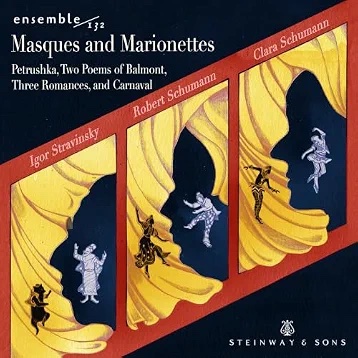
Ensemble 132: Masques and Marionettes – Chamber works by Stravinsky, C. Schumann, R. Schumann – Steinway & Sons
“… a bold experiment in chamber-music programming, carried off with technical brilliance.”