HDTT HDCD CD-R 134, 52:05 ****:
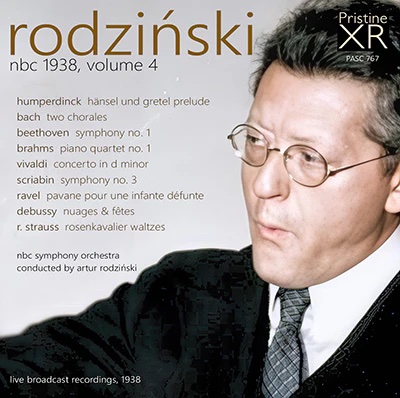
Each performance culled from 2-track tapes, courtesy of RCA and Westminster respectively, we have a pair of viscerally exciting Schubert inscriptions, given the almost polar opposition of the conductors’ personalities. Artur Rodzinski (1892-1958) late in his career transmitted a nervous energy in his romantic, albeit literalist persona. His Unfinished Symphony has a nobility of line and clear definition in the strings, brass, and tympani that often achieve exalted “intimations of mortality.” Whatever Rodzinski’s tumultuous career in Cleveland, Chicago, and New York, he seems to have managed a détente with the Philharmonia players, and his recordings–like the Tchaikovsky Romeo and Juliet and the Strauss Dance Suite After Couperin–emanate a deep serenity of line. There are several moments in the Andante con moto of the B Minor Symphony when flute, horn, and lower strings produce an elastic aura thoroughly at home in the Austrian alps. Long an admirer of Toscanini, Rodzinski could beckon an organ sonority from his players suggesting a largesse of musical vision often denied his personal and social interactions.
The Charles Munch (1891-1968) B-flat Symphony testifies to an exuberant, extroverted personality at every bar. From the opening Largo to the Presto finale, the Boston Symphony players remain pumped up and eager to demonstrate a virtuoso ensemble at work. Munch maintained a repute for his easy rehearsal methods, saving the improvised electricity and grand passion for both the recording studio and the concert hall. Superlatives rule for the outer movements, whose unrelenting impetus carries us away. The theme and variations of the gentle Andante permits the BSO woodwinds to shine; the lower basses, violas, and cellos have their bravura passages in the muscular Menuetto. Whether the HDTT people will continue to transfer BSO/Munch materials to their high-def format I can only speculate, but I would love to hear their restorations on the Menotti Violin Concerto (with Spivakovsky) and the Schubert Ninth Symphony.
— Gary Lemco