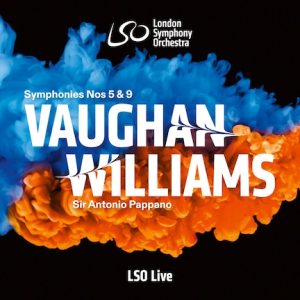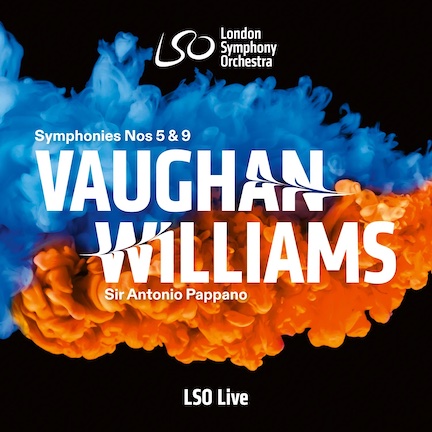
VAUGHAN WILLIAMS: Symphony No. 5 in D Major; Symphony No. 9 in E Minor – London Symphony Orchestra/ Sir Antonio Pappano – LSO Live LSOO900 (74:43) [9/05/25] [Distr. by PIAS] ****:
Recorded live, respectively in April and December 2024, the two symphonies addressed by Antonio Pappano reflect the dramatic chiaroscuro over which composer Ralph Vaughan Williams wrought masterly control. The 1943 Fifth Symphony bears a dedication to Jean Sibelius: though conceived in the midst of war and global travail, the music reaches for a transcendent vision, a contemplation forbidding mourning. The Preludio’s tonal ambiguities—a persistent tritone that waits for the finale the flügelhorn theme to resolve—soon dispel to reveal alternately fluttering and monumental vistas of hymnal fervor. Its lush, dark hues gain an added luster under Pappano’s focused direction, the affect both dramatic and bucolic.
The second movement Scherzo demands a light hand, the duple versus triple motifs marked Presto misterioso. Horns and strings weave a series of veiled gestures, accompanied by wind pipings and tympanic cadences. At moments, the music becomes blatantly aggressive, only to relent back into its hazy whispers. Sheer elegance of line defines the expansive Romanza movement, which in its own, elegiac way, suggests Tchaikovsky’s Third Suite. Religious conviction seems to infiltrate the score, likely the influence of the composer’s fascination with Bunyan’s The Pilgrim’s Progress, soon to be the subject of an opera. The violin solo by leader Roman Simovic makes us feel that Thomas Tallis is nigh. The final movement, a thrilling Passacaglia: Lento, moves with decision to a cyclical conclusion often set in sturdy fanfares and playful sailors’ jigs, while double-basses urge their palpable presence along with a blazing brass choir.
The 1956 Ninth Symphony belies the composer’s advanced age, 86, as he was eager to include Bach influences from the St. Matthew Passion in a score that contains both dire and optimistic elements. A persistent, dismal quality haunts this music, as much attributable to Thomas Hardy’s Wessex tragedy Tess of the D’Urbervilles as to the effects of two world wars on the composer’s consciousness. Alternately dreamy and savage, the music paints a colossal vista of human experience, its pastoral episodes countered by grim periods of melancholy.
The work, dedicated to the Royal Music Society, demands suggestive colors, proffered by the three saxophones and harp in the first movement Moderato maestoso in E minor, 4/4. Any “programmatic” associations with Thomas Hardy have been deleted by the composer, who openly declared the symphony “absolute music.” In amended sonata form, the movement features a violin solo by leader Andrej Power, once more hinting at the antique modes of the Tallis Fantasia. The ensuing G minor Andante sostenuto, however, does rather suggest Tess of the D’Urbervilles and her Stonehenge fate. The scoring includes the flügelhorn theme that might depict the doomed Tess and a later “barbaric march,” that itself cedes to a romantic moment (B-flat minor) in triple time. With the return of the callous march theme, the continuity seems random and incongruous, but the music settles for a quiet C major coda, pp over four measures.
The third movement, Scherzo: Allegro pesante, indulges in spiky, discordant, jarring harmonies not far from the likes of Shostakovich. The metrics shift between 6/8 and 2/4, whirling and wheedling, a snare drum accompanying the cymbals and saxophones. A saxophone chorale intrudes upon the martial proceedings, rather fitfully attempting, with strings in canon, some appeasement. A B-flat saxophone offers a flurry in the midst of a new storm, and the snare drum brings closure, “quietly taps itself to death,” in the composer’s words.
The LSO violas hold pride of place for the final movement, Andante tranquillo, set in two sections that include a long violin cantilena and a sonata form development rich in counterpoint. The brass and strings offer quasi-chorale elements that dissipate too quickly, leaving us with unresolved aspirations of grandeur. A slow, polyphonic impulse does manage to proceed to the E major so dearly sought for the culmination of an emotional odyssey of alternately grim and hopeful episodes of real power. If a swan-song, the Ninth Symphony feels less remorse and regret than potent confidence in a life well lived—according to Horace Mann—having made a distinct contribution to Humanity.
—Gary Lemco