Op. 36; Gavotte, Op. 16, No. 3; Tarentelle, Op. 10, No. 5; Suite for Cello and Piano, Op. 16; Romance, Op. 51; The Swan (from Carnival of the Animals) – Emmanuelle Bertrand, cello/Pascal Amoyel, piano – Harmonia mundi HMC 901962, 68:45 ****:
The eclectic, multi-talented, musical phenomenon Camille Saint-Saens (1835-1921) enjoyed a long, productive association with the cello, having befriended virtuosi like Auguste Franchomme, Auguste Tolbecque, Joseph Hollmann, and Charles Lebouc. Between 1866 and 1877 Saint-Saens composed a number of grateful works for the instrument, beginning with the relatively infrequent Suite (in olden style) from 1866, written for a graduate of the Paris Conservatory, Joseph Poencet. Add the compositional the decided influence of Beethoven and Schumann, each of whom made his own contribution to cello literature, and we have a master of many styles indulging in the expressive and virtuoso aspects of the instrument. The last movement of the sturm und drang First Cello Sonata (1872) has more than one recollection of Schumann’s Piano Concerto, which Saint-Saens had premiered in Paris, while at the same time discovering Schumann’s Cello Concerto. It’s second movement, however, exploits an organ hymn Saint-Saens claimed to have improvised at the church of St. Augustin.
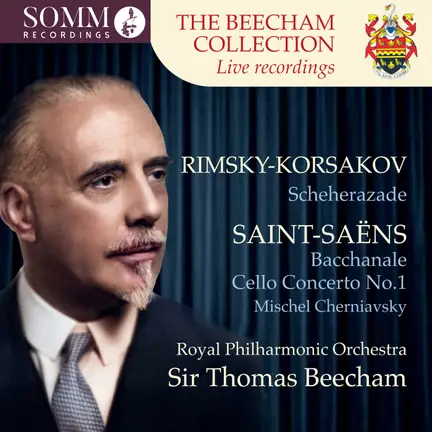
The Priere in G Major (1919) derives from a period just prior to Saint-Saens’ death, when he rediscovered his love for the idiom, writing for Andre Hekking (who went on to create the modern French school of cellists, like Maurice Marechal) another cello sonata as well. The Op. 36 Romance in F (1874) can be played on either horn or cello, and it sings in a robust manner smacking of Schumann’s Florestan. The Op. 51 Romance in D (1877) goes further in permitting the piano pearly, virtuoso riffs to accompany the sweet song of the cello. The Gavotte is the original third section of the Op. 16 Suite, replaced by a Scherzo. Some daunting trills and metrics for pianist Amoyel in the course of the cello’s courtly escapade. The Tarentelle definitely has something of Finiculi, funicula about it, its Neapolitan zest quite infectious and the piano part no less knotty than in the Gavotte. For unbroken cantabile, few melodies over a rippling accompaniment suffice so well as The Swan, here a pristine moment of sound.
The major work on this disc, besides the driven C Minor Sonata, is the stylish Suite of 1866. Its five movements, including the opening Prelude–with its obvious debts to the Bach Solo Suites–become increasingly complex and tonally adventurous. The Prelude has the cello dipping down into its lower range, most songfully. The plucky Serenade is likely to become a detached encore all it own. The Scherzo has formed an uneasy truce with Haydn to evolve a waltz that keeps shifting its shape. The Romance section, an extended dialogue between equal voices, dominates the piece. The grand finale displays both contrapuntal ingenuity and the cyclic recapitulation of earlier themes the French school adopted with consistent dexterity.
– Gary Lemco