A mostly Metheny tribute with memorable music.
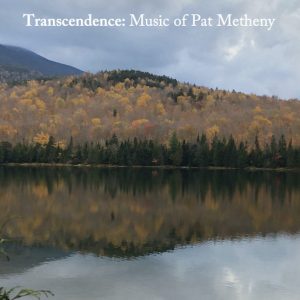
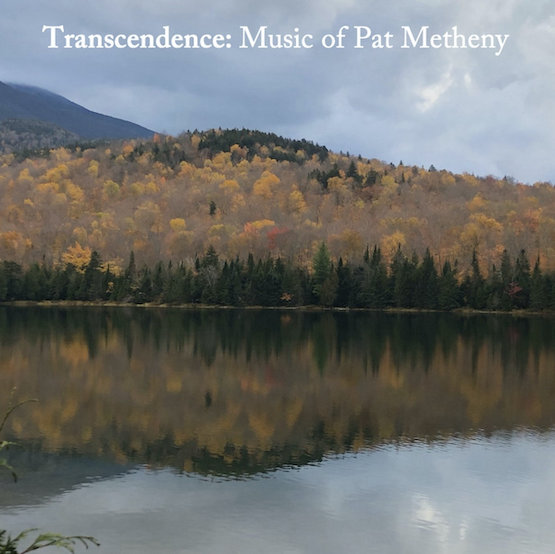
Transcendence – Music of Pat Metheny – [TrackList follows] – FMR CD 718-0125, 43:07 [7/1/25] ****:
(Bob Gluck – acoustic piano, ROLI Seaboard; Christopher Dean Sullivan – electric bass; Karl Latham – drums)
The 43-minute, seven-track Music of Pat Metheny by the trio Transcendence answers two questions. How can musicians do a Metheny tribute with no guitar? And why is there Herbie Hancock and Keith Jarrett material on a Metheny tribute? The answer to the first query is in the music. The threesome’s emphasis on keyboards, bass and drums means listeners are not distracted by too many obvious comparisons to Metheny’s guitar-led arrangements. Instead, the stress is on Metheny as composer. Through interpretation a better understanding of five Metheny compositions emerges and a broader discernment is acquired for the dimensions of Metheny’s creativeness. The reply regarding Hancock and Jarrett is found later in this review.
Transcendence keyboardist Bob Gluck is no stranger to Metheny. He authored Pat Metheny: Stories Beyond Words (University of Chicago Press, 2024). The in-depth book looks at Metheny as composer, band leader and musician. Gluck explains in his album liner notes the book and album interconnected. Gluck says, “This recording was…informed by insight gained in the study of Pat Metheny and his music, while the book was informed by the unparalleled experience that gave birth to this exciting trio and its first album.” Transcendence also includes drummer Karl Latham – who is in the jazz cover group Living Standards – and bassist Christopher Dean Sullivan. Sullivan and Gluck know how to traverse the music of other jazz artists. They were involved on 2015’s Infinite Spirit (Revisiting Music Of The Mwandishi Band) which centered on material from the ensemble led by Herbie Hancock.
Tunes are split between pieces featuring acoustic piano and the ROLI Seaboard, which can simulate guitar-like sounds. Opener “Question & Answer” is the title track from a 1990 outing with Metheny, bassist Dave Holland and drummer Roy Haynes. Metheny’s version has a delicious spontaneity with a sense of respondent wittiness. Transcendence furnishes an inquisitive quintessence fronted by probing acoustic piano lines.
“Afternoon” is from the Pat Metheny Group’s 2002 Grammy awarded fusion album Speaking of Now. Metheny’s arrangement included guest vocals and had a light Brazilian touch. Transcendence deletes the vocals and concentrates on the cut’s harmonics with dynamic interplay between acoustic piano and electric bass. The band’s interpretation accentuates Metheny’s composite, elaborately detailed music.
“The Bat” was first heard on the 1980 double-disc LP 80/81 (Metheny with bassist Charlie Haden, drummer Jack DeJohnette, and saxophonists Dewey Redman and Michael Brecker) and a shortened, reworked take is on 1982’s studio effort Off Ramp. The original 1980 tune has an introspective, cinematic quality. During “The Bat” Gluck is again on acoustic piano, Sullivan adds a memorable solo and the band as a whole slips in some pastel dissension but retains a picturesque, vista-like demeanor.
Transcendence goes electric on the title track from Metheny’s Grammy winning Offramp and “Roof Dogs” (Metheny spelled it as “Roofdogs”) from the 2012 self-titled Unity Group record. It was on “Offramp” where Metheny first utilized his guitar synth which provided an otherworldly and rock-oriented display. For the Transcendence take of “Offramp” Gluck switches to the MIDI-controlled ROLI Seaboard keyboard instrument. The ROLI allows Gluck to create a guitar synth tonality similar to Metheny. The result is fusion with a definite rock music abandon. The Transcendence translation of “Roof Dogs” commences with acoustic piano but Gluck shifts to the ROLI so that the tune echoes the Unity Group’s version.
DeJohnette, Hancock, Holland and Metheny toured in 1990. Official audio and video concert releases don’t include Hancock’s “Dolphin Dance” but they may have played it. Gluck and Sullivan initially did Hancock’s “Dolphin Dance” on the 2011 drummer-less trio project Something Quiet. Gluck’s 2011 reading was an intimate acoustic piano and stand-up bass duet. The Transcendence rendition has a slightly more conceptional connection, a bit more robust and modernistic.
Metheny has covered Jarrett on stage and gives high esteem to Jarrett’s ‘American Quartet’. Which probably explains why Transcendence does Jarrett’s “Everything That Lives Laments.” A brief trio performance is on Jarrett ‘s 1971 album The Mourning Of A Star. A fuller revision was re-recorded for the 1975 ‘American Quartet’ LP Mysteries. Transcendence turns up the elegiac attributes. Sullivan’s electric bass is responsive and adventurous. Listener’s will undoubtedly compare Gluck’s acoustic piano to Jarrett’s but Gluck is his own man and supplies rich chords and decades of keyboard expertise to this illuminating adaptation.
Anyone who wants to hear more Metheny tributes have lots of choices. The Transcendence record is not the first to focus on Metheny nor will it be the last. Some examples: Bob Curnow’s L.A. Big Band (2007’s The Music Of Pat Metheny & Lyle Mays and a 2011 followup); Jason Vieaux’s 2005 classical music homage Images Of Metheny; and there are more.
—Doug Simpson
Transcendence – Music of Pat Metheny
TrackList:
Question & Answer
Afternoon
The Bat
Offramp
Dolphin Dance
Everything That Lives Laments
Roof Dogs