J.S. BACH: Sonatas for Viola da Gamba and Harpsichord – Antonie Tamestit & Masato Suzuki – Harmonia Mundi 902259 ((44:40), 6/19 (Distr. by [PIAS])*****:
(Antoine Tamestit; viola “Mahler” Stradivarius 1672, Masato Suzuki harpichord William Kroesberger after Johannes Couchet 1996)
When it comes to Bach, one is used to sorting out the relatively small (compared to the liturgical works) works of purely instrumental compositions in packets of six. For our listeners, how many purchases of double-fold-out lps or discs offer six portals into the magically sublime world of the Bachian apotheosis of the Baroque trio sonata, typically, the works for violin solo, the six cello suites, the sets of suites for keyboard, and the partitas? Even the Brandenburgs, as diverse in form and weight as they are, roll the “lucky six.” All the more puzzling to encounter this half-set of three works for viola da gamba and harpsichord. I recall my initial feeling of being shorted an entire record. And then, having fully absorbed the splendor of the solo cello, there was the oddness of this antecedent instrument, the viola da gamba, which seemed on first hearing to be excessively subdued and (in the case of my first record) nasally congested. Over the years and a dozen recordings, I have come to revere these works and appreciate the HIstorically Informed Practice (HIP) that animated the rediscovered viola da gamba among other baroque instruments. The issue under review here, while following the illustrious tradition of Early Music practice, manages to achieve something new entirely; it elevates them even higher to the celestial realm of violin sonatas BWV 1017-1023. This required not only the specific, unparalleled skills of these performers but also recourse to a legendary instrument, the “Mahler” stradivarius, built more than a decade before Bach’s birth, and a recording technique that captures and indeed flatters the darker register of the viola, which unabashedly stands in for the viola da gamba on this recording.
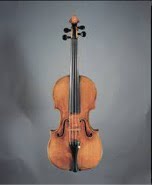 Antonie Tamestit plays the instrument on loan from Habisreutinger Foundation. (He discusses the strad here with able support from the harpsichordist of the bach Collegium Japan Masat Suzuki. [https://www.thestrad.com/video/antoine-tamestit-talks-about-his-1672-stradivarius-viola/6976.article] Together, the pair offer a meticulously refined yet emotionally sweeping tour of the three sonatas, BWV 1027-1029. There are a couple of twists to the recital which prompted me to a reappraisal. First, they begin with the G minor work, which from the first announces itself as a polyphonic wonder on a large scale. For ears conditioned to the lighter texture of the first gamba Sonata, which by contrast seems like a pedagogical exercise for a beginner much like its key companion solo suit for cello, this piece, longer than the other by half, breathes the same air as the violin sonatas.
The harpsichord holds an animated dialogue with the viola on a breath-taking scherzo that hurtles breathlessly for nearly five minutes. There are intense passages of virtuosic semiquavers, leaps, twists, and dazzling ornamentation. It feels like a miniature concerto with the deep-voiced viola holding its own as the string section. I have never heard a viola like this. After the roaring of the Vivace comes an affecting Adagio. Tamestit coaxes sweetness form the upper register without resorting to vibrato. Meanwhile, the bottom register of the harpsichord plucks pearly notes of rounded perfection. The three voices possess exceptional clarity and resolution for a spellbinding 4”40’. Brisk imitation follows on the Allegro, and finally, the strad leaps to its highest register with dazzling effect.
This will be a benchmark performance for this singular sonata. It is a fine idea to start off the recital with the heaviest of the set. But an even more unexpected treat awaits the listener. For a second offering, the musicians deliver an arrangement of an Aria from Cantata BWV 5 “Ergiesse dich reichlich” which translates as “pour forth abundantly.” The viola begins with an elaborate accompaniment figure built of circling semiquavers, then alternates to a series of cantabile utterances as the harpsichord echoes the floating first pattern. It is a most peculiar reworking of the cantata, and its success is ultimately made possible by an uncanny ability of the viola parts to juggle the thick contrapuntal duties of two voices even as the continuo parts are elaborate in harmony without becoming murky.
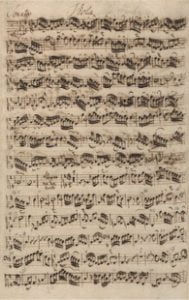 There follow the two shorter sonatas: the D major BWV 1028 and the G major BWV 1027. Both exhibit the slow-fast-slow-fast form of the so-called Church Sonata. The adagios repose in Bachian solemn splendor while the crisp Allegros dance cheerfully, constrained only by the always-disciplined counterpoint from the left-side of Mr Suzuki’s elegantly forceful harpsichord.
These fine musicians play exceptionally well without a demonstration of virtuosity. Tempos are unhurried, dynamics relieve the occasionally overwhelming business of the three voiced harmony. There is one moment of pure magic in the Andante of the G major sonata in which the viola holds a vibratoless low note over which the harpsichord plays a sequence of punishing dissonant figures. The gamba is losing air in quiet despair while Bach relentlessly plows his way to a hard-won resolution. No other composer could have (or would have deemed it proper) to stretch the ears like this.
In short, this recording offers a distinctive and perfect performance. Harmonia Mundi deserves high praise for the entirely satisfying production which includes excellent notes and a handsome picture of the illustrious Stradivarius.
—Fritz Balwit