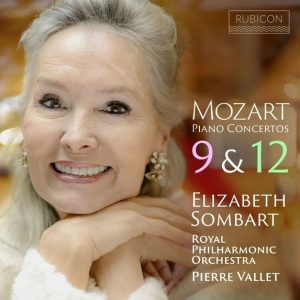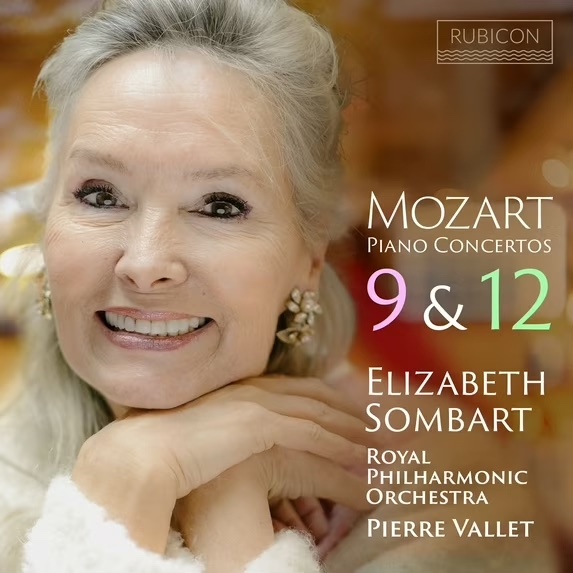
MOZART: Piano Concerto No. 24 in C Minor, K. 491; Piano Concerto No. 10 for 2 Pianos in E-flat Major, K. 365 – Elizabeth Sombart, piano/ Nicolas Comi, piano/ Royal Philharmonic Orchestra/ Mihaela Cesa-Goje – Rubicon RCD1093 (4/24/26) (59:11) [Distr. by PIAS] ****:
Recorded at Henry Wood Hall, London in March 2025, the two Mozart concertos juxtaposed here offer diametrically opposed sensibilities, given that the Piano Concerto No. 24 of 1786, one of only two in the concerto medium set in a minor key, embodies Mozart in a most fervently dramatic temper, a real incursion into the Romantic sturm und drang movement. The opening movement, Allegro has solo Sombart’s sharing the restless, often aggrieved, texture with large forces, including a pair of clarinets and a generous complement of winds and strings, trumpets and drums.
Sombart, new to me as a performer, plays with clean, forceful articulation, a natural Mozartean whose patina never becomes harsh or her style mannered. She reminded me that my own, earliest impressions of this epic and grandly tragic work derived from performances by Artur Rubinstein and Edwin Fischer. The clean woodwind and muted string work of the E-flat major Larghetto movement evinces a serenade or cassation effect, intimate and eminently graceful. The Allegretto and its eight variations, unlike the finale of the cousin D Minor Concerto No. 20, does not relent in its dark counterpoints and solemn, last tonal color. Conductor Cesa-Goje injects a martial urgency into the opening statement, and Sombart fluent parlando response, with its brisk filigree, leads directly into the woodwind-serenade variation, dominated by the bassoon. The march becomes “symphonically” insistent, only to find solace in a more galant, staccato and arioso version. The music returns to its C minor origins, emotionally as well as chromatically, allowing Sombart a brief cadenza with which to meditate on the common fate of all and proceed, head bloodied and unbowed, to a firm resolution.
The 1779 Concerto for 2 Pianos proceeds with a joyful sense of collaboration and seamless colloquy indicative of the master artistry commanded by Mozart and sister Nannerl. The two keyboards know exactly what each is thinking, and they either conclude or echo their respective lines of thought. The entire Concerto reflects the notion of Classical construction a la Johann Joachim Winckelmann, for sheer purity of balanced phrases. Besides elegantly molded runs, scales, trills, and imitative phrase lengths, their pauses and lacunae communicate as much drama and impact as their melded sonorities with the orchestra.
For the vocal power of the keyboard – a notion that surely captured Chopin’s musical imagination – the second movement Andante becomes a cornucopia of operatic, cantabile fluency, both haunted and haunting. Mozart often sustains the vocal line over a woodwind or trilled piano pedal point, a gripping effect of ravishing beauty, worthy of a line from Keats. The effortless synchrony of effect extends into the brilliant, joyful Rondeau: Allegro, which displays Mozart’s gift for modulating key colors and hues of orchestral blends. The playful, polyphonic final cadenza communicates a buoyant spirit on behalf of all participants, the last trill an eddy of propulsion to a coda we can all relish with gratitude.
For me, a most delightful debut of all the collaborators, excepting Sir Thomas Beecham’s Royal Philharmonic Orchestra, for we go way back.
—Gary Lemco