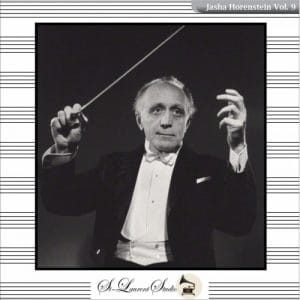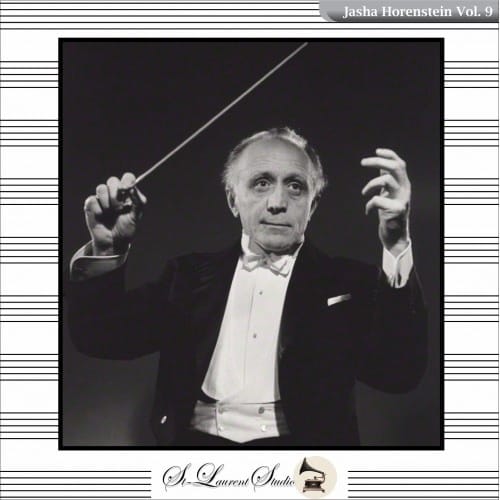
Horenstein Vol. 9 = BEETHOVEN: Leonore Overture No. 2, Op. 72a; BRUCKNER: Symphony No. 5 in B-flat Major (1878, Haas Ed.) – BBC Northern Symphony Orchestra/ Jascha Horenstein – YSL T-1616 (2 CSs = 51:20; 37:35) [78experience.com] *****:
Yves St-Laurent continues to extend the recorded legacy of conductor Jascha Horenstein (1898-1973), here with the live concert from Milton Hall, Manchester on 9 April 1970. The emphasis lies in epic drama, given the two selections Horenstein leads: first, the 1805 Leonore Overture No. 2 testifies to Beethoven’s potent malaise about the entire enterprise of operatic creation, that his Fidelio caused him perpetual grief in terms of structure and proportion. Beethoven chooses the dire developments of his plot to expound upon: Florestan laments in his dungeon cell, rife with dissonant, chromatic, descending octaves. His nostalgic aria, “In des Lebens Frühlingstagen” (in the springtime of my life) recalls his youthful hopes, now facing the presence of death, and these conflicting impulses drive the music forward in abridged sonata form. The sound of the trumpet, Florestan’s release, in its second appearance, omits any recapitulation of themes and propels us to an explosive coda. The 1875-76 Fifth Symphony of Anton Bruckner derives from a tumultuous period in his life, invoking him to call his intricately contrapuntal score “fantastic.” Bruckner’s inner ear, too, seems to hearken to a particular, pizzicato effect, present in all but one movement, while the drawn-out momentum, the “fearful symmetry” of the work, finds its ultimate release only at the very end of a huge double-fugue, in the chorale.
This concert opens with the potent Leonore Overture No. 2, the first of Beethoven’s attempts to compress his political drama into pure, introductory music without overloading its content and creating an anti-climax. He fails, as he had done with the relatively lightweight No. 1 and the even-more-colossal No. 3. Horenstein, like Wilhelm Furtwaengler and Bruno Walter, however, reveals no hesitancy in addressing the huge chasms in dynamics: the assault-laden unison G chord and the abysmal descent to F-sharp, followed by protagonist Florestan’s inner pleas of hope, all in a tormented C major. His competing aspirations turn to heaving despair, until the trumpet call of freedom sallies forth, delivering its own shocks. Horenstein’s silences prove as weighty as his entries, and coda literally explodes in paroxysms bathed in a sense of newborn freedom.
Horenstein’s Bruckner has as many adherents as detractors, the arguments mainly regarding his inattention to the composer’s tempo indications. Few, however, contest the sincerity and attention to color detail Horenstein elicits from his various ensembles: his BBC Legends Bruckner Fifth (4033-2) with that studio’s orchestra has gleaned both fine praise and reserved condemnation. This reading with the BBC Northern Symphony Orchestra exhibits startling discipline, especially in the climactic moments of the outer movements, when brass choirs and strings must assail Heaven without breaking the sonic line from the sheer strain of expression. The first movement accomplishes the composer’s slight differentiations of bewegt and maintains a steady, if increasingly, grandiose structure. The composer’s huge pedal points sustain their authority as do his periodic pauses and resumptions of impetus. The crisp alertness of the BBC woodwinds singularly appeals to me, since their woodland imperatives contrast so dramatically with the attacking, epic sounds to Pantheism, Deism and Divinity.
I confess that the work’s second movement, the huge Adagio in D minor, has remained my favorite moment, initially due to the performance (on Decca) from the Vienna Philharmonic under Hans Knappertsbusch. Though marked in common time, the pulse follows a 6/4 course that addresses two themes, dolce and kräftig, sweet and powerful, that ascend with no less than religiously intimate urgency. The ache in the emergent chorale theme from Horenstein, palpable and aware of human mortality, proves repeatedly compelling. When the initial entry theme returns for the last time, its sense of malaise and heartbreak renew the gasping struggle for salvation once more, until whispering strings and winds receive the potent consolation of the sustained, rising brass that dissolve into fragments of the opening tune.
Horenstein’s rendition of the third movement Scherzo: Molto vivace captures its somewhat bi-polar personality: a wicked, sometimes plodding, ¾ march and an impish, rustic dance of Austria that Bruckner accents (in arrowheads) to increase the fleet, transparent tension involved. Horenstein does not slow down for the Trio section, no mean trick after the bravura assertions from his strings, winds, and screeching brass that must now become relatively diaphanous. The da capo manages a slightly demented character, an onrush to swirling vapors high above the common world’s sea of troubles described in Caspar Friedrich’s 1818 painting.
The art of sustaining the potentially all-too-academic last movement, Finale: Adagio – Allegro moderato, with its monstrous double fugue, may easily defeat both conductor and ensemble. The initial theme’s re-appearance, and then the second movement’s theme in the oboe, set against a quirky, woodland bird call, disarms us for the rigors of the ensuing exercise in massive orchestral counterpoint, a rival to the intricacies of late Beethoven string quartets. Bucolic interruptions recall the Scherzo, but all impulses will convene and undergo impressive juxtaposition before Bruckner will consign his Herculean effort to God’s glory. Horenstein, however, appears technically and affectively equipped to provide grandeur and elastic sensitivity at once, without any sag in the evolving lyric architecture. It would seem that Bruckner has turned his aural allegiances away from Wagner to Beethoven, all the while retaining his instrumental declarations of his personal faith. Horenstein has met Bruckner in these celestial ambitions, and the result is a concert of rare and passionate persuasion. Highly recommended.
—Gary Lemco