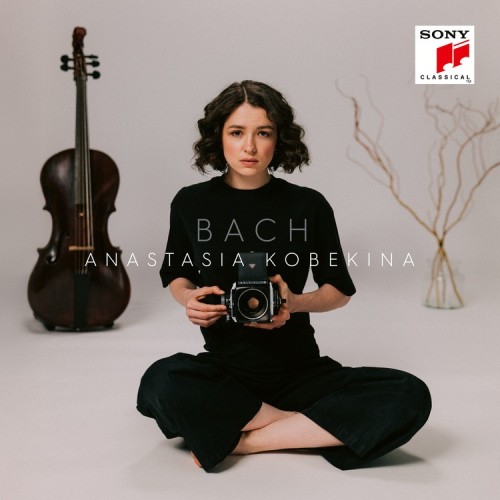
Controversial to be sure, but certainly an eye opener.
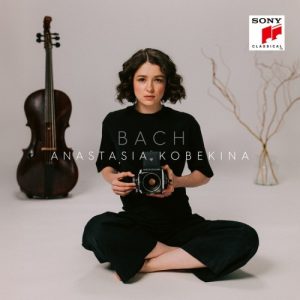
JS BACH: Six Suites for Violincello solo – Anastasia Kobekina, vc – Sony Classical 19802954682, 61:43, 82:52 ****:
Cellist Anastasia Kobekina has certainly been enjoying a huge promotional effort. She was born in Russia and garnered the third prize at the 2019 Tchaikovsky Competition. Recently signed to Sony, we have been flooded with all things Kobekina, especially videos and interviews online. Of course, this is not the first time Sony has signed a young artist to its roster, and we’ll see how long she lasts there—history paints a rather bleak picture in terms of the long-term viability of any musician signing with this company—many are called, but few are chosen.
This album has received very mixed reviews so far, many lauding her obvious talent and boldness of her interpretations, while others are not as favorable, some even disparaging. I think this is going a bit far; while one might argue the viability of what she does, there is no doubt that this is serious effort by a young woman looking at this mountain of a set of suites from a very personal—perhaps too personal—vantage point.
But it must be admitted that the old adage “can’t see the forest for the trees” applies here in spades. Kobekina is all about the moment, sometimes getting too caught up in the beauties and passions of one phrase or even bar, while really not considering its place in the overall suite. If you approach this music as a consistent and well thought out offering in terms of formal structure, with each movement somehow related emotionally to the previous or next one, then this recording will prove bothersome.
It’s hard to determine which approach Bach would prefer, as the cello suites in general are a bit of a mystery. Most likely composed immediately after the Brandenburg Concertos, while he still worked as Capellmeister in Cöthen in the 1720s, this evidently first exploration of the instrument was something unique for the time, as the cello was relegated to a supporting role, and generally thought of no use for anything else. They do seem to disappear from history for quite a while, about 150 years until Pablo Casals spotted them in a secondhand music store. Even then he did nothing with them for 13 more years, and finally recorded them. Lo and behold, suddenly these suites, initially thought by Casals to be a simple collection of rather uninteresting technical studies, blustered their way into the increasingly large Bach pantheon of greatness. Quite a comeback, and we have no idea what Bach’s intentions really were—the absence of the original score doesn’t help.
The earliest manuscripts, done by Bach’s second wife, Anna Magdalena, give us absolutely no idea of how these pieces should be played, and so each performer goes from scratch, hence the predicaments found in the recording under review. It really does depend on how one thinks, individually, that these suites should be performed. Kobekina relishes the note-by-note connections of this music, sometimes speeding up, sometimes delving into an intense legato, and then suddenly putting the brakes on for a moment she finds particularly meaningful.
Unfortunately, her consideration of these works as a blend of Apollonian clarity and Dionysian passion might make for clever philosophical consideration and pseudo-intelligent liner notes, but does not translate into anything palpable in the actual readings. I wish she had just said, “this is how I feel this music, take it or leave it” and let the listener decide on how it works, devoid of any pre-listening prep. If one does indeed use this scheme as a basis for evaluation, there are many good things to be appreciated. She plays her Stradivarius cello from 1698, known as the “De Kermadec-Blass,” as well as the 1717 “Bonamy Dobree Suggia”, five strings in the sixth suite. Tempos are pushed and pulled in really spontaneous ways, and some might be bothered by the not infrequent fingerboard slapping and other extraneous noises that seem to appear. Yet, for all that, these are far from dull or lifeless performances, and her sound is robust, warm, and quite attractive. She employs an array of emotional content, delicacy, humor, unadulterated virtuosity, and pathos-laden slower movements. I can’t think of another recording where you come away feeling like you know the performer as well as the composer.
While I cannot recommend this as a first introduction to the world of Bach’s cello suites, it will serve nicely as a supplement to existing recordings when one feels the need for something a little more adventurous or even wayward. If you are new to these or seek something that has sparking playing and subtle intellect behind every phrase—and want a period instrument approach—get Pieter Wispelwey’s 1990 second recording on Channel Classics.
— Steven Ritter