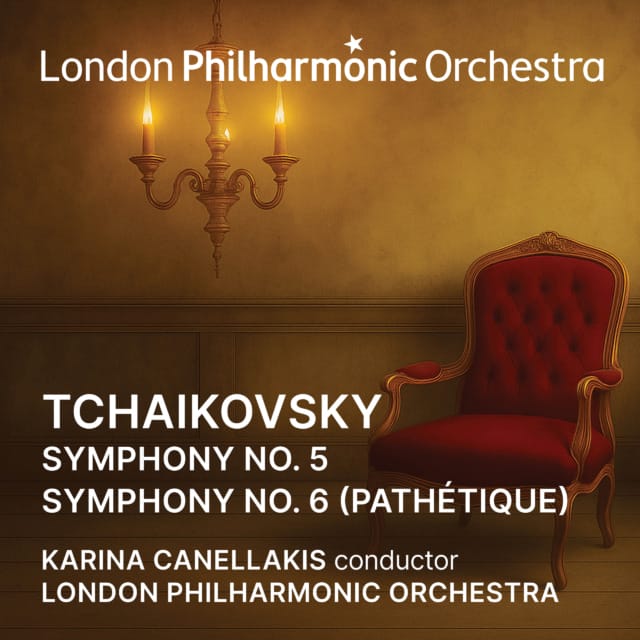
TCHAIKOVSKY: Symphony No. 5 in E Minor, Op. 64; Symphony No. 6 in B Minor, Op. 74 “Pathétique” – London Philharmonic Orchestra/ Karina Canellakis – LPO-0137 (2 CDs = 89:34) (11/21/25) [Distr. by Integralmusic.com] *****:
Conductor Karina Canellakis (b. 1981) serves as Principal Guest Conductor of the London Philharmonic Orchestra, recording these Tchaikovsky symphonies 15 March 2023 (Op. 64) and 2 November 2024 (Op. 74). Since her European conducting debut in 2015, Canellakis has enjoyed a meteoric rise in recognition, and these readings justify her international attention. The two Tchaikovsky performances captured live reveal an interpreter scrupulous in her obeyance to the composer’s expressive, dramatic details, the pacing and molding of the potent, tragic phraseology fluid without exaggerated emotionalism.
The 1888 E Minor Symphony, often regarded as a “fate symphony,” projects a cyclic unity of development in all four movements. The reading by Canellekis emphasizes linear clarity of line, the driven momentum at times reminiscent of those powerful models from Koussevitzky in Boston and Mravinsky in Leningrad, but not quite so explosive. The mournful opening march will eventually emerge as a triumphant declamation of spiritual victory, at once balletic and heroic, and always persuasively melodic. Canellekis attends to the harmonic transitions in movement one – E minor to D and E major – with suave resolve, the inflections of melody and waltz rhythm as vivid as the more militaristic impulses.
The heart of the symphony, Andante cantabile, con alcuna licenza, enjoys an especial aura as the subdued strings support a noble horn motif that soon embraces the transparent woodwinds. Tchaikovsky’s call for con noblesse and desiderio, expressions of high sentiments mixed with unresolved longing, finds decisive realization here. The pace and nuance evoke an ambiguity of emotional intensity, elegantly expressive but anxious that such tender reveries remain ever frail. The third, waltz movement in A major, extends the agitation despite the gracefulness of the melodic line: the rhythmic shifts pit 3/4 against 4/4 in a way, especially in the F# minor Trio, maintain our sense of spiritual unease. Only in the last movement – which Canellakis gratefully takes without the so-called “authorized” cut – does confident prowess assert itself, however hyperbolically, with broadly furious, brazen strokes and immense rushes of polyphony, all held in masterful command by our gifted conductor.
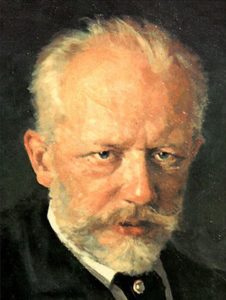 I first came to Tchaikovsky’s 1893 Symphony No. 6 “Pathétique” by way of Artur Rodzinski and the New York Philharmonic, a forceful, if literal interpretation from which I proceeded to more subjective responses by Celibidache, Furtwaengler, Mitropoulos, Talich, Bernstein and, Mravinsky. Tchaikovsky’s unique gambit – at that time in my musical experience, which had not imbibed Mahler – lay in the slow Finale: Adagio lamentoso, ending in a minor key which, after the explosive third movement, felt anticlimactic and unnerving. The time signature 5/4 for the dreamy second movement waltz, with its trio in B minor, no less marked an innovation for my listening consideration. But I omit the shock of that first movement explosion into a stormy D minor, after the Adagio introduction, a shattering wake-up call to Thaikovsky’s consistent struggle with intimations of mortality. For many subsequent auditions of the symphony by various conductors, that dramatic fortissimo stood as my test sequence.
Canellakis assumes a brisk tempo for the opening, first movement Adagio, more a walking tempo than a funereal dirge. Still, the gloomy tension mounts in transparent figures, with an alert response between strings, woodwinds, and subdued brass, at least until the first trumpet volley. The first major melody, uttered by melancholy strings, has a tender allure, especially in the flute part counter-melody. The ensuing Allegro non troppo, tempestuous and passionate, proves gripping, the transitions in tempo seamless. Urgent, rife with languor, the movement vibrates with a tragic resolve.
The Allegro con grazia has rarely achieved such likeness to a balletic sequence; and except for its dire middle section, with its pulsating tympani, the music brings a guarded relief from the tragic muse. Delicate but intensely etched, the Allegro molto vivace, the scherzo, asserts a will to what might be termed a Pyrrhic Victory, given the series descending motives that cast a perpetual shadow beneath the seeming gaiety and startling energy of spirit. Always, final bars convince us the symphony has concluded, only to usher in a mortal veil of infinite sorrow. It rarely occurs that music overtly communicates pity, but Canellakis’ somber Adagio lamentoso conveys the state of our harried planet, personal catastrophe made universal.
I am reminded of a conversation I had with an organist, a student of Helmut Walcha, when we discussed Bach’s The Art of Fugue: I had commented on the grand work’s consistent darkness, and he pointed out to me, “Don’t you realize what this music is? It is God’s looking at the wonderful world He gave Man and reflecting upon what Man has done with it.”
—Gary Lemco
More information at Amazon