An odd choice for a debut, but generally fine recording…
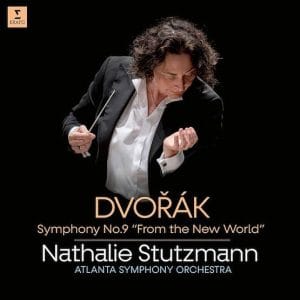
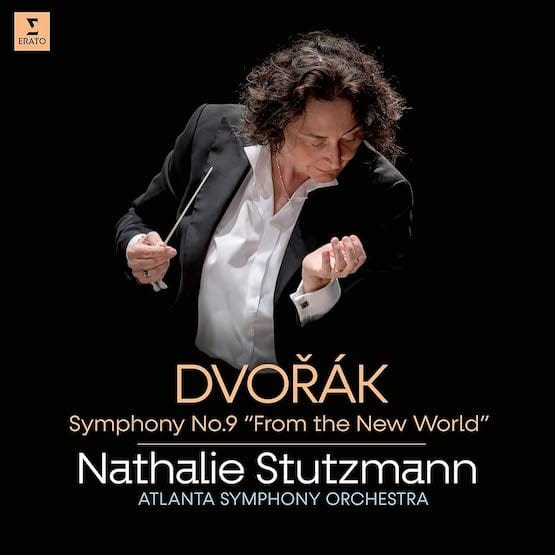
DVORAK: Symphony No. 9 in e, “From the New World”; American Suite – Atlanta Sym. Orch./ Natalie Stutzmann – Erato 5021732263797, 63:31 ***1/2:
It’s odd to me that Natalie Stutzmann, the new music director of the Atlanta Symphony Orchestra, would choose this particular symphony, surely one of the most famous in the world and the subject of umpteen great recordings, as her way of introducing herself to the orchestral catalog. There are so many worthy pieces that might have served as a better entrée into the new ASO Erato (Warner Classics) contract that would garner far more attention than this. Though Stutzmann, with over 80 recordings in her stable, and the ASO, no strangers to great recordings, are hardly hidden from view in the recording world, putting herself in the limelight with the panoply of outstandings issues over the years requires a great deal of, well, guts.
The results? Not bad, actually, though this version is not going to supplant your favorites, or the New World’s that have achieved legendary status—I need not name them all here. Starting with the sound, the horrible recording environment of Symphony Hall in Atlanta has long been regarded as an irritable lion to be tamed. Robert Wood’s famed Telarc group was able to do this by and large, creating shock for those hearing ASO discs from afar and then visiting in person. Erato has created, in this concert recording, a very close up, immediate sound stage that catches more detail than Telarc did, with perhaps a loss of warmth in the process, yet this is not a deal breaker. And it must be said that the orchestra caught live also shows a little ensemble raggedness, especially the winds who are not always spot on with their entrances. Hearing this live you probably would not notice or care, but on a repeatedly played recording you will become aware.
Interpretatively, Stutzmann has a definite view and is effective in offering her rather passionate and excited presentation. There are thousands of recordings of various works where absolute and articulate technical prowess is sacrificed in the quest for pure excitement. Though this recording is not as technically deficient as I am making it sound, it is clear that the emotive aspect of music making is first and foremost on Stutzmann’s mind. Sometimes it works very well, and no one listening to this will go away unmoved as the orchestra is indeed exceptionally fine sounding. But at some instances Stutzmann seems to try to create emotion by sudden tempo changes, pauses at the end of phrases, and shifts in mood that do not seem congruous with Dvorak’s intentions. This is certainly subjective but must be pointed out. She knows and loves this music and sometimes tried too hard to prove it.
The appearance of the American Suite, never before performed in Atlanta, is a welcome addition. Written upon the composer’s arrival in New York, it is part of his ongoing quest to show Americans how to write native music. Though as in the New World, there is very little “American” in it, and very much redolent of his native Czech land, it is a tuneful, and graciously lyrical piece that deserves to be heard and recorded more often.
It will be interesting to see where the Stutzmann/ASO partnership goes from here, starting with this, a worthy recording.
—Steven Ritter