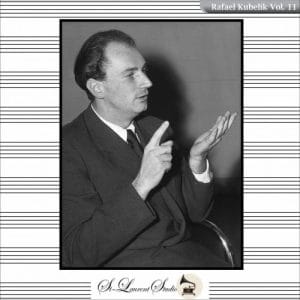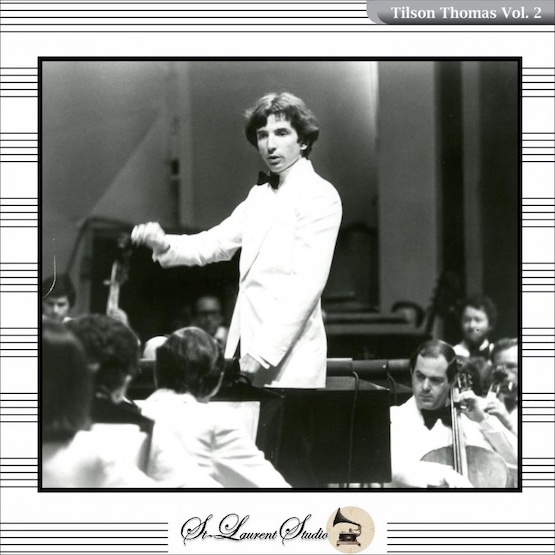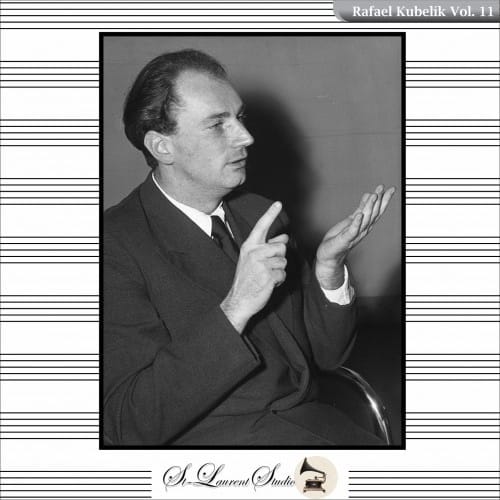
Rafael Kubelik Vol. 11 = VAUGHAN-WILLIAMS: Fantasy on a Theme of Thomas Tallis; MENDELSSOHN: Symphony No. 5 in D Major, Op. 107 “Reformation” – WDR Symphony Orchestra, Cologne/ Rafael Kubelik – Yves St-Laurent YSL T-1583 (47:42) [www.78experience.com] ****:
Despite the relative brevity of this disc, the sonic intensity and breadth of the performances by Czech conductor Rafael Kubelik (1914-1996) from Cologne, Germany – 13 February 1965 and 18 October 1965, respectively – do full justice to the religious fervor demanded of the two works. The 1910 Fantasia on a Theme of Thomas Tallis by Ralph Vaughan Williams has had several eminent records by the likes of Adrian Boult and Malcolm Sargent, but few so incandescently feverish (and driven) as that by Dimitri Mitropoulos and the New York Philharmonic from 1958. Ralph Vaughan Williams composed his string orchestra Phrygian hymn for the Three Choirs Festival, and its layered approach to harmonic development and antiphonal responses won him immediate, international success.
Vaughan Williams retained a personal commitment to Paul Bunyan’s The Pilgrim’s Progress, and so he allegorically defined reality in Christian terms and images. Im his 1906 stage work based on Bunyan, Vaughan Williams adapted the tune for a presentation of a hymn by John Addison, “When riding from the bed of death.” Vaughan Williams creates a novel form of the Baroque concerto grosso, complementing a double string choir with a small string quartet, systematically altering the dynamics and textural combinations. A slow, chordal presentation of the theme in B-flat major divides the tune into four elements, 4/4, proceeds to a pizzicato statement, ¾, very softly, poco sostenuto, before launching into a series of colored, wave-like variations and periodic episodes on the theme in the three voices, alternately conjoined and separated.
Like Mitropoulos, only more slowly, Kubelik maintains a hovering, ingratiating string pedal while the upper voices sing voluptuously. The passion increases in volume and rhythm, to 6/8 and ¾ in the Phrygian mode, appassionato, in double stops, the mode’s shifting to C major until the solo viola initiates a new path, in E. The string quartet provides a kind of trio section, a solemn meditation in counterpoint, when the full string complement proceeds by graduated dynamics to the ff climax, 5/8. The almost Wagnerian “love-death” subsides into a calm and illumined adagio, awaiting the call of the solo violin to usher in the final trope in B-flat, pizzicato, and ending in the ever-ready G major for the afterglow. The seamless control of the whole, its organic growth and resonance, testifies to an ensemble wholly responsive to its gifted conductor.
Mendelssohn composed his D Major Symphony in 1830 for 300th anniversary of the Augsburg Confession, an epic event in the development of Protestantism. Poor health prevented Mendelssohn’s completing his second symphony by 25 June 1830, and the finished score did not receive its premiere as Symphony No. 5 until 1868. Legend has it that Mendelssohn carefully scored the music vertically, as a test of his contrapuntal imagination. Harmonically, only the brooding introduction proceeds in the tonic major, while the rest of movement one lies in D minor.
Mendelssohn fuses his version of the “Dresden Amen” with distinct battle-cry motifs we recall from his Scottish Symphony No. 3. Kubelik leads the scherzo second movement, Allegro vivace in B-flat major, with a light hand, its trio a delightful country affair for the woodwinds. A 2/4 Andante follows, again lyrical rather than somber, only to cede authority to the “Dresden Amen” in order to segue to variants of the Lutheran hymn Eine feste Burg, Andante con moto, in martial 4/4 and a dancing 2/4. With a last, heroic utterance of the Lutheran affirmation of faith, the symphony ends in a blaze of pious glory. No applause, but much adulation is warranted from these two performances by a master of orchestral discipline.
—Gary Lemco