Tahra TAH 632-633 (2 CDs), 74:15; 67:47 [Distrib. www.tahra.com – Not Available in the USA] *****:
Among the more tragic figures in classical music making is Michael Rabin (1936-1972), the exceptionally gifted son of New York Philharmonic musician George Rabin and pianist Jean Seidman. Rabin made a colossal sensation at the age of 14, performing the Vieuxtemps Concerto No. 5 (2 February 1950), then making some impressive recordings for CBS, including Paganini Caprices. Michael studied with his father and then Ivan Galamian, whose star pupil he became. Auditioning for the likes of Mischa Elman and William Kroll, and Zino Francescatti, Rabin found endorsements for his strong technique and sweet tone. He made his fourteen-year-old debut with the Bell Telephone Hour (7 August 1950) under Donald Voorhees in two pieces, the Heifetz arrangement of Mendelssohn’s On Wings of Song and the 17th Caprice of Paganini. Rabin would appear as a guest of Donald Vorhees 22 times, with only Heifetz having appeared more often (53 times). By 1955, Walter Legge had signed Rabin to a contract with EMI, where Rabin recorded some of the repertory by which his name survives. But by the mid-1960s cracks in the Rabin persona began to show through, mainly due to psychological stress and drug abuse. Rabin never made records after 1960, although some private tapes exist. The events surrounding his untimely demise remain apocryphal, ranging from reports of an accidental fall to a deliberate suicide.
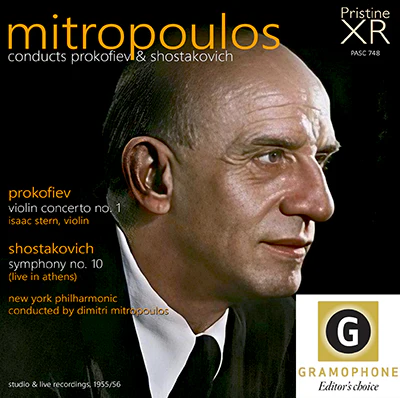
The first of the Tahra discs opens with a pungent rendition of the rarer of the two Wieniawski concertos, led (2 February 1954)by the otherwise self-effacing Alfred Wallenstein. But the bristling collaboration with Dimitri Mitropoulos of the Glazounov Concerto (2 May 1954) bring us the kind of visceral excitement and long, elastic musical line we came to expect from Rabin’s intensely lyrical style. Always with Mitropoulos, the Slavic impulse possesses a measure of the tragic sensibility, eerily poignant and exalted at once. Of the concerto excerpts, the Tchaikovsky (10 September 1956) might have been absolutely devastating, except for the large cuts made in the orchestral tissue–mainly the big tuttis–and some of the solo work, although the cadenza sizzles with an electricity equal to the Francescatti rendition with Mitropoulos which remains my heart’s choice. The Brahms (13 June 1955) third movement proves quite colossal, more in the driven, manic style of Milstein than in the sweet Heifetz mode. The Mendelssohn (16 May 1955) is almost an homage to Mischa Elman, brisk, sugary, fleet, and eminently stylistic. So, too, is Kreisler’s The Old Refrain (17 August 1953) a nod to a passing epoch we can only guess at.
The second disc is comprised of chronological appearances by Rabin with the Bell Telephone Hour. Arrangements by Kreisler and Heifetz pepper the programs, the sentimental Alt Wien of Godowsky (22 October 1951) typical of offerings that include the E Minor Slavonic Dance (arr. Kreisler, from 9 July 1951)), Kroll, Wieniawski (9 June 1952), Falla, Debussy, Elgar, Moszkowski (Guitarre, from 23 August 1954), Chopin, and Sarasate, the last of whom provides Rabin with a naturally fiery vehicles in Gypsy Airs (10 November 1952) and excerpts from the Carmen Fantasy, Op. 25 (9 November 1953). The Wieniawski Polonaise in D, Op. 4 (9 June 1952) exhibits all kinds of virtuosic flair, not the least of which is the innate rubato Rabin feels for the Polish dance-salon style. The Chopin Nocturne in C-sharp Minor (arr. Milstein, from 10 November 1952) qualifies as a “testimony” piece of Rabin’s precocious maturity, a model of poise, phrasing, and what the Poles call zal. The same sensuality and glistening facility permeates Kreisler’s arrangement Falla’s Spanish Dance from La vida breve (10 November 1952). On the other hand, the ingenuous simplicity of presentation of Debussy’s Girl with the Flaxen Hair (arr. Hartmann, from 10 May 1954) had me thinking of Selznick’s film Portrait of Jennie once more. Tahra has done us collectors a real service with these beautifully restored recordings, if only to say, again, “Farewell, Michael; you, like Dinu Lipatti, bore a star on your brow.”
— Gary Lemco