VICTORIA: Tenebrae Responsories – stile antico – Harmonia mundi HMM 902272,71:21 [Distr. by PIAS] ****:
Tómas Luis de Victoria is most likely the greatest Spanish composer ever. He was a priest, composer, organist, and singer—with a preference to composing over the other activities—and was as responsible as Palestrina for the resurgence in musical efforts during the Counter-Reformation. Though thoroughly educated in Italy, which was the springboard for his international fame, he ended up going back to Spain where he was devoted to Philip II, wearing himself out from his intense compositional activity.
During this time, he created his first motets, and in 1585 he wrote his Officium Hebdomadae Sanctae, a collection which included 37 pieces that are part of the Holy Week celebrations in the Catholic liturgy, including the eighteen motets of the Tenebrae Responsories, included in the present recording. To break up the monotony of one-time listening on an album like this, which would normally have natural pauses and instruction in the Holy Week liturgical services, they have added three plainchant Lamentations of Jeremiah the Prophet, and conclude with the motet O Domine Jesu Christe.
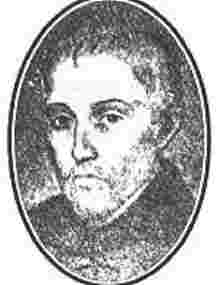
Tómas Luis de Victoria
Victoria eschewed the often formal and intricate counterpoint so prevalent during the late Renaissance, and instead favored more homophonic textures that are considered by many masterpieces of mystical simplicity. He is far more concerned with melody than Palestrina, and his work uses dissonances often outside the constrictions of the harmonic constructs of the day, with intervallic leaps that are surprising in their effectiveness and emotional power to move.
Though these responsories, sung at the second and third nocturns on Maundy Thursday, Good Friday, and Holy Saturday in the Latin rite, do have a sameness in terms of key and general mood, one must imagine them in the context of an increasingly darkened church surrounded by the hymns and gospel readings of the Holy Week experience. Only then, in an atmosphere of complete meditation and piety, can these intricacies of Victoria’s deceptively simple music achieve something of their intended full power. Stille antico performs these wonders with devotion and real understanding of the Victorian muse, and if one takes the time to listen from beginning to end uninterrupted, the music still has the power to move us and soothe our desperately jaded 21st century souls. Easily recommended, and in great sound, for those needing such a balm.
—Steven Ritter