Gorgeous renditions of this music, sans any idealistic encrustations.
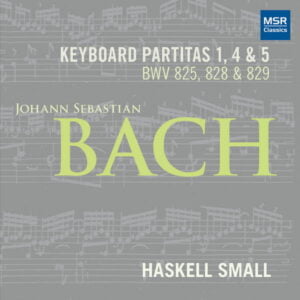
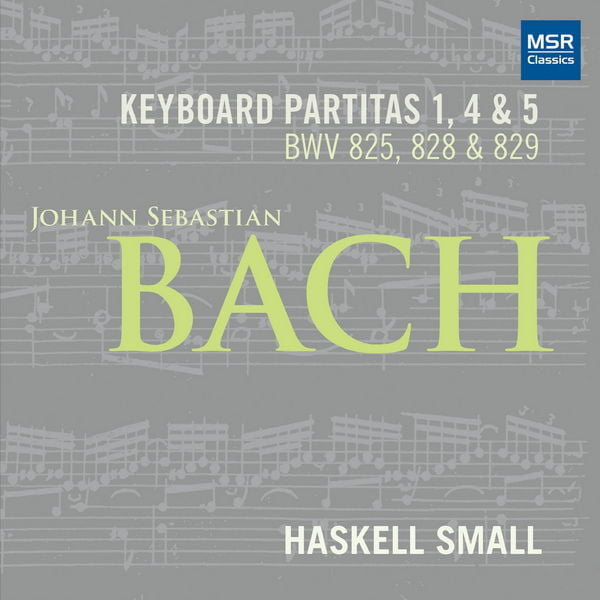
Bach: Keyboard Partitas Nos. 1 in B-flat BWV 825), 4 in D (BWV 828), 5 in G (BWV 829) – Haskell Small, piano – MSR Classics MS 1717, 79:03 *****:
For many, the very idea of using a Bluthner Concert Grand, as Small does on this recording, would be anathema. Especially considering that these recordings were made ten to twelve years ago, when the rage for smaller and more intimate equated with Bach’s “ideals”, you could easily dismiss this record as anachronistic. Big Bach surely was never intended. But these kinds of misguided and historically inaccurate insistences contradict a composer who, by many of his own statements, was always looking for bigger. It was hardly his fault that he was stuck with often mediocre playing and small ensembles that sometime lacked even the basic needed instrumentation, Bach made use of what he had, but the dreams continued. I daresay Mendelssohn’s revival of the St. Matthew Passion with its extraordinary forces was more in keeping with the composer’s secret desires than the modern inclination to reduce everything he wrote to chamber music.
So why complain when a brilliant pianist (and composer and basically a polyglot) comes along with a desire to jettison any considerations of what Bach might have had at his disposal, and instead turn to what it is he actually wrote? Haskell Small is clearly in love with this music; returning to It after many years has enlightened his sensibilities and enabled him to present us with a clear and undiluted portrait of a middle-aged composer who long found himself and, after years of masterworks behind him, including 150 cantatas, is extremely comfortable in tackling that faux-suite form called partita. These pieces speak like the earlier suites did not. There, we had bold brashness from a composer trying to set himself in the fast lane. Here, true conversational and discursive meaning from one who wishes to teach us what music is all about.
Small understands this, and not only understands but is ready and willing to serve as a Bachian oracle, channeling the composer’s most subtle and illuminating ideas as would a persuasive arguer. His instrument, though grand indeed, is hardly overwhelming or dominating. Instead, he allows us to peer into the art of one of the greatest composers who ever lived in terms of structure, sonority, color, and conversation, for we come away from these readings as if we had been lectured by a wonderful orator. There has been a plethora of recordings of this music, many truly great. I daresay that this one proves just as enlightening.
— Steven Ritter