New verb of the year: let’s all get Monk’D.
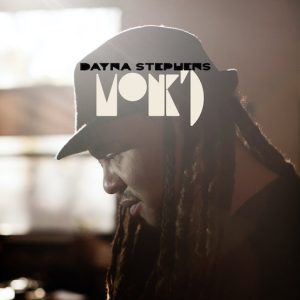
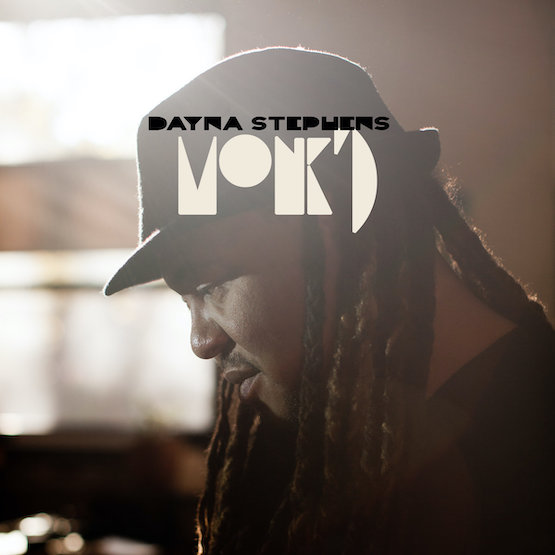
Dayna Stephens – Monk’D – [TrackList follows] – Contagious Music, 49:50 [10/10/25] ****:
(Dayna Stephens – acoustic bass, mixing, mastering; Stephen Riley – tenor saxophone; Ethan Iverson – piano; Eric McPherson – drums, cymbals)
Saxophonist and sometime bassist Dayna Stephens has created a new verb for the jazz audience. The title of his nearly 50-minute, nine-track release is Monk’D. Stephens probably means to have it pronounced ‘Monk D’ but ‘we were so Monk’d today’ or ‘let’s get Monk’d tonight’ might be utilized when someone wants to dig deep into Thelonious Monk.
Stephens does go deep into Monk territory on Monk’D. The reason is because Stephens has a lasting preoccupation with Monk’s music that goes back to his teens and which was molded during his time at Washington, DC’s Thelonious Monk Institute of Jazz, which became the Herbie Hancock Institute of Jazz in 2019.
Stephens puts some twists and turns into this project.
The first twist is his shift to acoustic bass. Fans may not know Stephens is an accomplished bassist who has toured or worked as a bassist with Eric Harland, Billy Hart, Jeff “Tain” Watts, Sam Yahel, Peter Bernstein, Joshua Redman, and others. Stephen’s choice for using bass is individualized and functional. He wanted to focus on Monk’s music from a bass perspective, so he could arrange the tone and harmonic foundation from a bassist’s mental orientation.
Another unusual twist is the song selection. Instead of typically performed Monk tunes, for the most part Stephens opted for obscure compositions. Those hoping to hear “Misterioso,” “Straight No Chaser”or “Rhythm-A-Ning” will be disappointed. This tactic provides listeners the opportunity to experience Monk in a different and interesting way.
A third twist is the use of contrafacts. A contrafact is a musical work based on a prior work. The term originates in western classical music but has been employed in jazz since the 1940s. Some of Monk’s pieces on Monk’D are contrafacts and Stephens includes his own contrafact elements as well.
To do this tribute proper Stephens enlisted talented musicians. Tenor saxophonist Stephen Riley’s resume includes Wynton Marsalis, Marcus Roberts, Christian McBride and many more. He has 13 albums as a leader. Pianist Ethan Iverson co-founded the Bad Plus (which he left in 2017), has over a dozen records to his name and credits include Billy Hart, Kurt Rosenwinkel, Lee Konitz, and others. Drummer and percussionist Eric McPherson was in the Jackie McLean Quintet and has been on stage or in the studio with Pharaoh Sanders, Andrew Hill, Jason Moran and others.
The quartet commences with “Brake’s Sake” which Monk recorded twice: first as a sideman in 1955 on Gigi Gryce’s Nica’s Tempo and on 1964’s It’s Monk’s Time. Iverson’s piano has a light and effervescent touch; Riley’s tenor sax is warm and eloquent; and overall there is little of Monk’s restlessness. “Brake’s Sake” is an affable starting point.
The quartet supplies a sportive and gleeful treatment to the upbeat “Humph,” the first contrafact, which Monk based on George and Ira Gershwin’s “I Got Rhythm.” It was the first tune Monk recorded as a leader, in 1947, for the Genius of Modern Music sessions which were issued by Blue Note in 1956.
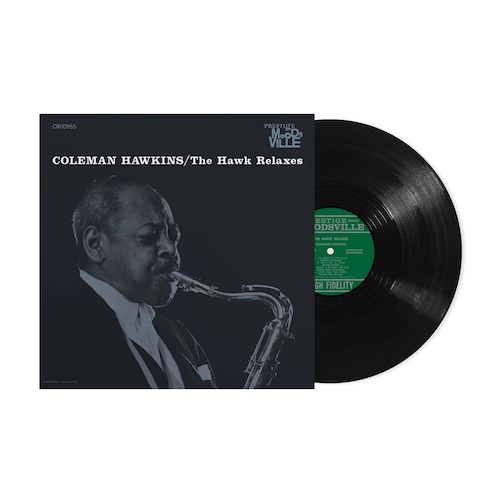
Another contrafact is “Stuffy Turkey” from 1964’s It’s Monk’s Time. The A-section is based on rhythm changes and is adopted from Coleman Hawkins’s “Stuffy” (see 1958’s Bean Bags featuring Hawkins and vibraphonist Milt Jackson).
There’s a contrafact inside a contrafact on the lengthy “Just You and Me Smoking the Evidence.” The opus blends “Just You, Just Me,” “Evidence” and Stephens’ “Smoking Gun.” The jazz standard “Just You, Just Me” comes from the 1929 musical movie Marianne; instrumental adaptations were done by Red Norvo, Oscar Peterson, Lester Young and dozens more. Monk’s 1948 “Evidence” is a contrafact of “Just You, Just Me”; it was originally called “Justice” (“Just Us” refers to “Just You, Just Me”), then “We Named It Justice” and finally “Evidence.” Stephens’ “Smoking Gun” is his contrafact based on Monk’s “Evidence” and is on Stephens’ 2007 debut The Timeless Now.
Monk wrote the little-known “Coming on the Hudson” in 1958 during his stay at a house which had an excellent Hudson River view. The sprightly composition is on 1958’s live album Thelonious in Action. Stephens and his band re-envisage it in 3/4 time with recurrent shifts to 4/4 which furnishes a softly edgy terrain.
There’s an exquisiteness and insightful inventiveness on the slowly swaying “Ugly Beauty” which is Monk’s only waltz. “Ugly Beauty” was filmed for a 1967 TV show and the same year was taped for the Columbia LP Underground. The foursome largely persist with Monk’s arrangement and leave space for enticing piano and sax solos.
The pivoting “Hornin’ In” is from 1952 and is on Genius of Modern Music. Iverson’s comping has a definite Monk-ish mannerism while Riley adds some winsome tenor playing.
The quartet concludes with something familiar and something new. The ballad “Ruby, My Dear” honors Monk in a moderate and musical direction spotlighted by Iverson’s keyboard and Riley’s glinting sax. Iverson’s closing bopping title tune mirrors and respects Monk’s character and personality while echoing Monk’s 1950s era.
—Doug Simpson
Monk’D
TrackList:
Brake’s Sake
Humph
Coming on the Hudson
Just You and Me Smoking the Evidence
Ugly Beauty
Stuffy Turkey
Hornin’ In
Ruby My Dear
Monk’D