Time Traveling back to the 1970s to honor Muse Records, a classic jazz label
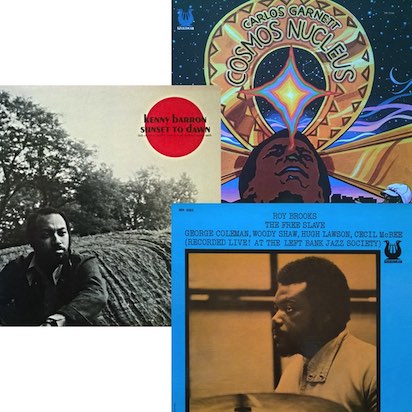
Roy Brooks – The Free Slave; Kenny Barron – Sunset to Dawn; Carlos Garnett – Cosmos Nucleus
Over the last decade, “jazz detective,” Zev Feldman, has had more irons in the fire than a high rise journeyman arc welder. Whether it be working on releases for Resonance Records, Elemental Music, or the more recent Horace Silver album (Silver in Seattle: Live at the Penthouse) for Blue Note Records, Zev is a man on a mission to search out and release new material from jazz greats. For jazz aficionados, it’s manna from heaven.
Feldman’s latest project, (with assistance from Craft Recordings and Virgin Music Group), on his new boutique label, Time Traveler Recordings, is re-issuing classic albums from Muse Records, from the 1970s. It’s a labor of love.
Going first class all the way for vinyl lovers (remastered and cut AAA directly from the original tapes, and pressed on 180 gm vinyl), with tip-on jackets, new liner notes, and archival photos, the opening three releases are now ready for purchase.
Here are initial impressions of the first set:
Roy Brooks – The Free Slave – Time Traveler Recordings/ Craft Recordings/Muse Records # TT-M001 – 180 gm vinyl – 1970 – 46:05 – ****
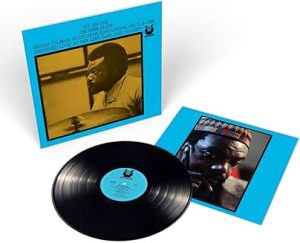 The Free Slave, from drummer Roy Brooks, has been a crate lover’s dream for years. Brooks came out of Detroit, where he became active with fellow Motor City jazz icons, Yusef Lateef, and Barry Harris. He recorded mostly as a leader in the 1970s, but he is better known as a first call sideman when he was on the drum chair for Chet Baker, Max Roach, Horace Silver, and Sonny Stitt.
On The Free Slave, Roy leads a fiery quintet led by a front line of trumpeter, Woody Shaw, and tenor saxist, George Coleman. It’s a live date (April 26, 1970) at The Left Bank Jazz Society in Baltimore. Almost all the tracks (four total), exceed ten minutes, so there is room for the musicians to stretch out.
The title track has an infectious piano line from Hugh Lawson, and solos from Coleman and Shaw, before Lawson returns and digs in. The horns get to play together, and take the tune out. “Understanding” lowers the temperature. George and Woody set the tone early with each getting solo time. Coleman is more tender, and Woody, as usual, more heated.
Side B opens with “Will Pan’s Walk,” a hot blues, made to order for Shaw. Brooks’ drumming here pushed his mates. Each solos, and Hugh Lawson shines with fleet choruses. Mid-tune, Brooks goes on a run before Cecil McBee’s bass has its say, and the horns, lit on overdrive, burn.
“Fire For Max,” written for Roy’s mentor, Max Roach, has the audience shouting encouragement. Brooks makes use of his invention, “The Breath-A-Tone.” It has two rubber tubes that blown into the drums, change the pitch. It helps build the drum solos in intensity.
Kenny Barron – Sunset to Dawn – Time Traveler Recordings/Craft Recordings/Muse Records #TT-M002 – 180 gm vinyl – 1973 – 39:44 – ****1/2
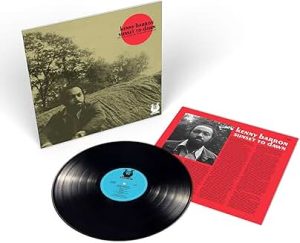 Next in line is Kenny Barron’s, Sunset to Dawn. Kenny, who is still active and vibrant at age 82, began his career as a leader with this 1973 Muse release. Barron is noted for his lyricism, and was elected in 2022 to the Downbeat Jazz Hall of Fame,.The six tracks on this album blend acoustic jazz, along with electric jazz piano, and the Fender bass that was in vogue in the 1970s.
In addition to his working group of this period, (Bob Cranshaw on bass and Freddie Waits on drums), Kenny adds Richard Landrum on congas, and Warren Smith on vibes. You’ll find influences from Afro Latin, hard bop, and early modal group interaction.
“Sunset” opens Side A with a musical African stew including pan pipes. Barron, on electric piano, is the shaman with heavy percussion backing. “A Flower,” is simply sublime, with such tenderness that brings to mind Bill Evans. Barron’s unaccompanied acoustic piano, early in his career (he started as a child prodigy) showed mastery, already, of ballads.
“Swamp Demon” has a funk vibe with overdubbing of percussion effects. Kenny’s electric piano is ideal for the group modal efforts.
Side B has three more tracks, each clocking in the mid six minute range. “Al-Kifha,” provides the most assertive track on the entire album. Written by drummer, Freddie Waits, Cranshaw and Freddie provide the foundation for Kenny’s fast tempo runs. San Francisco’s Delores Street, home of its Mission, is the inspiration for tender memories on “Delores St. S.F.” Various percussion instruments are utilized, with Richard Landrum’s congas standing out. “Dawn” closes out this eclectic set, with mellow piano in a relaxed mood. Sunset to Dawn is a welcome re-release, as an introduction to this living legend.
Carlos Garnett – Cosmos Nucleus – Time Traveler Recordings/Craft Recordings/Muse Records #TT-M003 – 180 gm vinyl – 1976 – 46:09 – ****
 The third re-issue in this promising series of Muse label winners is Carlos Garnett’s Cosmos Nucleus. Garnett is the least well known of the three opening artists for Time Traveler to feature.
Born in 1938 in Panama, Carlos was initially self-taught on saxophone. He moved to the States in 1962. Mentored by Freddie Hubbard, Garnett quickly became better known, and developed his skills thru gigs with heavyweights like Art Blakey, Charles Mingus, and Miles Davis, all demanding leaders.
Cosmos Nucleus was his fourth album for Muse. It was recorded in June and July of 1976. Leading a 26 piece ensemble here was a massive undertaking.
“Saxy,” the opening track, the shortest at 5:19, is very approachable with an easy going vibe. Garnett has the only solo, with an ensemble backing. The title track, at over 12 minutes has a full big band arrangement. It would be at home in a college big band setting, as it has such high energy. “Wise Old Men,” has its vocal a bit overwhelmed by the large aggregation.
Side B, has Cheryl Alexander on vocals on “Mystery of Angels. Kenny Kirkland (on his first recording!) has an exemplary electric piano solo. “Kafira,” a ballad, is a feature for Garnett’s warm, sensual bluesy tenor.
The album closes with “Bed-Stuy Blues.” It’s a full big band majestic affair.
Trumpeter, Wayne Cobham (Billy Cobham’s brother) has a nice solo, as does Zane Massey (Cal Massey’s son). The “family” connection continues here as Cliff Anderson, the nephew of Sonny Rollins, solos on trombone.
All in all, Cosmos Nucleus has aged well, and is a nice slice of 1970s big band jazz, combining funk and fusion.
The acoustics on these three Muse re-releases is top notch, and the packaging, liner notes, and photos just sweeten the pot!
—Jeff Krow
Roy Brooks- The Free Slave:
Side A: The Free Slave, Understanding
Side B: Will Pan’s Walk
Artists: Roy Brooks – drums; Woody Shaw – trumpet; George Coleman – tenor sax; Hugh Lawson – piano; Cecil McBee – bass
Kenny Barron – Sunset to Dawn:
Side A: Sunset, A Flower, Swamp Demon
Side B: Al-Kifha, Delores St. S.F., Dawn
Artists: Kenny Barron – acoustic and electric piano; Bob Cranshaw – Fender bass; Freddie Waits – drums; Richard Landrum – congas & percussion; Warren Smith – vibes & percussion
Carlos Garnett – Cosmos Nucleus
Side A: Saxy, Cosmos Nucleus, Wise Old Men
Side B: Mystery of Ages, Kafira, Bed-Stuy Blues
Artists:
Carlos Garnett – saxophones, ukulele, vocals; Otis McLeary – guitar; Kenny Kirkland – electric piano; Cecil McBee, Jr. – electric bass; Byron Benbow – drums; Neil Clark – congas, percussion; Gene Ballard – bongos, percussion; Cheryl Alexander – vocals
Cyril Greene, Angel Fernandez, Preston Holas, Wayne Cobham, Roy Campbell, Jr, Quentin Lowther, Abdul Malik – trumpets
Charles Dougherty. Al Brown, Robert Wright – alto saxophones
Randy Gilmore, Zane Massey, Akum Ra Amen-Ra, Yah Ya – tenor saxes
Carlos Chambers – baritone sax & ukulele
Cliff Anderson, Andrew Washington, James Stowe – trombones