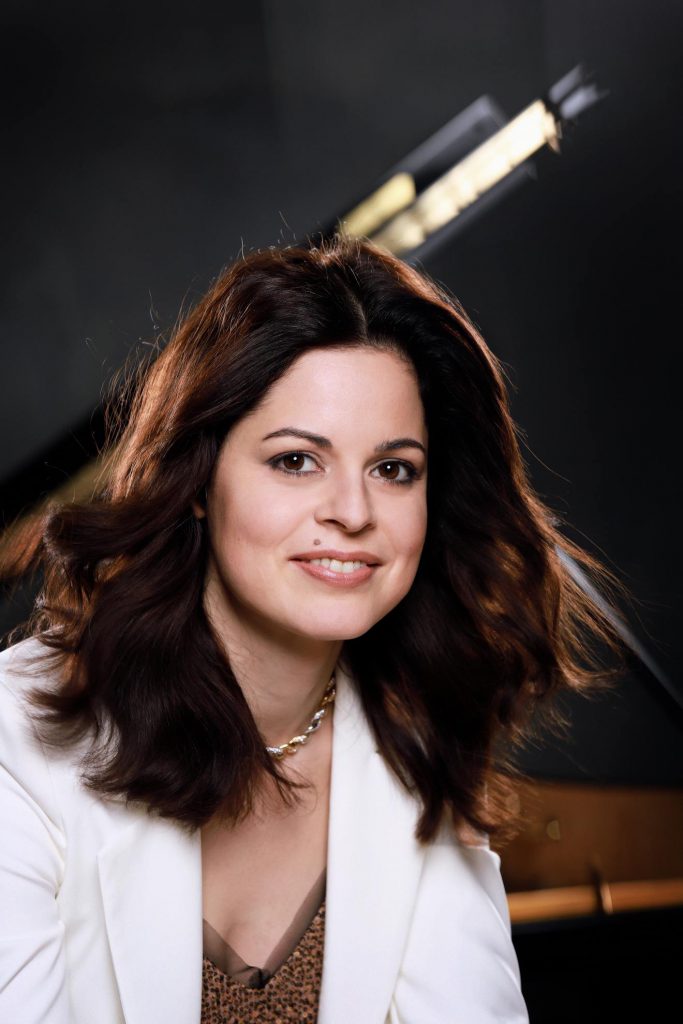
Zlata Chochieva in Recital
review by Dr. Gary Lemco
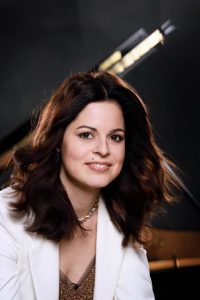
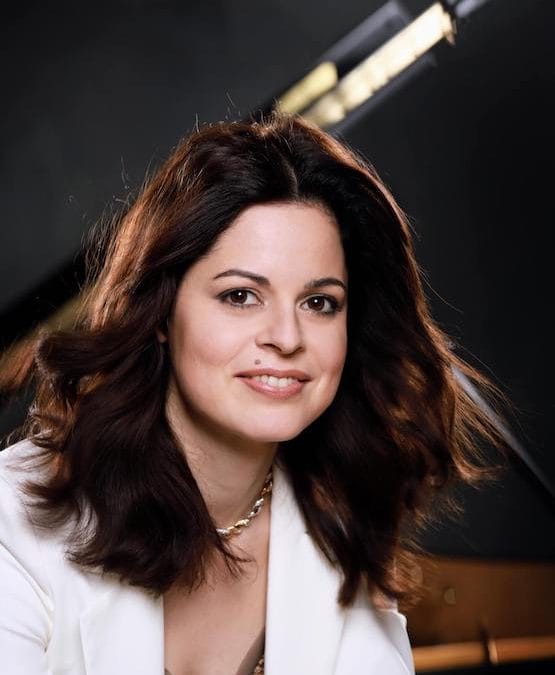
Brilliant piano virtuoso Zlata Chochieva made a sensational appearance at the Oshman Family JCC, Palo Alto, California on Monday, February 12 in a recital of Romantic masters Scriabin, Chopin, and Rachmaninoff, with the unstated rubric’s being “Homage a Chopin.” In striking fashion, Chochieva began with Five Preludes, Op. 15 of the Russian mystic Alexander Scriabin, whose work at this period of his development, 1896, imitates much of the Chopin ethos of expression, here in concentrated, intimate form. The No. 1 in A Major set a kind of watery imagery soon absorbed into Scriabin’s improvised, idiosyncratic counterpoint. The Vivo No. 2 in F# Minor asserted motor power on a level with a Chopin étude. The two successive preludes, each in E major, allowed Chochieva to demonstrate lush arpeggios. The last prelude, set in C# minor, favored Gabriel Fauré in its penchant for selective rubato along a dark course.
After a brief ovation, Chochieva, clad in a sleek, black ensemble which made her lithe figure a panther at the keyboard, turned to her personal trump card, the set of 12 Études Op. 10 of Frédéric Chopin (1833). These archetypal, bravura studies test the facility in each hand, all the while evolving artistic structures of profound emotion and singing lyricism. These audacious exercises exerted an immediate effect on the history of music, raising the notion of pedagogy to an exalted, aesthetic height. Their demands of touch, stretch, texture, rhythmic acuity, polyphony, and digital coordination become dwarfed by the need for controlled dynamics and the transformation of the keyboard into a vocal instrument. Chochieva managed their variegated requirements with passionate authority, albeit a fervently rushed sensibility, that still managed to retain Chopin’s lyric power amidst the digital fireworks. The No. 3 in E sang in its outer sections while the middle section boiled in fierce passion. In the course of No. 4 in C# Minor. we could hear its pyrotechnical influence on the Liszt B Minor Sonata. The virility that marked many of the individual pieces found elegant foils in moments of repose and delicacy, as in the No. 6 in E-flat Minor. The No. 8 in F Major elicited a playful deftness of execution, the sheer sound of rapid, colored figuration an end in itself. The herculean No. 12 in C Minor, “Revolutionary,” did indeed suggest rebellion, but more in keeping with its “Ocean” counterpart from the later set of Op. 25, the No. 12.
To begin the second half of her recital, Chochieva selected Chopin’s late (1846) Polonaise-Fantasy in A-flat Major, Op. 61, a work challenging in its shifts of temper and the contrapuntal richness of its texture, its structural ambiguities. To maintain a sense of constant pulsation throughout its eclectic mix of musical impulses: fantasy and improvisation, mazurka and polonaise rhythms, and ballade-like, musing narratives, sets a monumental task before the performer that belies its relative compression of form repose – the middle section its own nocturne-ballade in B major – the ability of Chochieva to bring a sense of unbroken flow to the work warranted our admiration.
For her own pièce de résistance, Chochieva turned to Sergei Rachmaninoff’s epic homage to Chopin, his 1903 Variations on a Theme of Chopin, Op. 22. In the course of Rachmaninoff’s flights of virtuoso improvisations on the Chopin Prelude in C Minor, Op. 28. No. 20, a structure emerges – with Chopin’s acting as a cantus firmus – similar to the much-admired Chaconne in D Minor of Bach’s Violin Partita No. 2. The grim clangor of Chopin’s original will undergo every manner of thematic transformation, using techniques and sonorities gleaned from Bach, Liszt, Brahms, Schumann, and possibly Busoni. The huge progression will embrace any number of contrapuntal episodes that include canon (Variation 3), fugue (Variation 12), chorale-prelude (Variation 14), and a Schumannesque scherzo (Variation 15) that will culminate in a proud peroration in the tonic major. Chochieva set a determined, vigorous sensibility to these proceedings, her speeds often suggesting Rachmaninoff’s more daunting sets of Études-Tableaux of a few years later or the inflamed marches that had been rudely received in his Op. 13 Symphony No. 1. If the first variant resounded in Bach, the final pages mounted to a Maestoso finale in the style of Mussorgsky, replete with Russian bells.
Chochieva’s one encore reflected her and Rachmaninoff’s veneration of Bach, with her playing the “Praeludio” from the Violin Partita No. 3 in E Major, BWV 1006, as transcribed by Rachmaninoff in 1933. Dazzling in its fleet articulation and relentless pulse, the music assumed a singing line that denied the natural percussion of the instrument, with Chochieva’s once more creating a sonic, self-enclosed bower of suspended motion. With the tolling of the final chords and their beguiled fermata, the audience rose in gratified recognition of a supremely gifted musician whose talents promise much for a generous career.
More information through from Zlata Chochieva