
Monthly Archive: May 2017

Artur Schnabel: The Complete RCA Victor Recordings = BEETHOVEN: Concerti, Sonata; SCHUBERT: Impromptus- Artur Schnabel (p.) / Chicago Symph. Orch./ Frederick Stock (cond.) – Sony
Artur Schnabel: The Complete RCA Victor Recordings = BEETHOVEN: Piano Concerto No. 4 in G Major, Op. 58; Piano Concerto No. 5 in E-flat Major, Op. 73 “Emperor”; Piano Sonata No. 30 in E Major, Op. 109; Piano Sonata No. 32 in c minor, Op. 111; SCHUBERT: Four Impromptus, D. 899 – Artur Schnabel, piano/ Chicago Symphony Orchestra/ Frederick Stock – Sony 88985389712 (2 CDs) 70:03; 73:18 (5/19/17) ****: The master Artur Schnabel’s 1942 RCA recordings come back as an integral, essential release. The Artur Schnabel (1882-1951) legacy receives a long-delayed comtribution with this reissue of the sparse few recordings the Viennese master made in America. Some years ago, I attended the William Kapell Competition at the University of Maryland that featured a Schnabel symposium, hosted by Karl Ulrich Schnabel and including distinguished ex-pupils and commentators Claude Frank and Harris Goldsmith. Each reminisced on Schnabel’s hegemony in the music of Beethoven, with particular references to movements and passages from selected sonatas. When Alexis Weissenberg played the G Major Concerto in Atlanta, I asked him if his sudden accelerando at the very end of the linking phrase from the Andante con moto to the attacca finale were from Schnabel’s influence, and […]

David Weiss & Point of Departure – Wake Up Call – Ropeadope
David Weiss & Point of Departure – Wake Up Call [TrackList follows] – Ropeadope RAD-328, 76:08 [2/10/17] ****: A re-consideration of the early fusion era with remarkable results. (David Weiss – trumpet, Fender Rhodes (tracks 1, 5); Myron Walden – tenor saxophone (tracks 1, 5-9); J.D. Allen – tenor saxophone (tracks 2-4); Ben Eunson – guitar (solos on tracks 1, 5, 7, 9); Nir Felder – guitar (tracks 2-4, solos on tracks 3-4); Travis Reuter – guitar (tracks 1, 5-9, solos on tracks 6, 8); Matt Clohesy – bass; Kush Abadey – drums) Trumpeter, composer and band leader David Weiss has a wide-ranging inquisitiveness and acquaintance with both modernistic, forward-seeking jazz and early jazz-fusion. On the 76-minute Wake Up Call, Weiss’ latest album with his ensemble Point of Departure, he showcases his uncanny ability to uncork material which is not always well-known to jazz fans, but which brings to life music which has an essence that goes beyond what is predictable. Notably, there are no originals among the nine tracks on Wake Up Call, and yet Weiss has managed to put compositions by John McLaughlin, Wayne Shorter, Joe Henderson and others into a cohesive and thematic whole. No easy feat […]

STANFORD: Preludes – Sam Haywood (p.) – Hyperion
Sir Charles Villiers STANFORD: 38 Preludes from the Two Sets of 24 Preludes in all the keys for pianoforte, Opp. 163 and 179 – Sam Haywood, piano – Hyperion CDA68183, 69:41 (6/2/17) [Distr. by Harmonia mundi/PIAS] ****: Irish composer and organ pedagogue Stanford has some effective statements in his extended homage to Bach, his 48 preludes. Sir Charles Villiers Stanford (1852-1924) survives today more as a pedagogue and musical influence in the academic tradition of Cambridge and the Anglican persuasion, the teacher of such notables as Holst and Vaughan Williams. Highly conservative, Stanford sympathized with his conception of Brahms, as an upholder of classical values in the face of an increasingly chromatic modernism; and so, in reaction to the encroachments of Wagner, Liszt, Schoenberg, Stravinsky, Varese, and Busoni, Stanford sought retreat into the music of J.S. Bach. Christopher Howells notes that Stanford “had amassed by the end of [his life] a corpus [of piano music] equal to, or greater than such near contemporaries as Brahms, Tchaikovsky, Grieg or Dvorak.” Stanford produced two distinct sets of 24 preludes modeled after the Bach WTC, the Op. 163 (in 1918) and the Op. 179 (c. 1921). Australian pianist Sam Haywood has chosen from […]

Van Morrison – The Authorized Bang Collection – Legacy/Bang
Van Morrison – The Authorized Bang Collection – Legacy/Bang 88985424672 – 3 CD set (71:32, 74:31, 35:44) ***1/2 A case of “what could have been” rather than “what was”- Van Morrison – The Authorized Bang Collection (Van Morrison – guitar and vocals; Eric Gale, Hugh McCracken, Al Gorgoni, Donald Thomas – guitars; Russ Savukas, Bob Bushnell – bass; Herbie Lovelle, Gary Chester – drums; percussion/mallets – George Devens; Artie Butler, Seldon Powell – keyboards; tambourine and backing vocal – Jeff Barry; Cissy Houston, Dee Dee Warwick, Myrna Smith – backing vocals) When Bert Berns convinced Van Morrison to leave Belfast after the break-up of Them in 1967, and come stateside to record for his new label, Bang Records, it was a major coup. Van was ready to break out on his own after “Gloria” became a hit and Them’s line-up changes convinced Morrison to go out on his own after a 1966 US tour. Berns had worked with Them and Morrison on major hits, “Here Comes the Night” and “Baby Please Don’t Go.” Bert also worked with Atlantic Records’ soul division and wrote iconic songs such as “Twist and Shout,” “Under the Boardwalk,” “Cry to Me,” and “Baby Let Me […]
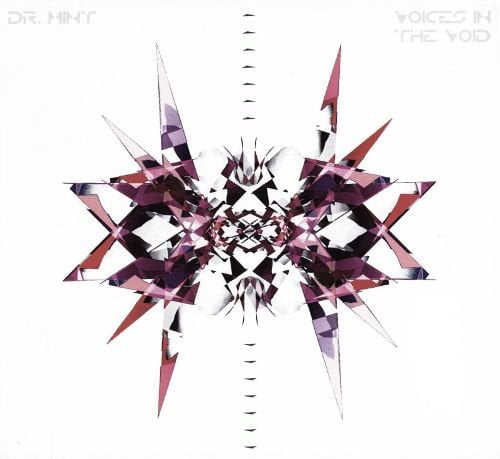
DR. MiNT – Voices in the Void – Orenda
DR. MiNT – Voices in the Void [TrackList follows] – Orenda 0037, 34:34 [1/27/17] ****: The doctor is in. (Daniel Rosenboom – trumpet; Gavin Templeton – saxophone; Alexander Noice – electric guitar, effects; Sam Minaie – electric bass, effects; Caleb Dolister – drums) Jazz quintet DR. MiNT (yes, it’s officially spelled that way) uses an approach the band has dubbed “archistration.” The process equates to producing compositional structures in real time and allows the border between improvisation and composition to be nebulous and yet cohesive. The modernistic methodology permeates DR. MiNT’s fifth release, the 34-minute Voices in the Void. The ten pieces—which range from 1:29 to nearly seven minutes—have an evolving and involving jazz rock, electronic and freely-flowing improvisational base. The bi-coastal group is fronted by trumpeter Daniel Rosenboom, saxophonist Gavin Templeton and guitarist Alexander Noice (all three reside in Los Angeles), alongside bassist Sam Minaie and drummer Caleb Dolister (who both live in New York City). The “archistration” style, which emphasizes both structure and exploration, is heard right from the get-go on the heavy-hitting opener “Kingdom in the Middle,” which develops alternatingly via a brief, seven-bar section outlined moments before recording. Templeton’s sax and Rosenboom’s trumpet ride above futuristic […]

“El Amor Brujo – The Essence of the Music of Manuel De Falla” – Euskal Barrokensemble/Enrike Solinis – Alia Vox
“El Amor Brujo – The Essence of the Music of Manuel De Falla” – Euskal Barrokensemble/Enrike Solinis – Alia Vox AV9921, 57:15, (6/09/2017) Tracklist follows ****: Absolutely sultry and very authentic sounding. I have loved the music of Manuel De Falla for many years, having first heard my father’s old vinyl recordings as I was growing up. The appeal for me in de Falla and, really, all Moorish-inspired Catalan music is in its lush, gypsy inspired melodies. Players and singers in that culture write fairly simple yet attractive melodies and the embellishments placed in and on them adds the excitement and the virtuosity which makes it so captivating. De Falla and other composers and artists grew up listening to this music, themselves, and created beautiful classical music and works of art that became the ‘essence’ of Spain with its rich but somewhat embattled history and traditions. To this day, Spain has produced few classical composers who became well known outside of Spain, let alone any who write in a style which goes outside this iconic stylistic box; beautiful though it is. So, the Euskal Barrokensemble with this wonderful and sonically rich recording takes De Falla’s score to El Amor Brujo […]

Fifty Shades Darker, Blu-ray (2017)
A long second chapter of the best-selling book and movie, with more to come. Cast: Dakota Johnson, Jamie Dornan, Eric Johnson, Kim Basinger Director: James Foley Studio: Universal Pictures 61180932 (5/19/7) [2 discs] Video: 2.40:1 for 16:9 screens, HD color Audio: English DD 5.1 & 2.0, English SDH, French DD 5.1 & DTS-HD MA 5.1, Spanish DD 5.1 & DTS-HD MA 5.1 Subtitles: French, Spanish Extras: UltraViolet; A Tease to Fifty Shades Freed; Deleted Scenes; Writing Darker; A Darker Direction; Dark Reunion; New Threats; The Masquerade; Intimate with Darker Length: 500 min. Rating: **** No wonder I had to watch this in pieces over three nights! What a long movie this latest ploy in the international phenomenon is. Billionaire Christian Grey tries to entice a cautious Anatasia Steele back into his life. She was evidently put off by his thorough display of bondage. She demands a new arrangement this time around, and they end up with Christian proposing marriage to her. But shadowy characters from Christian’s past begin to affect the couple. Anatasia’s boss and a former older lover are determined to destroy the couple’s hopes for a happy future together. There is much more bondage than in the first film, the […]

DVORAK: Serenades from Bohemia = Piano Octet, Serenades for strings and woodwinds – Czech Nonet/ Ivan Klansky (p.) / Pavel Huela, Vladimir Klansky (vlns.)/ Academy of St-Martin/Marriner – Praga Digitals
DVORAK: Serenades from Bohemia = Piano Octet-Serenade in E, B. 36; Serenade for Strings in E Major, Op. 22; Serenade in d minor for Woodwinds (arr. Nonet), Op. 44 – Czech Nonet/ Ivan Klansky, piano/ Pavel Huela and Vladimir Klansky, vioins/ Academy of St-Martin-in-the-Fields/ Neville Marriner – Praga Digitals PRD 250 371, 77:21 (4/17/17) [Distr. Harmonia mundi/PIAS] ****: ¯The dancing spirit of Bohemia’s native son Dvorak infiltrates this collection of chamber pieces. Much in the tradition of Mozart and his serenades, divertimentos and cassations, Dvorak conceived his Op. 22 Serenade in an “outdoor” style. English musicologist Nicholas Ingman helped to unearth the 1873 version (rec. September 1998) of the String Serenade in the form of a piano-based Octet, the piano and the double bass here serving in a melodic capacity in the absence of a cello part. The strong presence of the bassoon (Pevel Langpaul), clarinet (Ales Hustoles), and French horn (Vladimira Klanska) contribute to the feeling of Nachtmusik, an evening’s love song rendered by an ensemble of musical equals. With the addition of the winds, along with the deep grumblings of the double bass and keyboard’s active treble, the Scherzo movement, for instance, achieves a sense of contrast that […]

DVORAK & SCHUBERT: ‘American’ and ‘Death and the Maiden’ Quartets – Channel Classics
DVORAK & SCHUBERT: String Quartets ‘American’ & ‘Death and the Maiden’ – Channel Classics 39147, 64:17 (5/26/17) *****: The debut recording of a powerhouse Chinese ensemble featuring central works of the string quartet repertoire. Midway through the Dragon String Quartet’s vivid reading of Schubert’s “Death and the Maiden”, I realized that this was not just another young ensemble straight out of conservatory aiming to establish itself in the Classical World. Rather, we have the assembling of a “supergroup,” comprised of players of international reputation — Ning Feng, first violinist and founder of the group, has earned a large reputation as a soloist with several recordings for the prestigious Channel Classics label; Wang Xiaomao is the concertmaster of the China National Ballet Orchestra; Zheng Wenxiao is the principal Viola of Bayerischen Rundfunks; cellist Qin Liwei is a celebrated solo recording artist with Decca. The collective choice to move from the bright lights of the big concert stage to the more cloistered world of chamber music shows real commitment. This debut recording arrives four years after the founding of the group in 2012, and the preparation shows. The choice of repertoire is significant: arguable the two most well-known quartets of all, the […]

Joris TEEPE & Don BRADEN: Conversations – Creative Perspective Music
Joris TEEPE & Don BRADEN: Conversations – Creative Perspective Music 3004, 61:11 (2/17/17) ****: A well considered and deeply prepared trio outing in the footsteps of the legendary Sonny Rollins trio. (Don Braden; Tenor Saxophone, Flute/ Joris Teepe; Bass / Gene Jackson; drums (tracks 2,4 and 6) Matt Wilson; drums (tracks 1,7,8 and 9) Why the Jazz trio, you might ask? Well, for starters, one might only have two musician friends in town. A historically more significant cause involves a principle of subtraction. Perhaps after a period of musical reconnaissance, it becomes clear to a tenor saxophonist that the harmony instruments represent an encumbrance. In order to sort out one’s ideas and construct a personal but maximally efficient language of communication, the piano or guitar with all their chords and attitudes must go. Lessons from history highlight this process and are worth revisiting. In 1956, Sonny Rollins took his sax and an ersatz cowboy outfit, but no pianist , “out West”, in what would be a landmark session. What emerged on Way Out West, was the ultimate “thinking man’s” approach to improvisation on a record of enduring charm. In 1960, Lee Konitz followed with Motion, a remarkable session on which […]

Cantelli: New York Phil.-Symph. Orch., Vol. I = Works of HAYDN, MOZART, RAVEL, de FALLA, VIVALDI, BEETHOVEN, PISTON, COPLAND – Walter Gieseking (p.) / New York Phil. Symph. Orch./ Guido Cantelli – Pristine Audio
Cantelli: New York Philharmonic-Symphony Orchestra, Vol. I = HAYDN: Symphony No. 93 in D Major; MOZART: Piano Concerto No. 21 in C Major, K. 467; RAVEL: Pavane pour une infant defunte; FALLA: El Sombrero des Tres Picos: Suite No. 2; VIVALDI: Concerto Grosso in d minor, Op. 11, No. 3; BEETHOVEN: Piano Concerto No. 3 in c minor, Op. 37; PISTON: Toccata; COPLAND: El Salon Mexico – Walter Gieseking, piano/ New York Philharmonic-Symphony Orchestra/ Guido Cantelli – Pristine Audio PASC 501 (2 CDs) TT: 2:26:56 [www.pristineclassical.com] *****: Two explosive, thoroughly engaging concerts from Carnegie Hall remind us of the glories of Guido Cantelli’s work with the baton. The legacy of Italian virtuoso conductor and Toscanini protégé Guido Cantelli (1920-1956) finds sonorous revival through Pristine’s Andrew Rose, here offering two, live CBS Radio broadcasts from successive weeks in March, 1955 from Carnegie Hall. It would be too facile to consider the gifted Cantelli a merely “youthful version” of Arturo Toscanini, despite their several, superficial similarities. Cantelli maintained his own ideas in relation to repertory and structure, often – say in his powerful rendition of the Schumann Fourth Symphony – revealing a sense of tempo and transition much closer to the German […]

Henri MARTEAU: Serenade; Clarinet Quintet/Alexander ZEMLINSKY: Clarinet Trio – Mark Lieb (cl.)/Phoenix Ensemble – Navona Records
“Chamber Works of Henri Marteau and Alexander Zemlinsky” = Henri MARTEAU: Serenade; Quintet for Clarinet and String Quartet/Alexander ZEMLINSKY: Trio for clarinet, cello and piano – Mark Lieb, clarinet/Phoenix Ensemble – Navona Records NV6076 [Distr. by Naxos], 77:09, (2/10/2017) ****: Pleasant and somewhat obscure music played with dedication. This very pleasant collection of chamber music, featuring clarinetist Mark Lieb, is a very rewarding discovery. First, the Phoenix Ensemble, largely organized and lead by Lieb, is a very fine performing unit. The ensemble is based in New York and has given many concerts intended to bring some lesser known music to diverse and atypical audiences. Lieb and the members of the Phoenix Ensemble have a clear commitment to both the lesser known works from familiar eras and idioms but also to new and contemporary music. They have made several recordings that illustrate this commitment such as their amazing recording of the Quintet for Clarinet and Strings by Morton Feldman and that by Milton Babbitt or their equally attention-getting disc with music by Stockhausen and Schoenberg. The music on this album is not quite so adventurous as those mentioned above but it is, nonetheless, quite pleasing and interesting. The Trio by Zemlinksy […]

Steve REICH, “Duet” = Duet for Two Solo Violins, compositions – MDR Leipzig Symph. Orch./MDR Leipzig Radio Choir/Kristjan Järvi – Sony Classical
Steve REICH, “Duet” = Duet for Two Solo Violins, compositions [Tracklist follows] – MDR Leipzig Symphony Orchestra/MDR Leipzig Radio Choir/Kristjan Järvi – Sony Classical 88985366362 (2 CDs), 92:58, (11/11/16) [Distr. by Naxos] ****: Some of Reich’s best works given excellent performances, As one of the founding composers and one of the best known of America’s minimalism movement, Steve Reich has been incredibly consistent. He continues to write music that is very recognizably of his own signature style and I think always of high quality. The best thing about his output – and of others of his generation, most notably Philip Glass and John Adams – is that he writes in a very personal idiom that has evolved over the years and yet cannot be simplistically labeled as ‘minimalist’ – let alone be confused for music by others such as Glass and Adams. (and the same can and should be said of them, as well) To me, there are two elements to Steve’s music that help to define his art; almost all of his pieces have a very buoyant and recognizable rhythmic ‘palate’ for rhythms have always been an even bigger hallmark of Reich’s music than other composers and – often […]

Anat COHEN, Marcello GONCALVES, Trio Brasileiro: Outra Coisa & Rosa Dos Ventos – Anzic
Anat COHEN & Marcello GONCALVES: Outra Coisa: “The Music of Moacir Santos” – Anzic 0055, 46:45 (4/28/17) *****: Anat COHEN & Trio Brasileiro: Rosa Dos Ventos – Anzic 0057, 48:40 (4/28/17) ****: Anat Cohen fronts two small ensembles on a double release of stupendously creative and exciting music which draws its inspiration from choro, jazz and the compositions of Moacir Santos. Among Anat Cohen’s bona fides in the jazz world are 8 Down Beat Clarinetist of the Year Awards. As exalted as she is modern jazz scene, she would, by her own account, prefer to play Brazilian music. She has made a deep study of the older tradition of Chorinho, which is characterized by a lively rhythms and sophisticated compositions. Like its nearest period equivalent, Ragtime, it relies on embellishment of melodies rather than long passages of improvisation. It is inevitable, however, that Anat Cohen would expand the range of the older form with all manner of improvisational vitality. Yet in the end she is an authentic and especially joyful expression of this pre-bossa nova idiom. On Rosa dos Ventos, Ms. Cohen collaborates with Trio Brasileiro on a dozen charts which have one foot in the compositional style of Chorinho […]
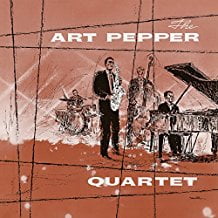
Art Pepper – Art Pepper Quartet – Omnivore Recordings
Art Pepper – Art Pepper Quartet – Omnivore Recordings/ Tampa OVCD-214/ TP-20 – Mono – Nov. 1956 – 45:59 **** Classic 1956 West Coast session from Art Pepper… (Art Pepper – alto sax; Russ Freeman – piano; Ben Tucker – bass; Gary Frommer – drums) One of my most treasured West Coast jazz LPs is a Japanese pressed audiophile vinyl of the Marty Paich Quartet featuring Art Pepper from 1956. It epitomized early West Coast jazz with cool arrangements, lightly swinging and highly melodic. The LP was issued by Tampa Records and cost me a pretty penny. It was well received when issued, and influenced Tampa to record Pepper with his own quartet shortly after. Now thanks to Art’s widow, Laurie, and Cheryl Pawelski of Omnivore, we get the opportunity to hear this November, 1956 recording in fine remastered (by Michael Graves) sound on CD (also available on Vinyl). It took quite a bit of legal wrangling and perseverance by Laurie to regain possession of the master tapes, and we get the benefit of her detective work. At the time of this session, Art was in a good space with a relaxed confidence that the immediate future held promise. It did […]

Eliane Elias – Dance Of Time – ConcordJazz
Eliane Elias – Dance Of Time – ConcordJazz CJ A00027 56:16 **** Samba Olé (Eliane Elias – vocals , piano; Marcus Teixeira – acoustic guitar 1-3, 5-10; Conrado Goys – electric guitar 4; Marcelo Mariano – electric bass – 1-10; Edu Ribeiro – drums 1-3, 5-10; Celso de Almeida – drums 4; Marivaldo dos Santos – percussion 2, 3, 9; Gustavo di Silva – percussion 2, 3, 9; Special Guests: Amilton Godoy – piano 11; João Bosco – vocal, guitar 4; Mark Kibble – background vocals 3, 5, 8; Mike Mainieri – vibraphone – 2, 7; Randy Brecker – flugelhorn 8; Toquinho – vocal 9, 12 – guitar 12) It may be unusual to use a Spanish expression to describe Brazilian music, but the term Olé in the above noted tag line is meant to be used in the (sports) context when one person performs a great feat of skill. A more appropriate recognition could not be found to acknowledge Eliane Elias’ latest release Dance Of Time as it is a superbly performed, constructed, and engineered homage to that particular Brazilian musical form, the samba. With her pianistic skills firmly in the forefront, accompanied by a tight rhythm section and […]

PROKOFIEV and ZABOROV: Piano Works – Jenny Lin (p.) Steinway & Sons
PROKOFIEV: Pieces from Cinderella – Pieces for Piano – ZABOROV: Nine Variations on the theme by Dmitri Shostakovich – Variations for piano “Quattrocento” – Ten Apparitions – Suite for Piano “Entrelacs” – Jenny Lin, piano, Steinway & Sons 30055, 62:56, ***** Classic and modern Russian piano scores, played with intelligence and verve This is the sixth CD of a superb series of recordings on the Steinway & Sons label by the Taiwan born and Austrian raised pianist Jenny Lin. She began her piano studies at age four in Vienna and at age 10 entered the Hochschule für Musik. She came to the United States at age 14 and graduated from the Peabody Conservatory of Music in 1998. Lin has studied with Leon Fleisher and Richard Goode and lives in New York City where she teaches at the 92nd Street Y. Her recording of Stravinsky solo piano works and the album Get Happy (show tunes for piano) demonstrate her proficiency in diverse repertoire. She plays with virtuosity and musical intelligence, and has a unique ability to express the music’s emotional essence. Steinway and Sons has provided her with the most authentic piano sound that I’ve heard in a long time. This […]

Sir John BARBIROLLI conducts = SIBELIUS: Symphony No. 6; NIELSEN: Symphony No. 4 – The Hallé Orch. – HDTT
Sir John BARBIROLLI conducts = SIBELIUS: Symphony No. 6; NIELSEN: Symphony No. 4 – The Hallé Orchestra – HDTT [various formats including hi-res PCM & DSD from www.highdeftapetransfers.com] [Reviewed from DSD64 files], TT: 64:33 Barbirolli shines in two works from Scandinavia. Sir John Barbirolli (1899-1970) was born in London; his father and grandfather were violinists at La Scala, Milan and young John learned the violin, too. He changed to playing the cello as a small boy and was taught first at Trinity College, London, then at the Royal Academy of Music. By sixteen, he was a cellist in Sir Henry Wood’s Queen’s Hall Orchestra. After the First World War, he continued playing in various orchestras; in addition, he appeared as soloist in concertos (he was an early adopter of Elgar’s Cello Concerto) and in a couple of string quartets. After gaining a lot of experience conducting in the concert hall and opera house, he formed his own chamber orchestra, the Barbirolli Chamber Orchestra, with whom he made recordings for HMV. He got an excellent reputation as accompanist in London for top soloists, and his recordings with Heifetz, Kreisler and Rubinstein won him much praise internationally. After a few years as […]

KLEIBERG : Mass for Modern Man – Mari Eriksmoen (sop) / Johannes Weisser (bar) / Trondheim SO & Choir / Eivind Gullberg Jensen – Pure Audio Blu-ray 2L
KLEIBERG : Mass for Modern Man – Mari Eriksmoen (sop) / Johannes Weisser (bar) / Trondheim SO & Choir / Eivind Gullberg Jensen – Pure Audio Blu-ray – 5.1 surround + stereo + mShuttle / 9.1 Auro-3D + 11.1 Dolby Atmos 48kHz / SACD multichannel and stereo; 2L-136SABD – TT: 67:59 ea. (2 discs) [Distr. by Naxos] *****: A gripping new work for our time served with excellent sonics Ståle Kleiberg (b. 1958) is one of Norway’s most distinguished composers. He has written a good deal of music, much of it as the result of a commission, and performances are given around the world. An earlier work, Requiem – for the Victims of Nazi Persecution, also commissioned by Nidaros Cathedral in Trondheim, had it US premiere in the National Cathedral in Washington and its recording appeared on Simax on SACD. The Mass for Modern Man succeeds other 2L recordings, Mezzotint, a collection of chamber works, Treble and Bass, concertos for violin and double-bass, and Kleiberg’s opera-oratorio, David and Bathsheba. As with the Requiem, Kleiberg includes among the traditional Latin texts of the Mass fresh literature to emphasise the contemporary nature of the work. In this case, between the Kyrie eleison, […]

Leopold STOKOWSKI conducts BRAHMS: Symphony No. 1; WEBER: Invitaton to the Dance; STRAUSS: Blue Danube and Vienna Woods Waltzes; LISZT: Hungarian Rhapsody No. 2 – Philadelphia Orch./ Leopold Stokowski – PASC
BRAHMS: Symphony No. 1 in c minor, Op. 68; WEBER: Invitaton to the Dance, Op. 65 (arr. Berlioz/Stokowski); J. STRAUSS: On the Beautiful Blue Danube Waltz, Op. 314; Tales from the Vienna Woods Waltz, Op. 325; LISZT: Hungarian Rhapsody No. 2 (orch. Mueller-Berghaus) – Philadelphia Orchestra/ Leopold Stokowski – Pristine Audio PASC 500, 70:01 [www.pristineclassical.com] ****: Mark Obert-Thorn initiates an integral survey of the Brahms symphonies by Stokowski, buttressed by virtuoso supporting recordings. Leopold Stokowski (1882-1977) receives from Mark Obert-Thorn tribute upon the advent of Stokowski’s 135th year of his birth (on 18 April 1882), here in the first electrical recording of any Brahms symphony (25-27 April 1927), the first installment of the complete cycle that Stokowski left for posterity 1927-1933. Stokowski would record the Brahms First Symphony five times, each a reminder of Stokowski’s penchant for imposing a distinct organ sonority on the work’s massive melodic structure. The tendency to “layer” the various orchestral voices in the manner of the organ’s diapason seems to thicken an already generous texture, especially when the Philadelphia strings engage in their monumental capacity. On 30 April 1927 Stokowski lectured from the keyboard his “Outline of Themes,” whereby he provides an enthusiastic bit of […]

Arrangements or Transfigurations = BACH, MOZART, BRAHMS, STRAVINSKY, JANACEK: Pieces for piano, string trio/quartet, wind ensemble, orch. – Wilhelm Kempff (p.); Grumiaux Trio/ Arthur Rubinstein, Guarneri String Quartet; Chicago Symph. Orch./ Robert Craft/ Tokyo String Quartet/ London Symph. Orch./ Antal Dorati/ Prague Wind Quintet/ Zemlinsky Quartet – Praga Digitals
Arrangements or Transfigurations = BACH: Prelude and Fugue in e-flat minor, BWV 853; MOZART: 6 Preludes and Fugues, K. 404a: No. 3 in d minor; BRAHMS: Piano Quartet No. 1 in g minor, Op. 25: Intermezzo; Intermezzo (orch. Schoenberg); STRAVINSKY: Three Pieces for String Quartet; Four Etudes for Orchestra; JANACEK: Mlada Suite for Wind Sextet; Mlada (trans. Maratka) for String Quartet – Artists below – Praga Digitals SACD DSD 3501 32, 80:31 (5/26/17) [Distr. Harmonia mundi/PIAS] ****: A series of selected works, from Bach forward, exploit the possibility of new sonorities in these masterly arrangements. [Wilhelm Kempff, piano (Bach); Grumiaux Trio (Mozart)/ Arthur Rubinstein/ Members of the Guarneri String Quartet (Brahms); Chicago Symphony Orchestra/ Robert Craft/ Tokyo String Quartet (Stravinsky)/ London Symphony Orchestra/ Antal Dorati/ Prague Wind Quintet/ Zemlinsky Quartet] Culled from over fifty years of recording history, 1961-2016, this disc, compiled by annotator and arranger Krystof Maratka, seeks to illustrate that great composers often like, venerate, and transform works by their predecessors. The musical premise – following the idea that all philosophy is merely a footnote to Plato – seems to be that all music evolves as a footnote to Bach. Wilhelm Kempff plays the meditative Prelude in e-flat […]

BRUCH: String Octets; String Quintet – The Nash Ensemble – Hyperion
The aging German master displays his melodic and often explosive temper in three late string works. BRUCH: String Octet in E-flat Major; String Quintet in a minor; String Octet in B-flat Major – The Nash Ensemble – Hyperion CDA68168, 62:48 (3/31/17) [Distr. by Harmonia mundi/PIAS] ****: The three chamber works by Max Bruch (rec. 18-20 April 2016) here performed by the talented Nash Ensemble testify to the resurgence of the composer’s late interest in the medium, all of the pieces having been conceived 1918-1920. Even in the throes of WW I, Bruch managed to find inspiration through his association with violinist Willy Hess, virtuoso and pedagogue at the Hochschule fuer Musik in Berlin. Throughout these string ensemble works, we feel that both Brahms and Mendelssohn have exerted their respective spells and influences upon Bruch, though his own natural capacity for melodic utterance remains his own. The opening work, the String Quintet in E-flat, proffers four movements, the first of which, Andante con moto, serves an introductory function for the ensuing Allegro. This movement projects a more symphonic cast, with the two violas – Lawrence Power and James Boyd – filling out the often dramatic outbursts. The songful Andante con moto […]
Stereotypes Audio

Cembal d’amour

Pure Pleasure / Speakers Corner

Cedille


