
Monthly Archive: September 2017

Chris Tordini – Midnight Sun – Newvelle
Chris Tordini – Midnight Sun – Newvelle Records NV 010LP – 180 gm vinyl – ****: Wearing your heart on your sleeve—celebrating in acoustic splendor… (Chris Tordini – bass; Becca Stevens – vocals; Greg Ruggiero – guitars) I first became aware of Becca Stevens’ talents a few years ago when she participated on Billy Childs’ Grammy winning tribute to Laura Nyro, Map to the Treasure. Becca sang “The Confession.” Her original vocal talents were immediately apparent, and hearing her live early the next year at the Portland Jazz Festival, both with Billy and on her own, helped form a lasting impression. As part of Newvelle Records second year subscription series, Ms. Stevens is featured on her band mate, bassist Chris Tordini’s Midnight Sun audiophile LP. Tordini’s muscular, yet sympathetic bass accompanies Stevens along with guitarist, Greg Ruggiero. Both Chris and Greg shine during their solos, but it is Becca who raises this release to a much higher level. Becca’s acclaim has been steady, and she was voted Best Rising Vocal Star in the most recent Downbeat Poll. Tordini plays bass in her current band (they both attended the New School of Jazz and Contemporary Music in New York City), and […]

Bjarte EIKE & Barokksolistene: The Image of Melancholy – BIS
Bjarte EIKE & Barokksolistene: The Image of Melancholy – BIS SACD 2057, 66:28 (1/28/14) ****½: The rambunctious leader of the ale-house gang turns melancholic and leads his troupe on an investigation through folk and Elizabethan idioms to finds the beauty at the heart of sorrow. (Bjarte Eike; violin/ Berit Norbakken Solset; soprano/ Jon Balke; organ & soundscapes / Milos Valent; viola/ Frederik Bok; lute & baroque guitar/ Kanerva Juutilainen; violin/ Thomas Pitt and Judith-Maria Blomsterberg; cello/ Hans Knut Sveen; harpsichord) Melancholy is a far richer term than its modern successor, depression. The latter is a recent clinical notion which presupposes the separation of malady and subject, as well as the possibility of a cure or treatment. In contrast, melancholy describes an existential condition, a very shape of the soul, which prompts a special receptivity to an inescapable sadness beyond the self. As a cultural construct, the condition connects to a wide array of emotions and performances, prescribed routines and rituals, and as we see in this remarkable exploration of its themes, music. Bjarte Eike, whom we last met on these pages dancing merrily with his Barokksolistene in the context of an ale-house revelry (Ale-house Sessions on the Rubicon label were […]

BRUCKNER: Symphony No. 3; WAGNER: Parsifal: Act II; Tristan und Isolde: Prelude and Liebestod – Kirsten Flagstad, soprano (Kundry)/ Birgit Nilsson (Isolde)/ Vienna Philharmonic Orchestra/ Hans Knappertsbusch – Praga Digitals
BRUCKNER: Symphony No. 3 in d minor; WAGNER: Parsifal: Act II: “Ich sah das Kind an seiner Mutter Brust”; Tristan und Isolde: Prelude and Liebestod – Kirsten Flagstad, soprano (Kundry)/ Birgit Nilsson (Isolde)/ Vienna Philharmonic Orchestra/ Hans Knappertsbusch – Praga Digitals PRD 350 140, 77:13 (7/28/17) [Distr. by Harmonia mundi/PIAS] *****: The inimitable “Kna” makes his presence felt in Bruckner and Wagner staples he passionately endorsed. Culled from studio recordings 1954-1959, these performances celebrate the majestic realizations of conductor Hans Knappertsbusch (1888-1965), as often celebrated as criticized for his slow tempos and rhythmic mannerisms. The 1954 recording of the Bruckner Third employs the 1877 version as edited by Theodor Raettig. The work seems infiltrated with allusions to and quotations from both Beethoven and Wagner, while its structural evolution follows the lyrical model of Schubert, with his tendency to utilize laendler tropes and chorale progressions. The music possesses a fervent sincerity that somehow has survived the numerous revisions and cuts the composer imposed upon his original ideas, excising many of the references to Wagner operas. Still, enough of Die Walkuere remains to justify the reference to the piece as the “Wagner Symphony.” The combination of nervous tension—a d minor ostinato—and ostentatious […]

Gerald Cannon – Combinations – Woodneck Records
Gerald Cannon – Combinations – Woodneck Records 66:27****: A pleasant mixture of precision and coolness (Gerald Cannon – bass; Gary Bartz – alto sax # 1,7,10; Sherman Irby – alto sax #2,4,5,6; Steve Slagle – alto sax #3; Jeremy Pelt – trumpet # 1,2,4,5; Duane Eubanks – trumpet #10; Rick Germanson – piano #1,3,4,6,7,9; Kenny Barron – piano #2,5,10; Russell Malone – guitar #3,7,8;,Willie Jones III – drums #1,2,3,4,5,6,9,10; Will Calhoun – drums #7) Gerald Cannon was last heard from as a leader of his own group in 2003 when he released the self-styled album Gerald Cannon. It’s not that he has been inactive in the intervening years, he has. He has taught at several universities and conservatories including the Oberlin Conservatory, the Wisconsin Conservatory, and was a faculty member of the Conservatory of Maastricht, The Netherlands. He has also recorded with drummer Willie Jones III, guitarist Russell Malone, and pianist Rick Germanson among others. In this cavalcade of musical styles and artists under the title Combinations, Cannon demonstrates his own versatility and that of his cohorts. Kicking things off with Slide Hampton’s “Every Man Is A King”, Cannon’s big-toned bass is in solo mode as this swinger takes shape. […]

Eddie Daniels & Roger Kellaway – Just Friends: Live at the Village Vanguard – Resonance Records
Eddie Daniels & Roger Kellaway – Just Friends: Live at the Village Vanguard – Resonance Records HCD 2028, 57:57 – [Recording Date: 11/26/88, Street Date: 9/29/17] ****1/2: Another sharp arrow in Resonance Records’ quiver… (Eddie Daniels – clarinet; Roger Kellaway – piano; Buster Williams – bass; Al Foster – drums) George Klabin and Zev Feldman the “jazz detectives” at Resonance Records, continue to provide the jazz community with previously unissued jazz recordings, largely from the 1970s through the end of the 20th Century. Many of them were recorded in Europe from the vaults of radio and TV stations on the continent. Their latest release comes from much closer to the jazz mecca in the US, New York City. It was recorded by Klabin himself, who revisited it recently, and decided it was too good not to share with jazz fans. Klabin sat in the front row of the Village Vanguard club, armed only with a Dolby cassette recorder and a single Sony electric condenser microphone. The finished recording provides a perfectly acceptable document of an outstanding set from a remarkable quartet of Eddie Daniels on clarinet, Roger Kellaway on piano, Buster Williams on bass, and Al Foster on drums. The sound […]

Vladimir Horowitz — Streaming broadcast presented by Mordecai Shehori and Gary Lemco
This week The Music Treasury will be featuring recordings by Valdimir Horowitz, presented by the distinguished pianist Mordecai Shehori and hosted by Dr Gary Lemco The streaming broadcast can be heard 1 October, 19:00 – 21:00 PDT, from Stanford University’s station, kzsulive.stanford.edu This is a rather exceptional presentation; the full announcement from The Music Treasury follows. The Music Treasury for Sunday evening, October 1, 2017, 7 – 9 PM Vladimir Horowitz, pianist We are delighted to have us as our on-air guest, distinguished pianist Mordecai Shehori, who will share his experiences with Mr. Horowitz. Winner of many competition prizes, Mr. Shehori concertizes in the US, Canada, and Europe and has performed at various music festivals and at the White House. He has given 27 different recital programs in New York City in as many years. In February 1987, Mr. Shehori assisted Vladimir Horowitz in preparing Mozart’s Piano Concerto K.488, playing the orchestral reduction on second piano, while Horowitz played the concerto’s solo part. This took place in the basement of Steinway & Sons in New York City. From October 24 to November 3, 1989 Mr. Shehori acted as a page turner for Horowitz in what turned out to be the sessions for […]
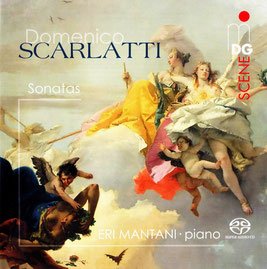
Scarlatti Sonatas: Angela Hewitt, Eri Mantani, Yevgeny Sudbin
SCARLATTI Sonatas: Angela Hewitt – Hyperion 68184, 79:14 (9/29/17) ****½ : Eri Mantani – MDG SACD 904-1987-6, 77:52 (1/23/17) ****: Yevgeny Sudbin – BIS SACD 2138, 74:30 (3/14/2016) *****: A wealth of recent Scarlatti recitals which capture the dual nature of this singular musical genius. Midway through a Scarlatti recital, astonishment prompts the puzzled query: How does he do it? Every sonata is distinct, full of surprise displaying a special kind of playful ingenuity. How could such variety spring from a single source? Having read all of Ralph Kirkpatrick’s massive biography, which includes an elaborate “anatomy” of Scarlatti’s subjects and themes, I can attest that there is no easy explanation. However, a simple scheme has allowed me to imagine Scarlatti’s inventive powers as elements of two distinct worlds that both spar and combine in ways that give his music its marked sense of contrast, unpredictability and delight. I call these sources “calle” (street) and “corte” (the court). The deepest source for Scarlatti’s music is surely the Italian tradition. With the ascendency of the Baroque, this style would conquer the 17th and 18th century as a portable science and an aesthetic sensibility. In the case of the long displaced composer-in-residence in […]

SCHUBERT: Piano Trio D. 929; Notturno D. 897 – Trio Alba – Audiomax Super Audio CD
SCHUBERT: Piano Trio D.929. Notturno D. 897 – Trio Alba (Livia Sellin, violin. Philipp Comploi, cello. Chengcheng Zhao, piano) – Audiomax Super Audio CD 9023013-6, 60:17 (9-15-2017) *****: Trio Alba’s stunning new recording of Schubert’s second Piano Trio is exceptional in the modern fashion: almost casually virtuosic, bright eyed, bushy tailed and up on the latest scholarship. They even make the insane length of the original last movement the way to go from now on. Although it makes the last movement at 20 minutes 4 minutes longer than the first movement, and the entire Trio to more than 50 minutes, it clears up the composer’s thinking to a remarkable extent and makes an appropriately expanding, Schubertian statement. The players and the recording engineers working at the church in Marienmünster, a half hour’s drive from MDG’s headquarters in Detmold, make some exceptionally gorgeous, open-hearted joyous sounds with the piano recorded in the most stunning liquid tones. And the first bars of the D. 897 Notturno which follow begin so softly that you have to tune your ears in extra carefully; then, when the first notes from the violin and cello begin to emerge the effect is pure magic—Schubert would have been […]

Johann Sebastian BACH: Six cello suites – Richard Narroway, cello — Sono Luminus
Johann Sebastian BACH: Six cello suites – Richard Narroway, cello — Sono Luminus SLE-70010, 1:16:26, (9/24/17) **** Richard Narroway would not be the first young cellist to take-on the suites for solo cello by Johann Sebastian Bach early in their professional career. Immediately in my mind I think of a young Yo-Yo Ma, who recorded the suites for the first time in 1984 for CBS Masterworks (Sony). While Narroway is not as well-established as Ma, there’s little doubt he has a promising career ahead of him either as a performer, pedagogue, or both, as evidenced by his YouTube videos. Narroway approaches the suites on one hand in a very clean, clear, and measured way, blurring the lines between a period approach and a more romantic one. His use of vibrato is never excessive and is used to warm a note, or to provide an organic lift. This approach is careful in one respect, aiming to not offend the listener with anything getting in the way of Bach’s music. Narroway’s training wears well: his intonation is impeccable throughout and his articulation is always clear. The effect is not unlike his appearance: young and clean shaven. Yet Narroway does inflect some personality […]

Linda May Han Oh – Walk Against Wind – Biophilia
Linda May Han Oh – Walk Against Wind [TrackList follows] – Biophilia BREP0003, 63:28 [4/14/17] ****: An emerging bassist who wants to make a difference. (Linda May Han Oh – acoustic bass, electric bass, vocals (tracks 3-4); Ben Wendel – tenor saxophone; Matthew Stevens – guitar; Justin Brown – drums; Fabian Almazan – piano (track 2), keyboards (tracks 6, 10); Minji Park – janggu, kkwaenggwari (track 8)) [Streaming and Digital Download-only album] If you’re a jazz bassist fan, and you haven’t discovered Linda May Han Oh (who previously went by Linda Oh), then you should listen to Oh’s fourth release as a leader, the 63-minute, digital-only album Walk Against Wind. Over the course of Oh’s 11 original compositions, she surveys the personal tests, trials, and profits of an artist’s life. Oh (on both acoustic and electric bass) is complemented by tenor saxophonist Ben Wendel (co-founder of Kneebody and sideman to Todd Sickafoose, Taylor Eigsti and others); guitarist Matthew Stevens (who has recorded with Christian Scott, Jacky Terrasson, Esperanza Spalding and more); drummer Justin Brown (the Ambrose Akinmusire Quartet) and special guests: pianist Fabian Almazan (Terence Blanchard) and Korean percussionist Minji Park. Oh’s inspirations during Walk Against Wind are myriad but […]

Tomorrow’s Air – Contemporary Works for Orchestra – The Moravian Philharmonic Wind Ensemble / Ovidiu Balan, Vít Micka, Pety Vronský, and John Page – Navona
Tomorrow’s Air – Contemporary Works for Orchestra and Large Ensemble – The Moravian Philharmonic Wind and Percussion Ensemble conducted by Ovidiu Balan, Vít Micka, Pety Vronský, and John Page – Navona Catalog # NV6108 (9/8/17) ****: Lovely contemporary music well performed and recorded. Tomorrow’s Air is a most agreeable CD with a collection of contemporary music of varied moods and styles. I doubt the composers names will be familiar to our readers, but that is no reason to steer clear of this interesting disc. The album opens with Hilary Tann’s Anecdote for solo cello and orchestra. Inspired by Wallace Stevens’s nature musings in his poem “Anecdote of the Jar”. It’s a lovely piece, with shimmering strings and dynamic contrasts. Next is Hans Bakker’s Cantus, a darker and expressive work for string orchestra. Bakker has his own unique style, and the piece is a good listen. The third track is Daniel Perttu’s lyrical overture To Spring. It was written in honor of his daughters; To Spring was inspired by William Blakes poetic ode of the same name. Although not thematically related to the music of Alan Hovhaness, it evoked similar emotions as I listened, but Perttu uses more brass. It’s uplifting […]

Reger – Maximum Reger / Max Reger: The Last Giant
Reger – Maximum Reger / Max Reger: The Last Giant (2016) I’ve never seen a boxed DVD set of this scope and scholarship for any classical composer. Professor Susanne Popp, Bernhard Haas, Ira Levin, Jürgen Schaarwächter, Aris Quartett, Frauke May, Marcus Becker, Rudolf Meister, Andrew Brownell, Oliver Kern, et al. Director. Will Fraser; Studio: Fugue State Films 011. 6 DVDs. [2016]. Run Time: 900 minutes Video: Widescreen Audio: Dolby, NTSC, Stereo Subtitles: English, German Extras: None Rating: ****½ My friend Alex is a Facebook fiend. She loves devising word games to play with her followers. For one of them she issued this challenge: “Ask me what my ‘top five’ are for any subject and I’ll answer it!” Her friends went crazy issuing requests and she had a great time responding. I couldn’t resist so I typed: “Your top five compositions by Max Reger.” I should mention that Alex is a composer and a professor of music. Her work is dizzyingly eclectic and often nods respectfully to music of the past. What was her response? Nothing. Zilch. Ask any lover of classical music to name one composition by Johann Baptist Joseph Maximilian Reger (1873–1916) and they too may not answer you. […]

Altius Quartet: “Dress Code” = Haydn Quartet in C major Op.74 No.3; Bolcom Three Rags; Arrangements of Dave Brubeck, Led Zeppelin, Ben E. King, and a-ha – Altius Quartet – Navona Records
Altius Quartet: “Dress Code” = Haydn Quartet in C major Op.74 no.3. Bolcom Three Rags. Arrangements of Dave Brubeck, Led Zeppelin, Ben E. King, and a-ha – Altius Quartet (Joshua Ulrich and Andrew Giordano, violins. Andrew Krimm, viola. Zachary Reaves, cello) – Navona Records NV6078, 55 minutes, (4/14/2017) ****: Altius Quartet brings fresh life to a classic masterpiece within a contemporary framework… Whatever possessed the Altius Quartet to come up with a program blending the talents of Franz Joseph Haydn and William Bolcom with four pop arrangements turns out be a most fortunate inspiration, and the Altius Quartet chose wisely and played well, laying out their sequence of interspersed music like one continuous scroll. Haydn particularly benefits from this approach because it enables you to focus on and realize just how powerfully he creates his musical worlds. Each of the movements of his extraordinary String Quartet Op.74 No.1 has entirely its own personality and structure, each contains at its core an overwhelmingly affectionate joke, and each is blessed with rare beauties. The Quartet have captured this well, even adding to the occasion with a little joke of their own in the form of an unwritten crescendo on the opening chord […]

George Li Live = HAYDN: Piano Sonata in B Minor; CHOPIN: Piano Sonata No. 2; RACHMANINOV: Variations on a Theme of Corelli; LISZT: Consolation No. 3, Hungarian Rhapsody No. 2 – George Li – Warner Classics
George Li Live at the Mariinsky = HAYDN: Piano Sonata in B Minor, Hob.XVI:32; CHOPIN: Piano Sonata No. 2 in b-flat minor, Op. 35; RACHMANINOV: Variations on a Theme of Corelli, Op. 42; LISZT: Consolation No. 3 in D-flat Major; Hungarian Rhapsody No. 2 in c-sharp minor – George Li – Warner Classics 0190295812942 68:56 (10/6/17) ****: George LI raises sparks and a silver sheen at the Mariinsky Theatre in 2016. George Li (b. 1995), silver medalist of the 2015 International Tchaikovsky Competition, offers a recital (4-5 October 2016) from St. Petersburg that testifies to the range of colors in his digital arsenal. Li opens with the 1776 Sonata in b minor of Haydn, a curious mix of sturm und drang and Scarlatti at once. The quick staccatos of the Allegro moderato find consolation in D Major, punctuated by broken runs and pert accents. The upper registers enjoy a light color offset by a kind of cello or bassoon figure in the bass, which descends dramatically. The contest between major and minor continues into the succeeding Menuetto, which opens in B Major but whose trio becomes agitated in the tonic minor. The Finale: Presto moves in nervous, quicksilver periods, rife […]

Bob Merrill – Tell Me Your Troubles: Songs By Joe Bushkin Vol. 1 – Accurate Records
Bob Merrill – Tell Me Your Troubles: Songs By Joe Bushkin Volume 1 – Accurate Records AC 5071 48:55*** A tasty tribute to a fine pianist and an interesting songwriter. Whitney Balliett in writing a feature piece on Joe Bushkin for the February 21,1983 edition of The New Yorker described his piano style as“primitive, elegant, flashy, swinging…It is hornlike rather than pianistic.” While we only get a brief taste of that piano style, son-in-law Bob Merrill has put together a warm tribute to the song-writer Joe Bushkin in Tell Me Your Troubles which may be the first offering in bringing his talents to a new audience. Many of Bushkin’s compositions that are featured on this release might be “head scratchers” in terms of recognition. However there are two that are really well known, principally due to their association with Frank Sinatra. They are “ Oh! Look At Me Now” and “Something Wonderful Happens In Summer”. The former was written for Sinatra when both he and Bushkin were with the Tommy Dorsey Band in 1941 and it became a big hit. In this version which was recorded in 2003, (Bushkin died in 2004) with Bushkin on piano doing fills and background, […]

Indigos – Duke Ellington and his Orchestra
Indigos – Duke Ellington and his Orchestra Studio: HDTT (from 15 ips 2-track tape recorded by Columbia in NYC in 1957) Transfer is playable on any universal deck. *****: A delightful Ellington album in truly hi-res form. So nice to have this great Ellington album in really good hi-res sound. With Jimmy Woode on the bass, Sam Woodyard the drums, Paul Gonsalves on tenor sax, Jimmy Hamilton and Russell Procope on clarinet & alto sax, and Johnny Hodges and Rick Henderson on alto sax and Harry Carney on baritone sax, Ellington’s writing for the talents of each performer is nowhere more clear than on this album. Ellington hated the term “jazz” and considered his music just great music. He began to play professionally at age 17. His unique blend of melodies, rhythms and subtle sonic movements gave audiences a new experience—complex yet accessible jazz. Bathe in the unique sounds of his band in their wonderful album. PlayList: 1. Prelude to A Kiss 2. Willow Weep for Me 3. Tenderly 4. Dancing in the Dark 5. Solitude 6. Where or When 7. Mood Indigo 8. Autumn Leaves —John Sunier

MALIJA (Lockheart/Hoiby/Noble) – Instinct – Edition
MALIJA (Lockheart/Hoiby/Noble) – Instinct – Edition Records EDN1096 – 49:29 (9/8/17) ****½; Outstanding trio jazz with a chamber music discipline and compositional reach. (Mark Lockheart: saxophones/ Jasper Hoiby: double bass/ Liam Noble: piano) The players comprising the trio Malija—Mark Lockheart, Liam Noble and Jasper Hoiby—are major figures on the U.K. jazz scene. Readers of these pages are likely to remember the accolades bestowed on the Jasper Hoiby’s 2016 release “Fellow Creatures.” The release here of the drummer-less trio is typical of the UK label Edition, smart and disciplined improvised music unconstrained by post-bebop conventions. This is the group’s second outing, but from the evidence of both recordings, we can surmise that this is a veteran working unit. No one is calling out standards in the studio; Instead, each player contributes original and intricate charts to the session. The arrangements are very well done. The opening line of Kindred Spirit, with its exacting unisons and jagged rhythm, is a good indication of things to come. No drums are needed as this trio are adept at managing a swinging pulse. Hoiby’s bass is a huge driving force throughout; he alternates between snappy ostinato and unison lines. TV Shoes is a marvel of […]

Cantelli: New York Phil. Orch. = CRESTON: Dance Overture; SCHUMANN: Symphony No. 4; BEETHOVEN: Piano Concerto No. 4, No. 5; VIVALDI: Concerto Grosso; R. STRAUSS: Don Juan, Op. 20 – Wilhelm Backhaus (piano)/ Walter Gieseking (piano)/ New York Philharmonic/ Guido Cantelli – Pristine
Cantelli: New York Philharmonic Orchestra, Vol. 2 = CRESTON: Dance Overture; SCHUMANN: Symphony No. 4 in d minor, Op. 120; BEETHOVEN: Piano Concerto No. 4 in G Major, Op. 58; VIVALDI: Concerto Grosso in d minor, Op. 11, No. 3, RV 565; BEETHOVEN: Piano Concerto No. 5 in E-flat Major, Op. 73 “Emperor”; R. STRAUSS: Don Juan, Op. 20 – Wilhelm Backhaus, piano (Op. 58)/ Walter Gieseking, piano (Op. 73)/ New York Philharmonic/ Guido Cantelli- Pristine Audio PASC 510 (2 CDs) TT: 2:23:36 [www.pristineclassical.com] ****: Pristine’s Andrew Rose restores two Cantelli concerts in New York that exemplify his kinetic, ardent style. Guido Cantelli (1920-1956) appears before the Carnegie Hall audience in two successive New York concerts, 18 and 25 March 1956. Cantelli complained bitterly about the lack of cooperation afforded him by “Murderers’ Row”—the Philharmonic players—but no less so than for their regular conductor, Dimitri Mitropoulos, they grudgingly gave much of their expert musicianship to the performances gleaned on this compilation restored by Andrew Rose. Like Mitropoulos, Cantelli did not shy away from contemporary American scores, and his opening Dance Overture by Paul Creston, which includes some syncopated clapping by the players, has character and energy to spare. I recall […]
Maurizio SQUILLANTE: The Wings of Daedalus – ZKM Institute for Music and Acoustics/Maurizio Squillante – Wergo
Maurizio SQUILLANTE: The Wings of Daedalus – ZKM Institute for Music and Acoustics/Maurizio Squillante – Wergo 2073-2, 74:40, (8/18/17) **: Stretching the definition of ‘opera’… This is easily one of the strangest things I have heard in awhile. This does not mean I didn’t like it – at least a little. Maurizio Squillante is an Italian composer who specializes in both electronic soundscapes as well as extended vocal techniques; both of which summarize the palate of this ‘neo-Baroque opera’ (as say the booklet notes.) Finding out about Squillante is daunting as I could not find a website of his and all we can gather from the helpful booklet notes is that his medium is regularly electronics and that the text/libretto for this work is, indeed, the Greek myth of Icarus and Daedalus who tried to be as birds and fly. In many places the texts are isolated and monadic; barely sung and really hard to understand. The notes do correctly point out that much of this approach to vocal writing has its roots in Monteverdi who—in turn—wrote several operas on mythological themes. The libretto itself, in English, is by playwright David Haughton and this work was conceived in 2004 for […]

RAVEL: Daphnis et Chloé; Pavane – Orchestre Philharmonique du Luxembourg/ Gustavo Gimeno – Pentatone
RAVEL: Daphnis et Chloé (complete ballet); Une barque sur l’océan; Pavane pour une infante défunte – Orchestre Philharmonique du Luxembourg/ Gustavo Gimeno – Pentatone multichannel SACD PTC5186652, 72:35 [Distr. by Harmonia mundi] *****: A perfumed and utterly intoxicating reading of Ravel’s masterpiece. It was the Greek writer Longus, probably from around the 2nd century AD, that gave Maurice Ravel the inspiration for his widely-acclaimed—and some say greatest—masterpiece Daphnis et Chloé. The three-scene, one act “choreographic symphony” (as Ravel called it) was written for Serge Diaghilev’s Ballet Russes, surely one of the most luxuriant and hothouse scores ever set to paper. The exceptionally large orchestra provides the composer with multitudinous opportunities to show his extraordinary ability in orchestration, and he rarely lets us down, from music of subtlety and seduction to as rousing a final bacchanal as has ever been composed. The story itself is quite subjugated to the music, and sets itself up for the imagery and scents of the impressionist era rather than driving home any sort of musical storyline interpretation. Perhaps because of this, Ravel himself sensed that this hour-long work demanded resuscitation in the form of smaller suites to capture the concert hall imagination, and in fact […]

BEETHOVEN: Piano Sonatas Nos. 3, 14, 23, 26, 32; Variations on an Original Theme – Evgeny Kissin, piano – DGG
BEETHOVEN: Piano Sonata in C Major, Op. 2, No. 3; 32 Variations on an Original Theme in c minor, WoO 80; Piano Sonata No. 14 in c-sharp minor, Op. 27, No. 2 “Moonlight”; Piano Sonata No. 23 in f minor, Op. 57 “Appassionata”; Piano Sonata No. 26 in E-flat Major, Op. 81a “Les Adieux”; Piano Sonata No. 32 in c minor, Op. 111 – Evgeny Kissin, piano – DGG 479 7581 (2 CDs) 55:40; 73:14 (9/8/17) [Distr. by Universal] *****: Evgeny’s Kissin’s Beethoven exploration, 2006-2016, reveals a mature thinker in music with ideas of his own. Russian virtuoso Evgeny Kissin (b. 1971) has assembled performances of Beethoven he deems significant in his artistic development, culled from various sources, 2006-2016. Indeed, the musicality revealed in these performances bespeaks a thoughtful, matured artist, for whom restraint and tasteful execution has become an integral part of a technical arsenal that had already achieved bravura status. Kissin opens from Seoul, 2006, with the 1795 Sonata in C Major, a clear, often bold, statement of the composer’s virtuosic ambitions, even as it experiments with a narrow melodic tessitura, based on conjunct intervals. The placement of the second subject in g minor must have raised eyebrows […]

Oliver Lake Featuring FLUX Quartet – Right Up On – Passin’ Thru
Oliver Lake Featuring FLUX Quartet – Right Up On [TrackList follows] – Passin’ Thru 41236, 69:44 [4/21/17] ****: Lake as composer, not necessarily performer. (Oliver Lake: alto saxophone (tracks 1-2, 4), co-producer; Tom Chiu, Conrad Harris: violin; Max Mandel: viola; Felix Fan: cello) Fair warning: fans of saxophonist Oliver Lake should be aware the 70-minute Right Up On is not, strictly speaking, a solo Lake release. Yes, his name is prominent, but he doesn’t perform on all seven tracks, only three. Mostly, these are pieces (which range from seven to 21 minutes in length) specifically composed for the contemporary-classical string group FLUX Quartet, who has collaborated with Lake for many years. Right Up On collects old and new material Lake penned for the FLUX Quartet, some of which has been performed on stage and some which has not. However, this is the first time Lake and the FLUX Quartet have recorded together. Essentially, if you’re a Lake supporter, be forewarned, because this concentrates on Tom Chiu and Conrad Harris on violin; Max Mandel on viola; and Felix Fan on cello. If you like the Kronos Quartet, the Brodsky Quartet and likeminded ensembles, Right Up On will be right up your […]
Stereotypes Audio

Cembal d’amour

Pure Pleasure / Speakers Corner

Cedille


