
Monthly Archive: August 2017
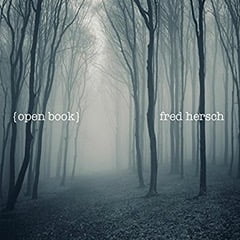
Fred Hersch {Open Book} – Palmetto Records
Fred Hersch {Open Book} – Palmetto Records PM 2186 56:43****: Beyond Category ( Fred Hersch – piano) In a piece Margo Jefferson wrote for the New York Times on October 15,1993 discussing Duke Ellington, she used the following sentence: ”The highest praise Duke Ellington bestowed on people or music he loved ( not least his own) was the phrase beyond category.” If The Duke were still alive, conferring this accolade on Fred Hersch would be automatic. Fred Hersch’s latest release of solo piano music is entitled Open Book. It is a judicious amalgam of his own compositions, along with covers of some jazz and popular standards. In deciding how any composition is to be played, Hersch may be compared to a crafty baseball pitcher who paints the corners of the plate, never anything over the middle. His attack is generally filled with sharp possibilities, supported by his daunting command as an improvisor. The session opens with one of Hersch’s originals called “The Orb”. It is a ruminative piece filled with a mixture of calmness and fastidious harmony. Benny Golson’s famous composition “Whisper Not” has a Mozartian feel with sharply struct notes, a bold and complex attack that provides an inner […]
Streams and Podcasts for 18 August 2018
Streams and Podcasts for 18 August 2018 This week, The Music Treasury will be continuing the review of Hans Schmidt-Isserstedt, a noted conductor and composer through the 1900’s. Schmidt-Isserstedt own works included songs, one opera, as well as orchestral pieces; he founded the North German Radio Symphony Orchestra, and was principal conductor of the Royal Stockholm Philharmonic Orchestra. The show can be heard on Sunday, 20 August 2017, between 19:00 and 21:00, PDT. Dr. Lemco is the show’s host, it is presented as a radio show with streaming broadcast: kzsulive.stanford.edu On both Saturday and Sunday, Edmund Stone will share his observations and insights on some parts of the vast repertoire of film scores. It too is broadcast as a streamed radio show, from its host station in Portland: AllClassical.org. The show can be heard between 14:00 and 15:00 PDT. This Saturday, Edmund Stone’s show is “Before They Were Famous”, where he will explore the cinematic beginnings of such composers as John Williams, Elmer Bernstein, Hans Zimmer, and others. Sunday will have an encore broadcast of last week’s show, “Family Feuds”, touching on scores to Romeo and Juliet, The Lion in Winter, and more.
![Miles Okazaki – Trickster [TrackList follows] – Pi Recordings](https://www.audaud.com/wp-content/uploads/2017/08/Okazaki-Miles-front-1.jpg)
Miles Okazaki – Trickster [TrackList follows] – Pi Recordings
Miles Okazaki – Trickster [TrackList follows] – Pi Recordings P1682, 44:46 [3/24/17] ****: Mythology, magic and folklore help create modern jazz. (Miles Okazaki – guitar, producer; Craig Taborn – piano; Anthony Tidd – bass, mixer; Sean Rickman – drums) Guitarist Miles Okazaki has layers inside of layers inside of layers on his latest outpouring, the 44-minute, nine-track Trickster, his first solo album in five years and his debut on the forward-thinking Pi Recordings. Okazaki may be best known by jazz fans for his stint in Steve Coleman and Five Elements, but he’s also spent time with vocalist Jane Monheit, and had early gigs with Regina Carter, Stanley Turrentine and has credits as a session musician. Okazaki’s newest material is complex and influenced by myriad components, but foremost among them is the socio-cultural theme of the trickster, a folklore figure and ancient archetype who uses mischief and/or magic to rupture or break down taboos, conventions or societal barriers. Tricksters are not what they seem to be, and that makes them ideal as thematic objects for Okazaki’s nine originals. Each composition relates to a separate trickster from various cultures across time, sometimes directly, sometimes less overtly and on occasion hidden within the […]
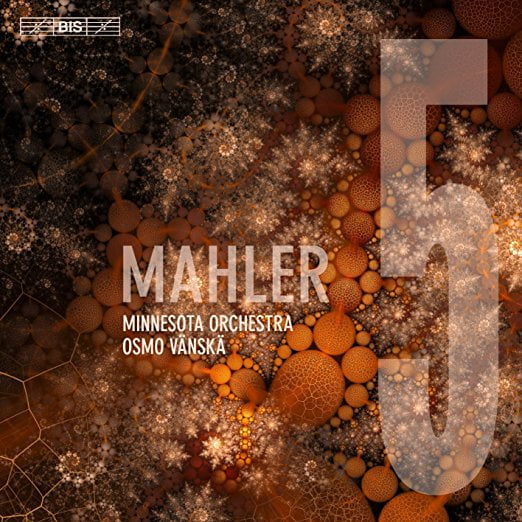
MAHLER: Symphony #5 – Osmo Vanska and the Minnesota Orchestra – BIS
Mahler Symphony #5 – Osmo Vanska and the Minnesota Orchestra – BIS 5.0 Hybrid SACD BIS 2226 – TT:75:30 (8/4/17) *** (performance) **** (sonics): An out of the mainstream interpretation with fine sonics This new recording of the Mahler 5th is the beginning of a projected Mahler series from BIS, the Minnesota Orchestra and conductor Osmo Vanska. There are plenty of fine Mahler Fifths around, including my favorite by Bernstein recorded in the 80s, as well as those of Chailly and Dudamel, for whom I have an affinity For this new recording I’m honestly a bit conflicted. I find the first movement detailed but slow. I can’t say it is lifeless, but I think it lacks energy. The remaining four movements recover some, but overall this enthralling symphony doesn’t enthrall me in this performance. Some reviewers have been quite taken with this disc, but it’s not an interpretation that would cause me to abandon my favorites. No complaints about the Minnesota Orchestra. It’s a fine ensemble that has been underrated for years. This Mahler is a difficult piece to perform, and the Minnesotans are in fine form. My conflict arises from the quality of the recording. It’s marvelous, revealing details […]

Dial & Oatts Rich De Rosa The WDR Big Band – Rediscovered Ellington Zoho
Dial & Oatts Rich De Rosa The WDR Big Band – Rediscovered Ellington Zoho ZM201707 77:36**** A world of enjoyment from these Ellington gems ( Garry Dial – piano, arranger; Dick Oatts – soprano sax, alto sax, flute, arranger; Rich De Rosa – conductor, arranger, big band orchestrations; The WDR Big Band) Duke Ellington, over the span of his lifetime, composed over 3000 songs and was probably the most prolific and prodigious creator of music in the jazz genre. Of his best know compositions such as “Mood Indigo”,”Solitude”,”Sophisticated Lady” etc. it may not be an exaggeration to say, there probably has not been a jazz musician either past or present who was exposed to Ellington’s music, that has not included one of his numbers in their repetoire. Yet given all this recognition of his most illustrious compositions, there are some pieces that fall into the category of “name that tune”. There is a long story outlined in the liner notes on the genesis of this recording and the music, which much too detailed even to précis here. Needless to say, a special thanks should be offered to Dial, Oatts, De Rosa and The WDR Big Band for bringing these unheralded […]

DVORAK: Cello Concerto in b minor; BLOCH: Schelomo – Marc Coppey, cello/ Deutsches Symphonie-Orchester Berlin/ Kirill Karabits – Audite
DVORAK: Cello Concerto in b minor, Op. 104; Klid (Silent Woods), Op. 68, No. 5; BLOCH: Schelomo – Marc Coppey, cello/ Deutsches Symphonie-Orchester Berlin/ Kirill Karabits – Audite 97.734, 68:25 (6/30/17) [Distr. by Naxos] *****: Marc Coppey and Kirill Karabits collaborate in two epic cello scores with singular passion. Ernest Bloch, too often ‘constrained’ by the label ‘Jewish composer,” achieved a body work that well transcends any ethnic limit. His 1915-16 Hebraic Rhapsody, Schelomo, comes as an imaginative invention of his own in the same way Sibelius could be said to have created a ‘Finnish’ sound. The keys to that ‘Jewish’ sound lie in the semitones and the interval of a fourth. At the time, in the first shadows of WW I, Bloch—living in Geneva—suffered financial straits, and he sought a conducting position which he failed to attain. His reading of the Book of Ecclesiastes seemed to correspond to his own plight, and he began sketching the rhapsody with a particular cellist, Alexander Barjansky, in mind. Given the attribution of the Biblical text to King Solomon, Bloch decided to name his work Schelomo. The piece, passionate and voluptuous, exhorts us in both intimacies and convulsive gestures. The influence of Richard […]

RACHMANINOV: Piano Sonatas; TCHAIKOVSKY: Lullaby – Rustem Hayroudinoff, piano – Onyx
RACHMANINOV: Piano Sonata No. 1 in d minor, Op. 28; TCHAIKOVSKY: Lullaby, Op. 16, No. 1 (arr. Rachmaninov); RACHMANINOV: Piano Sonata No. 2 in b-flat minor, Op. 36 (ed. Hayroudinoff) – Rustem Hayroudinoff, piano – Onyx ONYX 4181, 66:38 (6/23/17) [Distr. by Harmonia mundi/PIAS] ****: Pianist Rustem Hayroudinoff injects voluptuous energy into the Rachmaninov piano sonatas. Rachmaninov in 1907 confessed to pianist Konstantin Igumnov that the spell of Liszt’s Eine Faust-Symphonie had held him in thrall, and that he conceived his d minor sonata as a representation of the three main characters: Faust, Gretchen, and Mephistopheles. Following Liszt—and to a degree, Wagner—Rachmaninov employed an amalgam of sonata-form and leitmotivic development in the first movement to express Faust’s simultaneous attraction to earthly and spiritual pleasures. Five identifiable motifs crowd the Allegro moderato first movement, among which a Russian orthodox chant emerges amid the welter of often polyphonic activity that often recalls Liszt’s own Dante Sonata and its own urgency for spiritual ascent. Huyroudinoff plays the opening movement with an ongoing, unbroken sense of sweep and directed energy, much as he might realize a sonata by Beethoven. The sparkling figures at the movement’s end enjoy the pearly-play we associate with the Etudes-Tableaux, […]

Serge PROKOFIEV: Romeo and Juliet, Blu-ray
Serge PROKOFIEV: Romeo and Juliet, Blu-ray (2017) Cast: San Francisco Ballet Director and Principal Choreographer: Helgi Tomasson Music: Orchestra of the San Francisco Ballet Conductor: Martin West Stage Director: Glenn McCoy Studio: C Major, Blu-ray. [7/30/2017] Video Director: Thomas Grimm Run Time: 128 minutes Video: 1.77:1 Color. Audio: Dolby, NTSC, Stereo Extras: “Shakespeare Without Words”, “En Garde”, “Children of the San Francisco Ballet” Rating: ***½ Very entertaining and traditional adaptation. This is one of a very fine and promising set of videos from “Lincoln Center at the Movies”, a series of movie house showings of concerts of all genres as well as opera and ballet. I have attended one or two of these and, to be honest, the large screen is a nice experience if one cannot get to an actual live ballet, opera or what have you. However, the resolution and sound in a movie house is never quite as good as you could experience at home by getting a really good quality video such as this. The sight and sound of this very fine performance of the San Francisco Ballet’s 2015 live performance of Prokofiev’s Romeo and Juliet is everything you would want. I have enjoyed all of […]
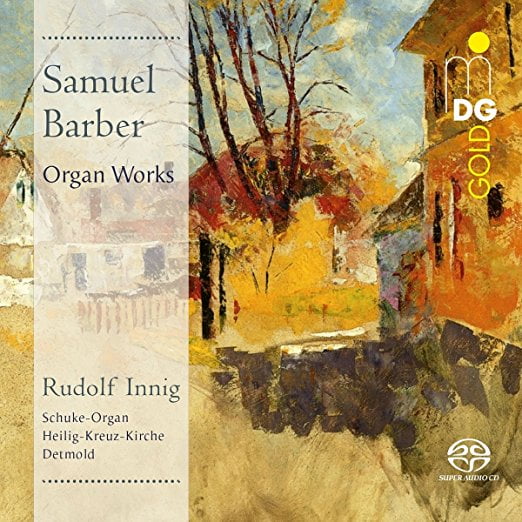
Samuel BARBER: Organ Works – Rudolf Innig – MDG Classics
Samuel BARBER: Organ Works- Rudolf Innig – MDG Classics MDG 917-2010-6 -5.1 channel SACD TT: 65:04 (8/18/17) [dist. by Naxos] ****: Barber’s Organ music well played and nicely recorded When Samuel Barber was young, he told his mother he intended to be a musician, and not to try and dissuade him. Luckily, his mother complied, and Barber became one of the great musical voices of the 20th century. What many do not know, is that Barber was a fine organist and composer for organ. The CD under examination today is a fine collection of Barber’s organ works, ably performed by Rudolph Innig. The disc starts with Barber’s first organ composition, To Longwood Gardens, and ends with his Chorale Prelude based on Silent Night. Along the way we get a lovely transcription of Barber’s most well known work, the Adagio for Strings, opus11. Barber himself did the arrangement for organ, and the piece has been performed at the state funerals of Presidents Roosevelt and Kennedy and at the memorial services for Grace Kelly and Albert Einstein. This familiar piece works well transcribed, and is one of the many highlights on this disc. Organist Rudolf Innig does a fine job with each […]

Chicago Edge Ensemble – Decaying Orbit – Music+
Chicago Edge Ensemble – Decaying Orbit [TrackList follows] – Music+ Silpakorn University 53:35 [3/17/17] ****: A Chicago jazz quintet which embraces that city’s musical unconventionality. (Dan Phillips – guitar, producer; Mars Williams – saxophones; Jeb Bishop – trombone; Hamid Drake – drums; Krzysztof Pabian – double bass) The Chicago jazz/improvisation scene has been—and continues to be—a thriving and developing one. The city has nurtured artists such as the AACM (Association for the Advancement of Creative Musicians), Sun Ra, Ken Vandermark, Jeff Parker and more. Some participants of the metropolitan’s jazz community have remained, while others have moved to other areas (Rudresh Mahanthappa is based in New York City, and Parker now lives in the Los Angeles basin). But many have never forgotten what they learned in the city or are still influenced by the region. Case in point: guitarist Dan Phillips. Although he has lived and taught in Thailand for close to two decades, Phillips stays true to his Chicago roots, and recently he formed the aptly-named Chicago Edge Ensemble to help him record and create the seven original tracks on the Ensemble’s debut, the 54-minute Decaying Orbit. The Chicago Edge Ensemble’s pedigree is notable. Drummer Hamid Drake has a […]

Primer & Bob Corritore – Ain’t Nothing You Can Do! – Delta Groove
Primer & Bob Corritore – Ain’t Nothing You Can Do! – Delta Groove DGPCD175, 52:04 *****: Modern blues artists bring continuity and style to their craft. (John Primer – guitar, vocals; Bob Corritore – harmonica; Henry Gray – piano; Barrelhouse Chuck – piano; Big John Atkinson – guitar; Chris James – guitar; Troy Sandow – bass; Brian Fahey – drums) Blues music is nearly a century old, but feels eternal. From its early pioneers like W.C. Handy, Ma Rainey and Charley Patton through Robert Johnson and Blind Willie McTell, the torch was passed. Jimmy Reed, Howlin’ Wolf, Muddy Waters and Willie Dixon took blues to Chicago. The music expanded, but never strayed from its roots. Elmore James, Buddy Guy, B.B. King and John Lee Hooker carried the flag and influenced the next generation of blues and rock artists.The up and coming blues players never lost sight of their predecessors. Harmonica virtuoso, session player, blues club owner and record producer Bob Corritore exemplifies this reverence for the genre, more than anyone. He records with a vast assortment of past and present blues musicians on many projects. His latest release, Ain’t Nothing You Can Do! is classic blues that you would expect […]

BRAHMS: Piano Works Vol. 5 = Variations for solo piano ‒ Hardy Rittner, piano ‒ MDG
BRAHMS: Piano Works Vol. 5 = Variations Op. 21, Nos. 1 and 2; Variations and Fugue on a Theme of Handel, Op. 24; Variations on a Theme of Paganini, Op. 35, Volumes 1 and 2 ‒ Hardy Rittner, piano ‒ Musikproduktion Dabringhaus und Grimm (MD&G), multichannel SACD MDG 904 1974-6 (2+2+2), 73:19 [Distr. by E1] (12/2/16) **** A satisfying survey of Brahms’s variations for solo piano, performed on a great contemporary instrument. Like the Classical masters he revered and emulated, Brahms was a master builder of variations. Two of his greatest works conclude with a variations-form movement, the Clarinet Quintet and the Fourth Symphony, whose finale is a passacaglia featuring thirty variations on a theme derived from Bach. For his own instrument, Brahms crafted two of the finest nineteenth-century sets of variations: Variations and Fugue on a Theme of Handel and the two-piano version of Variations on a Theme of Haydn. As with so many composer-pianists, he found Paganini’s Twenty-Fourth Capriccio an irresistible vehicle for variations. And like his friend and supporter Robert Schumann, Brahms cast his Paganini Variations as a series of etudes for piano. Schumann wrote six etudes; Brahms was ambitious enough to produce two sets of these […]

BRAHMS: Cello Sonatas ‒ Brian Thornton, cello / Spencer Myer, piano ‒ Steinway & Sons
BRAHMS: Cello Sonata No. 1 in E Minor, Op. 38; Cello Sonata No. 2 in F Major, Op. 99 ‒ Brian Thornton, cello / Spencer Myer, piano ‒ Steinway & Sons 30081, 55:29 (6/16/17) **** If you like your Brahms with drive and interpretive forthrightness. . . . While the First Sonata leaves me a bit cold, the Second Sonata is far and away my favorite Brahms sonata and probably my favorite cello sonata period. In a way, the two works are mirror images of each other. Sonata No. 1 was the first sonata that Brahms wrote for piano and another instrument. Originally, it was supposed to have four movements just like Sonata No. 2, but somewhere along the line Brahms decided to scrap the slow movement; the piece ended up with three more-or-less fast movements. Some scholars believe that the projected slow movement was not scrapped at all but became the second movement of Sonata No. 2 written more than twenty years later. The First Sonata begins with a rather lugubrious theme played in the cello’s lowest register; in contrast, the Second Sonata starts impetuously, with churning tremolos in the piano, over which the cello rises to its very […]

Domenico SCARLATTI: Vol. 1 thru Vol. 11 – Fernando Valenti / Wanda Landowska (1934), Playel harpsichord – Pristine
Domenico SCARLATTI: Vol. 1 thru Vol. 11 – Fernando Valenti, harpsichord / Wanda Landowska (1934), Playel harpsichord – Pristine Audio Nos. PAKM010 thru PKM027 & PAKM 004 for Landowska CD – [avail. in mono from Pristine Audio] *****: An amazing remastering of probably the best D. Scarlatti Sonatas ever. Domenico Scarlatti was one of the most amazing composers ever; the harpsichord (in spite of its lack of dynamism) is a fabulous-sounding instrument in the proper music. He was primarily an Italian (the son of Allesandro Scarlatti) a monk at the Spanish court at Escorial, who wrote over 550 little sonatas full of extraordinary energy and elan (they keep discovering new ones which is partly why there is no complete set of all of them), written in pairs to contrast and complementary to one another. Landowska had a metal-sounding board revival harpsichord which she convinced piano-maker Playel to build and offer for sale. She single-handly inserted the harpsichord into the music of the 20th century; in addition to these 1934 78s of Scarlatti (only 500 sets were pressed) convinced several famous composers to write harpsichord concerti. The speed at which she takes her favorite 20 Scarlatti sonatas is often astonishing, and […]
YARUMA: River Flows In You – Jeroen van Veen, piano – Brilliant
YARUMA: River Flows In You – Jeroen van Veen, piano = Brilliant 2 CDs 95069 [Distr. by Naxos] ****: A nice New Age double-CD package. Lee Ru-ma (YARUMA) is South Korean and studied in the UK. His music has been variously described as contemporary classical, New Age and minimalist. His simple pop instrumental songs sound almost like outtakes from the floor of Michel LeGrand. His music is frequently compared with that of Ludovico Einaudi. The notable song melodies are distinctive, different from most other New Age piano solos. Yaruma has millions of fans, and his music allows the listener to relax and unwind. Its simplicity for both the listener and performer is a part of its unpretentious nature. Jeroen van Veen has also recorded albums of the piano works of Einaudi, Satie, and himself. He runs several European music festivals and is active in the Two Piano Competition based in Miami, Florida. There are 41 tracks on these two CDs. —John Sunier

Railroad Tigers, Blu-ray
Railroad Tigers, Blu-ray (2017) Entertaining Blu-ray based on Chinese history from aging Jackie Chan. Cast: Jackie Chan, Jaycee Chan, Zitao Huang Director: Ding Sheng Studio: Well Go USA Enter. (2 discs) Video: 2.35:1 for 16:9 screens color Audio: Mandarin Chinese DD 5.1, Dubbed English DD 5.1, Dubbed English DTS-HD MA 5.1 Extras: The Dangers of Shooting, The Making Of…, VFX feaurette, The characters, Trailer Release date: 6/20/17 Length: 125 min. The setting is the time when the Japanese conquerors were oppressing the Chinese during their occupation of mainland China. Jackie has a ragtag group of freedoms fighters who decide to ambush a heavily-armed military train which has needed provisions on it. They are generally unarmed at the beginning, and greatly outnumbered, but they must fight back against the powerful Japanese army using only their wits. There are several action scenes which are said to rival those Chan used to do, but that is not necessarily the case. The action on the speeding train is quite interesting nevertheless. It’s sort of a throw-back to the earlier Chan action comedies, where he really showed how effective he was. —John Sunier

Bjarte EIKE & Barokksolistene – The Alehouse Sessions – Rubicon
A playful tribute to the engaging world of 17th-century English tavern music infused with jazz and folk music elements.
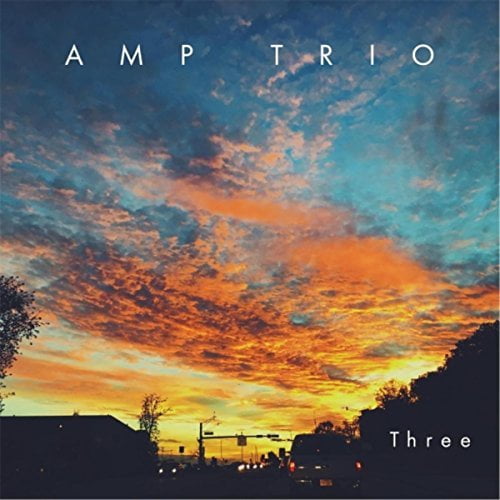
AMP Trio – Three – AMP Trio Music
AMP Trio – Three [TrackList follows] – AMP Trio Music, 56:37 [3/17/17] ****: The best things come in threes. (Addison Frei – piano, Fender Rhodes; Matt Young – drums; Perrin Grace – acoustic bass) New York City based AMP Trio believe in the power of three. The threesome’s latest is the hour-long Three (issued on the band’s own imprint, AMPTrioMusic). The group was named after themselves: the A is for keyboardist Addison Frei (acoustic piano and Fender Rhodes); the M is for drummer Matt Young; and the P is for acoustic bassist Perrin Grace. The three met while students at the Manhattan School of Music and have been gigging and recording ever since. Each member has been busy after graduating. Young was in the late Bob Belden’s Animation ensemble; Frei (it’s pronounced ‘Fry’ by the way) has released solo albums and supported John Raymond and Tim Green on stage, and has had numerous solo piano gigs; Grace has performed alongside John Riley, Amina Figarova and Alex Sipiagin and has extensive international jazz experience. But it is definitely the AMP trio’s live and studio work which has garnered the most interest from reviewers and listeners. The 13 tracks on Three showcase […]
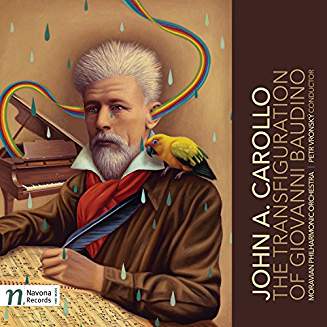
John A. CAROLLO: “The Transfiguration of Giovanni Baudino” – Moravia Philharmonic Orchestra/Petr Vronsky – Navona
John A. CAROLLO: “The Transfiguration of Giovanni Baudino” = The Rhetoric and Mythos of Belief; The Transfiguration of Giovanni Baudino; Let Freedom Ring; Do You Have an E.R. for Music?; Symphony No. 2 (“The Circle of Fire”; Move Toward the Light (Your Destiny Awaits You) – Moravia Philharmonic Orchestra/Petr Vronsky – Navona Records NV6109 [Distr. by Naxos], (August 25, 2017), 77:21 **1/2: A strange but attractive work… Part of the press materials for this new work by John A. Carollo state that “’The Transfiguration of Giovanni Baudino’ is a fascinating mixture of music written for different orchestral instrumentations and with wildly varying intended emotional responses”. After listening to this release I agree—there is an overall subdued and apprehensive feel to most of the works on this album especially in the opening and fetchingly titled The Rhetoric and Mythos of Belief. All of Carollo’s titles invite you to hear the work to find out what the piece is about—with titles ranging from the somewhat cheeky and humorous Do You Have an E.R. for Music to the Symphony No. 2 (Circle of Fire) and the implied religious or mystical connotations of The Transfiguration of Giovanni Baudino. Carollo is a new name for me. […]

Kenji BUNCH – The Snow Queen: A Ballet in Two Acts – Orchestra Next/Brian McWhorter (cond.) – innova
Kenji BUNCH – The Snow Queen: A Ballet in Two Acts – Orchestra Next/Brian McWhorter (cond.) – innova #977 (6/23/17), TT: 102:33 ****: Fantastic musical interpretation of this fairy tale classic. When I was asked to review these CDs, I interestingly did something that I normally don’t do. I chose not to read the liner notes until I had listened to this in its entirety. Growing up in the land of 10,000 lakes, long and cold winters were something that I knew all too well. I have my own aural preconceptions of winter “should” sound like in my own head, and I genuinely wanted to be surprised as to how Bunch and Oregon’s own Orchestra NEXT brought this classic Hans Christian Andersen tale to life for the Eugene Ballet Company. Since the ballet is divided into two acts, there are two discs in total. Although I was not able to watch the ballet choreography while listening to the music, I honestly didn’t need to see it—the music tells the story quite well. What I was impressed with right away on disc one was how Bunch was able to show the subtle complexities of winter compositionally. It would be easy to […]

LISZT: Symphonic Poems – Herbert Von Karajan/ Ferenc Fricsay / Stanislav Macura / Rafael Kubelik – Praga Digitals
LISZT: Symphonic Poems = Les Preludes; Tasso: Lamento e Trionfo; Mazeppa; Die Ideale – RIAS Symphony Orchestra, Berlin/ Ferenc Fricsay/ Prague Radio Symphony Orchestra/ Stanislav Macura/ Berlin Philharmonic Orchestra/ Herbert von Karajan/ Bavarian Radio Symphony Orchestra/ Rafael Kubelik – Praga Digitals SACD PRD 350 124, 79:59 (7/7/17) [Distr. Harmonia mundi/PIAS] ****: Four Liszt symphonic poems receive masterful treatment in sonically stirring restoraton. At least two of these four performances of Liszt symphonic poems have consistently granted me extreme musical satisfaction and an airing on my radio program, “The Music Treasury”: the September 1956 reading of the 1854 Les Preludes by Ferenc Fricsay (1914-1963), and the September 1960 performance of Mazeppa by Herbert von Karajan (1908-1989). The Fricsay Les Preludes (after Lamartine) testifies to the Hungarian maestro’s astonishing, fluid rhythmic flexibility. After the fateful fanfares in the trombones, the RIAS strings exhibit a grand, operatic line suggestive of “the wounded human soul’s endeavor to find solace in Nature.” The sectional, periodic structure of the piece flows seamlessly in quasi sonata-form, only to return to its heroic brass invocation, aided by the tuba. The Symphonic Poem No. 6 Mazeppa (1851) derives from a poem by Victor Hugo devoted to Lithuanian folk hero […]

BERNSTEIN: Complete Solo Works for Piano – Andrew Cooperstock, piano – Bridge
BERNSTEIN: Complete Solo Works for Piano = Seven Anniversaries; Four Anniversaries; Five Anniversaries; Thirteen Anniversaries; Touches: Chorale, Eight Variations and Coda; Sonata for the Piano; Non Troppo Presto; Music for the Dance, No. II; Four Sabras; El Salon Mexico (arr. Bernstein); Bridal Suite; Three Encores – Andrew Cooperstock, piano – Bridge 9485A/B (2 CDs) 44:09; 60:13 (6/16/17) [Distr. by Albany] ****: The diverse range of Leonard Bernstein’s keyboard style has comprehensive realization from Andrew Cooperstock. Professor of Piano Andrew Cooperstock—at the University of Colorado Boulder—celebrates Leonard Bernstein’s centenary (1918-2018), with performances that feature the composer’s complete solo piano works. A special bonus lies in the witty and charming Bridal Suite for piano duet, composed in 1960 but published in 1989. In addition to the better known Anniversaries, Sonata for the Piano, and Touches, Andrew Cooperstock includes Leonard Bernstein’s very first published work, the highly effective transcription of Aaron Copland’s orchestral tone poem El Salón México, together with the Four Sabras, Non troppo presto, and Music for the Dance, No. II. This new recording features music from the composer’s teenage years through his late composition for the 1980 Van Cliburn Competition, Touches. Cooperstock includes music Bernstein dedicated to friends and distinguished […]
Stereotypes Audio

Cembal d’amour

Pure Pleasure / Speakers Corner

Cedille


