
Monthly Archive: August 2018

Bausznern: Chamber music, Vol 2 – Berolina Ensemble, Maria Bengtsson (soprano) – MDG
A little known composer in some very fine recordings make this trip worthwhile Bausznern: Chamber music, Vol 2 – Berolina Ensemble – Waldemar von Bausznern: Quintet for Piano, Violin, Clarinet, Horn & Cello, 8 Kammergesange for Soprano, String Quartet, Flute & Clarinet, String Trio -Maria Bengtsson (soprano) Berolina Ensemble – MDG Scene 948 2071-6 Multichannel 5.1 SACD ****: Waldemar von Bausznern (1866-1931), who as a composer is not a household word, grew up in Transylvania, and quite early developed an interest in the folk music of his Hungarian surroundings. He was influenced by the New Germans, educated in the Brahms tradition in Berlin, and went on to develop a most highly individual personal style that is always good for surprises. However, it seems to have been too “far out” for the conservative Berlin public of his times, whose members evidently were irritated by its great artistic freedom. So the composers music was seldom performed and consequently, seldom heard. That’s mostly fixed now, with this second volume of his music. Both of the works presented are very interesting, yet both have different styles and to my ear, sound much more modern than the era in which they were composed. I listened […]

Editorial for August, 2018
Rameau — Le Temple de la Gloire Rameau’s masterwork — Le Temple de la Gloire (The Temple of Glory) — has been given new life, presented in the original version Rameau intended, for the first time since the opera’s 1745 premiere, with the magnificent libretto by Voltaire. This version is based on the original manuscript, housed at U.C. Berkeley’s Hargrove Music Library; this multi CD set is from the performances at U.C. Berkeley’s Zellerbach Hall, co-produced by Cal Performances and Centre de Musique Baroque de Versailles, representing a collaboration years in the making. The version of this ballet héroïque that has been heard up until now is the second version which was substantially changed by Rameau to take into account the Parisian public’s aversion to moral maxims, and their preference for love scenes. Voltaire originally wanted this to be a philosophical reform of opera: an allegory around the idea of the temple of glory, a grandiose spectacle with moral and political overtones. This original 1745 version is much more spectacular, and its originality in the history of Enlightenment Theater calls for a twenty-first-century restaging. To enter in the drawing for Rameau’s Le Temple de la Gloire merely fill out the […]
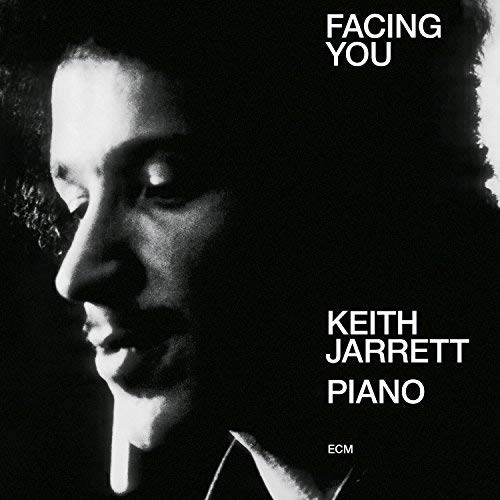
Keith Jarrett – Facing You – ECM Records
This vinyl reissue of Keith Jarret’s ECM debut belongs in every jazz collection! Keith Jarrett – Facing You – ECM Records ECM 1017 (1972/2015) 180-gram stereo vinyl (distr. by Universal Music), 47:37 *****: Like many prodigies, Keith Jarrett began taking piano lessons at the age of three. At five, he appeared on a program hosted by big band leader Paul Whiteman. At his first recital (seven years old), the Allentown native performed works by various classical composers, and two original compositions. In high school, Jarrett learned jazz (inspired by Dave Brubeck) and then attended the Berklee School Of Music. After moving to New York , he caught the attention of drummer Art Blakey who recruited him into the Jazz Messengers. His breakthrough came with the Charles Lloyd Quartet. The release of the iconic album Forest Flower and an unexpected crossover with that quartet to psychedelic rock audiences (most notably at the Fillmore West in San Francisco) lifted Jarrett’s musical profile. He was a part of the Miles Davis fusion era, concentrating on electric instrumentation. He formed quartet that featured Charlie Haden, Paul Motion and Dewey Redman. He would occasionally return to quartet formats throughout his career. Keith Jarrett artistic vision […]

STECHER & HOROWITZ: COMMISSIONS – Aristo Sham, Charlie Albright, Daniel Kim, Mackenzie Melemed, Leann Osterkamp, Anna Han, Matthew Graybil, Larry Weng – Steinway and Sons
STECHER & HOROWITZ: COMMISSIONS—LIEBERMANN: Two Impromptus—TORKE: Blue Pacific—GABRIELA LENA FRANK: Nocturno Nazqueno—DORMAN: Three Etudes—MUSTO: Improvisation and Fugue—BROWN: Suite for Piano—PISTON: Concerto for Two Pianos Soli—performed by pianists Aristo Sham, Charlie Albright, Daniel Kim, Mackenzie Melemed, Leann Osterkamp, Anna Han, Matthew Graybil, Larry Weng—Steinway and Sons 30079, 69:59, **** The attraction of this disc will be for those who love great piano sound and are interested in hearing original works for piano. The performers are winners of the Stecher and Horowitz Foundation’s biennial New York International Piano Competition. Melvin Stecher and Norman Horowitz started as a professional piano duo in 1951 and performed recitals together for the next five decades in the United States and many other countries. These concerts were sponsored by the National Concert and Artists Corporation/Civic Music, Columbia Artists Management/Community Concerts, and the United States State Department. In 1960 they established their School of the Arts that later became the Foundation named after the duo. The purpose of the Foundation was to provide artistic development, educational enhancement, seminars, master classes and performance opportunities for pianists. The Two Impromptus of Lowell Liebermann (b. 1961) are melodic and subtle, music that, as Liebermann states, “deal in shades of dynamics…and require […]

BRAHMS: The Late Piano Works – Craig Sheppard, piano – Romeo Records
Craig Sheppard traverses the late Brahms piano music with resolve and reflection. BRAHMS: The Late Piano Works = 7 Fantasien, Op. 116; 3 Intermezzi, Op. 117; 6 Klavierstuecke, Op. 118; 4 Klavierstuecke, Op. 119 – Craig Sheppard, piano – Romeo Records 7327, 74:42 (3/18/18) [Distr. by Albany] ****: Brahms began the writing of his last sets of keyboard music around 1892, works he characterized as “old bachelor music” to suggest their introspective, sometimes bleak emotional states. Complex, dense, and contemplative, the pieces demand less of pure virtuosity than long, meditative musicianship and a capacity for nuanced coloration. Their brevity may pay homage to the composer’s mentor, Schumann, who extolled the short character piece as essential to the Romantic ethos. The Op. 116 set reveals a certain symmetry, with D Minor Capriccios serving as bookends, and interior lines shared by several of the Intermezzos, in the third and seventh pieces and close intimacy of those 4-6 in E Major, of which the No. 5 opens in minor but concludes in the major mode. Sheppard belies the remark about the relatively restrained virtuosity required, opening the D Minor Capriccio with Lisztian fervor, in the manner of an assertive ballad. The A Minor […]
Stereotypes Audio

Cembal d’amour

Pure Pleasure / Speakers Corner

Cedille


