
Yearly Archive: 2018

Hans Rosbaud conducts MENDELSSOHN; WEBER – Southwest Radio Orchestra, Baden-Baden/ Hans Rosbaud – SWR Classics
SWR Classic issues a series of Hans Rosbaud vintage recordings, 1955-1962, of Romantic staples. Hans Rosbaud conducts = MENDELSSOHN: A Midsummer Night’s Dream: Overture, Scherzo and Notturno; Capriccio brillante in B minor for Piano and Orchestra, Op. 22; WEBER: Overtures: Preziosa, Op. 78; Der Freischuetz, Op. 77; Der Beherrscher der Geister, Op. 27; Konzartstueck in F minor for Piano and Orchestra, Op. 79 – Yvonne Loriod, piano (Mendelssohn)/ Robert Casadesus, piano (Weber)/ Southwest Radio Orchestra, Baden-Baden/ Hans Rosbaud – SWR Classics SWR19040CD, 79:40 (8/4/18) [Distr. by Naxos] ****: Those who lament the passing of Wilhelm Furtwaengler in 1954 as Germany’s great interpreter of the Romantic tradition—that is, who do not particularly relish the legacy of Herbert von Karajan—may recall the Austrian conductor Hans Rosbaud (1895-1962) continued both that tradition and a strong commitment to modernism in Baden-Baden by tirelessly working with his chosen SouthWest Radio Orchestra. My late colleague from my “First Hearing” days at WQXR-FM in New York City, Richard Kapp, had been a Rosbaud pupil, and he would harp perpetually on the limited scope of those few recordings that failed to represent the extraordinary range of Rosbaud’s musical acumen. Now, SWR Classic issues previously unpublished documents (rec. […]

Bausznern: Chamber music, Vol 2 – Berolina Ensemble, Maria Bengtsson (soprano) – MDG
A little known composer in some very fine recordings make this trip worthwhile Bausznern: Chamber music, Vol 2 – Berolina Ensemble – Waldemar von Bausznern: Quintet for Piano, Violin, Clarinet, Horn & Cello, 8 Kammergesange for Soprano, String Quartet, Flute & Clarinet, String Trio -Maria Bengtsson (soprano) Berolina Ensemble – MDG Scene 948 2071-6 Multichannel 5.1 SACD ****: Waldemar von Bausznern (1866-1931), who as a composer is not a household word, grew up in Transylvania, and quite early developed an interest in the folk music of his Hungarian surroundings. He was influenced by the New Germans, educated in the Brahms tradition in Berlin, and went on to develop a most highly individual personal style that is always good for surprises. However, it seems to have been too “far out” for the conservative Berlin public of his times, whose members evidently were irritated by its great artistic freedom. So the composers music was seldom performed and consequently, seldom heard. That’s mostly fixed now, with this second volume of his music. Both of the works presented are very interesting, yet both have different styles and to my ear, sound much more modern than the era in which they were composed. I listened […]

Editorial for August, 2018
Rameau — Le Temple de la Gloire Rameau’s masterwork — Le Temple de la Gloire (The Temple of Glory) — has been given new life, presented in the original version Rameau intended, for the first time since the opera’s 1745 premiere, with the magnificent libretto by Voltaire. This version is based on the original manuscript, housed at U.C. Berkeley’s Hargrove Music Library; this multi CD set is from the performances at U.C. Berkeley’s Zellerbach Hall, co-produced by Cal Performances and Centre de Musique Baroque de Versailles, representing a collaboration years in the making. The version of this ballet héroïque that has been heard up until now is the second version which was substantially changed by Rameau to take into account the Parisian public’s aversion to moral maxims, and their preference for love scenes. Voltaire originally wanted this to be a philosophical reform of opera: an allegory around the idea of the temple of glory, a grandiose spectacle with moral and political overtones. This original 1745 version is much more spectacular, and its originality in the history of Enlightenment Theater calls for a twenty-first-century restaging. To enter in the drawing for Rameau’s Le Temple de la Gloire merely fill out the […]
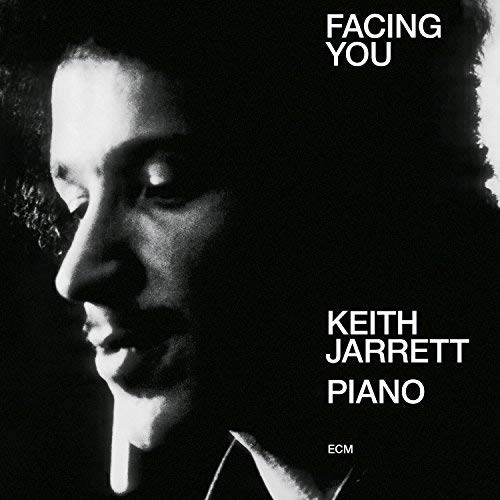
Keith Jarrett – Facing You – ECM Records
This vinyl reissue of Keith Jarret’s ECM debut belongs in every jazz collection! Keith Jarrett – Facing You – ECM Records ECM 1017 (1972/2015) 180-gram stereo vinyl (distr. by Universal Music), 47:37 *****: Like many prodigies, Keith Jarrett began taking piano lessons at the age of three. At five, he appeared on a program hosted by big band leader Paul Whiteman. At his first recital (seven years old), the Allentown native performed works by various classical composers, and two original compositions. In high school, Jarrett learned jazz (inspired by Dave Brubeck) and then attended the Berklee School Of Music. After moving to New York , he caught the attention of drummer Art Blakey who recruited him into the Jazz Messengers. His breakthrough came with the Charles Lloyd Quartet. The release of the iconic album Forest Flower and an unexpected crossover with that quartet to psychedelic rock audiences (most notably at the Fillmore West in San Francisco) lifted Jarrett’s musical profile. He was a part of the Miles Davis fusion era, concentrating on electric instrumentation. He formed quartet that featured Charlie Haden, Paul Motion and Dewey Redman. He would occasionally return to quartet formats throughout his career. Keith Jarrett artistic vision […]

STECHER & HOROWITZ: COMMISSIONS – Aristo Sham, Charlie Albright, Daniel Kim, Mackenzie Melemed, Leann Osterkamp, Anna Han, Matthew Graybil, Larry Weng – Steinway and Sons
STECHER & HOROWITZ: COMMISSIONS—LIEBERMANN: Two Impromptus—TORKE: Blue Pacific—GABRIELA LENA FRANK: Nocturno Nazqueno—DORMAN: Three Etudes—MUSTO: Improvisation and Fugue—BROWN: Suite for Piano—PISTON: Concerto for Two Pianos Soli—performed by pianists Aristo Sham, Charlie Albright, Daniel Kim, Mackenzie Melemed, Leann Osterkamp, Anna Han, Matthew Graybil, Larry Weng—Steinway and Sons 30079, 69:59, **** The attraction of this disc will be for those who love great piano sound and are interested in hearing original works for piano. The performers are winners of the Stecher and Horowitz Foundation’s biennial New York International Piano Competition. Melvin Stecher and Norman Horowitz started as a professional piano duo in 1951 and performed recitals together for the next five decades in the United States and many other countries. These concerts were sponsored by the National Concert and Artists Corporation/Civic Music, Columbia Artists Management/Community Concerts, and the United States State Department. In 1960 they established their School of the Arts that later became the Foundation named after the duo. The purpose of the Foundation was to provide artistic development, educational enhancement, seminars, master classes and performance opportunities for pianists. The Two Impromptus of Lowell Liebermann (b. 1961) are melodic and subtle, music that, as Liebermann states, “deal in shades of dynamics…and require […]

BRAHMS: The Late Piano Works – Craig Sheppard, piano – Romeo Records
Craig Sheppard traverses the late Brahms piano music with resolve and reflection. BRAHMS: The Late Piano Works = 7 Fantasien, Op. 116; 3 Intermezzi, Op. 117; 6 Klavierstuecke, Op. 118; 4 Klavierstuecke, Op. 119 – Craig Sheppard, piano – Romeo Records 7327, 74:42 (3/18/18) [Distr. by Albany] ****: Brahms began the writing of his last sets of keyboard music around 1892, works he characterized as “old bachelor music” to suggest their introspective, sometimes bleak emotional states. Complex, dense, and contemplative, the pieces demand less of pure virtuosity than long, meditative musicianship and a capacity for nuanced coloration. Their brevity may pay homage to the composer’s mentor, Schumann, who extolled the short character piece as essential to the Romantic ethos. The Op. 116 set reveals a certain symmetry, with D Minor Capriccios serving as bookends, and interior lines shared by several of the Intermezzos, in the third and seventh pieces and close intimacy of those 4-6 in E Major, of which the No. 5 opens in minor but concludes in the major mode. Sheppard belies the remark about the relatively restrained virtuosity required, opening the D Minor Capriccio with Lisztian fervor, in the manner of an assertive ballad. The A Minor […]

Lionel LOUEKE: Close Your Eyes – Newvelle Records
Lionel LOUEKE: Close Your Eyes – Newvelle Records 015 – 45:46 (June 2018): ****: (Lionel Loueke; guitar, Ruben Rogers;bass, Eric Harland; drums) State of the art vinyl release by Newvelle Records which maintains the high musical standards of its predecessors. Newvelle Records is in its third season of a unique project of producing new music, released on vinyl only, sold by subscription (only six records per year). These 180 gram LPs come handsomely-packaged with the inclusion of specially commissioned art and oblique literary works, which may or may not relate to the music. Their stated goal is to reconnect the jazz fan to the original thrill of the medium. Part of this may be considered the two-month drama of waiting for the next release. There is something special in unwrapping an LP and watching the dual-fold open with its potent suspense. And how much more rewarding it is to find a product pared down to an essential work of art. There is no plastic, no video-tie ins, no photos, bio, dedications, resumes. In short, there are two pieces of art (credited on cover) and an accompanying literary piece of uncertain description and a single disc of transparent vinyl. Apparently, given […]
Music Treasury for 29 July 2018
On Sunday, The Music Treasury is presenting cellist Dmitri Atapine. While Dr Gary Lemco oft-times presents recordings of artists, this week he will have Dmitri Atapine live in the studio at Stanford. More details of Atapine can be found below. The show can be heard between 19:00 and 21:00 PDT on KZSU in the Bay Area, as well as its concurrent streaming at kzsu.stanford.edu. Dmitri Atapine, Cellist We have as our in studio guest this evening, Dmitri Atapine, who appears in this season’s Music@Menlo Festival, now ongoing, as he has during the past six seasons. Mr. Atapine brings with him music of contemporary composers Lowell Leiberman, Aldo Parisot and James Winn along with composers of earlier eras including Louis Spohr. He will also discuss great cellists of the recent past including Mstislav Rostropovich. Dmitri Atapine has been hailed as a performer with “brilliant technical chops” (Gramophone), whose playing is “highly impressive throughout” (The Strad). As an avid soloist and recitalist, he has appeared on some of the world’s foremost stages, including Alice Tully Hall at Lincoln Center, the Zankel and Weill halls at Carnegie Hall, the National Auditorium of Spain, to cite but a few. His performances have been broadcast on radio […]

Cello Sonatas by CHOPIN; SCHUMANN; GRIEG – Inbal Segev, cello/ Juho Pohjonen, piano – Avie
A truly elegant “hour” of Romantic cello music comes to us via two instrumentalists in spirited kinship. CHOPIN: Cello Sonata in G minor, Op. 65; SCHUMANN: 3 Fantasiestuecke, Op. 73; GRIEG: Cello Sonata in A minor, Op. 36 – Inbal Segev, cello/ Juho Pohjonen, piano – Avie AV2389, 70:13 (7/20/18) [Distr. by Naxos] *****: This recital (rec. 4-6 October 2017), which represents the debut of cellist Inbal Segev on the Avie label, would seem to extend a career as meaningful as those of contemporaries Natalia Gutman, Sol Gabetta, Alisa Weilerstein, and the great precursor Zara Nelsova. The blazing sonority of Segev’s 1673 Ruggieri instrument, particularly as employed in the stunning Cello Sonata in A minor by Edvard Grieg, will electrify auditors from the outset, especially given the equally alluring keyboard collaboration from the Finnish virtuoso Juho Pohjonen (b. 1981), whose work at the Music@Menlo Festival I have followed with some dedication. Segev and Pohjonen open with Chopin’s 1846 Cello Sonata in G minor, Op. 65, created for the admired August Franchomme (1808-1884). After the piano, Chopin most revered the cello, and of his five concerted works, three are for that instrument. Chopin and Franchomme performed the piece together as […]

Sir Dan Godfrey: A Sesquicentennial Salute – Bournemouth Municipal Orchestra/ Sir Dan Godfrey – Pristine Classical
For Godfrey’s 150th anniversary, Mark Obert-Thorn supplies us a generous bounty of classic recordings, immaculate in their restored sound. Sir Dan Godfrey: A Sesquicentennial Salute = MOZART: Syphony No. 41 in C Major, K. 555 “Jupiter”; HANDEL: Largo from Xerxes; MEYERBEER: Coronation March from Le Prophete; WAGNER: Homage March; GERMAN: Three Dances from Henry VIII: SUPPE: Pique Dame – Overture; AUBER: The Bronze Horse – Overture; OFFENBACH: Orpheus in the Underworld – Overture; ALFORD The Two Imps – W.Byrne and W.W. Bennett, xylophone/ Symphony Orchestra/ Bournemouth Municipal Orchestra/ Sir Dan Godfrey – Pristine Classical PASC 534, 74:38[www.pristineclassical.com ****: Restoration Engineer and Producer Mark Obert-Thorn turns his gifted spotlight upon Sir Dan Godfrey (1868-1939), who ordinarily does not occupy a prominent place in my personal pantheon of “the greats,” but whose 150th anniversary of his birth warrants artistic reconsideration. Obert-Thorn selects a number of significant works recorded 1927-1934 that reveal Godfrey—whom I had long associated with light music and a number of Gilbert & Sullivan moments—as a sensitive and authoritative musician quite capable of the virile showmanship we attribute at once to Arthur Fiedler and Malcolm Sargent. Obert-Thorn speculates that the “Symphony Orchestra” employed in the 4 February 1927 rendition of […]

J.S. Bach: Sonatas for Flute and Harpsichord – Stephen Schultz, Jory Vinikour – Music and Arts
The best performances of these works of the new millenium. J.S. Bach: Sonatas for Flute and Harpsichord – Stephen Schultz (flute) Jory Vinikour (Harpsichord) – Music and Arts 1295 55:18, (3/2/18) *****: This writer subscribes to the view that the Sonatas BWV 1017-1023 for violin and harpsichord obbligato by Bach are his finest chamber works. A new recording of these by Rachel Barton Pine and Jory Vinikour were recently and favorably reviewed on these pages. It seems only fitting to acknowledge a 2018 recording of pieces that are nearest rivals to these eminent works, the Sonatas for Flute and Harpsichord, BWV 1030-1032, (featuring, as it happens, the same harpsichordist, Jory Vinikour); They are part of the inspired innovation to realize a trio sonata with two instruments by asking of the obbligato accompaniment a division of hands. The left hand merrily chases around the soloist, now in imitative counterpoint and now in extravagant improvisations, each instrument with its own themes, which converse with each other. The left hand soberly performs the work of the basso continuo, carrying along the swiftly-moving harmonic progressions. From a historical perspective, these sonatas were remarkable for the use of the transverse flute as a solo instrument, […]

Erroll Garner – Nightconcert – Octave Music/Mack Avenue Records
More than five decades later, a live concert of a jazz legend is released. Erroll Garner – Nightconcert – Octave Music/Mack Avenue Records MAC1142LP [7/13/2018] double vinyl, 79:34 *****: (Erroll Garner – piano; Eddie Calhoun – double bass; Kelly Martin – drums) Coming from Pittsburgh, Pennsylvania, it was understandable that Erroll Garner would be compared to another Steel City legend, Earl “Fatha” Hines. The diminutive Garner (who attended the same high school as Billy Strayhorn and Ahmad Jamal) developed a specific playing style. Utilizing right hand octaves and expanding the stride influences of Fats Waller and James P. Johnson, Garner channeled a frenetic virtuosity combing various cross rhythms and time signatures with melodic improvisations. His three decades of recording (Mercury, Columbia, Blue Note, Verve, London and Savoy) placed an emphasis on swing and bebop-like freneticism. Perhaps more amazing is that he never learned to read music (which became a subject of the documentary No One Can Hear You Read). Many people are aware of Erroll Garner for composing the ultimate ballad standard, “Misty”, or for his numerous appearances on the Tonight Show (Johnny Carson was a huge fan). But his reputation was forged from his electrifying live performances in various […]

SHOSTAKOVICH: Symphony Nos. 4 & 11 – Boston Symphony Orchestra/ Andris Nelsons – DGG
A Shostakovich cycle of special merit, the Nelsons performances of symphonies 4 and 11 bring the BSO to fever pitch. SHOSTAKOVICH: Symphony No. 4 in C minor, Op. 43; Symphony No. 11 in G minor, Op. 103 “The Year 1905” – Boston Symphony Orchestra/ Andris Nelsons – DGG B0028595-02 (2 CDs) 64:24; 62:59 (7/6/18) [Distr. by Universal] *****: The history of the Shostakovich Symphony No. 4 involves a tale of great frustration and upheaval in the life of the composer: soon after the Leningrad Philharmonic under Fritz Stiedry began rehearsals of this intricate and darkly apocalyptic work in August 1936, Soviet authorities cancelled the premiere on grounds of “elitist formalism,” that the aesthetic tenor of the work failed to conform to Party strictures about the “People’s art.” Already under a cloud created by Josef Stalin’s rebuke of the opera Lady Macbeth of Mtsensk, Shostakovich conceived the Fourth as a kind of aesthetic obstinacy of musical principles. The actual debut of this post-Mahler, mammoth symphonic work came on 30 December 1961, under the direction of Kyrll Kondrashin. Doubtless, the persistent sense of tension and fear that abides in this music corresponds much to the spirit of the times, when a failure […]

Jascha Spivakovsky: Bach to Bloch, Volume VI – Jascha Spivakovsky, piano – Pristine Audio
The sixth volume in the Spivakovsky legacy adds virtuoso color to an already seamless stylistic presence.
The Music Treasury for Sunday evening, 22 July 22 2018 – Henry Swoboda, Conductor
This week, The Music Treasury will be presenting works by Czech conductor Henry Swoboda. An active performer on various stages in Europe and the United States, he was also involved in the recording industry, capturing performances of many musicians now of historic value. Dr Gary Lemco will be hosting the show, airing from 19:00 to 21:00 PDT on KZSU from Stanford University, and concurrently streamed at kzsu.stanford.edu. Henry Swoboda, conductor and musicologist Henry Swoboda (October 29, 1897 – August 13, 1990) was a Czech conductor and musicologist. He made many recordings for the Westminster label, including the first commercially available record of Bruckner’s Sixth Symphony. He worked from 1927 to 1931 for Electrola, Berlin and later as conductor for Radio-Prag. He was a Guest professor at University of Southern California between 1931–1939 and emigrated 1939 to the USA. Swoboda’s pre-war career had involved administration and organization as well as conducting. Post-war he was one of the founder-members of the Westminster recording company in 1949. He recorded prolifically for Westminster in the early 1950s as well as for Concert Hall and its associated Musical Masterpieces Society and La Guilde International du Disque. On one slightly later recording (1959) he accompanied Ruth […]

Johann Sebastian BACH. The sonatas for violin and harpsichord—Rachael Barton Pine, Jory Vinikour —Cedille Records
Johann Sebastian BACH. The sonatas for violin and harpsichord—Rachael Barton Pine (violin), Jory Vinikour (harpsichord)—Cedille Records CDR 900000 177—99:45, **** : While we can’t afford Bach the title as inventor of the sonata for violin and continuo, he did provide us examples of the first concertos for keyboard and orchestra. And in a form that would be continued since his time, he left us six sonatas for keyboard and violin. What makes these different from the scores of sonatas that first appeared in Italy after 1600 is that the keyboard part acts not as a “continuous bass” but as bass and a second voice. The result are pieces written predominately in trio texture, with the right hand and violin often intertwined in harmony or else chasing one another, as Bach is known to do, in counterpoint. Jory Vinikour (harpsichord) and Rachel Barton Pine (violin) take the historical approach in their recoding of the six sonatas (BWV 1014-1019) using period instruments and saving left-handed vibrato for another day. Bach’s structure for the sonatas is unusually consistent, save for the last sonata in G, which survives with alternative pieces, wrought in five instead of four movements. Vinikour and Barton Pine offer us first the […]

Pat Metheny Group – Travels – ECM Records
ECM reissues a brilliant Pat Metheny live concert album on vinyl. Pat Metheny Group – Travels – ECM Records ECM 1252/53 (1983/2018) 180-gram stereo double vinyl (distr. by Universal Music Group), 96:28 ****1/2: (Pat Metheny – guitar, guitar synthesizer; Lyle Mays – piano, synthesizer, organ, autoharp, synclavier; Steve Rodby – acoustic bass, electric bass, bass synthesizer; Dan Gottlieb – drums; Nana Vasconcelos – percussion, voice, berimbau) Jazz takes on another dimension when it is played live. The Pat Metheny Group released Travels in 1983. It was the group’s first live album and won the Grammy Award for Best Jazz Fusion Performance. Travels climbed to #3 on the jazz charts and cracked the top 100 in pop. Recorded in Philadelphia, Hartford, Sacramento and Nacogdoches, the setlist is comprised of previously released and unreleased material. The tour was in support of the studio album Offramp and featured Metheny (guitar, guitar synthesizer) Lyle Mays (piano, organ, synclavier, synthesizers), Steve Rodby (bass, bass synthesizer), Dan Gottlieb (drums) and special guest Nana Vasconcelos (percussion, voice). ECM has reissued Travels on 180-gram double vinyl album. As the group initiates the familiar pulse-driven rhythm of “Are You Going With Me?”, the crowd erupts with applause. The low-key […]

SCRIABIN: Preludes, Etudes, Sonatas – Vadym Kholodenko, piano – Harmonia mundi
SCRIABIN: Preludes, Etudes, Sonatas, and other works = 6 Preludes, Op. 13; 5 Preludes, Op. 16; Sonata No. 4, Op. 30; Sonata No. 5, Op. 53; Poeme tragique, Op. 34; Poeme satanique, Op. 36; Eight Etudes, Op. 42; Vers la flamme, Op. 72 – Vadym Kholodenko, piano – Harmonia mundi HMM 902255, 72:01 (7/13/18) [Dist. by PIAS] ****: Vadym Kholodenko (rec. 1 September 2017) celebrates Alexander Scriabin’s “imaginative, fantastic, musical world,” citing his teacher Vera Gornostaeva, with a diverse selection of “poems” which trace the iconoclastic composer’s evolution—via Chopin and Liszt—into a self-proclaimed visionary of light. A master of concision, Scriabin penned for the better part of a decade various series of “poemes,” distilled miniatures —some 34 of them—that, like the paintings of J.W.N. Turner, increasingly become infused with light; if they are indeed poetry, then their obvious kinship lies in William Blake. Scriabin conceived his sets of Preludes, Opp. 13 and 16 (1895), as extensions of his Op. 11 set, meant to complement his appreciation of the Chopin oeuvre, Op. 28. The opening C Major Prelude, Maestoso, from Op. 13 has a Lisztian cast, diatonic in harmony and moving in dotted rhythm as a march. The ensuing Allegro in […]

Rachmaninov: Etudes-Tableaux, Op. 33 and Op. 39 – Steven Osborne, piano – Hyperion
Steven Osborne extends his prodigious gifts into the two sets of Etudes-Tableaux of Rachmaninov. Rachmaninov: Etudes-Tableaux, Op. 33 and Op. 39 – Steven Osborne, piano – Hyperion CDA68188, 61:39 (7/27/18) [Distr. Harmonia mundi/PIAS] ****: When Rachmaninov composed his first set of Etudes-Tableaux in 1911, he still felt the influences of Chopin, Schumann and Liszt, especially in their mastery of small forms that could convey, as Schumann remarked, “the import of whole symphonies.” In his 1930 letter to composer Ottorino Respighi, who intended to orchestrate several of the pieces, Rachmaninov admitted as to having some “program” in mind, but he wished the public to “listen to the music absolutely.” Originally, Rachmaninov composed nine of such tonal-pictures, but he would withdraw three of them: the C Minor would furnish material for his future G Minor Concerto; No. 5 in D Minor would appear posthumously in 1948; the A Minor became transposed to the Op. 39 set of 1917 as No. 6. Even with the forthright opening of No. 1 in F minor, Osborne projects its resolute affect akin to aspects of Chopin, its martial gait and pianistic confidence, marked alternately by diaphanous clouds and Russian bells. The ensuing C Major proffers a […]

The Django Festival AllStars – Attitude Manouche – Resilience Music Alliance
An up to date version of gypsy jazz The Django Festival AllStars – Attitude Manouche – Resilience Music Alliance 54:18****: (Samson Schmitt – lead guitar; Pierre Blanchard – violin, string arrangements; Ludovic Beier – accordion, accordina; Philippe “Doudou”Cuilerier – rhythm guitar, vocals; Antonio Licusati – double bass) In the book Django Reinhardt and the Illustrated History of Gypsy Jazz by Michael Dregni, we learn that Reinhardt was a “Manouche Gypsy” from the Romani gypsy’s of Eastern Europe. During the height of his popularity in the 1930s and 1940s in the jazz world of Paris, gypsy jazz was considered a pariah well outside the mainstream of what was regarded as jazz during that time period. That this style of music has survived and to some extent thrived, is due in no small measure to groups like The Django Festival AllStars and is exemplified by their latest release Attitude Manouche. In this frothy session of gypsy-styled music, ten of the compositions are by band members, with only one from another source and that is John Williams Main Theme from “Schindler’s List”. Their treatment of the number is in keeping with the gravity of the Stephen Spielberg film and is wonderfully evocative with […]

Steve Hobbs – Tribute to Bobby – Challenge
More than just tribute. Steve Hobbs – Tribute to Bobby [TrackList follows] – Challenge CR73433, 65:10 [1/5/18] ****: (Steve Hobbs – marimba, vibes; Adam Kolker – tenor and soprano saxophone; Bill O’Connell – piano; Peter Washington – bass; John Riley – drums) Vibraphonist Steve Hobbs’ 65-minute album Tribute to Bobby did not start out as a homage to Hobbs’ mentor and friend, famed vibraphonist Bobby Hutcherson. But the 13-track CD was turned into an accolade when Hutcherson passed away the day before this session was taped. While there are no Hutcherson compositions, listeners can feel Hutcherson’s palpable personality in the music and performances. In other ways, Tribute to Bobby also pays respect to other musicians, some who are still alive (Bob Dylan) and others who are gone (Consuelo Velázquez, Horace Silver, Thelonious Monk). Essentially, Tribute to Bobby honors many aspects of modern music, jazz and otherwise. Hobbs came to prominence in the late 1980s, and has performed with trumpeter Tom Harrell, Jazz Crusaders drummer Stix Hooper and continues to record with artists such as Kenny Barron. Hobbs has issued several solo records. Tribute to Bobby is the third with Hobbs’ current group, which comprises saxophonist Adam Kolker (he’s backed John […]

Life Force – Peter Moore, Trombone – Rubicon
In a brilliantly clean recording featuring trombone and piano, Peter Moore and James Baillieu make beautiful music. Life Force — Peter Moore (trombone), James Baillieu (piano)—Rubicon Classics RCD1028—66:31, ****1/2 : The trombone speaks by amplifying the buzzing of the player’s lips into a small, diminutive cup. Notes are differentiated by either extending the length of tubing through which this vibration travels, or else by traversing the harmonic series, as a bugler does. Tone is changed by limiting the amount of air, or else, by re-directing the direction of the stream of air within the mouthpiece. Hearing a trombone without all the mechanical fuss that’s part of playing, from sloppy movement of the slide to imprecision in the focus of the lips within the mouthpiece, betrays the amateur from the professional. What I admired most about Peter Moore’s recital is his technical perfection and clarity. The recording is pristinely lucid to also capture the depth of feeling from pianist James Baillieu. Coupled here are two expert musicians. Moore made his mark at the age of 12 as the BBC’s Young musician of the year. He now plays for the London Symphony Orchestra, appointed at age 18. The recital is an eclectic […]
Stereotypes Audio

Cembal d’amour

Pure Pleasure / Speakers Corner

Cedille


