by Audiophile Audition | Apr 22, 2026 | Jazz CD Reviews
A deep dive into Davis.
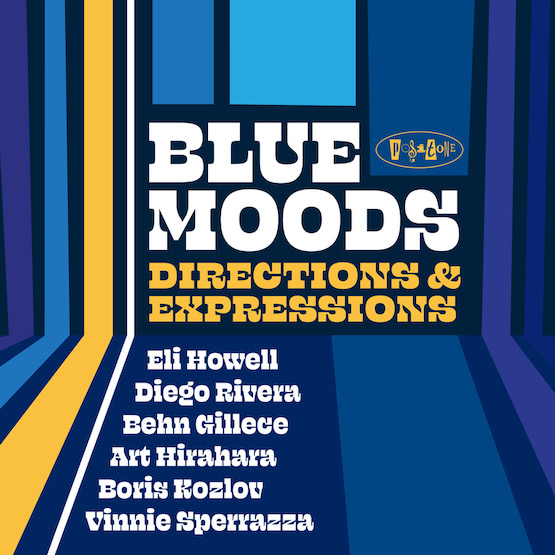
Blue Moods – Directions & Expressions – [TrackList follows] – Posi-Tone PR8274; 61:18 [4/17/26] ****:
(Diego Rivera – tenor & soprano saxophones; Art Hirahara – piano; Boris Kozlov – bass; Eli Howell – trombone; Behn Gillece – vibraphone; Vinnie Sperrazza – drums; Marc Free – producer)
Blue Moods’ Directions & Expressions is the fourth tribute project in an ongoing series from the Posi-Tone label. Previous Blue Moods records celebrated Freddie Hubbard (2025’s Force & Grace), Duke Pearson (2024’s Swing & Soul), and Charles Mingus (2022’s Myth & Wisdom). Coincidentally, a 1955 Miles Davis album was titled Blue Moods. So, it is apt the group Blue Moods now focuses on Davis. Directions & Expressions includes ten interpretations of lesser-known Davis-penned tunes. The 61-minute program has tenor and soprano saxophonist Diego Rivera, pianist Art Hirahara, bassist Boris Kozlov, trombonist Eli Howell, vibraphonist Behn Gillece and drummer Vinnie Sperrazza. The deletion of trumpet might seem unusual but it removes comparisons to Davis’ style and sound. Thus, the music is front and center and reveals Davis’ compositional command on several underappreciated songs.
The sextet kicks off with “Boplicity” from 1957’s compilation Birth of the Cool. Blue Moods stretches out on this cool jazz standard covered by Ronnie Cuber, Dave Liebman, Richie Cole and others. Davis’ nonet version showcased unison sound and colorful harmony. The Blue Moods’ arrangement has a light Latin rhythmic romp. Rivera and Howell craft some unified lines in a nod to the original, Gillece spins out a swinging solo, and that is followed by a sax improvisation.
“Somethin’ Else” is the title track from Cannonball Adderley’s 1958 Blue Note LP. At the time, Adderley was in Miles Davis’ First Great Quintet, so it made sense Davis wrote a piece for Adderley and also guested as a sideman. Blue Moods shrinks the tune to half the size of Adderley’s. Hirahara and Gillece furnish notable early solos, then there is a fine Rivera workout, and the band keeps it upbeat throughout.
Blue Moods evinces a facility for ballad material on “Circles,” from 1967’s Miles Smiles which featured Davis’ Second Great Quintet. Howell provides an interesting lower-register trombone tonality which contrasts with the higher register trumpet and sax on Miles Smiles. Gillece’s vibes also supply lower notes which support the Blue Moods’ appropriately moody, bluesy treatment. Another cut from Miles Smiles is “Stuff.” Davis’s 17-minute track had electric bass guitar and electric piano to fashion a jazz fusion feel. Blue Moods, on the other hand, concentrates on acoustic elements, pulls away from Davis’ groove jam approach – thus shaving ten minutes from the running time – and centers on melodic extemporization rather than Davis’ regulative rhythmic aspect.
Bop and post-bop are the foundations for “Agitation,” from 1965’s E.S.P., the debut of Davis’s Second Great Quintet. “Agitation” is the only E.S.P. tune credited solely to Davis and has an elasticity which mixes adventurous abstraction with a grounded structure. Blue Moods’ transformation of “Agitation” is anchored to a more straightforward bop stance although there are segments where the group breaks loose, particularly during the tune’s second half. One of the more obscure Davis works is “Générique,” from the soundtrack for Louis Malle’s 1958 crime film Ascenseur pour l’échafaud (English: Elevator to the Gallows). The beguiling number is worth discovering. Blue Moods maintains Davis’ pensiveness which permeates this darkly pigmented and noirish ballad.
The lengthiest and most emboldened selection is the 12-minute “La Suite De Kilimanjaro,” inspired by the title track from 1968’s Filles de Kilimanjaro. Davis’ release was transitional and formed a bridge between post-bop jazz and Davis’ full-on fusion on the subsequent In a Silent Way. Both versions offer spatial symmetry but done in different ways. Davis balanced acoustic and electric instruments whereas Blue Moods forges something akin to the Modern Jazz Quartet, especially during the first half where vibes interact with piano, bass and drums. The second half shifts to a faster, bop-bolstered stride where Rivera goes all out while the rhythm section brings the heat.
Another stimulant is “Lazy Susan/Half Nelson,” which melds two Davis compositions. “Half Nelson” (see Workin’ with the Miles Davis Quintet, taped 1956, released 1960) uses chord progressions from Tadd Dameron’s “Lady Bird.” “Lazy Susan” (from Miles Davis, Vol. 3, a 10-inch 1954 LP) is also a contrafact – a musical work based on a prior work – of “Lady Bird.” Blue Moods two-for-one is easygoing and swinging with lots of soloing and unison lines. There’s a lissome quality to “Fran-Dance,” a 1958 piece written by Davis for his then-wife Frances Taylor Davis, a ballerina and dancer. Blue Moods sustains a lightly-lush, late-night ambiance with an emphasis on vibraphone, piano and yearning horn spotlights. What to do with a funk vamp? Jettison the funk and preserve the vamp. That’s what Blue Moods does with “U’n’I,” from 1983’s Star People. No synths, no electric bass or electric guitar, no self-parody. It’s a cavorting and undulating album closer sure to get toes tapping and fingers snapping.
Tributes can be tricky to do. Stay too near to the original and its mimicry. Stray to far from the source and an artist may lose fans likely to enjoy the music. Blue Moods consistently hits a sympathetic equilibrium on their continuing tribute series. Directions & Expressions is insightful and imaginative; performed with panache and respect; and should be heard by listeners who appreciate what can be done with Davis’ compositions.
—Doug Simpson
Blue Moods – Directions & Expressions
TrackList:
Boplicity
Somethin’ Else
Circle
Stuff
Agitation
Générique
Lazy Susan/Half Nelson
La Suite De Kilimanjaro
Fran Dance
U’n’I

by Audiophile Audition | Apr 20, 2026 | Classical CD Reviews
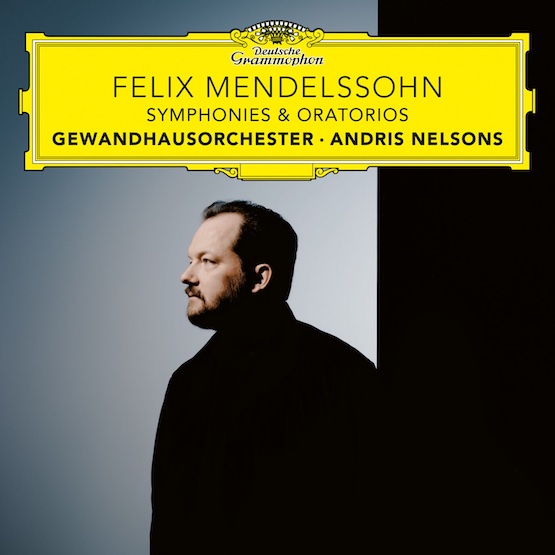
MENDELSSOHN: Symphonies & Oratorios – Gewandhausorchester Leipzig/ Andris Nelsons – Deutsche Grammophon DG 486 8178 (2/10/26) (7 CDs = 70:10; 55:05; 66:22; 61:49; 72:25; 74:03; 59:25; complete contents/credits detailed below) [Distr. by Universal] **8**:
Deutsche Grammophon collects the 2021-2024 recordings by Latvian maestro Andris Nelsons, including his readings of Mendelssohn’s oratorios, Elijah and St. Paul. Nelsons leads the Gewandhaus Orchestra of Leipzig, historically the very ensemble Mendelssohn himself conducted. I postponed my audition of the Biblical settings to enjoy Nelsons’ athletic rendition of the youthful (1824) C Minor Symphony No. 1, a product of an ardently inspired master at fifteen-years-old. Energetically dramatic in the manner of both Beethoven and Weber, the opening Allegro di molto oozes confidence and optimism. The two interior movements linger in the imagination for their songful appeal as well as jubilant buoyancy in the Menuetto. The last movement, Allegro con fuoco, reveals a young master of polyphonic procedures, the discipline derived from Bach and the previous mastery of thirteen string symphonies by which Mendelssohn’s craft attained a fine sheen.
Coupled on Disc 1 with Op. 11 we have Mendelssohn’s evocation of Sir Walter Scott’s highlands, his Symphony No. 3 in A Minor, “Scottish.” Composed over an extended period (of revision), 1829-1841, the work enthusiastically captures Mendelssohn’s fondness for the Edinburgh environs and their pageant of history. Strings and elegiac woodwinds intone, Andante con moto, the innate nobility of the landscape, a brisk tempo that does not compete with the sheer monumentality of effect garnered by Otto Klemperer and the Philharmonia Orchestra. The ensuing Allegro un poco agitato projects a virile, elastic swagger – wonderful in the cellos and timpani – much in line with that drive Dimitri Mitropoulos imparted to the score. The marvelous, diaphanous clarity of the woodwinds, especially the clarinet, in the Vivace non troppo, the scherzo, redolent of highland bagpipes, deserves repetition. Pathos and dignity suffuse the Adagio, alternately offering deep sincerity in the strings followed by a funeral march. The last movement, Allegro vivacissimo – Allegro maestoso assai, conveys the grumbling, impulsive, Scottish sense of militant virtues, concluding with a victory hymn.
“The jolliest piece I have written,” Mendelssohn’s words to describe his 1833 “Italian” Symphony, literally explodes with Nelsons’ exuberance for the opening Allegro vivace, whose lithe bluster rivals the same movement from Sir Thomas Beecham. Vivid trumpet calls saturate the lively atmosphere, a fervid sense of former Roman glories superimposed on a brilliant landscape. Andante con moto, the second movement proceeds a bit marcato to my taste, but persuasively evocative of a leisurely tour in pace and time. The ensuing, rather brisk, Con moto moderato hints more of the light-infused Black Forest than sunny Tuscany, given the luxurious horn calls and flute trills with their mesmerizing, bucolic colors. The dazzling hustle of the concluding Saltarello movement, Presto, enjoys the deft alternations of light and shade, thin and lush textures, to impart a fervent, enduring affection for the Italian ethos.
Disc 7 concludes with Mendelssohn’s musical celebration, 1830, of the centennial of the Augsburg Confession, a major rite of the Lutheran Church, his “Reformation” Symphony in D minor. Legend has it that, from the initial notes of the Gregorian Magnificat, Mendelsohn composed the entire score vertically, as if to commemorate its ecclesiastical rigor. Motifs like the “Dresden Amen” infiltrate the polyphonic texture, a progression that elicits awe and reverent menace, at once. Nelsons takes a huge lacuna prior to the “Amen” that recurs late in the recapitulation, a virtual signal for Wagner to usher forth his “Grail” motif from Parsifal. The second movement, Allegro vivace, begins as a muted woodwind serenade that soon gains heft and splendor, though it retains its function as an interlude. The brief Andante movement provides, arioso, a transition to the initial, woodwind devotions of the final movement, whose Lutheran hymn Ein feste Burg ist under Gott soon monumentally irradiates, Allegro maestoso, the finale. Remember Mendelssohn’s “War March of the Priests” from Athalie? A similar martial fervor invests Nelsons’ brisk delivery of the composer’s mighty contrapuntal filigree, set in contrasting, sweeping, orchestral antiphons.
For the 400th anniversary of Johannes Gutenberg’s printing press, 1840, the city of Leipzig heard Mendelssohn’s celebratory Symphony-Cantata Lobgesang, his “Hymn of Praise,” that reveres an invention heralding Mankind’s progress, “the armor of light” to cast off the darkness of paganism and illiteracy. Mendelssohn utilizes Martin Luther’s translation of the Bible, a vehicle of faith made available by the innovation of moveable type. In ten sections, the work finds its unity in the trombone hymn that sets the whole in motion in the contrapuntally rich “Sinfonia.” After the spirit of Beethoven’s Ninth, Mendelssohn invokes a vocal as well as an instrumental arsenal, a structural “hybrid,” that blurs the distinction between absolute music and ecclesiastical reverence. The cyclical character of the music reaffirms God’s plan in finding through Gutenberg “the Word,” now made available to all flesh. Movement six proves especially dramatic and poignant: three times “Watchman is the night past?” appears, answered by the radiant soprano and chorus alike, “The night Is past,” to invite a new era of (German) Reformation, affirmed by the chorale, Nun danket Alle Gott, in a capella chorus and then with full orchestra. The prevalence of J.S. Bach’s polyphony in conjunction with Mendelssohn’s innate Romantic diction, his potent sense of vocal impact, makes for a notable composition too often relegated to the composer’s less successful efforts.
Nelsons includes two oratorios familiar in the United Kingdom in their Victorian English translation, but in this case sung in German. Paulus (1832), heavily influenced by the cantatas and passions of J.S. Bach, results from a commission from the Saint Cecilia Society in Frankfurt. The narrative traces the transformation of the Jewish Pharisee Saul into the Apostle Paul as a result of the stoning and death of Saint Stephen and the events of the road to Damascus. Periods of lyrical contemplation in the various arias alternate with highly dramatic exclamations by the chorus that often resemble moments in Handel, even more than in Bach. The narrator in Paulus imitates the Evangelist in Bach’s St. Matthew Passion. After Saul causes the death of Stephen, the chorus intones “Happy and blessed are they who have endured.” Attend to the last pianissimo, “For though the body dies, the soul shall live forever.” Basso Georg Zeppenfeld characterizes a somewhat truculent Saul, but his voice finds wonderful solace in the soprano of Julia Kleiter, who in her aria, “Jerusalem!” reminds me of Lucia Popp.
Mendelssohn’s oratorio masterpiece, Elijah, results from a commission from the Birmingham Festival in 1845 to compose a work (here based on the Book of Kings) that would succeed Paulus. The life of the prophet Elijah epitomized the evolution of Jewish faith from worship of the Babylonian pantheon of idols and myths to the worship of one monotheistic God. Even as a convert to Protestantism, Mendelssohn retained a strong Jewish sense of identity, having remarked, “It took a Jew to resurrect Bach’s St. Matthew Passion!” In this case, the typically wrathful prophet will be borne aloft on an angel’s wings, a reward for his visionary powers. A key moment has Elijah come to the end of his earthly life, and the accompaniment disappears so the chorus may sing, a cappella, a mighty C Major fortissimo. Andrè Schuen has the title role, here realized with a fine-tuned instinct for dramatic conviction.
Kudos to the DG production team for having assembled a sincerely felt, musically alert series of performances by Nelsons, who proves himself a master of the Mendelssohn style.
–Gary Lemco
MENDELSSOHN: Symphonies & Oratorios
1Paulus, Op. 36; 2ELIAS, Op. 70;
Symphony No. 1 in C Minor, Op. 11;
3Symphony No. 2 in B-flat Major, “Lobgesang,” Op. 52;
Symphony No. 3 in A Minor, “Scottish,” Op. 56;
Symphony No. 4 in A Major, “Italian,”
Op. 90; Symphony No. 5 in D Minor, “Reformation,” Op. 107
1Julia Kleiter, soprano/
1, 2Wiebke Lehmkuhl, alto/
1,2Werner Guera, tenor/
1Georg Zeppenfeld, bass/
1,2,3MDR-Rundfunkchor/
1,2,3Philipp Ahmann, chorus master/
2Golda Schultz, soprano/
2Andre Schuen, baritone/
3Christiane Karg, soprano/
3Elsa Benoit, soprano II/
by Audiophile Audition | Apr 14, 2026 | Pop/Rock/World CD Reviews, SACD & Other Hi-Res Reviews
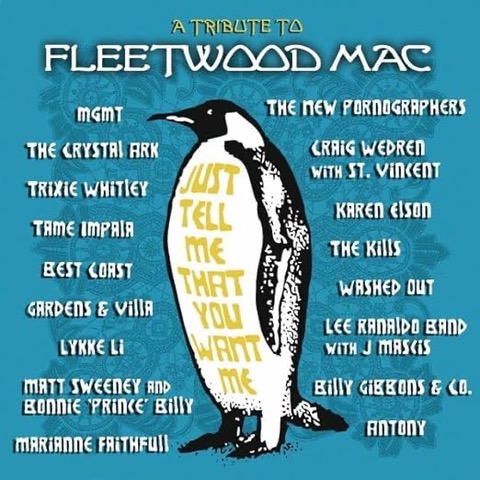
Craft Recordings releases an indie rock tribute to Fleetwood Mac for Record Store Day!
Just Tell Me That You Want Me – A Tribute To Fleetwood Mac – Craft Recordings CR 01003 [4/18/2026] 2-LP Translucent Sea Blue Vinyl Record Store Day, 87:01 ****1/2:
(Featuring Lee Ranaldo Band; Antony; Trixie Whitley; Billy Gibbons & Co.; Best Coast; The New Pornographers; Marianne Faithful; Lykka Li; Karen Elson; Matt Sweeney and Bonnie “Prince” Billy; Washed Out; Tame Impala; Craig Wedren with St. Vincent; The Kills; Gardens & Villa; The Crystal Ark; MGMT; Haim; The Entrance Band)
Just in time for Record Store Day 2026, Just Tell Me That You Want Me – A Tribute To Fleetwood Mac is an unusual collection of engaging covers. It covers a variety of eras from this band, including some of the the greatest hits and lesser known material. It is stylistically diverse, and plays like a shuffle. Side A consists of three Peter Green-penned songs. On the instrumental, “Albatross”. Lee Ranaldo creates a guitar-based sonic landscape of distortion and echo that captures the deep blues pedigree of Green. “Before The Beginning” (Trixie Whitley) is troubled blues with a driving pulse and gut-wrenching vocals. Billy Gibbons brings a slow-burning intensity to a slowed down “Oh Well”, changing the vibe. The Entrance adds a psychedelic dimension to the rendition of “The Green Manalishi” with a rocking tempo and crashing guitars.
Certainly Stevie Nicks is the most covered songwriter on this collection. Antony gives a faithful rendition of “Landslide” with warm idiosyncratic vocals and acoustic guitar. Karen Elson delivers a lithe version of “Gold Dust Woman” and keeps the ethereal feeling. One of the significantly re-arranged numbers is Best Coast’s “Rhiannon”. This seems like an artist trying to establish a more alternative pop statement. One of the weirdest arrangements is the fuzzy synthesizer treatment of “Sisters Of The Moon” (Craig Wedren with St. Vincent). It is a significant divergence from the Tusk single. (Note; There are four tracks from Tusk.) Many of these arrangements eschew the meticulous studio production in favor of more jagged acoustics. One of these is “Dreams” as performed by The Kills. It has a menacing edge. “Gypsy” as realized by Gardens & Villa has an interesting take, combining synthesizer/flute with vocals that emulate Nicks. One of the strongest cuts is “Silver Springs” by Lykke Li. Her vocals convey the heartfelt impact (with great echo and spooky aesthetics).
This album is at its most effective when the contributors cut loose. Oddly, there are only two Lindsey Buckingham songs. On “Tusk”, The Crystal transforms this into a groove-infused electronic flowing jam, still maintaining the number’s eccentricity. “That’s All For Everyone” (Tame Impala) is musically expansive with tracked vocals and spacey accents. Bob Welch’s “Future Games” (MGMT) utilizes digitally-altered voices and an other-worldly hypnotic soundscape, bringing an exotic, almost science-fiction aura.. Christine McVie has two compositions. Haim aligns with Mac’s version of “Hold Me” as jaunty pop. Conversely, The New Pornographers intermingle hard rocking and layered vocals to liven up “Think About Me”.
Just Tell me That You Want Me – A Tribute To Fleetwood Mac is a rewarding collection. Translating Fleetwood Mac to Indie rock is a compelling way to revisit this band’s diverse catalog. Vinyl aficionados will appreciate the translucent sea blue discs.
Highly recommended!
—Robbie Gerson
Just Tell Me That You Want Me – A Tribute To Fleetwood Mac
TrackList:
Side One: Albatross; Landslide; Before The Beginning; Oh Well; Rhiannon
Side Two: Think About Me; Angel; Silver Springs; Gold Dust Woman; Storms
Side Three: Straight Back; That’s All For Everyone; Sisters Of The Moon; Gypsy
Side Four: Tusk; Future Games; Hold Me; The Green Manalishi.
by Audiophile Audition | Apr 13, 2026 | Classical CD Reviews
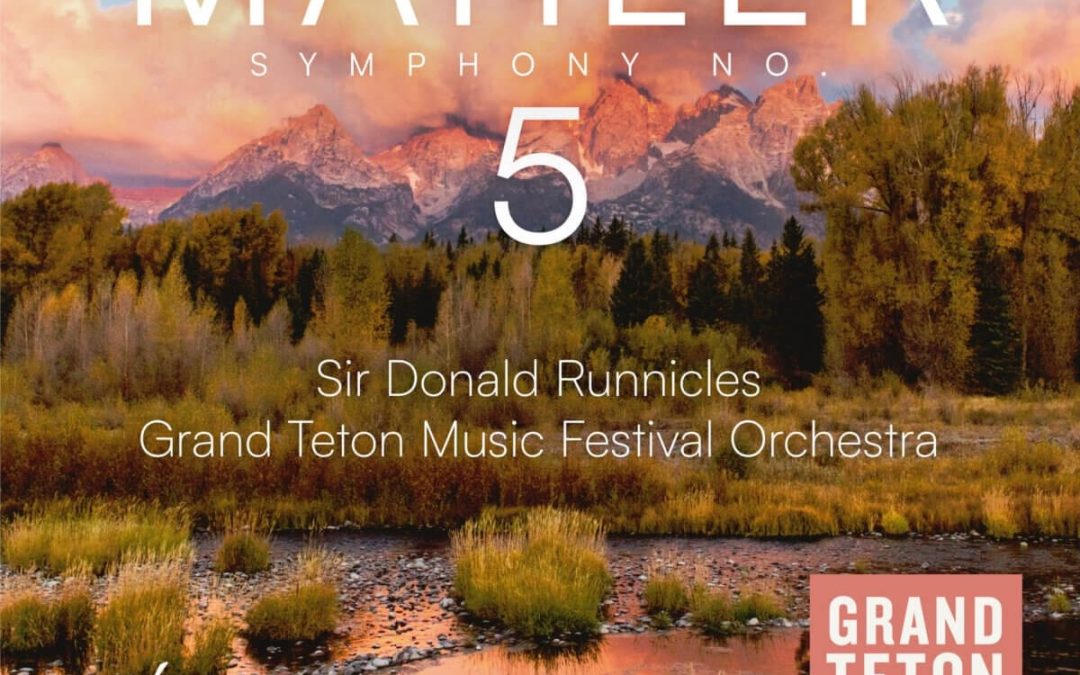
MAHLER: Symphony No. 5 in C# Minor – Grand Teton Music Festival Orchestra/ Sir Donald Runnicles – Reference Recordings FR-763SACD (72:57) (5/1/26) [Distr. by Naxos] ****:
Recorded 26-27 July 2024 at the Teton Village, Wyoming, we have a sober, stylistic performance of Gustav Mahler’s 1902 Fifth Symphony, led by Scottish conductor Sir Donald Runnicles (b. 1954), who has enjoyed a long, esteemed career in opera and symphonic music. At this period in the composer’s life, both mortality and conjugal bliss competed for primacy in his consciousness, the result of intestinal hemorrhage and his engagement to Alma Schindler. So, the Fifth Symphony realizes dual impulses, an awareness of tragic fate, via Beethoven’s Fifth motif in movement one, and the passionate “love letter” of the fourth movement Adagietto for strings and harp. If the first movement projects a funeral cortege, its ensuing, stormy, second movement announces a spiritual defiance to forces emanating from without. Mahler has turned away from folk song and lieder as sources of expressive power, and he becomes quite capable of inventing a hymn to affirm his faith, if not in an Almighty, then in the persistence of his will.
In three parts, the Fifth Symphony does not entirely reject Mahler’s avowed pantheism in his prior two symphonic works. Given that the expansive Scherzo (Part II) likewise serves two masters, the Viennese rural environs and the social world of the Strauss waltzes, we can appreciate the spiritual ambiguity that haunted Mahler. Horn principal Gail Willaims contributes a soulful emanation of the Vienna woods, after having intoned – with principal trumpet Thomas Hooten – the visceral energy of the opening movement’s motto. Mahler characterized his (contorted) central movement as “Mankind. . .at the zenith of life.” The initially charming dance pattern at times becomes persistent, even menacing, almost an adumbration of Ravel’s 1911 La Valse. Runnicles’ control of the many competing metrics proves persuasive and transparent at once, rather reminiscent of what Abbado, Boulez, and Haitink had achieved in this score. No less tonally ambiguous, the lovely, ever-familiar, anguished Adagietto flows at a calm but steady pace, avoiding bluster and sentimental ostentation. Musically, the movement lies along a continuum from Wagner to Debussy, a model of luminous, mystically diaphanous intimacy. Harp principal Allegra Lilly paints the various, modulating hues of this refined vision with intimations of a better world.
The last movement transitions to an essentially happy D major, a circuitous course that embraces much of the Adagietto’s motif but now within a contrapuntal context whose rustic energy occasionally reminds us of a whirling motif in Weinberger’s Schwanda the Bagpiper. Runnicles charters Mahler’s complex odyssey with a light hand, fervent and optimistic in tone. Mahler often spoke of the many “interruptions” that mark his movements’ progression. The sudden, intrusive energies herein somehow coalesce into a meaningful whole, legitimized by the Adagietto trope and the blazing chorale with which this last movement climaxes. Those last, sonically spectacular, 42 bars, Presto, argue for a vital resurgence of—if not rebellion against—the obstacles that do not originate from within.
—Gary Lemco
by Audiophile Audition | Apr 13, 2026 | Jazz CD Reviews, SACD & Other Hi-Res Reviews
Another excellent restored Ahmad Jamal live performance from Resonance Records.
Ahmad Jamal At The Jazz Showcase: Live In Chicago – Resonance Records HLP-9085 180-gram 2-LP gatefold vinyl. Limited Edition First Pressing Record Store Day [4/18/2026], 102:30 ****1/2:
(Ahmad Jamal – piano; John Heard – bass; Frank Grant – drums)
Ahmad Jamal entered the jazz scene at the height of bebop. His approach was unlike most artists of that era. He utilized spacing, tension and release that was more aligned to Thelonious Monk. This allowed him to arrange for trio with a nod to “big band”. He influenced many jazz pianists including Bill Evans, McCoy Tyner, Fred Hersch, Monty Alexander and Herbie Hancock. One of Jamal’s biggest supporters was Miles Davis. Jamal remained true to his musical vision, and recorded for over 60 years.
Resonance Records has released a 180-gram double vinyl of a 1976 performance Ahmad Jamal At The Jazz Showcase: Live In Chicago. Joining him are John Heard on bass and Frank Grant on drums. This concert is among his finest. Side A opens with a 15-minute original composition, “Ahmad’s Song”. This is a complex arrangement that begins with classically-infused runs. Then the jam shifts into a broader diverse structure, but is anchored by a repeat/ ostinato feel. There are tempo adjustments and chord modulation. Jamal covers Antonio Carlos Jobim’s opus, “Wave”. Starting with a bluesy vamp, the trio transitions to a breezy medium-tempo with Brazilian motifs. The pianist trades chords and punctuated notation with subtle phrasing and syncopation. His rhythm, section stays in lockstep. Jazz pianists have always had a connection to Richard Rodgers. Also with a Latin feel, “Have You Met Miss Jones?” flows gracefully with soulful piano runs and breezy articulation. Another popular song that was adapted to jazz is Johnny Mandel’s “Theme From M*A*S*H”. Jamal infuses funky rhythm and muscular chording to frame the melody. He sustains the basic melody, but adds soul-jazz licks on the solos
One of the highlights is Herbie Hancock’s “Dolphin Dance”. The opening solo is masterful. After a minute, Jamal slides into gentle swing groove. When the trio re-engages, it becomes a rousing jam. Jamal alternates rumbling chords and fluid right hand runs. There are classic hard bop accents (with modulations) and some dissonance. It feels like there are different movements. The homage to Duke Ellington (“Prelude To A Kiss”) is another gem. Jamal weaves a sinewy melody line, accentuating the fuller sound and flexible elocution. Another pop reinvention, “A Time For Love” utilizes a breezy cadence with lush inflection and melodic flow. Jamal executes gentle finger-snapping runs with soulful timing. As described in the liner notes, “Swahililand” is compelling, with a vivid, exotic musical tapestry. There are moments of muscular funkiness and grooves, with exhilarating flourishes.
Ahmad Jamal At The Jazz Showcase:Live In Chicago is another important contribution to jazz restoration. It is on a par with the previously issued Emerald City Nights – Live At The Penthouse 1965-1966 albums. The re-mastered sound (Matthew Lutthans/The Mastering Lab) is sourced from Joe Segal’s original masters. It is clear and quieter than typical live recordings. There is an informative 8-page booklet with session information, photographs and interviews with Fred Hersch, Wayne Segal, Stu Katz and Eugene Holley Jr.
Highly recommended!
—Robbie Gerson
Ahmad Jamal At The Jazz Showcase: Live In Chicago
TrackList:
Side A: Ahmad’s Song; Wave
Side B: Have You Met Miss Jones?; Theme From M*A*S*H
Side C: Dolphin Dance; Prelude To A Kiss; A Time For Love
Side D: Swahililand; A Nightingale Sang In Berkeley Square.
by Audiophile Audition | Apr 12, 2026 | Pop/Rock/World CD Reviews, SACD & Other Hi-Res Reviews
David Crosby, Stephen Stills & Graham Nash – The Solo Albums – Rhino Entertainment Company – Exclusive Record Store Day (4/18/2026) 4-LP 140-gram vinyl set
There are supergroups and among the finest was Crosby Stills & Nash. Comprised of Stephen Stills (Buffalo Springfield), David Crosby (The Byrds) and Graham Nash (The Hollies), the trio became the symbol of the Laurel Canyon folk rock movement and released a hugely successful self-titled album. Neil Young joined the band at Woodstock, becoming part of the band and the release of Dèjá Vu made them the biggest act in the world. Rhino Entertainment Company has released a 4-LP vinyl box that features the three solo debut albums (of the original group members) for Atlantic and one vinyl of rarities.
Stephen Stills: Stephen Stills – Atlantic Records R1 728555/081227805739-1 (1970)/Rhino Entertainment Company (2026) 140-gram stereo vinyl, 38:56 ****1/2:
As with the Crosby, Stills & Nash album, Stills played a huge part on this solo project, songwriting, vocals and playing several instruments. He is joined by Crosby, Nash, John Sebastian, Eric Clapton and Jimi Hendrix among others. The lead single, “Love The One You’re With” was a staple on both AM and FM radio. It has a hard-rocking groove, lush background vocals and positive energy. Stills’ range is prevalent on this album. There’s the introspective reflection of “Do For The Others” with nimble acoustic guitar and emotive vocals. He offers a Sunday-morning testimonial (with soulful back up singing) on “Church (Do For Others)”. His rock essence permeates two tracks, “Old Times Good Times” (accompanied by Hendrix) and “Go Back Home” (with Clapton).
Stills continues to expand the landscape on the ebullient “Sit Yourself Down” (passionate vocals). Then he transitions to an ethereal “To A Flame”. “Black Queen” is Delta blues with scintillating guitar. The finale is a meticulously produced counterculture two-part suite (“We Are Not Helpless”) that is a rousing affirmation.
David Crosby – If I Could Only Remember My Name – Atlantic Records R1 728555/081227805734-2 (1971)/Rhino Entertainment Company (2026) 140-gram stereo vinyl, 37:04 ****1/2:
Crosby’s 1971 solo album was a “communal” experience with a variety of California-based rock stars, including The Grateful Dead, Quicksilver, Jefferson Airplane, Santana, Nash, Young and Joni Mitchell. The overall vibe on this album is a dream-like, melancholy vision with some jazzy influences. There are sone “basic” songs like the hippie-infused but pulsating “Music Is Love” (with Neil Young). Another highlight is the achingly beautiful “Laughing”, with shimmering vocals by Mitchell and pedal steel from Jerry Garcia. “Cowboy Movie” is a straight-ahead rocker with Crosby’s most animated vocals. Songs like “What Are Their Names” feel like a Dead or Airplane political jam.
But this album has atmospheric flowing melodies with ethereal vocals. “Tamalpais High (At About 3)” has a psychedelic spacey musical structure and vocalese. “Traction In The Rain” is a almost New-Age tale of loss with a nice touch of autoharp (Laura Allen). A certain highlight is the gentle swaying “Songs With No Words (Trees With No Leaves)”. Crosby’s vocal arrangement is complex and it is magnetic. The last two numbers (“Orleans” and “I’d Swear There Was Somebody There”) are quintessential solo Crosby, emoting with multi-tracked vocals.
Graham Nash – Songs For Beginners – Atlantic Records R1 728555/081227805739-03 (1971)/Rhino Entertainment Company 140-gram stereo vinyl, 32:13 ****1/2:
Graham Nash’s debut is a collection of mostly well-crafted political, social and relationship themed material. It features an all-star cadre of musicians (Dave Mason, Garcia, Rita Coolidge, Neil Young). His strong positions on politics is represented on the loping “Military Madness” (great Mason wah-wah guitar). A thumping gospel chorus on“Chicago” establishes momentum that leads right into “We Can Change The World”. He laments on his breakup with Joni Mitchell on “I Used To Be King” (interesting arrangement with some country accents and tempo upticks).
Nash demonstrates that he is on a songwriting par with his bandmates. “Better Days” has both pop sensibilities and moody resonance. His conversational style (“Man In The Mirror”, “Be Yourself”) is effective and his voice is incandescent.
David Crosby, Stephen Stills & Graham Nash: Solo Rarities – Atlantic Records/Rhino Entertainment Company R! 728555/081227805739-04 140-gram stereo vinyl ****:
There is a bonus LP with a variety of demos (“Be Yourself”, “Chicago”, “Sleep Song”) and previously unreleased material (“Everybody’s Been Burned”). Among these highlights
is a live performance of “Do For Others” and an early look at “The Treasure” (which would be recorded for the first Stephen Stills/ Manassas album). “Dancer” is another non-verbal acoustic reverie from Crosby.
David Crosby, Stephen Stills & Graham Nash – The Solo Albums is a valuable addition to Record Store Day and rock vinyl aficionados. Sourced from the original analog masters and re-mastered at Bernie Grundman Mastering (Chris Bellman), it is a sonic upgrade. There is excellent detail of instruments and voices. Included is an incisive booklet of liner notes.
Highly recommended!
—Robbie Gerson
TrackLists:
Stephen Stills:Stephen Stills
Side One: Love The One You’re With; Do For Others; Church (Part Of Someone); Old Times Good Times; Go Back Home
Side Two: Sit Yourself Down; To A Flame; Black Queen; Cherokee; We Are Not Helpless
David Crosby: If I Could Only Remember My Name
Side One: Music Is Love; Cowboy Movie; Tamalpais High (At Around 3); Laughing
Side Two: What Are Their Names; Traction In The Rain; Song With No Words (Tree With No Leaves); Orleans; I’d Swear There Was Somebody There
Graham Nash: Songs For Beginners
Side One: Military Madness; Better Days; Wounded Bird; I Used To Be A King; Be Yourself
Side Two: Simple Man; Man In The Mirror; There’s Only One; Sleep Song; Chicago; We Can Change The World
David Crosby, Stephen Stills & Graham Nash: Solo Rarities
Side One: The Treasure (Stephen Stills); Dancer (David Crosby); Be Yourself (Demo/Graham Nash); Coast Road (David Crosby); Everybody’s Been Burned (Graham Nash)
Side Two: My Love Is A Gentle Thing (Stephen Stills); Kids And Dogs (David Crosby); Chicago (Demo/Graham Nash); Do For Others (Live/Stephen Stills & Steven Fromholz); Sleep Song (Demo/Graham Nash); Fugue (David Crosby).
by Audiophile Audition | Apr 11, 2026 | Pop/Rock/World CD Reviews, SACD & Other Hi-Res Reviews
This is a blues legend in his prime…
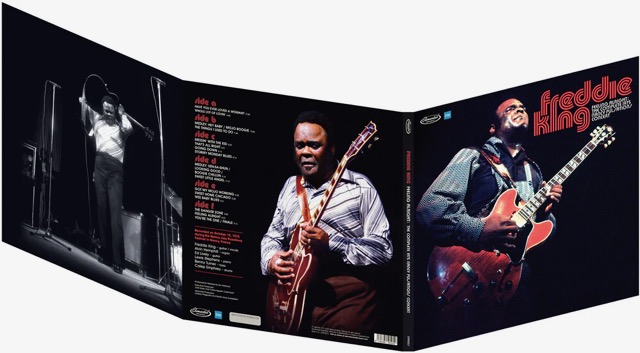
Freddie King – Feeling Alright: The Complete 1975 Nancy Pulsations Concert – Elemental Music 5990557 Record Store Day [4/18/2026] Deluxe Limited Edition 180-gram gatefold 3-LP Set, 126:13 ****1/2:
(Freddie King – guitar, vocals; Alvin Hemphill – organ; Ed Lively – guitar; Lewis Stephens – piano; Bennie Turner – bass; Calep Emphrey – drums)
Blues music was graced with 3 “kings” of the guitar, B.B., Albert and Freddie. Freddie King made his mark on the music scene, with unique guitar techniques from both Texas and Chicago. Utilizing open-string notation and piercing electric distortion, King adapted to the modern contours of this genre, aligning himself with British and American rockers. He favored semi-hollow Gibson electric guitars. King’s instrumental style (referred to as Texas Cannonball) relied on crisp, strident delivery. His soulful vocals were urgent with a “crying” tonal element. After establishing himself on specialty labels like Federal Records with songs like “Have You Ever Loved A Woman” and “Hideaway”, he moved on to rock labels like Shelter Records and toured extensively. Though, he died at 42, King was inducted into the Rock And Roll Hall Of Fame and the Blues Hall Of Fame.
Elemental Records has released a limited edition 180-gram triple vinyl of a monumental 1975 concert. Freddie King – Feeling Alright: The Complete 1975 Nancy Pulsations Concert. Fronting a sextet, he performed a two-hour set in front of 50,00 enthusiastic fans. Side A opens with his game-changing first hit, “Have You Ever Loved A Woman”. This is quintessential “down ’n’ dirty” electric blues. King’s guitar accents are blistering and the band provides a visceral, gritty backdrop to King’s gut-wrenching vocals. In a change of pace, “Whole Lot Of Lovin’” is high-octane rocking blues and King’s guitar is explosive. King and his band continue to dial up the intensity on the first medley, “Hey Baby/Mojo Boogie”. There are searing guitar licks and King digs deep on the vocal presentation, while the backing musicians propel the tempo. This is modern blues at its best.
The setlist is impressive. King’s confident delivery elevates “Messin’ With The Kid”. He is equally adept at slow-burning intensity on “That’s All Right”. His grasp of standards is a strength. “Going Down” has bone-rattling guitar licks and emotional singing. His ability to interpret slowed-down classics is equally adept on “Stormy Monday Blues”. One of the many album highlights is a robust instrumental medley, “Sen-Sa-Shun/Looking Good”. This is unadulterated blues celebration. The hits keep coming with perennial standards like “Boogie Chillun’”, “Sweet Home Chicago”, “Got My Mojo Workin’” and “Sweet Little Angel”. Drawing on the rock culture, King covers the Dace Mason/Traffic favorite “Feeling Alright”
Freddie King – Feeling Alright: The Complete 1975 Pulsations Concert Is another valuable addition to Record Store Day 2026 by Elemental Records. This is a blues legend in his prime. The restored sound (mixed by Marc Doutrepont and mastered by Matthew Lutthans/The Mastering Lab) is potent and captures the raw energy of King’s incendiary guitar and growling vocals. Included is an incisive booklet with liner notes by Cary Baker and interviews with Wanda King and fellow Texas blues guitarist Billy Gibbons. There are several concert photographs. Note: This album was released with the cooperation of the King family.
Highly recommended!
—Robbie Gerson
Freddie King – Feeling Alright:
TrackList:
Side A: Have You Ever Loved A Woman; Whole Lot Of Lovin’
Side B: Medley: Hey Baby/ Mojo Boogie; The Things I Used To Do
Side C: Messin’ With The Kid; That’s All Right; Stormy Monday Blues
Side D: Medley: Sen-Sa-Shun/Looking Good; Boogie Chiilun; Sweet Little Angel
Side E: Got My Mojo Working; Sweet Home Chicago; Wee Baby Blues
Side F: The Danger Zone; Feeling Alright; You’re The One/Finale.

by Audiophile Audition | Apr 10, 2026 | Classical CD Reviews, Classical Reissue Reviews
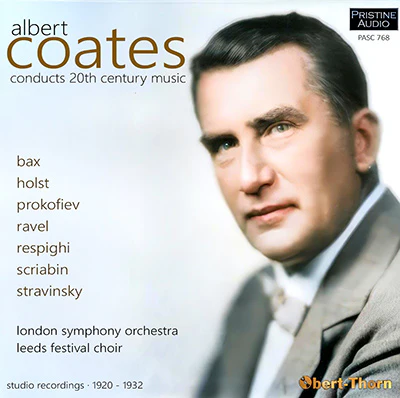
Albert Coates conducts 20th Century Nusic – Scriabin, Stravinsky, Holst, Ravel, Bax –Pristine Audi PASC 768 (2 CDs – 2 hr 1:42, complete listing and credits below) [www.pristineclassical.com] ****
My first encounter with Russian-British conductor Albert Coates (1882-1953) derived from a set, “Historical Anthology of Orchestral Music (from 78s), Volume One,” from esteemed collector Thomas L. Clear, a four-record compilation that included an especially frenzied account of Mozart’s Jupiter Symphony. In spite of the manic pace set by Coates, I had to admire the tenacity and discipline of his ensemble, which I can liken only to what Yevgeny Mravinsky achieved with his intimidated Leningrad Philharmonic. Aside from his mastery of the Russian repertory, Coates won fame for his Wagner interpretations, which could easily rival documents set down by Siegfried Wagner and Leo Blech. A man of girth and physical substance, Coates once, in a fit of temper, threatened recalcitrant players with what possibilities might be imminent if only he were “that diminutive Italian!”
Producer and Audo Restoration Engineer Mark Obert-Thorn has assembled Coates’s recorded contribution to 20th Century music, 1920-1932, here eschewing the usual Romantic legacy. `The extensive program opens with Scriabin’s 1905-08The Poem of Ecstasy (27 April and 7 May 1920), the one-movement composition which the composer considered his Fourth Symphony. Despite my aversion to acoustic recordings and their desiccation of orchestral colors, the Coates reading indulges Scriabin’s persistent demand for lanquid effects, a result of Wagner’s Tristan formula of withholding any tonal resolution, especially via whole-tone scales and competing chromatic harmonies. Thus, Coates manages an erotic elasticity to the evolution of the three-part structure, as “the joy of cosmic liberation” assaults our senses. Trumpet fanfares compete with birds’ extreme, twittering trills to accomplish an apotheosis. The “Soul in an orgy of (self) love” seems appropriate to this mastery of solipsistic energies, the illumined effects of which Coates negotiates with easy finesse. If only Coates had had more modern technology at his service, but Obert-Thorn has done much to revivify this moment of dazzlingly cryptic musical expression into a meaningful whole.
The Coates excerpts from Stravinsky’s 1910 ballet The Firebird (rec. 15 February 1928) immediately benefit from the electronic recording process, given the clear, articulate voicings from winds and strings. The glistening textures pass by in fleeting colors borrowed from the palette of Stravinsky’s teacher Rimsky-Korsakov, complemented by modern dissonances. The orchestral discipline feels less secure in the layered throes of the Infernal Dance, but at no loss of visceral excitement. The lure of the exotic continues in the selected pieces (rec. 14 October 1930) from the 1917 tone-poem The Song of the Nightingale, adapted from the 1914 opera. The delicacy of the scoring, including celesta, harp, cymbals, and glissando strings often set in pentatonic, dissonant scalar patterns, contributes to a startling array of vibrant colors. The Funeral March resonates in an eerie pageant, brief but mysterious.
The brief suite from Prokofiev’s 1921 satirical opera The Love for Three Oranges has survived mainly due to the acerbic “March.” The level of the opening foray by tongued trumpets never fails to arrest our attention, and Coates (rec. 6 January 1927) injects a mighty marcato pace shimmering with martial vitriol. The “Scherzo” imbibes all of the Coates capacity for spirited momentum, interrupted by dainty pulsations. The 1925 Exhibition of Modern Industrial and Decorative Arts in Paris inspired impresario Diaghilev to commission Prokofiev for his 1926 ballet score The Steel Step, consisting of eleven dances. Coates recorded Le Pas d’acier on 18 February 1932. An often ungainly blend of diatonic harmony and chromaticism, the music bears a militantly hectic color scheme that relies on Stravinsky’s Le Sacre du printemps cross-fertilized – as in “The Hammers” – by Mosolov’s Iron Foundry, given its recorded debut by Vittorio de Sabata. A degree of gentle sarcasm permeates the score, as in “The Commisars,” “The Little Street Vendors,” and “The Sailor with bracelets and the Working Girl.” Obert-Thorn notes that Coates recorded the complete suite, but HMV never issued movements seven through nine. The Coates performance of this imposing music competes with an equally compelling – and more complete – version by Igor Markevitch.
As Obert-Thorn points out, we collectors of classic performances most commonly associate Holst’s 1914-17 The Planets with Sir Adrian Boult. But the Coates set of four movements (rec. 20 September 1926) reminds us of the power and intensity this conductor wrought in scores he well knew and admired. A swift sense of cosmic justice informs “Mars,” rife with compelling menace. Coates had given the first public performance of the complete astrological suite in 1920. The second movement, “Mercury, the Winged Messenger,” captures the fleeting and diaphanous colors of him who servs no less as the cosmic trickster. “Jupiter, the Bringer of Jollity” projects a noble swagger borne of interstellar confidence, and the middle section becomes an orison of broad persuasion that basks in British solidarity of spirit and consummate humanity. “Uranus, the Magician” concludes the suite with dire fanfare and mischievous, urgent ambiguities befitting the “riddle of the universe.” The unnamed Symphony Orchestra demonstrates fertile instrumental accomplishment, especially in their brass and battery sections.
There exists a natural “alchemy” to the ballet music preceding Gustav Holst’s 1922 opera The Perfect Fool, since the music has dancers representing Earth, Wind, Fire, and Water. Coates offers the energetic “Introduction – Dance of the Spirits of the Earth” from the same session that produced The Planets excerpts. The restoration proves vivid, indeed. On the 28th October 1925, Coates led an a cappella choir in Arnold Bax’s 1921 Mater ora Filium for unaccompanied double chorus. The Mother of God bears her Divine Son upon her arm. May He grant us all the joys of the blessed. This recording suffers a degree of surface noise, but the innate piety and ecstasy of the occasion swells in resonant devotion.
Albert Coates claims the first recording of any of Respighi‘s “Roman Trilogy,” and The Fountains of Rome (1918), recorded over the course of a year (4 January 1927 – 5 January 1928) depicts selected Roman fountains as seen at various times of day. The first of the series, “The Fountain of Valle Giulia at Dawn,” presents a bucolic scene occupied by passing cattle at dawn. Respighi’s woodwinds and muted strings bear the hazy and ripe colors realized by the LSO. A luxurious eruption of sound announces “The Triton Fountain in the Morning,” a kind of mythical pageant wherein Neptune’s chariot enjoys a vivid retinue of sea personages. The movement, “The Trevi Fountain at Noon,” at first casts an umbra that soon evolves torrentially, a martial, brass pageant of potent force. A suggestion of melancholy nostalgia informs the last section, “The Villa Medici Fountain at Sunset,” rather a wistful recollection of a bygone era of Italian cultural eminence. Twittering birds with harp riffs, tolling bells, and the shimmer of falling leaves mark the occasion, a transparency of effect well realized by Coates and ensemble.
Finally, from 2 March 1926, we have the premiere recording of Ravel’s La Valse, Coates’s athletic rendering of Ravel’s perception of the age of Vienna and the Strauss waltz kings. Once more, a hazy opening sequence of subdued power and impulse flourishes, both of which will inevitably explode at the climax. As Obert-Thorn appropriately comments, the performance belies its hundred-year-old existence, given the throbbing, hurtling energies that appear in exquisite, instrumental detail. Touches of rubato and portamento tint the interpretation with Romantic hues, but the élan vital never wanes.
—Gary Lemco
ALBERT COATES conducts 20th Century Music
1SCRIABIN: The Poem of Ecstasy, Op. 54;
1STRAVINSKY: The Firebird (1910): The Princesses’ Games with the Golden Apples; Infernal Dance of All Kashchei’s Subjects; The Song of the Nightingale: Celebration at the Palace of the Emperor of China; Chinese March; Funeral March;
1PROKOFIEV: The Love for Three Oranges, Op. 33: Infernal Scene; March; Scherzo; Le pas d’acier, Op. 41: 8 Scenes;
2HOLST: The Planets, Op. 32: Mars; Mercury; Jupiter; Uranus; The Perfect Fool – Ballet Music, Op. 39;
3BAX: Mater ora Filium;
RESPIGHI: The Fountains of Rome;
2RAVEL: La Valse –
1London Symphony Orchestra/
2Symphony Orchestra/
3Leeds Festival Choir/
by Audiophile Audition | Apr 7, 2026 | Jazz CD Reviews, SACD & Other Hi-Res Reviews
Elemental Music unearths another historic Bill Evans live performance, just in time for Record Store Day 2026.
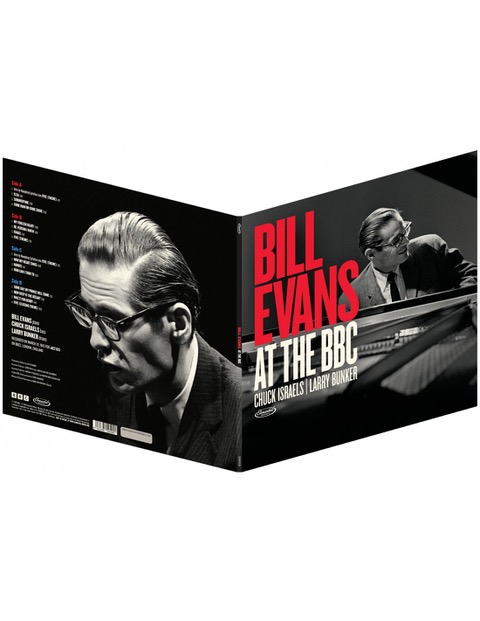
Bill Evans At The BBC – Elemental Music 5990558 – Deluxe Limited Edition First Pressing 180-gram gatefold 2-LP Set, Record Store Day [4/18/2026], 70:13 *****:
(Bill Evans – piano; Chuck Israels – double bass; Larry Bunker – drums)
After the untimely death of Scott LaFaro, Bill Evans continued with a “second trio” (prior drummer Paul Motian and bassist Chuck Israels). Eventually, Larry Bunker became the drummer. During a four-week stint at Ronnie Scott’s Jazz club, the Bill Evans Trio appeared at the BBC television studios on March 19, 1965 as part of the Jazz 625 series. This performance represented Evans in his lyrical prime and is a testament to the unique trio dynamics.
Elemental Music has released a 180-gram 2-LP of this concert (also available on CD). It captures the introspective approach by Evans. Side A opens with a syncopated jaunty Intro to “Five”. The intro is reprised in the finale. Next up is the atmospheric waltz-time “Elsa”. Evans’ tender rumination and precise notation is flawless and the rhtyhm section coalesces around his lithe execution. Israel’s sinewy double bass kicks off Gershwin’s eternal jazz standard, “Summertime”. Evans distills the melody with inherently rhythmic grooves and then hands it off to Israels for a solo. Evans’ solo is lively and includes a plethora of chord shifts, but never loses the song’s essence. Bunker’s brush work is nimble. “Come Rain Or Come Shine” began as a popular Broadway tune that became a staple of the jazz culture. Evans’ melancholic first verse is hypnotic. As the trio joins in, there is a gentle swing uptick, another Israels run and a percolating Evans solo that injects bluesy resonance.
There is a meditative, haunting aural landscape to “My Foolish Heart”. His relaxed play flows seamlessly, and the understated phrasing is moving. This aesthetic permeates the arrangement for an original, “Re: Person I Knew”. After a deliberate beginning, Evans kicks into cool swing with great right-hand notation. He is as always generous, as Israels also solos and the reserved brush strokes of Bunker add texture. Switching to hard bop mode, (“Israel”), the ensemble takes in a 10-bar blues number with briskness and attitude. Bunker shines on gritty drum solos and fills, exchanging with Evans.
Evans has always paid homage to jazz legends, especially Miles Davis. Here, there are a pair of tracks closely associated with him. “Someday My Prince Will Come” was originally a pop ballad from the Disney movie Snow White And The Seven Dwarves”. Evans’ cover is medium-swing and there is a torrent of piano improvisation, spirited double bass solo, and drum breaks. Like his mentor, he has reinvented pop as jazz. A Davis-penned song (that he actually never recorded), “Nardis” has become a consistent part on the Bill Evans repertoire (recorded 12 times) With a modal delivery and exotic motifs, Evans embraces the complex and evolving stylistic changes of the cool jazz era. It has a memorable vamp and bluesy chords. Evans utilizes a lilting tempo and precision on ballads like “Who Can I Turn To” and “How Deep Is The Ocean”. A certain highlight is one of Evans’ most recognized numbers, “Waltz For Debby”. He glides through the song (in medium 3/4 time) and articulates his jazz technique and arrangement skills.
Kudos to Elemental Music for uncovering this unreleased vintage Bill Evans concert (previously only seen and heard on bootleg videos). The sound mix (transferred from the original BBC tapes and mastered by Matthew Lutthans/The Mastering Lab) is potent and quieter, approximating studio acoustics. There is a great deal of subtlety and clarity in the piano tonality, with attention to centering and an expansive soundscape. Included in this Record Store Day gem is is a fold-out gatefold with an incisive booklet of liner notes, interviews and rare photos.
Highest recommendation!
—Robbie Gerson
Bill Evans At The BBC
TrackList:
Side A: Intro into Five Theme; Elsa; Summertime; Come Rain Or Come Shine
Side B: My Foolish Heart; Re: Person I Knew; Israel; Five (Theme)
Side C: Intro Five (Theme); How My Heart Sings; Nardis; Who Can I Turn To?
Side D: Some Day My Prince Will Come; How Deep Is The Ocean; Waltz For Debby; Five (Closing Theme).

by Audiophile Audition | Apr 5, 2026 | Jazz CD Reviews, SACD & Other Hi-Res Reviews
Romanticism and mood setting shine here…
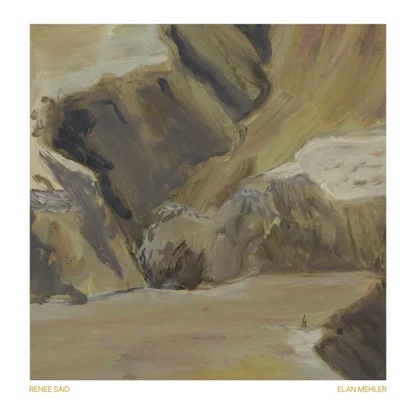
Elan Mehler – Renee Said – Newvelle Records #NV-038 – 180 gm audiophile vinyl – ****1/2
(Elan Mehler – piano; Loren Stillman – alto sax; Scott Robinson – tenor sax; Ben Monder – guitar; Tony Scherr – bass; Francisco Mela – drums; Matt Wilson – drums)
For the third entry in the Newvelle 10 anniversary series, the label’s co-owner, pianist Elan Mehler, has put together a dream sextet of musicians to help bring his vision of chamber music meeting blues, and meditative beauty, combining mood shifts, and counterpoint communication.
Choosing saxophonists, Loren Stillman, and legendary multi-reed master, Scott Robinson (here on tenor sax), with guitar wizard, Ben Monder, was a brilliant idea. Adding two drummers, Francisco Mela and Matt Wilson, for color, and shading just adds flavor to the mix.
Marc Urselli handled the recording and mixing, while Matthew Lutthans (he seems to be everywhere lately) did the mastering. The sound mix is pristine and the instruments blend impeccably, honoring the symbiotic interaction between the group.
The title track helps set the mood with minimalist lines, with introspection and passion reigning. Ben Monder’s fills add so much here, and throughout all tracks. “Byablue,” begins anthemic, and the saxes caress the melody. Elan’s piano brightens and elevates, and the saxes have blues driven choruses.
“Dani’s Fortress” highlights the group’s symbiosis, and the swing is contagious. “White Cloud’s Dark Sky” has a gorgeous melody, with counterpoint, while Monder’s shape shifting lets the saxes’ blues riffs take over. “Wolf Orchard” is mournful and tender, and Monder’s guitar is again featured.
Side 2 has “Yonder Waters,” sets a dreamy mood with resonant guitar. “Quickening,” written by Frank Kimbrough, has a chamber music feel, but also I heard a blues influence enter again from the saxophones. “The Violence of Reason,” (such a heavy title), has a winning melody with a “down home” blues saxophone solo, and Mehler’s piano choruses match the “soul” of the horns.
The closing track, “Tilt” has major tension escalation, like a pinball machine, “tilting” into free blowing, before returning into the easygoing opening melody. I’m sure they had fun on this one.
Elan should be mighty proud of the joyful listening that Renee Said brings.
The superb acoustics just sweeten the pot. Long live Newvelle Records. Their 10th anniversary series continues with more releases soon.
—Review by Jeff Krow
Elan Mehler – Renee Said
Tracklist:
Side 1:
Renee Said, Byablue,
Dani’s Fortress,
White Cloud’s Dark Sky,
Wolf Orchard
Side 2:
Yonder Waters,
Quickening,
The Violence of Reason,
Tilt