by Audiophile Audition | Apr 4, 2026 | Jazz CD Reviews, SACD & Other Hi-Res Reviews
Buster Williams debut as a leader from 1975…
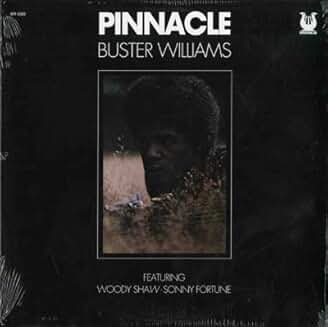
Buster Williams – Pinnacle – Muse/Time Traveler/ Craft Recordings # TT-M006 – 180 gm vinyl – 1975 – 44:07 – ***1/2
(Buster Williams – acoustic & electric bass, vocal; Earl Turbinton – soprano sax, bass clarinet; Sonny Fortune – soprano sax, flute, alto flute; Woody Shaw – trumpet; Onaje Allan Gumbs – acoustic & electric piano, Moog Synthesizer, Arp string ensemble; Billy Hart – drums; Guilherme Franco – percussion; Suzanne Klewan & Marcus – background vocals)
As part of the Muse Records re-release series of jazz LPs from the 1970s, Time Traveler Recordings, in association with Craft Recordings, is issuing Pinnacle, the debut recording (as a leader) of bassist, Buster Williams.
Buster has had a long career as a top notch bassist, who has played with all the greats over the years, and is still going strong. Before this 1975 release, Williams had accompanied Nancy Wilson, McCoy Tyner, and was a major contributor to Herbie Hancock’s Mwandishi group from 1970-1973.
For his leader debut, Muse, used a first rate group of horn players (saxophonists, Sonny Fortune, and Earl Turbinton, and added trumpeter, Woody Shaw, on two tracks.) The rhythm section is composed of pianist, Onaje Allan Gumbs, and drummer, Billy Hart. Percussion duties were ably handled by Guilherme Franco.
The five tracks, with four written by Buster, cover a wide range of genres, including spiritual jazz, post bop, with a strong dose of fusion, and a little funk thrown in. Several tracks have background vocals, which sometimes distract a bit.
“The Hump” opens with some 1970s psychedelia, with fusion meeting funk. Williams is on fender bass, while Turbinton and Fortune stir the pot on bass clarinet, and soprano sax, respectively. Gumbs’ synthesizer sets the mood, while Billy Hart’s forceful drumming is strong in the mix. The title track has Buster on vocals, while Earl and Sonny share soprano lines, with Earl taking lead duties. Woody Shaw adds his trumpet.
“Tayamisha,” written by Buster for his daughter, holds up quite well after 50+ years, and is a highlight of this LP. The two saxes have a high pitched keening blend, and Gumbs has a great straight ahead acoustic piano solo, while Buster’s bass solo stands out. He also has a major say on the closer, “Batuki,” an Allan Gumbs composition. Fortune and Turbinton blend well, while Woody Shaw is restrained, adding color, instead of heat. Once again, Williams solos extensively.
The sound mix is spot on, with the original analog masters used by Matthew
Lutthans at the Mastering Lab, and the pressings on 180 gm vinyl by Optimal. There are new liner notes, and a rare period photograph. Just in time for Record Store Day (April 18), this LP is housed on a Stoughton old style tip-on jacket.
It’s great to experience Buster Williams early in his career, backed by such great sidemen.
—Review by Jeff Krow
Buster Williams – Pinnacle
Tracklist:
Side A: The Hump, Noble Ego, Pinnacle
Side B: Tayamisha, Batuki

by Audiophile Audition | Apr 4, 2026 | Jazz CD Reviews, SACD & Other Hi-Res Reviews, Uncategorized
Chrysalis Records releases a memorable sonic vinyl upgrade to a live Robin Trower album.
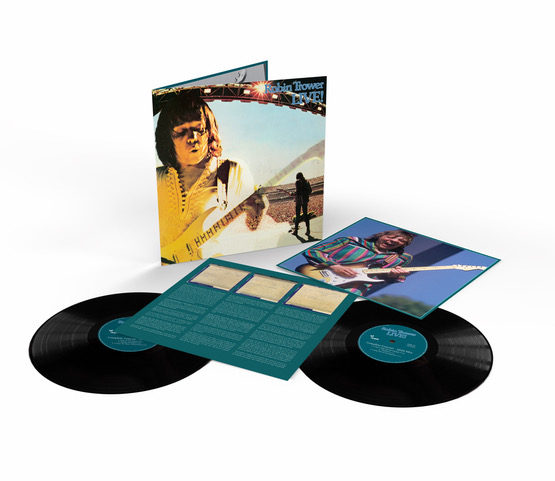
Robin Trower – Robin Trower Live! – Chrysalis Records (1976)/[4/3/2026] CRV230-4 50th anniversary edition 180-gram double vinyl ****1/2:
(Robin Trower – guitar; James Dewar – bass, vocals; Bill Lordan – drums)
English guitarist Robin Trower was part of the 1960’s British blues scene. His first group (The Paramounts) included pianist Gary Booker. In 1967, he became part of the progressive rock band Procol Harum. Trower played on five albums with the band, and wrote a few songs, most notably “Whiskey Train”. His piercing blues guitar added a gritty element, but inevitably left for more artistic independence. In 1971, he formed the Robin Trower Band with bassist/vocalist James Dewar and drummer Bill Lordan. This was a power trio, influenced by Jimi Hendrix. Trower is considered by many to be the standard bearer for the explosive, psychedelic blues genre viscerally represented by Hendrix and Cream. For 5 decades, Trower has recorded and performed as a solo artist, most often in a trio, including stints with Jack Bruce and Bryan Ferry. He rejoined Procol Harum for two late-career albums.
Chrysalis Records has reissued a 50th anniversary edition 180-gram double vinyl of Robin Trower Live! Recorded on 2/3/1975 at the Stockholm Concert Hall for the Swedish Broadcasting Corporation, the album was released on vinyl in 1976, and subsequently on CD. This was a concert that captured the blues intensity and instrumental style of Trower and his band mates, James Dewar (bass, vocals) and Bill Lorden (drums). This vinyl contains the entire setlist (11 originals and one cover) in sequential order. Side A opens with the amped-up hook-laden pyrotechnics on “Day Of The Eagle”. Trower’s muscular guitar lead with furious chords, distorted effects, propulsive rhtyhm section and gritty vocals bring this slightly over 3 minute number into a jagged focus with a breathless slow down and accelerated ending.
In a psychedelic arrangement, “Bridge Of Sighs” is hypnotic with a menacing vibe. Trower’s guitar accents are exquisite and incisive with note-bending and a dizzying array of tonal effects, especially in the extended solo. With potent lead and vocals, “Gonna Be More Suspicious” is a tightly constructed trio performance with high-energy, crisp guitar notation that feels relentless, but is delivered with nuanced tempo changes. “Fine Day” sustains the muscular play and bluesy contexts. Dewar’s emotional singing is at the center of “Lady Love” with a strong rock template and includes a blistering solo by Trower. In a considerable change of pace, “Daydream” is much slower and atmospheric.
A certain highlight is the frantic “Too Rolling Stoned”. It starts out with the rhythm section on fire, then Trower launches a fusillade of “shredded” notation and Dewar’s most appealing singing. At the 2:46 mark, there is a funky, world-class transition that hits a deep, thumping groove and finishes with several roof-shaking runs by Trower. The trio (as cited in the album notes) was relaxed for the show. “I Can’t Wait Much Longer” exudes a slow-burning intensity that sets up a fierce guitar solo. Trower moves effortlessly through the concert and delivers animated guitar lines on “Alethea” and “Little Bit Of Sympathy”. One of the cuts not on the original release, “Confessin’ The Blues” is “heavy” blues with a hard rocking vibe. The finale (“Rock Me Baby”) is a B.B. King signature tune, but the group brings a modern electricity to the arrangement.
This upgraded vinyl has a vibrant sound mix (Richard Whittaker) that amplifies the bottom end and helps center Dewar’s urgent vocals. There is considerable passion and clarity in the tonality of Tower’s Stratocaster. This will be a valuable addition to any rock or blues collection.
Highly recommended!
—Robbie Gerson
Robin Trower Live!
TrackList:
Side A: Day Of The Eagle; Bridge Of Sighs; Gonna Be More Suspicious
Side B: Fine Day; Lady Love; Daydream; Too Rolling Stoned
Side C: I Can’t Wait Much Longer; Alethea; Little Bit Of Sympathy
Side D: Confessin’ Midnight; Rock Me Baby.

by Audiophile Audition | Apr 4, 2026 | Jazz CD Reviews, SACD & Other Hi-Res Reviews
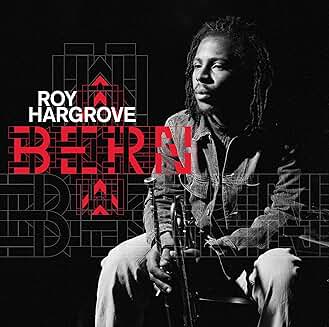
A Record Store Gem- Live Roy Hargrove from 2000…
Roy Hargrove – Bern – Time Traveler Recordings #TT- 003 – 180 gm audiophile vinyl -Record Store Day Release (4/18/26) – Limited to 3000 pressings – ****1/2
(Roy Hargrove – trumpet, flugelhorn; Sherman Irby – alto sax; Larry Willis – piano; Gerald Cannon – bass; Willie Jones III – drums)
The loss of jazz trumpeter, Roy Hargrove, at age 49, in 2018, is still being felt. Roy was a bright shining star in the jazz community, noted for his embrace of many musical styles, and a master of ballads. At a young age, he had already handled recording with strings, and embraced soul and hip-hop.
His live recordings were treasured, showing his mix of power and subtlety. For this Spring’s Record Store Day in mid April, his fans are in for a treat, thanks to the “jazz detective,” Zev Feldman, who in cooperation with Hargrove’s estate, is issuing a limited edition (3000 pressings), on 180 gm audiophile vinyl, of a 5/4/2000 live concert from the International Jazz Festival in Bern, Switzerland.
The acoustics are superb, as the concert has been restored and mastered by Matthew Lutthans at The Mastering Lab. The sound stage is impressive with Hargrove’s touring quintet of noted artists (Sherman Irby on alto sax; Larry Willis, on piano; Gerald Cannon on bass; and Willie Jones III, on the drum chair) mixed well, and prominently featured.
The five tracks are full length are each musician gets ample time to shine. Irby, Cannon, and Jones are all still active, while we have since, sadly lost Larry Willis.
The Swiss audience is enthusiastic, recognizing the polish, and swing of the quintet. Irby fits in well with Roy, both matching Hargrove’s power as well as adding his own soulful playing, well developed as an integral part of Wynton Marsalis’ touring orchestra.
The LP opens with Frank Lacy’s “Stranded,” which was made to order for Roy, and was a personal favorite. It is non-stop energy, and the choruses fly with the aid of circular breathing. Liner notes indicate that the group improvised nightly on this group staple. There is an energy release, mid-tune, when Larry Willis has some mellow choruses, then he leads the group back into high gear.
Hargrove’s “Depth,” is next, and is done at 4/4, made to order for Irby. Roy is introspective, before taking off after the bridge. Willis and Jones have solos, as well. Next is a gorgeous rendition of the standard, “Never Let Me Go.” Roy is on flugelhorn, and his choruses show his mastery of ballads, with a burnished tone to die for. Gerald Cannon’s sensitive bass solo adds to the mood.
“Caryisms,” written by Hargrove for pianist, Marc Cary, shows the funky side of Roy. There is call and response, and references to The Meters, and Herbie Hancock. Cannon’s bass provides the underpinning, and Roy and Sherman play off each other, having fun.
The closer, “Circus,” has fine horn blend, and Irby’s alto sax runs seem to have the energy of Charlie Parker. Willie Jones III trades back and forth with the horns, before having his own space, and the horns take the tune out.
This audiophile quality LP is a great opportunity to experience Roy Hargrove in his prime at age 30. His charisma and talent is certainly missed. This limited edition LP is likely to sell out.
—Review by Jeff Krow
Roy Hargrove – Bern – Time Traveler Recordings
Tracklist:
Side A:
Strands (16:23)
Depth (11:44)
Side B:
Never Let Me Go (11:48),
Caryisms (10:32),
Circus (9:04)

by Audiophile Audition | Apr 3, 2026 | Classical CD Reviews, Classical Reissue Reviews
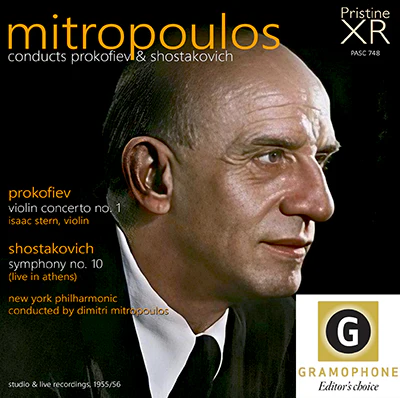
MITROPOULOS conducts PROKOFIEV and SHOSTAKOVICH = PROKOFIEV: Violin Concerto No. 1 in D Major, Op. 19; SHOSTAKOVICH: Symphony No. 10 in E Minor, Op. 93 – Isaac Stern, violin/ New York Philharmonic/ Dimitri Mitropoulos – Pristine Audio PASC 748 (69:57) [www.pristineclassical.com] *****:
The appearance of this disc from Pristine – especially the performance of the Shostakovich Tenth Symphony from the Orpheum Hall in Athens, Greece (2 October 1955), came as a remarkable discovery, given that no recorded documentation has existed for conductor Dimitri Mitropoulos (1896-1964) from his native country. The Shostakovich symphony, gestating between 1946-1951, had its premiere in December 1953 under Yevgeny Mravinsy and the Leningrad Philharmonic, and early commentary cited the music corresponded to qualities of the late Soviet dictator, Stalin. While Mitropoulos and the New York Philharmonic did make a commercial, studio recording for CBS, the present document derives from a post-war, European tour that allowed the Greek populace to witness their master musician in concert with the ensemble he had honed since 1949, after having shared leadership duties with Leopold Stokowski.
The opening movement, Moderato, stealthily and in sonata form, insinuates the personal motto DSCH (D-E-flat-C-B) in musical terms as an anagram of the composer’s himself, surreptitiously imposing his ego in a world fraught with malice. The NY Philharmonic string section asserts its intense supremacy in emotionally charged work when led by the inspired Greek conductor. An elastic but elongated movement, the taut line and dark evolution of its themes catch equal fire in the Philharmonic’s woodwinds, brass, and battery. At the mid-point of the progression, a manic, dizzy climax reaches a kind of apotheosis, finally resolved by groans in the cello line. A wind serenade ensues, a fluttering lyrical exposition on the motto theme, complemented by the awkward, meandering waltz tune. Having alluded both to Mahler and to his own Pushkin Verses, Shostakovich has the extended coda realize a haunted version of his motto, melancholy while somewhat uplifted by the flute choir that may refer to Nature’s eternal judgment.
The visceral scherzo (Allegro) emerges in frenetic militant, syncopated 16ths that buzz and whirl in spectacular fury. Whether a Soviet march or hustling orchestral étude in rhythmic gymnastics, the severe, demonic discipline of the Philharmonic rivals accounts left us by Mravinsky and Ancerl. There inhabits the Allegretto (Largo) movement a touch of Wagner’s Tristan, given the merger of two motives, the DSCH and the so-called “Elmira” motif, named for Elmira Nazirova (1928-2014), a composer for whom Shostakovich felt an enduring kinship. French horn and pizzicato strings set a fateful tone to which assorted woodwinds contribute an ambiguous, exotic series of color modulations, until a martial waltz erupts, a kind of angular, vehemently percussive variation on Borodin and the simian call from Mahler’s Das Lied von der Erde. A plaintive viola has the last word here, along with pizzicato strings, flute, and horn.
While the last movement, Andante-Allegro, contains the D-S-C-H motif and its variation D-C-B-E-flat, the mood strongly resembles that of Bartok, in particular, aspects of that composer’s 1944 Concerto for Orchestra, featuring strong presence from oboe and flute. A heaving, visceral anguish permeates the progress, until a jaunty – perhaps insincere – levity erupts in contrapuntal motion, the colors once more evocative of Bartok but colored by Russian folk energies. Mitropoulos’ control of divergent metrics and dynamic pulsations proves ever fertile, bristling, acerbic, headstrong. The colossal insistence, the feral, obsessive propulsion breaks off into a modified dirge in plaintive terms, pleading for reconciliation. A sense of mordant humor manages to appear, athletic circus music touched by Bartok’s woodwinds and snare drum. Are the last bars jubilant or simply mad? Whatever, the “hometown” audience virtually screams their adoration.
For the CBS performance of Sergei Prokofiev’s 1923 Violin Concerto No. 1 in D Major (rec. 27 February 1956), Mitropoulos has the assistance of American soloist Isaac Stern (1920-2001), who at this period in his career maintained a solid tone and effective technique, witnessed as well by his concerto recordings of Brahms and Sibelius with Sir Thomas Beecham. This performance was coupled (ML 5243) with the G Minor Concerto led by Leonard Bernstein. Constructed in three movements, the outer movements essentially lyrical and the middle movement a savagely ironic, flippant scherzo, the piece casts a luxuriant, exotic charm, often in the form of a reverie. Prokofiev alters the textures accompanying the solo in the course of the work no less demanding varying color effects from Stern, including ariosos, pizzicatos, ponticello chords, alternation of arco and plucked effects, and high harmonics. The duet with flute John Wummer, then the harp near the coda remains a moment of fine beauty. The whirling dervish Vivacissimo first revealed itself to me via Joseph Szigeti and Sir Thomas Beecham. Stern and Mitropoulos inject hiccups and dainty frenzy galore, a tour de force for all participants. The last movement, another suavely executed dream sequence, proceeds in a loose binary form, eventually dissolving in a rarified, cyclical ether here enshrined by Pristine’s XR process of amplified sonics.
Highly recommended, this fine restoration, with thanks to Andrew Rose and his team.
—Gary Lemco
From Pristine Audio, Dimitri Mitropolous condcuts Prokofiev Violin Concerto and Shostakovich Symphony No. 10. Classical Music Review by Robbie Gerson.
by Audiophile Audition | Mar 30, 2026 | Jazz CD Reviews
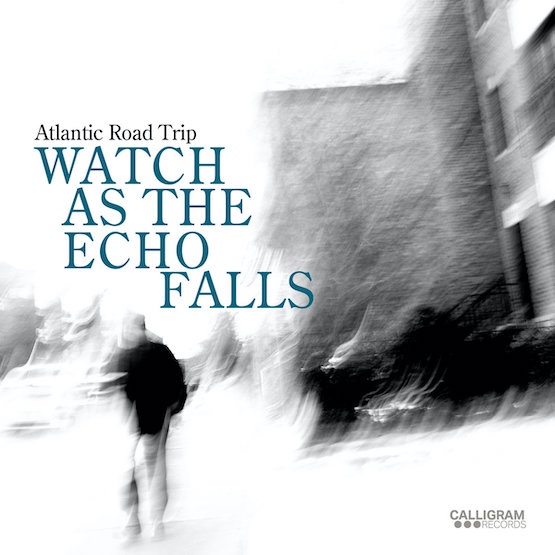
Oh, such beauty- Atlantic Road Trip’s new CD, provides near 45 minutes of bliss…
Atlantic Road Trip – Watch as the Echo Falls – Calligram Records #0028 – CD – 44:38 – *****
(Chad McCullough – trumpet, flugelhorn, synthesizers; Paul Towndrow – alto sax, flute, whistles; Miro Herak – vibraphone)
Atlantic Road Trip’s newest CD, Watch as the Echo Falls, pared down to a trio setting, is an intoxicating mix of folk, jazz, Balkan motifs, with classical chamber music soundscapes, all blending together, providing a listener with a well needed blissful retreat during these troubled times.
The sound stage is much deeper than you would expect from a trio, as there is layering, with use of space and coloring. The acoustics are crystal clear and enveloping, as much of the recording was done at the Royal Conservatoire, in The Hague. I recommend using a high end pair of headphones to really appreciate the aural splendors here.
Chad McCullough’s trumpet, and Paul Towndrow’s alto sax and flute, are a contrapuntal blend that floats and soars. Miro Herak’s vibraphone adds resonance, allowing the trio’s blend to linger and sink in deeply. Throughout, there is also room for improvisation. The constant here, for me, is a search for contemplative meditative beauty.
The shorter tracks (“Exordium,” “Prologue,” and “Epilogue” ) are mood setters for the longer tracks, which range from three to seven minutes in length.
“Parting of the Adriatic” blends a Celtic jig with Balkan influences. There is a joyous abandon, leading into a subliminal dreamy landscape. “Silere” uses the trio’s blend in a chamber music setting that soars to an ethereal heaven. “Fading Photograph” has McCullough’s horn in counterpoint with Towndrow’s flute.
There is freedom to explore in Miro’s “Past Memories,” and Paul has a bluesy passionate sax solo. Near the end of the track, Chad’s synthesizer takes us into new heights. “Cadmus” is simply gorgeous, as the notes linger with brightness. “And Again” has more elevation of emotions, with contrapuntal horn blends, and once again Chad’s synthesizer adds a jolt.
“Echo Falls” is a folk melody with Miro’s ostinato pattern leading to an opportunity for Paul and Chad to play some jazz choruses. “Singularity” closes this “road trip” journey with more symbiotic trio sublime beauty.
This is a release to treasure, and one to return to often, as a respite from chaotic times…
—Review by Jeff Krow
Atlantic Road Trip – Watch as the Echo Falls
Tracklist:
Exordium, Parting of the Adriatic, Silere, Prologue, Spell Breaking, Fading Photograph, Past Memories, Cadmus, And Again, Echo Falls, Epilogue, Singularity
by Audiophile Audition | Mar 30, 2026 | Classical CD Reviews
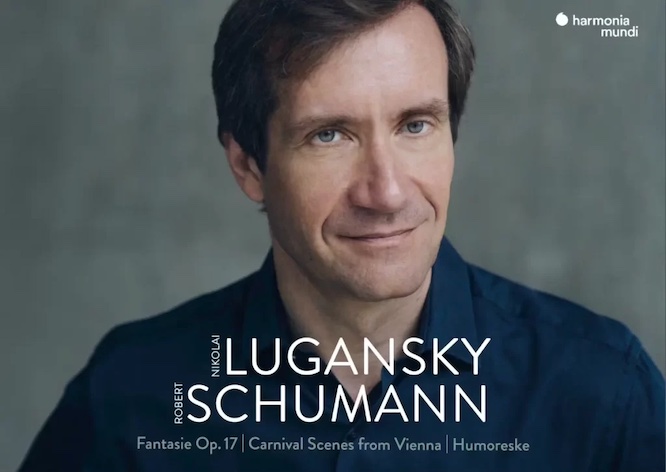
SCHUMANN: Fantasia in C Major, Op. 17; Faschingsschwank aus Wien, Op. 26; Humoreske in B-flat aor, Op. 20 – Nikolai Lugansky, piano – Harmonia mundi HMM 902753 (84:11) (2/6/26)[Distr. by PIAS] ****:
Pianist Nikolai Lugansky (26-28 May 2025) addresses three of Robert Schumann’s brilliant, imaginative constructs: the 1836 Fantasie in C; the Carnival-Jest from Vienna of 1839; and the Humoreske in B-flat Major, also from 1839. Inspired as much by his literary tastes as by his often frustrated romance with his future wife, Clara Wieck, Schumann experimented by subjecting his rhapsodic and spontaneous musical impulses to classical procedures, often with novel, startling results. Unlike his admired Beethoven, Schumann did not conquer large forms with easy security, and his extended pieces reveal a tendency to recycle short phrases in rondo form to achieve extended continuity. Nevertheless, Schumann’s simultaneous capacity for buoyantly exuberant spirits and refined, intimately passionate melodies guarantees the enduring status his body of piano works, some of which have gained high eminence in the canon of Romantic Music.
While I appreciate passion in performance, I take some umbrage at the clangor permitted Lugansky’s Steinway at the outset of the Fantasie, attributable to Nicolas Bartholomée for having rendered Lugansky more percussive than persuasive at several key points in this project. But Lugansky possesses a natural flair in Schumann, and his first movement of the Fantasie enjoys poise and poetic feeling, especially as he prepares to launch into the “legend” touched by Schlegel and Novalis. At moments, the music proceeds as a ballad in contrapuntally vocal motifs, addressed to Beethoven’s “distant beloved.” Lugansky’s florid runs and bass chords testify to a fluent technique in the service of noble aspirations, the pauses pregnant with attendant – if sonically inflated – drama.
Many commentators find parallels between Schumann’s martial middle movement and its parallel in Beethoven’s Sonata No. 31 in A-flat Major, Op. 110. A truly challenging, virtuoso, syncopated showpiece, especially in tis demonic coda, the movement alludes to Beethoven in his operatic guise, quoting from Fidelio. The Steinway tone once more proves trying, effecting a persistent fortissimo where softer nuances should be. The middle section relents a bit, allowing Schumann’s playful side some latitude. As energized as Lugansky performs this section, I had my first impression formed by a master colorist, Robert Casadesus.
The last movement shimmers with impulses from Beethoven’s Sonata quasi fantasia, the “Moonlight Sonata.” The sense of a haunting or haunted atmosphere permeates the progression, the tracery delicately intimate. Schumann regarded his Fantasie, dedicated to Franz Liszt, as among the most passionate pieces he ever conceived. Both Schumann and Liszt had engaged in a project to build, in Bonn, a monument to Beethoven; and this Fantasie served as a Greek obol, a symbolic coin to pay for traversal across the mythical Styx. A small but necessary token of love for the dead and for the ever much alive passion in Schumann’s heart for his absent Clara.
The year 1839 found Schumann in Imperial Vienna, and the engaging spirit of the city appealed to both Florestan and Eusebius, the duality in Schumann’s psyche. His five-movement Carnival-Prank, his self-styled “Romantic showpiece,” assumes some political irreverence when he parodies in the expansive, opening rondo the French patriotic song La Marseillaise, banned in Vienna since the time of Metternich. Again, Lugansky’s bold chords overly resonate with close microphone placement, but the antic humor of the piece shines through. The “jest” motif will serve as a unifying device throughout the composition. Follows a slow, wistful Romanze that utters a few terse phrases in obsessive plaints. The Scherzino enjoys a dotted-rhythm swagger that never quits its self-assured buoyancy, even as its chords modulate in unexpected directions. Intermezzo erupts with the passion of Schumann’s intensely personal Eusebius, a potent, ardent ( G minor) song rife with tender arpeggios. The last movement Finale offers a full-blooded toccata that Florestan asserts with flippant aggression, hand over hand. The secondary theme, too, casts a romantic ardor that ingratiates the piece to our collective memory, a phenomenon first revealed to me by Arturo Benedetti Michelangeli.
Set in the same B-flat major (and G minor) as the “Vienna Carnival,” Schumann’s 1839 Humoreske capitalizes on the German sense of synoptic perspective, a la Dante, whose Divine Comedy passes through stages of dire, grotesque tragedy and spiritual contemplation to a cosmic appreciation of the totality of Life. Recall that mit humour constitutes one of the tempos of initiation in the Dances of the Davids-League. Like Vladimir Ashkenazy, Lugansky savors this mesmerizing piece of “inwardness,” opening with a lovely Einfach that is soon countered by Sehr rasch redolent with the writings of Jean-Paul Richter that literally “gallop” in Schumann’s often martial sensibility. The force of Lugansky’s attacks enjoy a piercing resonance, the kind of vibrancy in Schumann that Horowitz would project.
Hastig plays like a powerfully extended, sectionalized Chopin étude in dynamics and color combinations. More delicate, chromatic colors ensue from Lugansky in the ternary Einfach und zart, which begins contemplatively but urges forward into another toccata. The soft return of the initial material has a decided poignancy from Lugansky. Innig defines one of the true essences in Schumann, a charming, dotted dance emergent from the tender, opening musings. Eusebius has spoken, so Florestan must declaim in Mit einegem Pomp, a multi-knuckled, vehement exercise in layered, chordal chromatics and shifting metrics. A little softer, in my estimation, would have been preferred. Schumann marks his finale, Zum Beschluss, or “onwards to decision,” which has the quality of a contemplative ballade, a rather puzzling postlude in terms of its searching, dark chromatic line. If humor inhabits this canonic study, it lies in subtle contrasts of chiaroscuro and a gentle reprise of small melodic kernels that have permeated and tied the whole together.
—Gary Lemco

.
by Audiophile Audition | Mar 30, 2026 | Pop/Rock/World CD Reviews, SACD & Other Hi-Res Reviews
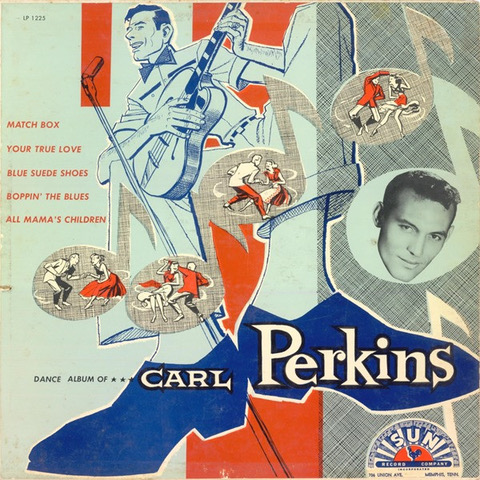
Intervention Records releases a vibrant 45r.p.m. 180-gram vinyl of Carl Perkins’ Sun Records catalog.
Carl Perkins – Dance Album Of Carl Perkins – Sun Record Company LP-225 (1958)/Intervention Records IR-038 (2026) 180-gram 45 r.p.m. mono vinyl, 31:04 *****:
(Carl Perkins – guitar, vocals; plus many others)
The rockabilly phenomenon began at Sun Records. The rock and roll crossover stars included. Elvis Presley, Jerry Lee Lewis, Johnny Cash and Roy Orbison. Perhaps the most notable of the Memphis-based rockabilly artists was Carl Perkins. “The King Of Rockabilly” wrote hit songs like “Blue Suede Shoes”, “Honey Don’t”, “Matchbox” and “Everybody’s Tryin’ To Be My Baby”. These became part of the commercial music scene, covered by artists like The Beatles (maybe the biggest disciples), Jimi Hendrix, Elvis, Johnny Cash and Eric Clapton. Perkins was highly regarded for his nimble guitar techniques consisted of finger picking, arpeggios, open stringing, note-bending and cross picking.
Intervention Records has released a 180-gram 45 r.p.m. mono vinyl of the 1958 album, Dance Album Of Carl Perkins. This was a compilation of singles and B-sides (with 10 original compositions). These 12 tracks, logging in at approximately 31 minutes is a quintessential look at rockabilly and the legacy of Perkins. Side A opens with the eternal rock and roll classic, “Blue Suede Shoes”. This swinging jam has youthful energy (“Go Cat!), country blues power and nimble guitar licks. Perkins has deep country roots. “Movie Magg” has subtle touches like harmonic guitar notation and a slight nod to traditional “yodel” singers. In an expansive arrangement, “Sure To Fall” has flowing tempo, ragged harmonizing and jangling guitars that frame Perkins’ emotional vocal delivery. His intermingling of blues and contemporary idioms is prevalent on “Gone, Gone, Gone”. It becomes a personal signature and will get anyone up dancing at a roadhouse. Another popular single, “Honey Don’t” is a breezy hook-filled jam that stands the test of time. The subject of angst-ridden love and rock and roll is a natural fit for the crisp instrumentation and vocals.
There is an element of good vibes in these cuts. Perkins steps up for his home state in “Tennessee”, name dropping Eddy Arnold, Red Foley and the first atomic blonde. But the reaL focus is playing in “the hillbilly way”. Humor abounds on “The Right String/Wrong YoYo”, as Perkins puts a lot of energy into the finger picking and yowling vocals. Another often-covered single, “Everybody’s Trying To Be My Baby” is translated to a bluesy shuffle with punctuated instrumentals and vocals. Another rollicking blues jam is “Matchbox”, utilizing propulsive rhythm and plenty of rebellious attitude. There is a change in musical direction on “Your True Love”. This feels like a country version of doo wop with soulful back up vocals. The finale, “Boppin’ The Blues” is pure rockabilly and swings like r & b.
This re-mastered vinyl of Dance Album Of Carl Perkins is an excellent addition to any rock and roll collection. Using original 1/4’ analog tapes (in a three-step process) from Sun Records, the mix (Kevin Gray/CoHEARent Audio) is crystalline and potent with detailed attention to Perkins’ guitar and fluid vocals. While the sound is augmented from the 1950’s studio aesthetics, it is not overproduced and never interferes with the straight ahead dynamics. This pressing (Gotta Groove Records) is pristine with little surface noise or tonal distortion.
Highest recommendation!
—Robbie Gerson
Dance Album Of Carl Perkins – Intervention Records
Side A:
Blue Suede Shoes; Movie Magg; Sure To Fall; Gone, Gone, Gone; Honey Don’t; Only You
Side B:
Tennessee; Wrong YoYo; Everybody’s Tryin’ To Be My Baby; Matchbox; Your True Love; Boppin’ The Blues.
by Audiophile Audition | Mar 29, 2026 | Classical CD Reviews
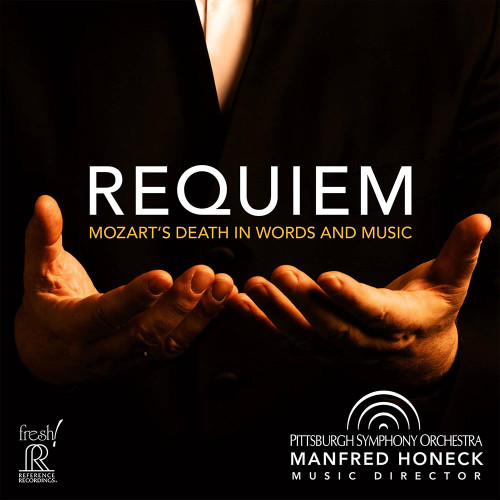
“Requiem – Mozart’s Death in Words and Music” = Mozart Requiem; Masonic Funeral Music; “Laudate Dominum”; Ave verum corpus; Gregorian chants – F. Murray Abraham, narrator/ Jeanine De Bique, soprano/ Catriona Morison, mezzo-soprano/ Ben Bliss, tenor/ Tareq Nazmi, baritone/ Pittsburgh Sym. Orch./ Manfred Honeck – Reference Recordings multichannel SACD FR-761, (complete listing and credits below) 60:13 ***1/2:
To be honest—I am not sure that this program works in the way that conductor Manfred Honeck envisions it. He has been offering this program in concert for a long time (in fact, I believe you can find it on YouTube), and it is obviously an extremely personal, and pious meditation on both the death of one of the greatest geniuses of all time as well as a profoundly introspective attempt at consideration of human death and the hope that lies beyond this mortal coil. Honeck lays out a liturgical scheme of the Requiem by Mozart in the context of a Requiem for Mozart. Interspersed are a few other pieces by the composer, and short tropes of Gregorian chant and poetry and scripture readings.
Yet buyer beware! This is not a performance of the Mozart Requiem in toto that you may be seeking. Though Honeck makes use of the Süssmayr completions, everything beyond the “offertorium” – Sanctus, Benedictus, Agnus Dei, Communio, Lux Aeterna, and Cum sanctis tuis – are absent.
So what to make of this? Seeing this in concert is probably a wonderful experience, because you know what you are in for, and the concept is a fascinating one. Listening to it on SACD (in splendiferous sound/mirror super audio sonics) is also an invigorating and very devotional exercise, the renderings of every piece done beautifully, with the orchestra and (thankfully) very large chorus trained to a fare-thee-well. But for repeated listening I am not sure; perhaps every once in a while I will pull this out, but I am far more likely to grab a favorite recording of the Requiem sans interpolations, as the piece itself is such a marvelously devotional and spiritual undertaking by itself.
To note—had it been a complete recording of the Requiem alone, it would have shot to the top five or six of the best versions available. Honeck, as usual, brilliantly defends everything he does in this music, looking at the notes and emotional context of the work to justify any dynamic changes and tempi that he chooses. You might not agree with all of it, but after reading his explanations one certainly cannot fault the logic of his arguments, and after so many sterile period instrument performances over the years, a little passion in interpretation is genuinely welcomed.
It was tough to review this, as a steady basis for evaluation is absent. Let me say this—If it is just the Requiem you seek, you might look elsewhere. If this sort of thing interests you, a combination liturgical reconstruction and philosophical meditation on life and death using Mozart’s own as a template, then you will not be disappointed as all performances are superlative.
—Steven Ritter
Requiem – Mozart’s Death in Words and Music
Requiem in D Minor, K. 626
Masonic Funeral Music in C Minor, K. 477
“Laudate Dominum” from Vesperae solennes de confessore, K. 339
Ave verum corpus, K. 618
various Gregorian chants
F. Murray Abraham, narrator
Jeanine De Bique, soprano
Catriona Morison, mezzo-soprano
Ben Bliss, tenor
Tareq Nazmi, baritone
Pittsburgh Symphony Orchestra
Manfred Honeck, conductor
by Audiophile Audition | Mar 28, 2026 | Pop/Rock/World CD Reviews, SACD & Other Hi-Res Reviews
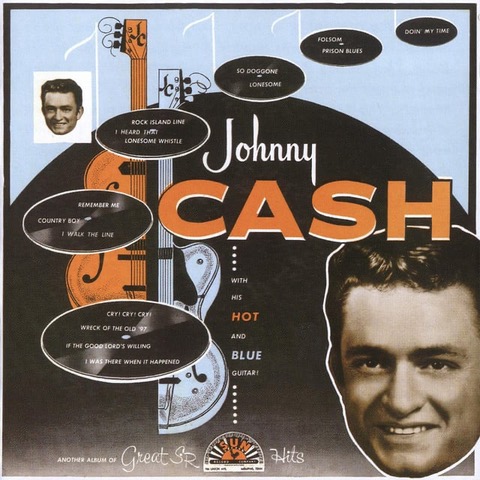
Johnny Cash’s Sun Records debut gets a significant vinyl upgrade and sounds better than ever!
Johnny Cash – Johnny Cash With His Hot And Blue Guitar! – Sun Record Company LP-1220 (1957)/Intervention Records IR-039 (2026) 180-gram 45 r.p.m. mono vinyl ****1/2:
(Johnny Cash – acoustic guitar, vocals; Luther Perkins – electric guitar; Marshall Grant – double bass)
The influence of Memphis record label Sun Records on modern rock and roll is significant. The intermingling of blues with country music created a new genre called rockabilly. Often recorded with minimal instrumentation, songs included “snapback” and echo. In 1954, a local singer named Elvis Presley released “That’s All Right”, leading the way for other seminal hits like “Blue Suede Shoes” (Carl Perkins), and “Whole Lotta Shakin’ Goin’ On” (Jerry Lee Lewis). One of the earliest crossover country stars was Johnny Cash. While his roots were in gospel, he ended up at Sun Records in Memphis with all of the artists trying to reach a rock and roll audience. But Cash was a different breed of musician, creating his own unique blend of folk, blues and traditional country.
Intervention Records has released a 180-gram 45 r.p.m. mono vinyl of the 1957 debut on Sun Records, Johnny Cash With His Hot And Blue Guitar!. The instrumentation is pared-down with Cash on acoustic guitar, Luther Perkins on electric and Marshall Grant on double bass. The focal point is Cash’s rumbling baritone. Side A opens with a classic talking blues train song, “Rock Island Line” (popularized by Huddie Ledbetter). Cash narrates the opening verse as the band creates a trademark 50’s “boom chick-a-boom” groove. There is a tempo uptick that is catchy. Next up is an unforgettable prison/train song from Hank Williams, “I Heard That Lonesome Whistle”. In a slower waltz-time, Cash recounts the poor decisions of a young man with his unique vocal style. His humorous enunciation of the word “lonesome” is uncanny.
Picking up the tempo, “Country Boy” (the first of four original compositions) has a lively feel with imagery of fishing, working and even dogs. “If The Good Lord Is Willing” (an early Jerry Reed song), is a foot-stomping exploration of romance viewed through a gospel lens. Even in the beginning, Johnny Cash had a trademark style. His first single “Cry, Cry, Cry” is a master class in the relentless burden of unrequited love with rhythmic inflection and a rolling musical structure. Cash’s larger-than-life voice permeates the amiable, sardonic 3/4 time arrangement of “Remember Me”.
Cash manages to exude pathos and humor on “So Doggone Lonesome”. His relaxed delivery merges with Sunday testimony (and backup vocals) on “I Was There When It Happened”. Like most of the songs on this album, it feels authentic and impossible to imagine any other musician coming up with a comparable version. One of the certain highlights is “I Walk The Line”. With impeccable rhymes and railroad cadence, Cash weaves his commitment to love with emotional verve and unexpected singing range. Returning to restless traveling, “The Wreck Of Old ’97” is high-octane. Perhaps the signature number for early Johnny Cash is the heart-wrenching ‘Folsom Prison Blues”. This also represents some of his best songwriting. Phrases like “I shot a man in Reno, just to watch him die” and “I let that lonesome whistle blow my blues away” are part of the outlaw culture. The finale (“Doin’ My Time”) embraces the ever-present themes of jail and being with “that gal of mine”.
Johnny Cash With His Blue And Hot Guitar! is a historical recording. Cash transcends the Sun Records rockabilly genre with fresh roots-based music, showcasing a consistent artistic vision. The re-mastered sound (100 % analog with a 1/4” transfer from original master tapes) and modern lacquer pressing expand the overall sound dynamics (Kevin Gray/CoHEARent Audio). The “low-fi” sensibility is maintained with quiet aesthetics and excellent centering of Cash’s deep voice.
Highly recommended!
—Robbie Gerson
Johnny Cash With His Hot And Blue Guitar!
TrackList:
Side 1: Rock Island Line; I Heard That Lonesome Whistle; Country Boy; If The Good Lord Is Willing; Cry, Cry, Cry; Remember Me
Side 2: So Doggone Lonesome; I Was There When It Happened; I Walk The Line; The Wreck Of The Old ’97; Folsom Prison Blues; Doin’ My Time.
by Audiophile Audition | Mar 26, 2026 | Classical CD Reviews, Classical Reissue Reviews
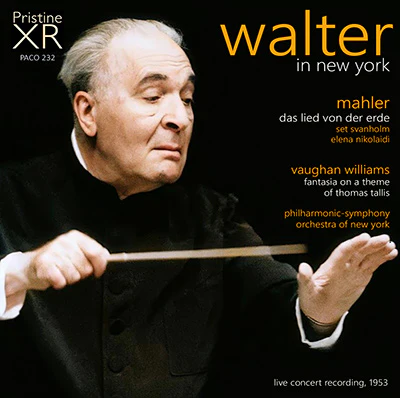
WALTER in NEW YORK = VAUGHAN WILLIAMS: Fantasy on a Theme by Thomas Tallis; MAHLER: Das Lied von der Erde – Set Svanholm, tenor/ Elena Nikolaidi, contralto/ New York Philharmonic Orchestra/ Bruno Walter – Pristine Audio PACO 232 (74:18) [www.pristineclassical.com] *****:
Pristine captures a special moment in the New York musical scene: from Carnegie Hall, 22 February 1953, Bruno Walter leads a radio-broadcast concert featuring the music of Vaughan Williams and Mahler, a most compelling aural spectacle of works set in contrasting modes of expression. Let me comment at the outset that Walter’s sonic achievement, the homogeneity of tone he achieves in the Philharmonic strings, anticipates in phrase and intensity of line, what Dimitri Mitropoulos would brilliantly commit to CBS for posterity in 1958.
Vaughan Williams had been working on his own English Hymnal, when in 1910, he came upon the third of nine psalm tunes composed in 1567 for the Archbishop Parker’s Psalter, Thomas Tallis’ Why Fumeth in Fight. Vaughan Williams conceives his Fantasia as a concerto-grosso study in contrasted string antiphons, comprised of a full string orchestra (as ripieno), a string quartet (as concertino), and a chamber string ensemble. The Fantasia premiered at the Gloucester Festival, and it has since had advocates of divergent temperaments, from Sir Adrian Boult, Sir John Barbirlli, and Leopold Stokowski to Louis Lane. Walter’s forces lean into the lush torment of the string line with a passion only equaled in my view by Mitropoulos. The mounted fury and retreating pulsations of the piece converge at a fearsome climax, a graduated rush tantamount to Wagner’s Tristan.
Gustav Mahler (1860-1911), eternally dreadful of the number “nine” for his symphonic oeuvre, turned to his love for poetry to fashion (1908-09) his six-movement Das Lied von der Erde, assembled after Hans Bethge’s The Chinese Flute, a series of ancient meditations on life and death, a profoundly personal revelation by Mahler concerning his obsession with mortality and the frailty of the human condition. Mahler only resumed the chronological numbering of his symphonies after “the curse of the Ninth” had passed, at least in his estimation. Swedish tenor Set Svanholm (1904-1964), noted for his Wagnerian characterizations after WW II, joins Bruno Walter and Greek contralto Elena Nikolaidi (1909-2002). Svanholm sets the tone in “The Drinking Song of Earth’s Woe,” whose poetic mode by Li Bai remains demure and detached, but whose musical realization verges on hysteria. “Dark is life, dark is death” as a refrain recurs, each entry one half-step higher, a hymn to existential pessimism.
The second movement, “The Lonely One in Autumn” (Qian Qi), provides a subdued, bucolic contrast, both celebrating and lamenting the ephemeral beauty of Nature, with Nikolaidi’s plaintive tone’s demonstrating the same stamina and unsentimental resolve as that of Svanholm. Her approach eschews the staggering drama we find in Kathleen Ferrier but instead provides a searching directness of expression that carries its singular pathos. Movement three, “Of Youth,” depicts a party inside a pavilion that borders a lake, so that the reflected image upon the water of the callow youths “comments” on the lucid illusion of strength and vitality. The “exotic” character of Mahler’s instrumentation basks in colors, transparent and intense, a wonderful, abbreviated ternary-form, alternative to what the French Impressionists were constructing at the same period in musical history.
Another singular contrast in human interaction enters with “Of Beauty,” intoned by Nikolaidi, as a group of young maidens sits by a riverbank plying restrained tones while, on horseback, a small band of young men pass by. Whatever flirtation exists in the meeting, the music explodes into fanfare effects, with Nikolaidi’s becoming more insistently breathless. The postlude proves hazy, transparent, and lyrically nostalgic in a chamber-music texture. “The Drunken Man in Spring” serves as a dramatic comic-relief, a pointed scherzo, an expression of emotional indifference to fate and mortality: “Life is a dream, so why worry and travail? I drink all day, glutting my fill, until I can imbibe no more!” Svanholm thrusts the inflated baits at Fate with hearty passion, the irony of the occasion indeed a snake devouring its own tail.
Mahler’s last movement, “Der Abschied,” compresses poetry by Mong Hao-Ran and Wang Wei with (final) lines added by Mahler himself. We have leave-taking on a grand scale, yet delicately intoned and colored by brass, winds, strings, mandolin, harp and celesta, while the contralto calmly contemplates the terrible neutrality of the universe as we pass away. The Earth does indeed abideth forever, while Man contemplates his ephemeral presence. “Endless, endless shines the blue horizon. . .”
There do appear moments in Nikolaidi’s performance that rival what Walter and Ferrier achieved in pure pathos for their collaborations. Hearken to her repeated “Warum?” in the course of the long narrative. And shall we not credit flute principal John Wummer (1899-1977) for his endearing, oft flutter-tongued, contribution to the unity of effect? But never forget Bruno Walter’s long and fruitful experience in this work, which he launched into the musical world in 1911, shortly after the death of its composer. Walter’s advocacy, his faith in the message of this demanding, doubting, suffering composer, never wavered in stalwart, musical integrity and firmness of vision. Many thanks to Pristine and Andrew Rose for yet another document of musical authenticity on the highest level.
—Gary Lemco