
Monthly Archive: September 2017

Serge PROKOFIEV: Cinderella, Blu-ray & DVD (2017)
This would make a great introduction to Prokofiev’s ballets! Serge PROKOFIEV: Cinderella, Blu-ray & DVD (2017) Cast: Mariinsky Ballet Theater Director and Principal Choreographer: Alexei Ratmansky Music: Orchestra of the Mariinsky Ballet Theater Conductor: Valery Gergiev Stage Director: Yuri Fateev Studio: Mariinsky, Bluray & DVD [9/18/2015] TV Directors: Antoine Perset & Vincent Massip Run Time: 110 minutes Video: 1.77:1 Color. Audio: Dolby, NTSC, Stereo Rating: **** This is not a new release but it may be one of the ‘must haves’ for lovers of the very beautiful but musically unique Prokofiev ballets. I only just recently came across this when asked to give my thoughts. My thoughts on all ballet remains that it is an artistic genre which can be enjoyed in two realms; in its visual and aural totality and that of the music only. This is why many symphony musicians and audiences would say—myself included—that ballet scores can be great fun to play and to listen to as one does a symphonic tone poem. If we know the story then each scene can be followed like a storyline and the really fine scores—like those of Tchaikovsky and Prokofiev stand well on their own and are picturesque in your mind’s […]

BRAHMS: Piano Sonata; Intermezzi; Capriccio; Ballade; Klavierstücke; Waltz – Nelson Freire, piano – Decca
Nelson Freire plays BRAHMS = Piano Sonata No. 3 in f minor, Op. 5; Intermezzo in A-flat Major, Op. 76, No. 3; Intermezzo in B-flat Major, Op. 76, No. 4; Capriccio in d minor, Op. 116, No. 1; Intermezzo in E Major, Op. 116, No. 4; Intermezzo in b-flat minor, Op. 117, No. 2; Intermezzo in A Major, Op. 118, No. 2; Ballade in g minor, Op. 118, No. 3; 4 Klavierstücke, Op. 119; Waltz in A-flat Major, Op. 39. No. 15 – Nelson Freire, piano – Decca 483 2154, 73:14 (8/25/17) [Distr. by Universal] ****: Nelson Freire’s historic reunion with the music of Brahms on disc marks a powerful, audacious occasion. So far as recording history is concerned, Nelson Freire (b. 1944) returns to the Brahms 1853 f minor Sonata after 50 years, the year 1967 having marked his CBS exploration of this work’s large, romantic gestures. In this respect, Freire reminds me somewhat of Artur Rubinstein, who likewise revisited this grand canvas twice in his recording career. The tumultuous first movement, Allegro maestoso, exploits constantly shifting rhythms amidst explosive, symphonic outbursts, from which a poignant melody in warm D-flat arises that will achieve even more luminosity in G-flat. […]
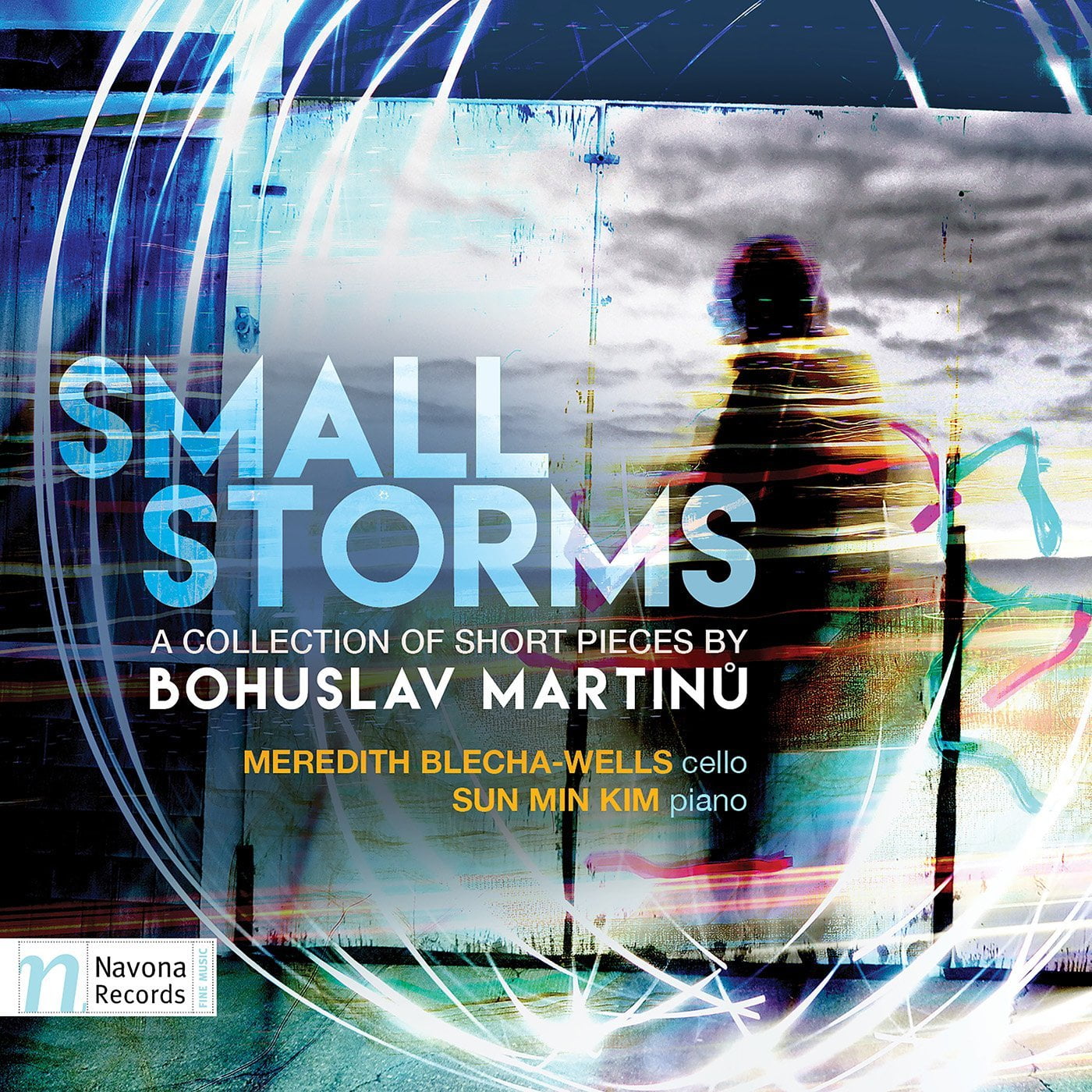
MARTINŮ: Variations on a Theme of Rossini; Ariette; Seven Arabesques; Suite Miniature; Nocturnes; Variations on a Slovakian Theme ‒ Meredith Blecha-Wells, cello / Sun Min Kim, piano ‒ Navona
“Small Storms: A Collection of Short Pieces by BOHUSLAV MARTINŮ = Variations on a Theme of Rossini, H. 290; Ariette for Cello and Piano, H. 188B; Seven Arabesques for Cello and Piano H. 201; Suite Miniature for Cello and Piano, H. 192; Nocturnes for Cello and Piano, H. 189; Variations on a Slovakian Theme, H. 378 ‒ Meredith Blecha-Wells, cello / Sun Min Kim, piano ‒ Navona Records NV6092 [distrib. by Naxos]; 59:00 (4/17/17) **** Martinů’s unique blend of neoclassicism and folk music bound up in a series of appealing little packages. Martinů is one of those composers—like Milhaud and Hovhaness in the twentieth century and Saint-Saëns in the nineteenth—who was almost too prolific to be taken seriously. And, indeed, critics have taken Martinů to task for writing too fast and furiously, not subjecting his art to the kind of scrutiny and reflection that results in lasting significance. Like Saint-Saëns, Martinů may not be broadly represented in the concert hall today, but also like the French composer, his vast oeuvre is increasingly finding its way to disk and to music lovers’ shelves. I confess it took me quite a while to come around to the manifest charms of Martinů. I […]
AUDIO NEWS for September 13, 2017
Major Labels Talk Hi-Res Audio — From music downloads to physical formats such as SACD and DVD-Audio, hi-res audio has always been a sort of niche for audiophile music fans. The three major labels—Sony, Universal and Warner Music—hope to change that and give hi-res audio mass-market appeal. The tech film MQA was also on the panel in Berlin. They see major opportunities for hi-res by getting the younger persons to appreciate that hi-res doesn’t just sound better, but is worth paying for. They grew up with MP3, and haven’t had any exposure to high-quality audio. Part of their job is to reach out to the young people so that they can hear it. The sound sells itself. One of the label heads said “We don’t really have to educate the 40, 50 and 60-year-olds because they already know…the benefit. But we’re getting excitement in the younger demographic segment.” Another talking point was the potential for hi-res to be about more than just the audio. The vinyl comeback was mentioned as a guide to features that may appeal to fans. They also want to return to providing digital booklets and the lyrics to the tunes. All new releases are requested in hi-res […]

JAN JIRÁSEK: Parallel Worlds ‒ JITRO Czech Girls Choir / Michal Chrobák, piano / Pavel Plašil, percussion / Jan Jirásek, scissors / Jiřį Skopal ‒ Navona
JAN JIRÁSEK: Parallel Worlds = Missa Propria; Si, vis amaria, ama; Mondi Paralleli; King Lavra ‒ JITRO Czech Girls Choir / Michal Chrobák, piano / Pavel Plašil, percussion / Jan Jirásek, scissors / Jiřį Skopal ‒ Navona Records NV6101 [distrib. by Naxos]; 60:00 (6/9/17) ***1/2 Some interesting music that recalls both Ligeti and Pärt, yet with an individual profile. The performances by the girls’ choir are notable. If you wade through the extensive notes to the current recording, you may be left a bit mystified about composer Jan Jirásek (b. 1955) and his musical idiom. My recommendation is to absorb the comments as best you can (they are a bit opaque in spots) and then listen to the music. Listening will certainly be more informative. All the music here was written for and features a remarkable group, the JITRO Czech Girls Choir. JITRO, by the way, is not an acronym but a Czech word meaning daybreak. The name may speak to the freshness and spontaneity of the choir’s delivery, but there is nothing jejune about their interpretations. From the get-go Jirásek requires them to address some pretty sophisticated musical challenges, and the choir rises to the challenge with admirable results. […]

Ossy Renardy: The Complete Remington Recordings = PAGANINI: Caprices; FRANCK: Sonata in A Major; RAVEL: Violin Sonata No. 2 – Ossy Renardy, violin/ Eugene Helmer, piano/ Eugene List, piano – Pristine Audio
Ossy Renardy: The Complete Remington Recordings = PAGANINI: Caprices, Op. 1 (arr. F. David); FRANCK: Violin Sonata in A Major; RAVEL: Violin Sonata No. 2 in G Major – Ossy Renardy, violin/ Eugene Helmer, piano/ Eugene List, piano (Franck & Ravel) – Pristine Audio PACM 103 (2 CDs) TT: 1:49:22 [www.pristineclassical.com] ****: The short-lived Austrian violinist Ossy Renardy enjoys a fine restoration in his Remington legacy. The name of Viennese violin luminary Ossy Renardy (nee Oskar Reiss, 1920-1953) may invoke the image of a “fingerboard gymnast,” compelled to play spectacular showpieces and flamboyant repertory, but he had gleaned respect for his formidable technique and sensitive interpretations, often likened to his compatriot, Fritz Kreisler. Renardy died in a car crash, only just having begun to reap the repute his hard work and commitment had earned. The decision to record the complete Paganini Caprices in the Ferdinand David edition, with (an anachronistic) piano accompaniment, comes as a result of Renardy’s having performed this version in 1940, and here again in 1953, for Don Gabor’s Remington label. Ruggiero Ricci would perform the pieces in their solo capacity—in 1947—but Renardy must have felt that the popular consensus would favor the “enriched” harmonization between him […]

Gaudi – Magnetic – RareNoise
Gaudi – Magnetic [TrackList and Recording Artists follow] – RareNoise RNR080, 52:21 [6/30/17] ****: A voyage into modern neo-dub. When most DJs, producers or other musicians raid a label’s catalog for sounds, the result is often a remix album or some kind of mishmash hybrid. When electronica/dub reggae artist Gaudi was given the opportunity to dip into the RareNoise catalog, he had a different idea. The perspective of Gaudi’s 52-minute Magnetic is an affirmation of bass (six bassists contribute separately to eight tracks). Magnetic is an assemblage of tunes which combine sounds from previous RareNoise releases with a roster of musicians who recorded in the studio with Gaudi. The end-product is aligned with earlier Gaudi recordings, but the framework, attitude and quintessence is unique. The upshot is that Gaudi is one of this year’s best electronic-laced instrumental albums. Magnetic has been issued as a digital download, vinyl LP and CD. This review refers to the CD version. Gaudi’s record starts with “30HZ Dub Prelude,” which contains 7:45 of bass, drums, trombone, guitar, wordless vocals, and keyboards which deliver a liquescent and slinky dub reggae excursion. The highlight is hearing bassist Colin Edwin (of prog rockers Porcupine Tree) create a hypnotic […]

BEETHOVEN: String Quintet. Piano Quartet. Grosse Fuge – Budapest String Quartet / Walter Trampler, viola/ Mieczyslaw Horszowski, piano – Praga Digitals
BEETHOVEN: String Quintet, Op. 29. Piano Quartet Op. 16. Grosse Fuge Op. 133 (1965, 1962, 1961) – Budapest String Quartet / Walter Trampler, viola / Mieczyslaw Horszowski, piano – Praga Digitals PRD 250381, 74:17 (9/8/17) ***: On a nostalgic disc devoted to important recordings by the fabled Budapest Quartet of tangentially curious, early and late chamber music by Beethoven, Praga Digitals continue their sprint through great classical music recordings of yesteryear. Spread across five years, all apparently recorded at Columbia Records’ 30th Street Studios, the performances represent the Quartet’s last years of glory before they disbanded in 1967 after having been in business for 50 years. Everything that made them famous, the skills and concentration that enabled them to forge a relentless relationship with the music they played, informs every bar. Anchored by the formidable playing of cellist Mischa Schneider and led by the charismatic first violinist Joseph Roisman, the Quartet’s commitment to speaking with one voice and to choosing honesty as the guiding principle in every substantial musical decision they had to make, came with a cost. As they finally neared the end, the increasing difficulty of their massive achievements become more apparent. Appropriately, the Grosse Fuge, recorded in […]
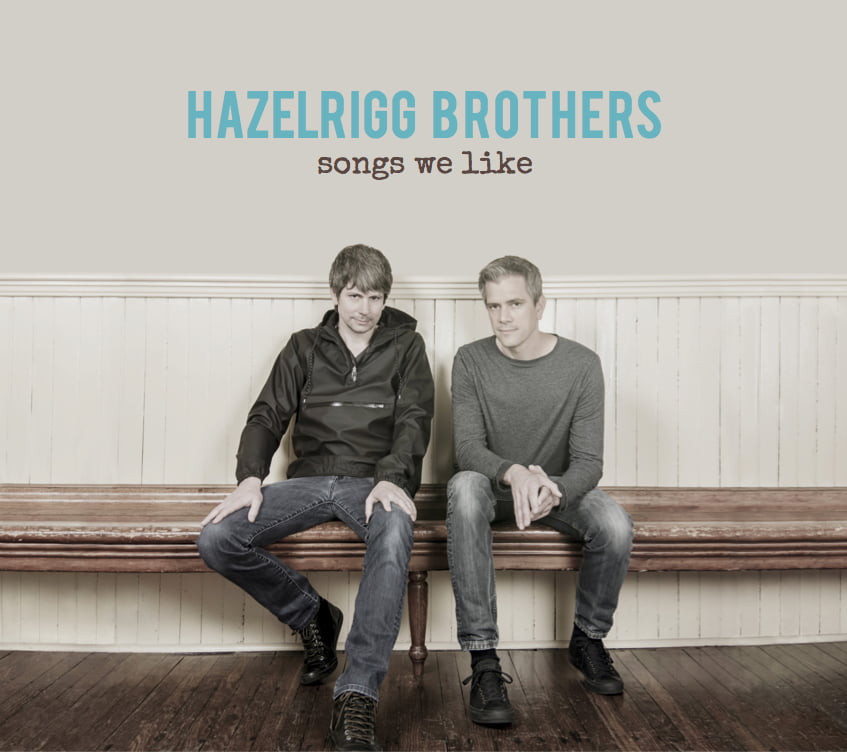
George & Geoff HAZELRIGG: Songs We Like
George & Geoff HAZELRIGG: Songs We Like – 61740, 40:31 (9/12/17) *****: (George Hazelrigg: piano/ Geoff Hazelrigg: bass/ John O’Reilly, Jr: drums) Taste and invention carry the day, rather than nostalgia, in an inspired set of rock-themed charts for a well integrated piano trio. The title and cover photo of the Hazelrigg brothers’ debut jazz release, “Songs We Like,” suggests candor and modesty. No vaunting claims or puffery. The back reveals that the songs in question have also been liked by others, for they are nothing less than pop/rock favorites from yesteryear by Led Zeppelin, Sting, Hendrix, Jethro Tull, with two classical tunes thrown in. We are broad-minded here at Audiophile Audition and readily accept that no musical tradition has a monopoly on good songs. However, for the jazz aficionado, there might be a concern that an important dimension of jazz will be rescinded if the rather single-minded rhythmic notions of Rock’n’roll are overindulged, not to mention all the subtleties of interaction and dynamics. Might they be overwhelmed by bombast or smothered by repetitious boredom? These concerns vanish within the first ten measures. From the opening track, “Living in the Past,” we are relieved to hear that the trio will […]

Mordecai Shehori: The Celebrated New York Concerts, Vol. 12 = Works by HANDEL; BEETHOVEN; CHOPIN; SCHUBERT; LISZT – Mordecai Shehori, piano – Cembal d’amour
Mordecai Shehori: The Celebrated New York Concerts, Vol. 12 = HANDEL: Chaconne in G Major, G. 229; BEETHOVEN: Piano Sonata No. 17 in d minor, Op. 31, No. 2 “The Tempest”; CHOPIN: Barcarolle in F-sharp Major, Op. 60; Polonaise in f-sharp minor, Op. 44; SCHUBERT (arr. Liszt): Staendchen; LISZT: Legend No. 2 “Saint Francis of Paola Walking on the Waves – Mordecai Shehori, piano – Cembal d’amour CD 189, 66:51 (5/8/17) [cembaldamour.com] *****: Add yet another gem to the legacy of New York recitals that impressed admirers of Mordecai Shehori. Mordecai Shehori continues to bestow his authoritative legacy from his New York Concerts, here that of 2 June 1993 at Weill Recital Hall, which offers a real cornucopia of keyboard color. He opens with Handel’s 1733 Chaconne in G Major, a ground theme (a Spanish sarabande) and twenty-one variations published as part of the Suite No. 2. Within the ten minutes of its inventive girth, the work subsumes many of the contours of the French school of clavecinistes Rameau and Couperin, while becoming increasingly virile until the middle variants, which settle into an arioso and contrapuntal g minor. The G Major return at variation 17 marks Handel in his best, […]
Russell Malone – Time For The Dancers – High Note Records
Russell Malone – Time For The Dancers – High Note Records HCD 7305, 50:51 ****: Jazz guitarist shines on latest release! (Russell Malone – guitar; Rick Germanson – piano; Luke Sellick – double bass; Willie Jones III – drums) The third release on High Note from Russell Malone, Time For The Dancers features a talented quartet (Russell Malone/guitar; Rick Germanson/piano; Luke Sellick – bass and Willie Jones III/drums) to interpret a variety of compositions (some originals and a mix of jazz and pop numbers). Opening the album is the title track. First recorded in 1977 by The Roland Hanna Trio, the quartet gives it a unique take. Germanson starts off with a brief ethereal piano riff as the rhythm section joins in a fluid groove. Malone takes command instantly with his precise notation and well-timed grooves. At the 3:43 mark, Germanson solos with melodic, lyrical finesse.There is a 70’s feel to the guitar tones and it is appealing. The reverie changes quickly on “Leave It To Lonnie’. With elements of funk in the rhythm and a guitar which alternates between jagged and smooth, the jam (dedicated to bassist Lonnie Plaxico) is gritty and gives Malone an opportunity to flex his […]

Jü – Summa – RareNoise
Jü – Summa [TrackList follows] – RareNoise RNR074, 53:31 [3/31/17] ****: Metal and jazz-influenced improvisation as only Jü can do it. (Àdàm Mészáros – guitar, kalimba, percussion; Ernö Hock – bass guitar, bass ukulele, percussion; Andràs Halmos – drums, bell, kalimba; Kjetil Møster – tenor saxophone (track 5); Bálint Bolcsó – electronics (track 5)) There are few groups quite like the Hungarian experimental metal-jazz trio Jü. They improvise like jazz artists but often integrate amplified and noisy elements from metal music, layering heavy and hard riffs with pummeling drums and scorched electric bass. On the 53-minute Summa, the threesome’s second release on the forward-thinking RareNoise label, guitarist Àdàm Mészáros (who also adds kalimba and percussion), bassist Ernö Hock (he also plays bass ukulele and percussion) and drummer Andràs Halmos (who incorporates kalimba and bells into his rhythmic stew) continue their sonic assault but assimilate world folk music, create ambient and calm arrangements, and include longer pieces reminiscent of the jam band ethos. Make no mistake, there is nothing on Summa which is jazz in a traditional or historical sense, and some listeners would never label this as jazz. Call it a hybrid if you will, and put it where you […]

The Hot Club of San Francisco – John Paul George & Django – HCL ; Thelonius Monk – Criss-Cross – Columbia
Two Vinyl LPs—The Beatles in gypsy jazz and Monk’s second and terrific album; contains his big hits. The Hot Club of San Francisco – John Paul George & Django – HCL 27041 33 1/3 vinyl ****: Thelonius Monk – Criss-Cross – Columbia CS 8838 (1963)/Pure Pleasure Records 33 1/3 vinyl re-master (2017)****: Although they are not identified in the title, the first of these LPs is dedicated to Ringo & Dan Hicks. Hicks, a San Francisco-based musician, gave the leader and lead guitarist of the HCSF (Paul Mehling) an idea to include “old” tunes. He had long fantasized about whether Django’s Hot Club of the 1930s would have played Beatles numbers. Now on this vinyl, 13 of them are heard in excellent arrangements and with the best fidelity. There was a lot of very contentious discussion about the arrangements, in which all members participated. The violin part is prominent in many of the arrangements, played by Evan Price. One girl, Isabelle Fontaine, is one of the two rhythm guitars, washboard, and contributes to some of the vocals. Four special guests also participate, on soprano ax melodica, barrel organ and drums. The great drummer Jeff Hamilton is one of them. Price […]
Editorial for September 2017
The acts of Martin Luther, now half a millennium ago, marked the beginning of the Reformation Movement. The results were profound and far-reaching, with influenced society, politics, and the arts for centuries, and are still being felt today. Next month marks the 500th Anniversary of the Reformation, and is being honored with two rich CDs by Harmonia mundi. The first of these features the Choir of Clare College, presenting Bach’s two great Reformation cantatas, along with other chorale-based works by Brahms, Vaughan Williams, and Felix Mendelssohn. Mendelssohn was also inspired to write his “Reformation Symphony”, Symphony #5, which is featured on the second CD from Harmonia mundi. This CD also has his Hebrides Overture, and the popular Violin Concerto in E Minor, his last large orchestral work. EDITORIAL AUDIOPHILE AUDITION began as a local program in San Francisco and then in 1985 as a weekly national radio series hosted by John Sunier, and aired for 13½ years on up to 200 public radio and commercial stations. In September 1998 its web site for program listings was expanded to this free Internet publication. September 2017 is our 222th issue! All disc reviews are added thru the month as […]

TCHAIKOVSKY: Manfred Symphony – Czech Philharmonic/ Semyon Bychkov – Decca
TCHAIKOVSKY: Symphony in B Minor after Byron’s “Manfred,” Op. 58 – Czech Philharmonic/ Semyon Bychkov – Decca 483 2320, 59:19 (8/25/17) [Distr. by Universal] ****: Tchaikovsky epic symphonic-poem receives a dedicated performance in this ongoing project by Semyon Bychkov. Tchaikovsky, much like Berlioz, found a poetic, kindred spirit in the work of George Gordon, Lord Byron, turning in late 1885—at the strong suggestion of Balakirev—to the poet’s gloomy masterpiece, “Manfred” (1817), that celebrates Romantic Agony in a series of episodes testifying to the protagonist’s alienation due to some un-named “original sin.” Like Berlioz, Tchaikovsky conceived his symphony as a through-composed leitmotif or idée fixe that would turn upon itself, cyclically, as the eponymous hero undergoes adventures that alter his melodic contour and harmonic syntax. Manfred longs for Astarte, an image of “the Eternal Feminine” that no less inhabits the world of Goethe and his Faust or Dante and his Beatrice. A morally ambiguous figure, Astarte inspires and torments Manfred, and she projects a romantic and demonic influence, appearing in ardent reality and later, in a wistful memory. A relatively massive score, Manfred rarely comes to the concert stage for performance: this reviewer recalls only one such experience, granted by conductor […]
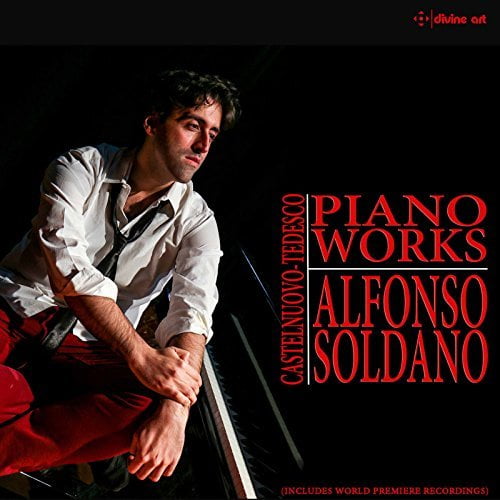
CASTELNUOVO-TEDESCO: Piano Works – Alfonso Soldano, piano – Divine Art
CASTELNUOVO-TEDESCO Piano Works = Notturno in Hollywood; Alt Wien, Rapsodia Viennese, Op. 30; Vitalba e Biancospino, flaba silvana, Op. 21; Cantico, Op. 19; Sonatina Zoologica, Op. 187; Film Etudes, Op. 67; Cielo di Settembre, Op. 1; Piedigrotta 1924 – Rapsodia Napolitana, Op. 32 – Alfonso Soldano, piano – Divine Art dda 25152, 74:19 (9/15/17) [Distr. by Naxos] ****: The long-neglected piano scores of Castelnuovo-Tedesco find a virile champion in Alfonso Soldano. The name of Mario Castelnuovo-Tedesco (1895-1968), if and when it should arise, most often bears an association with guitar music, or with violinist Jascha Heifetz for some arrangement, or in the pedigree of Hollywood composers whom he taught, like Henry Mancini, Jerry Goldsmith, and Andre Previn. The scion of an old Sephardic family in Italy, he began piano lessons with his mother and had begun composing by age nine. When young Mario discovered a secret notebook in which his grandfather had annotated several Hebrew prayers, the “precious heritage” made “one of the deepest impressions on my life.” A strong non-believer in musical or ideological “isms,” Castelnuovo-Tedesco eschewed easy categorization as a composer, so his large catalogue of works earned diverse designations, including his being referred to as “the most […]

SHOSTAKOVICH: Symph. No. 5; BARBER: Adagio for Strings – Pittsburgh Symph. Orch./ Manfred Honeck – Reference Recordings
SHOSTAKOVICH: Symphony. No. 5 in d, Op. 47; BARBER: Adagio for Strings – Pittsburgh Symphony Orchestra/ Manfred Honeck – Reference Recordings multichannel SACD FR-724SACD, 60:17 [Distr. by Naxos] *****: A breathtaking release of crushing power. One thing struck me as odd when I received this recording—what in the world is Honeck doing coupling the Barber Adagio with Shostakovich’s supposedly affirmative and optimistic work that he considered a “the response of a Soviet artist to just criticism”? And then I listened…and everything fell into place. Honeck’s linking (in the notes) to the composer with Mahler’s music is fascinating and thought-provoking, even though I think the examples he gives are somewhat tenuous at best. However, though we can consider that Mahler, always fraught with tension in the ideas of bountiful life and ever-present death, is certainly related to Shostakovich in his own struggles with this antinomy, their approaches are vastly different; Mahler plunges us into jubilation and despair with heart-on-sleeve provocation, while Shostakovich is always trying to fool us. One person’s delight is another’s despair in this most quixotic of composers. This present interpretation is one that takes the esoteric side of Shostakovich’s persona seriously. This is no jolly tonal romp with […]
AUDIO NEWS FOR WEEK OF SEPT. 4TH – BY JOHN SUNIER
Audio News Is Back – We hereby return to the Audio News feature, but only once a week instead of two… John Sunier Use of MQA Has Widened – At the IFA consumer electronics show in Berlin it was announced the MQA technology will be enbedded in products from the follwing: LG, Sony Pioneer, Onkyo, iFi, Electrocompaniet, Rotel, dCS, Groovers, Sim Audio, and others. Since the majority of the legacy recordings are analog 2 or 3-track on 7 1/2 or 15 ips tapes, MQA makes little difference on older recordings. Five Most Expensive Home Theater Installations – Civilized’s web site has a new article on the five most expensive Home Theater installations. One cost $3.5 million and is a Bat Cave format. New Sony Complete Home Audio System for $1300 – The new Sony MHC-V90W has 10 speakers, a “powerful surround audio system” – it doesn’t say exactly what power – and party and speaker lights to give you a disco feel, gesture control, control from Google’s “Home,” spread-out sound (the tweeters have horns), a Karaoke feature to let you sing along, a Fiesta Mode to create a party sound, even outdoors, a guitar input, a USB port, and Bluetooth […]

Spencer Myer – William Bolcom Piano Rags – Steinway And Sons
Spencer Myer – William Bolcom Piano Rags – Steinway And Sons 30041, 71:44 ****1/2: Pianist offers superb homage to modern-era Ragtime composer! (Spencer Myer – piano) The peak era of Ragtime was 1895-19i8. The genre was known for its unusual (at the time) syncopated tempo structure developed from African music.. This represented a polyrhythmic modification of the march time popularized by John Phillip Sousa. Early composers included Ernest Hogan, Ben Harvey and of course Scott Joplin. This development would lead to the the founding of stride piano. Joplin’s “Maple Leaf rag” influenced many future composers. The popularity of these 2/4 and 4/4 metered formats waned until a mass commercial revival in the 1970’s. This renaissance was driven by a film The Sting that featured the music of Joplin. One of the influential modern Ragtime artists was American classical composer William Bolcom. Among his many accomplishments is a cadre of Ragtime compositions, including “The Graceful Ghost Rag” and “Incineratorag”. Pianist Spencer Myer has performed with many symphony orchestras (Indianapolis, Phoenix, Richmond, Santa Fe, New Haven and China). His virtuosity and ability to interpret a wide array of genres has propelled his ascent as a classical performer. He is an in-demand chamber […]

Marcus Trio – Peace For Beethoven
Marcus Trio – Peace For Beethoven – 59:49 ****1/2: This is a great jazzy Beethoven tribute! (Lenny Marcus – piano; bass, flute, synthesizer; Rick Eckberg – double bass, six-string bass; Larry Scott – drums; Vladimir Espinosa – percussion; Tom Artwork – flute) The Lenny Marcus Trio garnered critical recognition for The Jazz Of Beethoven. Pianist Marcus continues his jazzy reinvention of Beethoven with Peace For Beethoven. With Rick Eckberg (double bass), Larry Scott (drums) and Vladimir Espinoza (percussion), ten Beethoven-motif based arrangements and three original inspired pieces bring a sense of dexterity and musical joy. Opening the album “Ecossaise Seven” (a British Isles Contradanze or country dance that was utilized by Beethoven, Chopin and Schubert) grabs the listener’s attention. Marcus initiates a lively modernized time signature that captures the festive ambiance with punctuated rhythmic timing. He injects elements of swing as Eckberg and Scott maintain a concise tempo. On “Beethoven’s Fifteenth” Marcus puts together a pulsating groove with his left hand and weaves through uplifting melodic chords as Espinosa adds some subtle percussion. Descending chord shifts are followed by jaunty runs. The pianist explores “Fur Elise” in jazzy shadings for the opening minute. Then the arrangement draws on the inspired […]

Machine Mass – Machine Mass Plays Hendrix – MoonJune Records
Machine Mass – Machine Mass Plays Hendrix – MoonJune Records MJR 084, 59:27 ****: Updated technical shout-out to a true rock legend! (Michel Delville – guitar, Roland GR09, loops, stylophone, electronics, samples; Tony Bianco – drums, percussion; Antoine Guenet – keyboards, synth, acoustic piano) It would have been difficult to predict the ascension of Jimi Hendrix. After his unsuccessful supporting band work in the early Sixties (most notably with The Isley Brothers and Little Richard), a chance meeting with former Animals bassist Chas Chandler at Cafe Wha changed rock music. Hendrix went to England, conquered the British isle and returned to the States. Then memorable performances at Monterey Pop and Woodstock made him a legend. His first three releases, Are You Experienced?, Axis: Bold As Love, and Electric Ladyland were highlights of a career cut short in 1970. Paying homage to an artist with as indelible a style as Jimi Hendrix is difficult and ambitious. Machine Head and in particular guitarist Michel Delville approaches this challenge with determination and originality. With a variety of guitar sounds, electronics, loops, drums and keyboards, the band seizes on the Hendrix spirit. Opening this unusual tribute is “Third Stone from The Sun”, the space […]

Sherman Irby & Momentum – Cerulean Canvas – Black Warriors Records
Sherman Irby & Momentum – Cerulean Canvas – Black Warriors Records BWR 1006 – 76:20 – ****1/2 <Street Date – 10/20/17> Flat out great…! (Sherman Irby – alto sax; Vincent Gardner – trombone; Eric Reed – piano; Gerald Cannon – bass; Willie Jones III – drums; Elliott Mason – trombone (#3, 4, 5); Wynton Marsalis – trumpet (#8, 10 ) It’s not often when a CD on first listen just reaches out and grabs you. There usually is a track or two where the listening experience weakens a bit. The new CD from Sherman Irby and his band, Momentum, is that rare CD with no flaws or filler. Cerulean Canvas, is Irby’s fifth issue for his label, Black Warriors Records. It honors many of Sherman’s band mates, and it does it with class, soul, and first class presentation. Irby’s present band, Momentum, is made up of trombonist, Vincent Gardner, pianist Eric Reed, bassist Gerald Cannon, and drummer, Willie Jones III. Irby is the lead alto saxophonist for the Lincoln Center Jazz Orchestra. Its leader, Wynton Marsallis, plays on two tracks. Guest trombonist, Elliott Mason, is also from JLCO, as is Gardner. Eric Reed also spent time with Marsalis. Bassist Cannon seems […]
Stereotypes Audio

Cembal d’amour

Pure Pleasure / Speakers Corner

Cedille


