by Audiophile Audition | Jul 3, 2026 | Jazz CD Reviews, SACD & Other Hi-Res Reviews
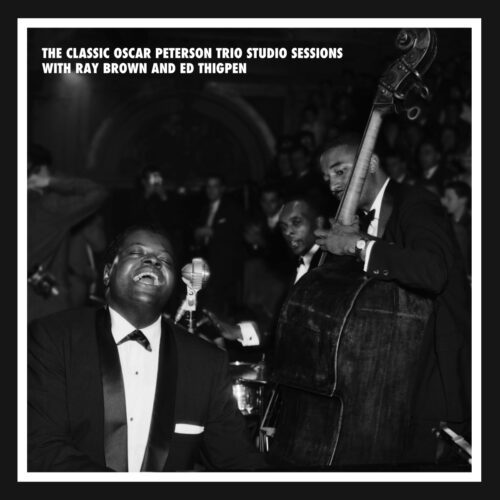
The Classic Oscar Peterson Trio Studio Sessions with Ray Brown & Ed Thigpen – Mosaic Records #MD8-235 – 8 CD – 1959-1965 – ****1/2
(Oscar Peterson – piano; Ray Brown – bass; Ed Thigpen – drums)
Oscar Peterson (1925-2007) has been hailed as one of the greatest jazz pianists of all time. Said to rival Art Tatum in technique and melodic skills, raised in Montreal as a child prodigy, he was introduced to American audiences by Norman Granz, in the Jazz at the Philharmonic series of concerts beginning in 1949.
In the early 1950s, he was featured in trio settings, backed by bassist Ray Brown, and guitarist, Barney Kessel, and later, Herb Ellis. His fame was then cemented by replacing guitar with a drummer, in another trio setting.
His classic trio, composed of bassist, Ray Brown, and drummer, Ed Thigpen, is considered (along with the trios of Bill Evans) to be the epitome of jazz piano trio groups. The premier historical jazz label, Mosaic Records, recently has recently released in an eight CD box set, on 125 tracks, the studio sessions, recorded between 1959-1965, from Verve, Limelight, and MPS labels. This trio stayed together for six and a half years, and to say that their “communication” was symbiotic is an understatement.
The fidelity and acoustics are top grade, transferred from the original analog master tapes in 24 Bit/192 kHz remastering by Swan Studios in New York City. There are 14 pages of liner notes by jazz historian, Bob Blumenthal, as well as archival photos from the recording sessions. Limited to only numbered 5000 copies, this is a must purchase for fans of Peterson.
The material covered in this set ranges from swing to a bit of bop, with a strong dose of blues, as well. Though a virtuoso, Oscar had to somewhat harness his prodigious skills in a trio setting to focus on sensitivity. His talents still shine, and the symbiotic interaction between the trio is like a well oiled machine, highlighted by Ray Brown’s weighty, fulsome bass, and Ed Thigpen’s masterful brush work. With Brown slightly ahead of the beat, and Oscar’s rhythmic precision, their “in the pocket sound,” honed over the years of playing, both in the studio and in live settings, is on full display here.
Highlights abound over more than the twelve recording sessions. They range from tributes to Frank Sinatra, several Broadway musicals, big band and contemporary hits, and an album (Canadiana Suite) devoted to Oscar’s home country. There is so much to love here.
Beginning with the Sinatra tribute, and ending with the German label, MPS, “lost tapes,” here are some of my favorite tracks:
“Ol’ Blue Eyes” classic tunes are given a largely, jaunty treatment with all of the tracks clocking in at under four minutes. “The Tender Trap” has some nice call and response from Oscar and Ray, while “I Get a Kick Out of You” with its fine brush touch from Thigpen, are two winners, as is “Saturday is the Loneliest Night of the Week,” which makes it hard not to at least nod your head in time to its mood.
The Jazz Soul of Oscar Peterson has an intricate arrangement of “Woody N’ You,” as Oscar pushes the trio, with an Art Tatum inspired “off to the races” piano run.
On the Porgy and Bess album, the trio takes “It Ain’t Necessarily So,” on a stroll, gentle but swinging. “Oh, Lawd, I’m On My Way,” gives Ed Thigpen space for both brushes and sticks, as Peterson ups the ante to an inspired finish.
Fiorello!, a Broadway musical covered the colorful life of mayor, Fiorello La Guardia. This album is noted for giving more time for Ray and Ed. “When Did I Fall in Love?,”is a Ray Brown feature, and Oscar is more subdued than usual. “Home Again,” has Thigpen and Brown sharing the honors, with Ray taking charge, while Ed sparkles in response, both upfront in the mix.
West Side Story, recorded in 1962, honoring one of Broadway’s most famous musicals, has many memorable moments from the trio, “Somewhere,” has a lovely bowed bass intro from Brown, the tune done in waltz time, and Thigpen’s cymbals shimmer. “Maria,” has a Latin beat, and the interplay between each member is striking.
Affinity, from 1962, is noteworthy for the trio’s take on Bill Evans’ “Waltz for Debby.” Oscar provides improvisation in a blues vein. Brown’s own, “Gravy Waltz,” provides soul jazz, while Oliver Nelson’s “Six and Four,” has the group going in several “time” directions, and Thigpen gets a most welcome opportunity for a well timed solo.
Night Train is considered the greatest album from the trio, and may also be the most well known. It has a heavy blues influence, with four tracks from the Ellington book. Hoagy Carmichael’s “Georgia on My Mind,” later fleshed out by Ray Charles’ definitive version, is done here in a reflective fashion. The title track drips with a bluesy grease, while Basie’s “Moten Swing,” is a real “head nodder.”
Oscar Peterson Plays was recorded in 1964. It has Neal Hefti’s “Little Darlin’, one of my favorite all time tunes. Another winner is Frank Foster’s “Shiny Stockings,” done in a sprightly tempo. Thigpen’s energetic drumming drives the tune’s passion, and Peterson’s melodic genius is on full display.
Oscar’s Canadiana Suite was a special release that deserves attention. It was written to honor his home country. The themes move from East to West, from
Quebec to the Canadian Rockies. Opening with “Place St. Henri,” a 20 bar blues, we move to “Hog Town Blues,” his homage to Toronto, where he later relocated. There are visits to the Canadian prairie on “Blues on the Prairies,” and “Wheatland,” and ending on wide country journey with “March Past,” and “Land of the Misty Giants. The former has a tinge of Aaron Copland, while the closer, elicits a sense of wonderment.
We Get Requests covers contemporary songs ranging from Broadway to Hollywood, with a stop in Brazil. The trio re-imagines Mancini’s “Day of Wine and Roses,” and Barbra Streisand’s “People.” “The Girl from Ipanema” strays from the more bossa nova version, to a more gentler take, centered on piano with heavy rhythm section comping.
The Lost Tapes (1 & 2) close out the set. Recorded in Germany, the eight tracks revisit “Satin Doll, and “Gravy Waltz,” as well as other classic Peterson staples. Features include a magnificent performance of the Benny Goodman ballad, “Goodbye,” as well as a moving, extended seven and half
minute, “Hymn to Freedom.”
This superb set covers a lot of ground, and it is an opportunity to hear in remastered acoustics, one of the best jazz piano trios in history. It will likely sell out in short order. Don’t miss your opportunity…
Discography: (Sessions from 1959-1965)
The Classic Oscar Peterson Trio Studio Sessions with Ray Brown & Ed Thigpen
LP:
A Jazz Portrait of Frank Sinatra
The Jazz Soul of Oscar Peterson
Porgy and Bess
Fiorello!
West Side Story
Affinity
Night Train
The Oscar Peterson Trio Plays
Canadiana Suite
We Get Requests
I/We Had a Ball
Action
The Lost Tapes
The Greatest Names in Jazz
CD:
Night Train
Collectors’ Disc
Exclusively for My Friends
—Review by Jeff Krow

by Audiophile Audition | Jul 3, 2026 | Classical CD Reviews
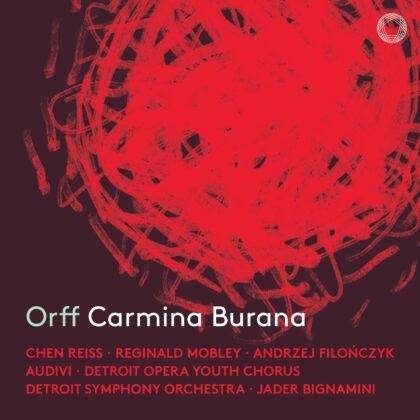
ORFF: Carmina Burana (Scenic Cantata) – Chen Reiss, soprano/ Reginald Mobley, countertenor/ Andrzej Filonczyk, baritone/ Audivi, chorus/ Detroit Opera Youth Chorus/ Detroit Symphony Orchestra/ Jader Bignamini – Pentatone PTC 5187 519 (6/26/26) (61:06) [distributed by the San Francisco Conservatory of Music] ****:
Some years ago, I aired (on “The Music Treasury”) the 1956 recording of Carl Orff’s scenic cantata Carmina Burana with Wolfgang Sawallisch leading the Cologne Raio-Symphony Orchestra, soloists and chorus, the whole enterprise supervised by the composer, who made a laudatory, short speech at the end of the Angel LP. Although a later (1960) performance on CBS with Eugene Ormandy appeared, it did not supplant the effect of the Sawallisch version. The work, especially through its rhythmic vitality and the lusty nature of its texts, continues to compel attention, exploring the mercurial nature of fate, love, and worldly gratifications. Orff selected 24 poems from a collection of secular, Eleventh and Twelfth Century songs found in a Bavarian monastery, the products of Goliards and disillusioned clerics and ecclesiastics. The large orchestral ensemble and the diversity of choral elements assure a feast of color and often provocative perspectives on the human condition. Within the diversity of texts lies a degree of satire and pensive reflection on social convention and hypocrisy, realized in acerbic musical accents and witty orchestral textures, eschewing contemporary, chromatic harmony for a chaste simplicity in diatonic harmony and adjacent triads.
The present performance, recorded 7-9 November 2025, captured by Pentatone producer Blanton Alspaugh and mastering engineer Mark Donahue projects the exuberance and lusty frictions of the score, the famed “O Fortuna” that frames entire concept and the individual, dramatic and lyrical declarations of pleasure and pain, amorous meditations and drinking songs. In three major sections: Springtime, In the Tavern, and the Court of Love, the “Fortune” motif provides a ritornello saturating the procession, while the immense orchestral hues owe debts to Igor Stravinsky’s Les noces. The bright panorama given us in the last of the Spring sequences, “Ecca gratum,” for instance, revels the diction of the chorus and the blazing battery of the DSO. The Bavarian dance that follows has seductive, rustic energies to initiate the “On the Green/In the Meadow” phase of the cycle, whose last two episodes, “Reie, Swaz hie gat umbe. . .” and “Were diu werlt alle min” enjoy a ravishing peroration.
For many auditors, after the opening energy of “O Fortuna,” the real excitement enters with the “In Taberna” quartet of pieces, wherein intoxication has induced a new layer of cruel truth. Baritone Andrzej Filonczyk invites us to the mixture of pleasure and mortality with a weird tango filtered by the Dies Irae. Countertenor Mobley renders the anguish of a roasting swan on a spit, the melody line divided between whole and half steps. The chorus of drunken revelers sardonically toast the Pope and the King, all the while imputing sheer hedonism to their motives. The abbot of Cockaigne literally flails humanity in the combustible mix of DCO percussion. Orff indicates the musical dynamic as scastenato, unfettered, listing every possible human condition as being susceptible to the power of drink.
A children’s chorus initiates “Th Court of Love,” no less a world of anguished contradictions. Soprano Reiss has oboe and flute to accompany her lyric response to the call of Amor. The baritone laments his uncertain, erotic fate, outlining the “O Fortuna” motif. A woman in red, sighing in a tango rhythm, muses on her own possibility for bliss. A baritone solo rife with flustered ambition and misery, sings a direct quotation from Stravinsky once more, his Symphony of Psalms, leading to the a cappella annunciation of scatological amorousness: “Veni, Veni, veritas” rings with erotic clamor, piano and percussion. The soprano invests a note of spiritual calm, “In trutina,” a moment of indecision between chastity and experience.
The near-full complement of singers thus conspire in the momentous “Tempus est iocundum” to culminate the occasion, citing “totus floreo” as more than enough justification for carnal union. With “Dulcissime,” the soprano cedes her body to the call of Amor, culminating with a high D. In “Blanziflor et Helena” the eternal consummation of the sexes has been certified by Venus and the Virgin Mary, at once. If Love does present an eternal paradox, the fact finds immanence in “O Fortuna,” the ouroboros, the full, mysterious, ostinato-laden circle that circumscribes our lives.
—Gary Lemco
by Audiophile Audition | Jul 1, 2026 | Pop/Rock/World CD Reviews, SACD & Other Hi-Res Reviews
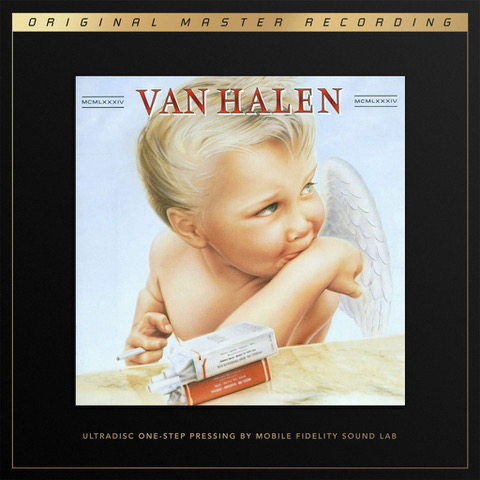
Mobile Fidelity Sound Lab’s sonic vinyl upgrade to Van Halen’s monumental 1984 album is superb!
Van Halen – 1984 – Mobile Fidelity Sound Lab UD1S 2-037 Ultradisc One-Step limited edition 45 r.p.m. 180-gram double vinyl *****:
(Alex Van Halen – drums, percussion, background vocals; David Lee Roth – vocals; Edward Van Halen – guitars, keyboards, background vocals; Michael Anthony – bass, background vocals)
Rock music hit a zenith in 1984. Several iconic albums were released from Peter Gabriel (So), Prince (Purple Rain), Bruce Springsteen (Born In The U.S.A.) and The Cars (Heartbeat City). Among these milestones was Van Halen’s 1984. The group burst on the L.A. club scene in the late 70’s with Motley Crue, Quiet Riot and Poison. But Van Halen rose to the top of this movement, due to the pyrotechnic guitar technique of its founder Eddie. Searing distorted notation with finger tapping on the fret left audiences spellbound. Frontman David Lee Roth added showmanship and MTV-friendly commercial exposure. With Alex Van Halen on drums and Michael Anthony on bass, a propulsive rhtyhm section anchored the quartet. Songs like “Eruption” “Runnin’ With The Devil”, and “Dance The Night Away” established a unique intermingling of metal and pop. Van Halen hit their first major commercial peak with 1984, releasing four singles. Roth’s initial departure from the band ensued, but Van Halen remained successful with Sammy Hagar.
Mobile Fidelity Sound Lab has released a limited edition 45 r.p.m. double vinyl of 1984 (with Roman Numeral titles). The album helped to define the rebellious chaotic essence of the group, including the controversial cover with a cigarette-holding toddler. Side One opens with a big surprise, Eddie Van Halen on synthesizer. The title cut is a minute-long lyrical run that emphasizes melody. The synth revolution continues on the mega hit (#1 on Billboard) “Jump”. As the intro unfolds, Alex Van Halen surrounds it with crashing drums as Roth delivers his theatrical howling vocals. At the 2:15 mark, EVH unleashes two fierce solos, the first on guitar and the second on keyboards. This is quintessential hard-driving rock that never lets up or sounds dated. For those concerned about reduced guitar, another single, “Panama” unleashes the raw metal fury of this band. It explodes on the first chords and sustains the muscular attitude. “Top Jimmy” kicks off with some nimble fret picking and urgent vocals with high harmonies. Van Halen is rooted in blues. On “Drop Dead Legs” a sinewy groove is established, and Roth’s screeching vocals fit. The tempo shifts, and the occasional Zeppelin-esque bombast and incendiary guitar runs are compelling.
An electrifying Alex Van Halen drum intro (a combination of acoustic and electronic) ignites “Hot For Teacher”. EVH lays down serious hooks and his solo is ferocious. Roth’s urgent, comical vocals are among his finest. On the Michael McDonald co-penned “I’ll Wait”, the flowing synth work reappears, but there is plenty of guitar histrionics. There are synthesized bass and Rotator drums. In a change of style, “Girl Gone Bad” has some progressive rock elements, slower interludes, but trademark Van Halen intensity with cohesive rhythm, and Roth’s over-the-top singing. The finale, “House Of Pain” is a no-holds-barred “classic” heavy rock instrumental with guitar, bass and drums blazing away.
This Ultradisc One-Step 45 r.p.m.vinyl of 1984 is a significant upgrade. The overall mix is expansive with enhanced detail and separation. Bass and percussion accents are more discernible. A quieter soundscape adds to the instrumental and vocal clarity. Small details like backup harmony vocals are more present. Even with a sleeker aural landscape, the potency of Eddie Van Halen’s searing guitar is captured. Cranking up the volume does not produce excess distortion.
Highest recommendation!
—Robbie Gerson
Van Halen – 1984
TrackList:
LP ONE:
Side One: 1984; Jump; Panama
Side Two: Top Jimmy; Drop Dead Legs
LP TWO:
Side Three: Hot For Teacher; I’ll Wait
Side Four: Girl Gone Bad; House Of Pain.
by Audiophile Audition | Jul 1, 2026 | Classical CD Reviews, Classical Reissue Reviews
BRUCKNER: Symphony No. 8 in C Minor, WAB 108 – Philharmonic-Symphony of New York/ George Szell – Pristine Audio PASC 766 (71:24) [www.pristineclassical.com] *****:
Eminent conductor of the Cleveland Orchestra George Szell (1987-1970) delivered three subscription concerts in New York’s Carnegie Hall in mid-December 1950, the 14th, 15th, and 17th, featuring music by Casella, but more significantly, an uncut version of Bruckner’s 1882 Eighth Symphony. Here we have the Sunday broadcast, an intensely forward-driven reading of Bruckner’s most problematic symphonic work, insofar as the composer’s insecurities about form and structure led to several revisions of the piece and the emergence of competing “editions.”
My own introduction to this knotty piece arose from EMI’s awkward packaging of some disc I purchased – likely the Beethoven Triple Concerto with the Oistrakh Trio and Malcom Sargent – that tacked on an accompanying disc of the first and last movements of the Bruckner led by Herbert von Karajan from Berlin. Consternation and curiosity competed for dominance, since I wondered how I would complement the excerpted symphony with its interior movements. I never did manage to purchase the Karajan version intact, but I auditioned the work as a whole courtesy of first, Eugen Jochum and then the famed 1949 Furtwaengler rendition.
The Karajan version of the opening Allegro moderato – with its brooding and often monumental application of three themes that appear, respectively, in dotted rhythm, and then the Bruckner patented gambit: two quarter notes followed by triplet filigree – seemed interminable. The music unfolded episodically and convulsively, justifying the Brahms quip about “contorted boa constrictors.” George Szell, conversely, imposes a firmly linear, propulsive pacing of the opening movement that establishes just proportion for the work as a whole. Where Szell succeeds lies in the smooth flow of transitions, the grand modulations to G major and to E-flat minor, intermittently injecting monolithic textures that suddenly retreat into intimate chamber music. Szell saves his slowed rhetoric for the coda, in which the brass beat out the dotted-rhythm tattoo ten times in a morbid and eerie atmosphere, one that Bruckner associated with the annunciation of Death itself. As misty as the opening had been – shades of Beethoven’s Ninth, the final bars included a silence followed by the tympani’s rolling three soft utterances.
I recall how shattering I had found the Scherzo: Allegro moderato when realized by Furtwaengler in 1949 Berlin. The five-note motif resounds relentlessly, again, not far from Beethoven’s obsessive scherzo from the Ninth Symphony. George Szell’s capacities for speed and accuracy – so eminent in his Wanger performances – surge forth here, with pungent articulation from woodwinds and tympani. The whistling qualities in th winds and strings assign a rustic, Austrian mountain sensibility to the music, even while the tympanic pedal sustains the secondary-theme section. Szell’s palpable grip on his responsive forces assure the dramatic impact of a probing, intuitively wrought conception. The A-flat major Trio section just as majestically projects a noble, Handelian procession, capped by horns and harp. Brass punctuations more than suggest a diversion to some hall in Valhalla before the inevitable return to perilously exalted and ineluctable energy.
Both Beethoven and Wagner may claim credit for Bruckner’s mighty conception of his massive Adagio third movement. Reflecting on this huge and controversial movement – due to competing editions from Haas and Nowak – we note that Bruckner, while permitting degrees of passion and vehemence in his scores, betrays no sense of irony or bitterness. Set in a solemn 4/4, the music unfolds in broad periods, often with more than a hint of Wagner’s Parsifal. The Philharmonic demonstrates its capacity for sustained, legato execution from the various choirs, as though the music were presented via the organ diapason. The cellos intone a deep melody that soon sails upward, via strings and winds, a towering melodic edifice worthy of Bruckner’s cosmic cathedral. A bucolic serenity sets in, as the music hesitantly seeks an upward, tremulous path to the great, layered, chorale-inspired climax in E-flat major. The extended coda basks in a sea of relatively static harmonic motion and melodic confidence reminiscent of Schubert.
I must grant Herbert von Karajan credit for having overpowered me with the opening, “belligerent” measures of the fourth movement, Finale: Feierlich, nichl schnell that gallops monumentally upon the scene as both march and chorale. Szell’s version seems to me more reserved, more organic in its absorption of this impulse into the two other thematic groups. Bucolic motifs as well as (fugal) polyphony from the previous movements define the musical progress, halted by an ardent spiritual appeal over an ostinato period that soon erupts into a titanic convulsion led by brass and tympani. The Philharmonic brass alertly applies the chorale tune as a linear evolution to the stratified C major peroration – a brilliant variant upon the Scherzo energies – that marks the triumph over all adversities.
The Pristine transfer of the 1950 broadcast, again utilizing their cleansing XR process, has produced a fine addition to the appearance legacy of George Szell before the New York Philharmonic, You may well decide to provide the missing applause to this historic concert event.
—Gary Lemco
by Audiophile Audition | Jun 29, 2026 | Classical CD Reviews
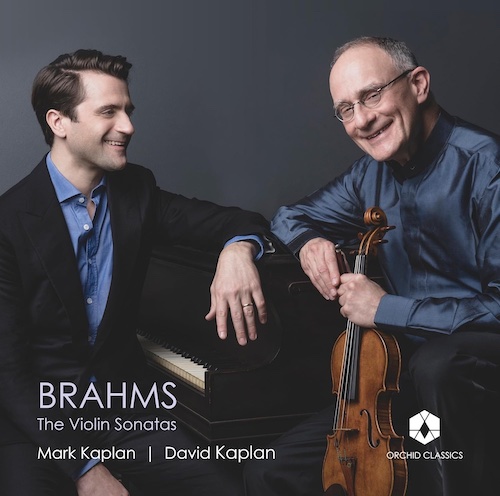
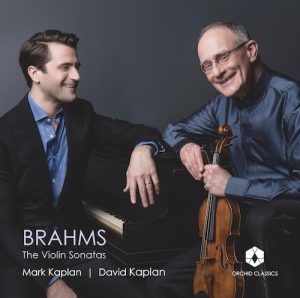
BRAHMS: Violin Sonata Nos. 1, 2, & 3 – Mark Kaplan, violin/ David Kapla, piano – Orchid Classics ORC 100454 (69:01) (6/19/26) [www.orchidclassics.com] ****:
Father and son duo Mark and David Kaplan recorded the three Brahms violin sonatas 14-16 June 2014, the fine sound of Mark Kaplan’s 1685 Stradivarius (“the Marquis”) and David Kaplan’s Yamaha piano captured by Producer Eric Silberger. From the outset of the 1879 “Rain” Sonata in G Major, the gentle nostalgia of the opening Vivace ma non troppo projects a thin, direct nasal tone that often reminds me of the sound from Joseph Szigeti’s instrument. Both through-composed and cyclical in construction, the sonata ranks among the composer’s most rarified, lyrical compositions, always tender in affect, the passion subdued but intensely wrought. Balances remain the focus of the procession of themes, the violin’s leading but the keyboard in fine symmetry in its realization of the dotted rhythm and the ubiquitous, three-note melodic contour.
Pianist David Kaplan takes a pregnant ritard in addressing the Adagio, and Mark Kaplan intones the main vocal theme with ardent introspection. Its aching expressivity will reappear at bar 84 in the last movement. The initial, martial rhythm assumes a processional quality, soon asserting itself with vivid earnestness. Solemn and intimate at once, the music soon adopts that “rainy day” filigree that often defines Brahms in his valedictory sensibility. He had paid homage both to composer Robert Schumann and his lamented son Felix, a violinist of future promise who died at age twenty-five. The last movement, Allegro molto moderato, alludes openly to songs from Brahms’s Op. 59, Nos 3-4, Regenlied and Nachklang, plangently reminiscent and expressively nuanced by painful memories. The Kaplans shape this music with tender care, the collaborators’ sympathy as palpable as the refined musicianship that realizes the composer’s bittersweet intentions.
The so-called “Thun” Sonata in A Major (1886), like many of the works of young Mahler, relies on songs and lieder for much of its inspiration. The singer Hermine Spies, a talented alto, received creative attention from Brahms, and the lyricism of Wie Melodien zieht es, Op. 105/1 and Kommt bald, Op. 97/5 infiltrates the opening movement, Allegro amabile. Commentors have well noted the resemblance of the opening to Walther’s “Prize Song” from Die Meistersinger. The keyboard part enjoys a plastic and persuasive series of gestures; and while David Kaplan intones his part affectionately, few have ever realized the keyboard contribution with the same magic as Mieczyslaw Horszowski. A series of declamations closes the movement, a sturdy resolution.
The second movement, Andante tranquillo – Vivace blends a slow section and a scherzo into one concept. Much of the violin and piano texture cross and reflect upon each other, in the same register or serving as doubles. One is reminded of Edgar Allan Poe’s insistence on “unity of effect” for a successful narrative. Some fine pizzicato and broken chord gestures glide by before the variation of the opening refrain that sails with casual elegance to the striking coda. Both metric ambiguity and intervallic repetition (A-C#, A-C) dominate the last movement, Allegretto grazioso (quasi andante), a thoroughly integrated lyrico-dramatic concept. Whatever undercurrents of doubt or conflict exist in this piece, the merger of the two instruments guarantees a hearty, impassioned conclusion.
The Violin Sonata No. 3 in D Minor (1888) likely meant to serve – as had the Double Concerto, Op. 102 – as a “reconciliation” piece, not for violinist Joseph Joachim but for conductor Hans von Bülow (1830-1894), whose advocacy for the music of Richard Wagner had alienated the two musicians. In four movements, this sonata offers a greater range of emotion than the more lyrically minded first two sonatas, with metric ambiguity and sudden dynamic shifts more aggressive than previously. Despite the violin’s sotto voce opening, the music soon explodes with emotion, a subito forte from David Kaplan asserting a sturm und drang dimension to this piece. So, too, the bariolage effect from the violin and sustained pedal point from the piano in the development maintain a distinct tension. The “circuitous route” through F # minor has had a disconcerting effect, until we pass, sostenuto, through modulations (including the major mode of D) leading back to a fragmentary hint of the music’s origin.
A serene cavatina, the second movement Adagio proceeds in D major, a 3/8 quasi-nocturne n waltz mode, in which the keyboard remains subservient to the violin. Mark Kaplan establishes a leisurely nostalgia that soon achieves its own, poignant rapture, capped by a potent passage in double stops. The expressive modulation, especially those in C, adds to the hesitant groping for emotional certainty. A kind of mischievous scherzo ensues, in F# minor, Un poco presto e con sentimento. The dalliance suddenly becomes ardent and serious, moving briefly to D minor. The da capo has the piano in sotto voce expression of the main impulse, while Mark Kaplan plucks the strings in thirds, and the movement ends.
The last movement, Presto agitato, offers a 6/8 tarantella of muscular power and momentum. I well recall how the collaboration of Jascha Heifetz and William Kapell struck me for their sheer emotive vehemence. The Kaplans prove not a whit less agile and insistent in their interpretation, which does not lack for the Brahms poetry. Syncopation appears to be the means of the day, with modulations into the modes of F. When the musicians combine for the coda, the result proves compelling, a just closure to a work that had considerable significance for the original musicians, and as a farewell to the violin sonata medium of which Brahms remains a master.
–Gary Lemco
Mark Kaplan, David Kaplan — Brahms Violin Sonatas
Violin Sonata No. 1 in G Major, Op. 78
Violin Sonata No. 2 in A Major, Op. 100
Violin Sonata No. 3 in D Minor, Op 108

Amazon
by Audiophile Audition | Jun 29, 2026 | Pop/Rock/World CD Reviews, SACD & Other Hi-Res Reviews
Mobile Fidelity Sound Lab releases a dazzling vinyl upgrade of ELP’s Brain Salad Surgery.
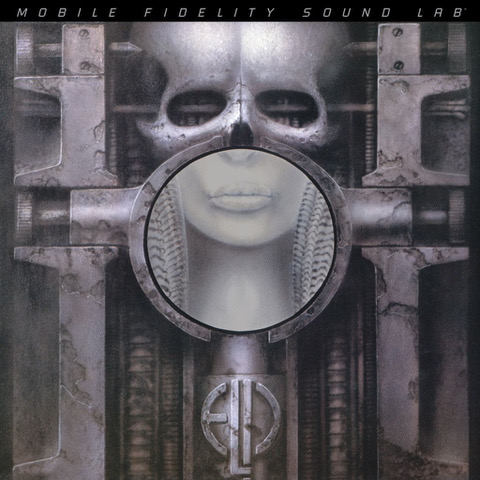
Emerson Lake & Palmer – Brain Salad Surgery – Mobile Fidelity Sound Lab MFSL 1-619 Gain 2 [6/19/2026] numbered edition 180-gram stereo vinyl, 45:02 *****:
(Keith Emerson – organ, piano, harpsichord, accordion, custom built Moog synthesizers & Moog polyphonic ensemble, vocals; Greg Lake – vocals, bass, Zemaitis electric guitar, six string & 12-string guitars; Carl Palmer – percussion, percussion synthesizers)
In the world of progressive rock, Emerson Lake & Palmer was at the boundary-stretching pinnacle. Keith Emerson (The Nice) was noted for his furious keyboard techniques. Greg Lake (King Crimson) handled vocals bass and guitar, and Carl Palmer (Atomic Rooster) was a gifted percussionist. Their self-title debut featured classical arrangements, progressive rock and an acoustic folk song (“Lucky Man”) that became a modest commercial success. Subsequent albums (Tarkus, Pictures At An Exhibition and Trilogy) sustained the career momentum. In preparation for their 1973 studio album Brain Salad Surgery, the band formed their own label Manticore Records.
Mobile Fidelity Sound Lab has released a 180-gram vinyl of Brain Salad Surgery. Five diverse translations epitomize the eclectic musicianship and exotic contexts of this trio. Side One opens with “Jerusalem”, a Hubert Parry hymn of a William Blake poem. Emerson kicks things off with a flowing processional church organ set against Lake’s sinewy vocals. There are polyphonic counterpoint synthesizer accents. The intensity is ramped up on “Toccata” (an adaption of Ginastero’s 1st Piano Concerto, 4th Movement) as the band members cut loose with abandon (especially Emerson in adrenalized runs).The use of bells is compelling. At the 3:00 minute mark, Palmer unleashes a stirring percussion movement (drum synthesizer, gong) that leads into a spacey run on synthesizer with dissonance and abstract phrasing. (Note: The album notes include a compliment from Ginastero on the arrangement). In a considerable change of pace, Lake’s emotive ballad, “Still You Turn Me On” is atmospheric with flashes of wah-wah enhanced electric guitar. Emerson provides different textures with accordion, harpsichord and keyboards. Emerson Lake & Palmer are noted for occasional “fun” material (“The Sheriff”) and “Benny The Bouncer” (co-written by King Crimson member Peter Sinfield) fits this mold. The vocals have a campy music hall vibe, and rollicking honky-tonk piano seems to fit here.
Brain Salad Surgery (title derived from a Dr. John song lyric) reflects on alienation and how societal dichotomy affects lives. The nucleus of this album is the four-part “Karn Evil 9” suite. Exploring opposing perspectives of good and evil in an unrestrained circus-like musical dreamscape, the first movement (which is on Side One due to the time restraints of early 70’s vinyl technology) begins with funky groove-infused organ and Lake’s aggressive vocals. There are modulations and at approximately 3:38, the trio explodes in a trademark frenetic jam. A combination of Emerson’s organ and synthesizers with Palmer’s muscular drumming frame the memorable lyric, “Welcome back my friends to the show that never ends, we’re so glad you could attend, come inside come inside!”. It has become closely associated with ELP. “1st Impression Part 2” engages the listener, and received considerable FM airplay With timing shifts and fiery intensity, the cautionary observation of modern civilization is delivered as an explosive dystopian three-ring circus. Emerson’s “2nd Impression” is a spirited jazzy piano number (with some synth accents) that is propelled by Palmer’s relentless tempo. A mid-song moderate interlude has distinctive classical motifs and resonance. A final up tempo sequence exudes raw, near bebop passion. As a finale, the “3rd Impression” carries the pomp and grandiosity of ELP, with quirky powerful vocals, organ/synth dynamics and tight rhythmic structure.
This Gain 2 180-gram vinyl is a vibrant sonic upgrade to Brain Salad Surgery. The bottom end with bass and drums has more clarity and separation from the heavy keyboards. Overall, the mix (1/4” analog tape to DSD 256 to analog console to lathe) is expansive and precise. Another highlight is the superior packaging, including the double-folded Stoughton gatefold, and fold-out insert with cutouts, designed by surrealist H.R. Giger. This remains one of the most audacious moments in rock history.
Highest recommendation!
—Robbie Gerson
Emerson Lake & Palmer – Brain Salad Surgery
TrackList;
Side One:
Jerusalem;
Toccata;
Still…You Turn Me On;
Benny The Bouncer;
Karn Evil 9: 1st Impression-Part 1
Side Two:
Karn Evil 9:
1st Impression-Part 2;
2nd Impression;
3rd Impression.
by Audiophile Audition | Jun 29, 2026 | Classical CD Reviews
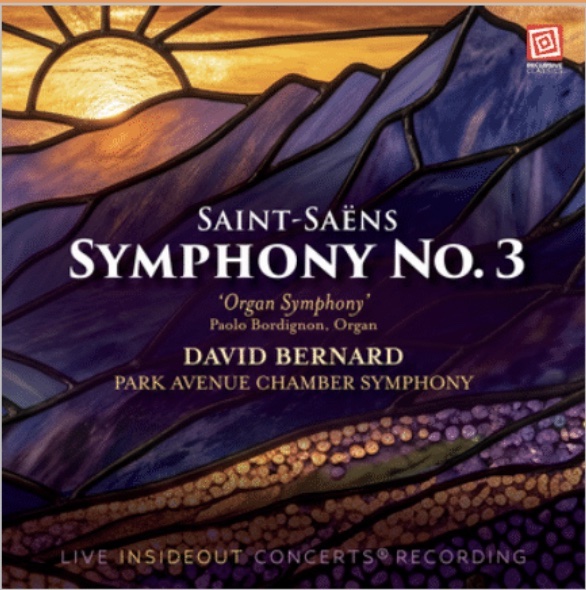
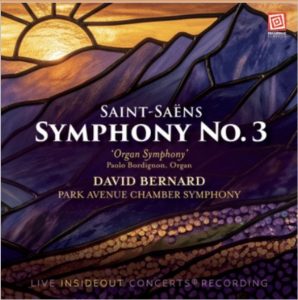
SAINT-SAËNS: Symphony No. 3 in C Minor, Op. 78 “Organ” – Paolo Bordignon, organ/ Maxim Lando and Keyi Wang, piano/ Park Avenue Chamber Symphony/ David Bernard – Recursive Classics RC 5230977 (7/10/26) (37:20) [Distr. Orchard/SONY] ****:
What this present album lacks in quantity may compensate in quality, when we consider the aesthetics of the occasion. Saint-Saens’ Third Symphony (1886) offers a challenge in balances, given that the organ serves an obbligato function, along with duo-pianist keyboard, essentially brilliant, color elements. The symphony proceeds in two major sections after having established a theme that will operate organically along cyclic principles, reappearing in rhythmic and timbre variation. The examples Saint-Saens follows derive from both Liszt and Schumann, in symphonic poems and symphonies, respectively. Conductor David Bernard addressed the problem of a statically positioned pipe organ and the orchestra – and audience – in the same room was to utilize a digital organ with speakers strategically placed to surround the ensemble and the hall, “immersing” players and audience in the full spectrum of Saint-Saens’ epic orchestral effects. The performance, then, has become an organic document, “a guerilla concert” conceived rather from the “inside out” to include the spectators, thus realizing Bernard’s conviction that “the relationship between a great symphony and its audience is not fixed but discoverable.”
The soft Adagio opening to the C Minor Symphony – shades of Schubert’s “Unfinished” Symphony – suddenly explodes Allegro moderato 6/8 in a relentless flow of eighth notes colored by strings, brass and battery. The periods of the movement alternate dramatically, with hints of chorale figures in the midst of blazing polyphony. The sense of mortality makes an appearance via the Dies Irae motif from the Requiem Mass. Huge stretti layer the various impulses upon each other, adding a sense of monumentality to alternately dramatic and lyric figurations. The elongated coda bears a resemblance to ballet music, leading prior to the formal Poco adagio a sense of entr’acte.
The organ pedal point provides the seque, attacca, to the hymnal Poco adagio, whose theme receives from conductor Bernard a broad sigh. A theme and variations, the music proceeds in soft cadential periods, still retaining allusions to the Dies Irae motif. Soft strings in counterpoint, with organ accompaniment, take up the melodic tissue, carefully etched by Bernard. The pizzicato motif itself becomes lyrically transparent, even transfigured, as various instruments alter the sonic atmosphere.
The Allegro moderato – Presto movement, essentially a scherzo, reminds us of the score’s dedication to the memory of Franz Liszt (1811-1886), given the wizardry applied to the one keyboard by a pair of accomplished virtuosos. This scherzo opens what becomes Part II of the symphony, now in compound rhythmic tumult with tympanic explosions, employing passing dissonances urged by a panoply of orchestral colors. The woodwinds and strings still insist the Dies Irae make its presence felt. The strings hustle us to a restatement of the main idea with the tympany’s palpable aid, the woodwinds now in full fettle. Suddenly, the low strings and brass demonstrate their polyphonic capacities, moving to the strings, the tessitura ascending over the Dies Irae, as we enter, attacca, the precinct of the last movement, Maestoso – Allegro.
Organist Bordignon does the honors with a huge chord, and the piano adds a distinctive sense of chimed harmony. The organ will itself indulge in a massive fugue, a specially of Saint-Saens the organ virtuoso. The potent fugato that ensues achieves a monumental texture, as brisk as it is learned. Tremolo strings, triangle, cymbals, and scalar strings contribute while the Dies Irae refuses to quit. The chorale aspect of the music reigns supreme, another Saint-Saens artful gambit used in his Violin Concerto No. 3 and Piano Concerto No. 4. The heaving momentum indeed casts a Lisztian fervor about it, perhaps in memory of the famous Liszt Totentanz, but now headed to a stunning C major peroration, all the rising orchestral forces unleashed in a glorious annunciation of French symphonic mastery.
The whoops that ensue seem a natural consequence of this “performance from within,” if you will, passing a firm, affirmative judgment on conductor Bernard’s experiment in blending the titular instrument’s presence into the living mass of musicians and spectators. For my money, I would still prefer a complementary work of some girth, say, Saint-Saens’ The Youth of Hercules.
—Gary Lemco

This CD is available through Record Store Day
by Audiophile Audition | Jun 27, 2026 | Jazz CD Reviews
An exquisite guitar & bass duet CD…
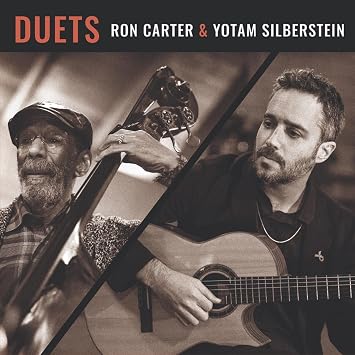
Ron Carter & Yotam Silberstein – Duets – Jojo Records #JJR-012 – CD – 34:02 – ****1/2
(Ron Carter – upright bass; Yotam Silberstein – guitars)
At age 89, iconic jazz bassist, Ron Carter, is the elder statesman of all living bass players. At last count, he has played on over 2200 (!) albums, and is easily the most recorded bassist in jazz history. His solo career spans over sixty years, and a shorter list could be compiled of who he has not played with, than who he has accompanied.
Even casual jazz fans know that he played with Miles Davis in the mid-60s , and was ever present on many Blue Note Records classic albums. Perhaps, a bit lesser known are his duet albums with guitarist, Jim Hall, in the 70s and 80s. Carter’s resonant, warm bass was a perfect match for Hall’s intricate reflective guitar.
Now a half century later, to honor this pairing, Ron is backed by Israeli guitarist, Yotam Silberstein, in a series of duets. Recorded at the most famous recording studio in jazz history, the Rudy Van Gelder Studio in New Jersey, the pair invigorates five standards, two Silberstein compositions, and the Brazilian track, “Nova Ilusao.”
The two Yotam written tracks really stand out. “Blues for Brother Malone,” honors guitarist, Russell Malone, whom we lost much too soon in 2024, of a heart attack. “Rain Again,” is a tender waltz that is deeply moving.
“What is There to Say,” features a sumptuous solo by Ron, while the closer, “Mil Dew,” written by saxophonist, Johnny Griffin, for his 1956 debut Blue Note album, is the most spirited track on the CD, and ends their session with some heat.
Yotam Silberstein’s sensitivity and tasteful guitar lines was a perfect choice to bring back memories of the Hall and Carter classic dates that set the standard for this jazz instrumental pairing. Having the opportunity to record this CD in the Van Gelder Studio just sweetens the pot. The acoustics help highlight this projects excellence.
—Review by Jeff Krow
Ron Carter & Yotam Silberstein – Duets
Tracklist:
Nova Ilusao
Love Letters
Blues for Brother Malone
Rain Again
The Lamp is Low
What is There to Say
They Say It’s Wonderful
Mil Dew
by Audiophile Audition | Jun 23, 2026 | Classical CD Reviews
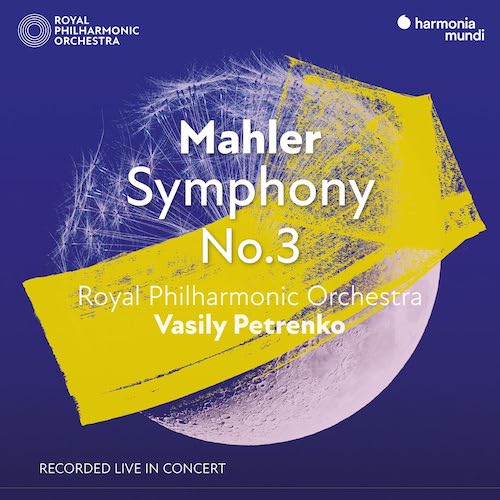
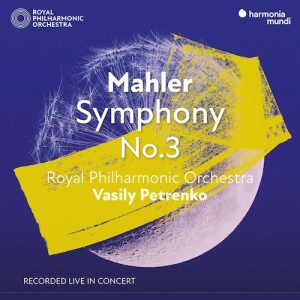
MAHLER: Symphony No. 3 in D Minor – Hanna Hipp, mezzo-soprano/ Philharmonia Chorus/ Tiffin Boys’ Choir/ Royal Philharmonic Orchestra/ Vasily Petrenko – Harmonia mundi HMM 905421.22 (2 CDs = 1:36:12) (5/22/26) [Distr. by PIAS] ****:
I well remember my first encounter with the longest, perhaps most cosmic of all symphonies in the classical repertory: Mahler’s Third, D Minor Symphony (1895-1896), led by James Levine with his Chicago Symphony Orchestra, whose first movement did not fit onto the RCA vinyl disc and had to be continued on the next side! And the music – a six-movement monolith devoted to a pantheistic or eschatological exploration of Nature and Being – as if Nietzsche and Spinoza had been coaching Mahler in the mystical direction of the late Beethoven quartets. In two parts, the work posits a procession from the first, martial stirrings of life, “Pan Awakes,” to a series of naturalistic and preternatural settings, from summer, to flowers, to animals, to Man, to Angels, and to (Divine) Love. The ambitions of this composer invite warnings of metaphysical hubris: his audacious confrontation of the mundane and sublime, the banal and the transcendent. Mahler claimed his symphony realized “a world,” the One and the Many and its every permutation of contradiction. The coda must be Whitman’s “Barbaric Yawp.” When I heard Dimitri Mitropoulos conduct the same work, the intensity became an agonized rage against the diurnal world in spite of its immanent spirituality.
The often dire, funereal harmonic motion of Part I finds some consolation in the allusion to the hymnal theme from the Brahms C Minor Symphony last movement. The shifting themes and emotional contours resemble more a Wagner operatic scene than a sonata-allegro orchestral movement. Hints of klezmer music infiltrate the march, a concession to the mundane embraced with the same optimism as Mahler’s penchant for rapture. Moments of desolation and doubt no less haunt the momentum, and a solo violin (then flute) offers brief solace, as do bird calls and mocking sounds from the natural world. String counterpoint confronts brass syncopations to invite another whimsical clash between mortality and humorous parody. The pungently mercurial character of the music anticipates both Ives and Shostakovich. If Pan has awakened, he has no less died, and it is the thought that “in the midst of life we are in death” that Mahler finds acceptance, Nietzsche’s Amor fati.
A long pause should ensue before the resumption of music for Part II, marked Tempo di Menuetto, a “carefree” excursion among the flowers of the field. The virtuoso execution by the RPO strings and woodwinds warrants the price of admission, persuasive and sensuous, at once. The bucolically languorous and rustic serenity endures, what Edmund Spenser would characterize as “a bower of blisse.” The second section, Comodo (Scherzando) invokes the dancing joy of the forest primeval before the advent of Man. An offstage posthorn announces the appearance of Humanity, and we hear echoes of La folia, appropriate enough as commentary for Man’s contribution to the natural world. A combination of perverse humor and riotous, polyphonic frenzy results from the extended notice of human invention and influence. Posthorn and tremolo strings urge us to the La Folia motif, and “the eternal note of sadness” sounds once more. The furor erupts in echoes of the original dance, but the mirth of the moment has been broken, the coda a whiplash thrust.
From the deeps of Night, we hear a voice, that of mezzo-soprano Hanna Hipp, intoning the words of Nietzsche, from his spiritual mediation, Thus spake Zarathustra, alerting Man that he must awaken to the mystery of life, which eludes all regret. A midnight nocturne, the episode offers consolation beyond dogma, the melody fraught with longing for a joy that denies nothing of existence. The dialogues of winds horns, strings and horns, cast an eerie serenity in “Eternity” that we Mahler acolytes know will haunt the last thoughts in Das Lied von der Erde.
The “child,” the third stage of Nietzsche’s concept of spiritual evolution, appears in movement five, here as a chorus of angelic bells that send forgiveness as a Divine judgment on Man. The spiritual impulse, clearly Christian in nature, seems counterintuitive to the Nietzschean maxim that “God is dead,” meaning that Man must assume total responsibility for his existence without recourse to metaphysical consolations. Yet, here Mahler, via soloist and children’s and women’s chorus, promises Divine mercy. The melody, of course, will engender the “heavenly-feast” vision of the Fourth Symphony.
The last movement, “What Love Tells Me,” seeks the same source for universal salvation, even quoting Wagner’s “Christ’s Suffering” motif from Parsifal. The initial impulse for the grand Langsam – Ruhevoll appears to derive from the slow movement Lento assai, cantabile e tranquillo of Beethoven’s last completed work (1826), his String Quartet in F major, Op. 135. Petrenko and the RPO maintain a crystalline transparency of texture throughout this sustained contemplation of Last Things, Mahler’s stunning, blazing, musical eschatology. Man, Nature, and God find a mysterious reconciliation of spirit, perhaps an exalted tocsin signaling a call to support and redeem the collective, uncreated conscience of our Divine planet.
An absolutely, previously silent audience emerges after the elongated coda, fully alert to Mahler’s call for a better world.
—Gary Lemco
Amazon
by Audiophile Audition | Jun 20, 2026 | Jazz CD Reviews
Archive-quality label Intervention Records releases a sonically robust vinyl reissue of Joe Jackson’s game-changing Night And Day.
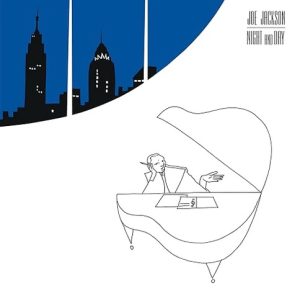
Joe Jackson – Night And Day – A & M Records (1982)/Intervention Records IR-003 150-gram stereo vinyl, 42:42 *****:
(Joe Jackson – Yamaha CP-70 electric grand piano, synthesizer,, piano, alto saxophone, vibes, lead vocals, orchestrations, arrangements; Graham Maby – bass, percussion, vocals; Larry Tolfree – drums, timbales, percussion; Sue Hadjopoulos – percussion. Bells, xylophone, flute, vocals; Ricardo Torres – percussion, claves; Ed Roynesdal – violins, synthesizer programming; Al Weisman – vocals; Grace Millan – vocals; Jack Waldman – synthesizer programming)
Joe Jackson emerged in the New Wave musical culture in the late 70’s with the album Look Sharp! It garnered both critical and commercial appeal with the single “Is She Really Going Out With Him?” Jackson, a classically trained musician, began to shift his focus to other genres. His 1981 release, Jumpin’ Jive consisted of blues and jump swing songs by artists like Cab Calloway and Louis Jordan. After being in New York, Jackson developed a feel for this city’s cultural and musical landscape, including jazz, Latin and Salsa. This transition crystallized in 1982 on Night And Day. It feels like a tribute to both New York and the compositional elegance of Cole Porter, George Gershwin and Duke Ellington. It became Jackson’s most successful project, and helped to articulate his maverick approach to popular music.
Emerging audiophile label Intervention Records has released a 150-gram vinyl upgrade of Night And Day. A potent combination of piano, keyboards and percussion establish a unique pop-jazz tapestry that permeates the 9 tracks of New York life. It is notable that there are no guitars on the album. Conceptually, there are not lettered or number sides, but Night and Day.
The “Night” side consists of five uninterrupted tracks that connect like a suite, with meticulous arrangements. “Another World” opens with tight drum patterns that have an Afro-Cuban feel. Jackson’s piano is muscular. Timbales, congas, xylophone (with Eastern shading) and repetitive title chorus build a hypnotic cohesion to this number. The pulse-driven syncopated journey of someone lost in the big city (“Chinatown”), is both humorous and urban cautionary. Again, the Afro-Cuban percussive instrumentation is compelling. “T.V. Age” has a “New Wave” percussive groove with a repetitive bell and a gritty saxophone on this satirical commentary. Jackson goes full salsa on “Target” with funky piano and a rousing chanting-like chorus. A organ solo and congas augment the stylistic approach. A certain highlight is the lead single “Steppin’ Out”. A combination of electronic and real drums, synthesized bass and layered keyboards energize this affirmative take on night life in NYC. As with most of the album, the crisp piano lines (especially on the chorus) are magnetic.
The “Day” side contains separate tracks. “Breaking Us In Two” is a simpler arrangement with jazzy piano, drums and percussion, but has an unexpected synth interlude. It is atmospheric and breezy. Returning to salsa, “Cancer” has an infectious chorus. An extended jazz-inflected solo on acoustic piano elevates this track. Perhaps the deepest cut is “Real Men”. Jackson emotionally reflects on the socio-political landscape through the lens of sexuality. The arrangement has a punched-up rock ’n’ soul vibe, framed by soaring piano and urgent vocals. “A Slow Song” is an interesting finale. It is performed as a ballad with shades of doo-wop with gospel inflection. Strings and subtle rolling organ add texture.
This Intervention Records vinyl upgrade of Night And Day is excellent. It is entirely mastered from 1/2” safety copy of original stereo analog tapes (Kevin Gray/Cohearant Audio) and pressed on 150-gram vinyl (Gotta Groove Records). The mix is vibrant and has added punch and clarity on the low and mid-ranges. There is also a quiet ambiance, with little surface noise. The gatefold with restored cover art is superior, as is the plastic inner sleeve..
Highest recommendation!
—Robbie Gerson
Joe Jackson – Night And Day
TrackList:
Night Side: Another World; Chinatown; T.V. Age; Target; Steppin’ Out
Day Side: Breaking Us In Two; Cancer; Real Men; A Slow Song.