by Audiophile Audition | Mar 24, 2026 | Jazz CD Reviews, SACD & Other Hi-Res Reviews
Ingrid Jensen’s Landings, another winner in the Newvelle 10 Anniversary collection…
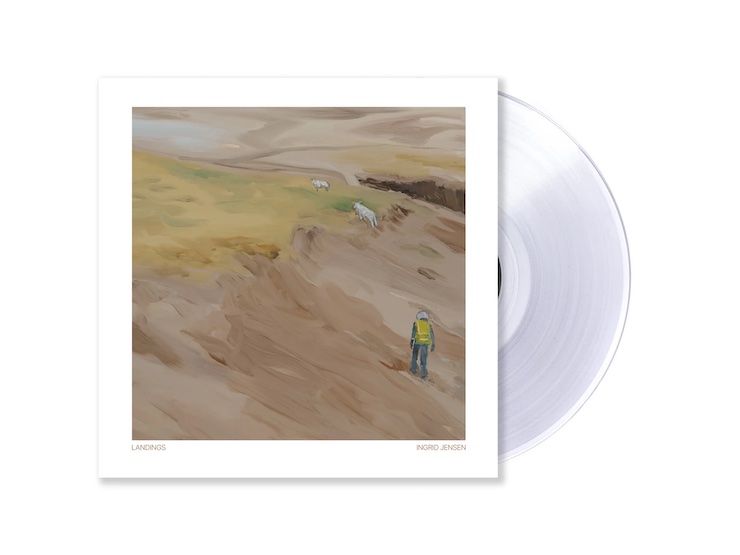
Ingrid Jensen – Landings – Newvelle Records #NV037 – 180 gm audiophile vinyl – 2025 – ****1/2
(Ingrid Jensen – trumpet; Gary Versace – organ and piano – Marvin Sewell – guitars; Jon Wikan – drums; George Coleman – tenor sax (Side A #1)
For the second in the Newvelle Records tenth anniversary collection of five 180 gm vinyls, the label is presenting noted jazz trumpeter, Ingrid Jensen on Landings, with a quartet, on eight tracks. Ingrid is backed by organist, Gary Versace; guitarist, Marvin Sewell; and drummer, Jon Wikan, (Ingrid’s husband).
The mastering by Matthew Lutthans, and pressing on gorgeous clear vinyl, is of course, first rate, as Newvelle is noted for exquisite acoustics, and album packaging with over-sized coffee table quality album artwork (for this series, they are using Ragnar Kjartansson, with gallery art paintings).
The tracklist consists of five band originals, as well as three covers. Covering multi-genre influences, there is a polish, and a heavy swing throughout, with Jensen’s burnished trumpet tone, blended with Gary Versace’s soulful organ, and Marvin Sewell’s guitar prowess. Jon Wikan is rock solid on drums, steady, and always in the pocket.
Whether it be funk, modal, hard bop, or fusion, the interplay between the quartet is locked in, especially the communication between Ingrid and Gary.
Special guest, tenor saxist, George Coleman, still vital at age 91, opens the session with his “Amsterdam After Dark.” It’s classic hard bop, spiced up with Versace, on what appears to be a Hammond organ. It would be at home on a golden age Blue Note or Prestige date.
Ingrid’s “New Body” is moody and melancholic, with rubato guitar, and Jensen’s muscular trumpet playing has the power of a Woody Shaw, and the emotional impact of Miles Davis during his pre-electric period. Carla Bley’s “Ida Lupino” has a Latin vibe, and Marvin Sewell’s classical style guitar is featured, as well as the trumpet and organ sharing time. Also Versace’s swirling organ accents add to the mix. Next is Ingrid’s “Handmaiden’s Tale” a duet with Versace, now on piano.
The title track opens Side 2. It’s a post bop blend with fusion, and a heavy electric feel. The quartet blends seamlessly. Marvin Sewell’s “The Workers Dance,” is done in waltz time, and Marvin is taking lead, and the group’s layered mix is simply beautiful.
Versace’s “Many Homes, Many Places” has a heavy dose of funk, and Ingrid and Gary trade lead. “Home,” written by Jim Knapp, is languid, with some “grease” supplied by Versace. It would be right at home in a detective noir soundtrack.
From start to finish, this is a great album, with top notch sound. It has a contagious joy that translates to a deeply satisfying listening session. Highly recommended!
—Review by Jeff Krow
Ingrid Jensen – Landings
Trackist:
Side 1: Amsterdam After Dark, New Body, Ida Lupino, Handmaiden’s Tale
Side 2: Landings, The Workers Dance, Many Homes Many Places, Home

by Audiophile Audition | Mar 23, 2026 | Classical CD Reviews, Classical Reissue Reviews
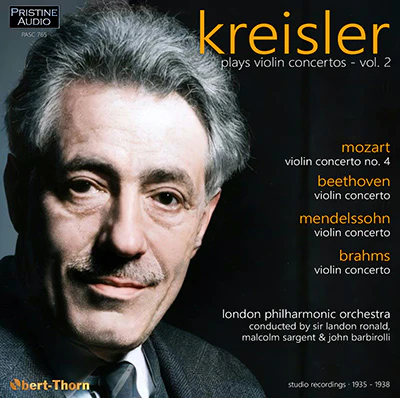
KREISLER plays Violin Concertos, Vol. 2 – Concertos by Mozart, Beethoven, Mendelssohn, Brahms – Pristine Audio PASC 765 (2 CDs = 2 hrs 14:48, detailed contents listed below) [www.pristineclassical.com] *****
Austrian violinist Fritz Kreisler (1875-1962) chose to re-record selected concertos in his repertory in order to take advantage of the improved electronic medium of the HMV studios in the 1930s. Though his early pedagogy embraced a Belgian tradition, Kreisler refined a decidedly Viennese approach to his music-making, founded on the performance style of Henri Wieniawski. Kreisler favored a showy, dramatic flair that emphasized large chords, virtuoso bowing techniques, double-stop and triple-stop fingering with tremolos and portamentos applied, delicate harmonics and pizzicatos, and always a fervent melodic line that urged his captivating, “liquid” tone. In the annals of great violin playing, perhaps Menuhin and Shumsky come closest to the pleading effect of Kreisler’s tone.
I began my audition of Mark Obert-Thorn’s meticulous transfers with the Mendelssohn Concerto (8 April 1935) with Landon Ronald. I find the performance compelling, if a bit mannered, in that Kreisler likes to underline every breathed phrase with a sighing effect, a product of his constant vibrato and emphasis on portamento. The gait remains leisurely, noble, ardently romantic, especially in the broad expressivity of the Andante movement. The innate charm and sincerity of Kreisler’s musical demeanor remain solid, despite the occasional nervousness of intonation. The sheer airiness of the last movement, its delicately brisk articulation, makes us admire the musician whose ease of phrase and sense of line require more study.
The Brahms Concerto, led by John Barbirolli (12 & 22 June 1936), enjoys a potent orchestral introduction from Barbirolli, whose career would soon take a fateful turn to New York to succeed Toscanini with the New York Philharmonic Orchestra. Kreisler openly admired Barbirolli, praising him as among the finest of accompanists. Kreisler’s projects a whiplash entry for the Allegro ma non troppo, rather gypsy in style, but rounding off in a delicate trill to a sweetly warm cantabile. Even the lengthy, parlando filigree enjoys a songful ease of motion until the arrival of the big melody over orchestral pizzicatos, intoned by Kreisler with burnished rapture. Kreisler’s aggressive attacks for the entry of the secondary episode heralds Barbirolli’s fanfare response, an ardent sense of the heroic line. That Kreisler can achieve a clean, chaste line no less finds occasional testimony in his quick adjustments of register and bow pressure. Having Kreisler perform his own, distinguished cadenza – as he does in the other two concertos – adds to the grandeur of the occasion.
The virtuosity of the London Philharmonic – itself the creation of the adventurous Sir Thomas Beecham – has a notable representative in oboe principal Leon Goossens, who does honor to the intimately persuasive Adagio. The last movement, the gypsy rondo, opens with an animal thrust that vibrates with feral passion. Kreisler applies a rasping effect and rapid strokes that border between staccato and spiccato effects, inspiring Barbirolli to exult in the occasion. The pace of the movement remains brisk, ardent without bathos or forced sentimentality. The momentum catches divine fire, and we should wonder with Lady Macbeth, who knew the old man had so much blood in him?
The Mozart D Major Concerto with Malcolm Sargent (11 February 1938) stands as Kreisler’s final, European commercial recording with orchestra. Like many violin soloists, Kreisler felt drawn to Mozart’s 1775 Concerto in D, with its French taste and courtly balances, capped by a “Strassburg” bagpipe melody that graces the last movement rondeau. The opening movement, Allegro, enjoys both ceremonial pomp and the luxuries of a serenade or cassation – given the elegance of the LPO woodwinds – with violin obbligato. Kreisler’s tone and technical fluency more than suggests why the Viotti Concerto No. 22 remained dear to his heart. A gracious, light hand guides the music to several dazzling displays of subtle, musical shifts in rhythm and inflection, suave and genial. The burnished sheen from Kreisler in this and all cadenzas warrant the price of admission.
The Andante cantabile second movement, though entirely lovely in execution, moves at a largo or adagio tempo, typical of virtually every performance I know, except that by Jiri Novak and Vaclav Talich. Richly lyrical and intimate as the performance by Kreisler realizes, the effect remains antiquated, but happily in the grand style. The last movement, Andante grazioso – Allegro ma non troppo, proffers a graceful, stately dance consisting of two themes, the second of which proves more animated. Kreisler plies his lowest string to invoke the hurdy-gurdy nostalgia of rural Austria or Italy. The leisurely canter concludes in a reprise of the animated version of the dance, intensified by a blaze of harmonious assistance from Maestro Sargent.
Fritz Kreisler had recorded the Beethoven Concerto in D in 1926 with Leo Blech and the Berlin state Opera Orchestra, a rendition some commentors find more classically controlled than the present version with John Barbirolli (16 and 22 June and 17 July 1936). The visceral, passionate impulse in the Barbirolli reading of the first movement Allegro ma non troppo, however, tends to support whatever tempo (rubato) decisions Kreisler may have imposed upon the linear progression of the concerto. The arioso passages in Beethoven sing with elegant grace, and Kreisler’s trill work maintains its diaphanous luster. Kreisler sustains his long line with taut control, segueing (via floating trills) to the marcato episodes with no loss of warm tension. The rapt sincerity of expression proves ubiquitous, and Barbirolli appears moved to gripping vehemence in his responses in the tutti sequences. As Richard Wagner points out in his 1870 essay on Beethoven, each musical element has become melody, testified to ultimately by the Fifth Symphony, where rhythm and melody become indistinguishable. It takes a discerning ear to catch the momentary finger slip in the contrapuntal cadenza, and to what end does one claim it? The coda provides the very soul of aesthetic closure, after some masterful playing has been accorded us.
A grand leisure suffuses the wonderful Larghetto second movement, a theme and variations in which Kreisler and the LPO woodwinds collaborate on an exalted level. Kreisler’s flute tone accompanies the LPO bassoon – and soon with pizzicato strings – in tender colloquy that springs from Orpheus himself. Another of Kreisler’s improvisatory cadenzas leads to the main impulse of the Rondo: Allegro, exerted with robust energy from both participants, with Kreiser’s demonstrating finesse in the various bowings at cadences required to add color to the warmly plastic proceedings. Barbirolli hustles to the suspended cadence for Kreisler’s final cadenza, a brilliant coloratura piece in itself that insists on elasticity of a sustained line. The hushed tones Barbirolli elicits from his ensemble gradually explode into what friend Richard Wagner called “the apotheosis of the dance,” the phrase I hereby transpose for my own, respectful purposes.
—Gary Lemco
KREISLER plays Violin Concertos, Vol. 2 (1935-38)
1MOZART: Violin Concerto No. 4 in D Major, K. 218;
2BEETHOVEN: Violin Concerto in D Major, Op. 61;
3MENDELSSOHN: Violin Concerto in E Minor, Op. 64;
2BRAHMS: Violin Concerto in D Major, Op. 77 – Fritz Kreisler, violin/
1London Philharmonic Orchestra cond. Malcolm Sargent/
2London Philharmonic Orchestra cond. John Barbirirolli/
3London Philharmonic Orchestra cond. Sir Landon Ronald

.
by Audiophile Audition | Mar 23, 2026 | Jazz CD Reviews, SACD & Other Hi-Res Reviews
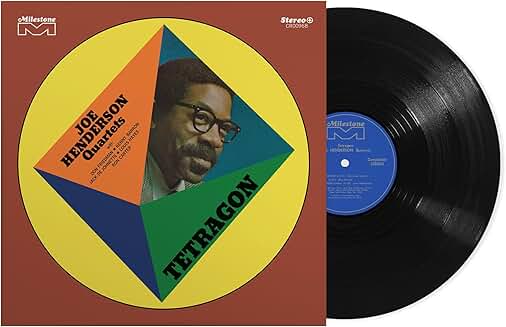
Joe Henderson’s Tetragon, now back on audiophile vinyl…
Joe Henderson – Tetragon – Milestone/Jazz Dispensary/Craft Recordings #CR00968 – 180 gm vinyl – 1967/68 – 42:04 – ****
(Joe Henderson – tenor sax; Don Friedman or Kenny Barron – piano; Ron Carter – acoustic bass; Jack DeJohnette or Louis Hayes – drums)
As part of their Top Shelf Series, Craft Recordings, is re-issuing a long out of print, Joe Henderson album, Tetragon, recorded in 1967 and 1968. Milestone Records, the original label, used two different rhythm sections, both with top grade credentials. The pianists were either Don Friedman, or Kenny Barron; and on the drum chairs were Jack DeJohnette, or Louis Hayes. Bassist, extraordinaire, Ron Carter, appears on both sessions All the players had already hit their strides as first call sidemen, or serving as leaders themselves.
As always, Craft has gone first class with this release, using lacquers cut from the original master tapes, by Kevin Gray at Cohearant Audio, and pressing on 180 gm vinyl. The albums are housed in a tip-on jacket.
At the time of this recording, Joe Henderson had fully established his career, and Milestone used him as the only horn here. Henderson was known for his dark tone, aggressive, and often pushing the envelope into very “free” territory. He could also be velvety, if needed, on ballads. Tetragon has a nice combination of both, on the seven tunes, with a few standards, and two tracks each, written by Henderson or Carter.
Side 1, opens with the standard, “Invitation,” and it is taken mostly straight ahead, with Joe immediately taking center stage, and an an excellent flowing solo by Don Friedman. “R.J.” was written by Carter for one of his sons. Don handles the fast tempo with ease, while Joe’s astringent tone jumps out.
“The Bead Game” is pure avant garde blowing by Joe, with no apparent melody. Jack DeJohnette is a perfect drummer for this track. Henderson goes out on stop/start runs, wild, and seemingly using free association. Certainly, it’s not for everyone.
Side 2, has the title track, a blues, which is right up the alley for Kenny Barron. Carter has an introspective bass solo, and Joe jumps in with intensity.
“Waltz for Sweetie,” written by Walter Bishop, is a welcome respite, a lovely ballad, and once again, the underrated, Don Friedman, has lovely choruses.
The closer, Cole Porter’s “I’ve Got You Under My Skin,” is taken at a brisk clip. Joe stays with the melody, but adds some “free” expression, when he sees fit.
Fans of Joe Henderson’s post bop career will find lots to like here. The remastered audiophile acoustics will enable listeners to fully appreciate his talents.
—Review by Jeff Krow
Joe Henderson – Tetragon
Tracklist:
Side 1: Invitation, R.J., The Bead Game
Side 2: Tetragon, Waltz for Sweetie, First Trip, I’ve Got You Under My Skin

by Audiophile Audition | Mar 19, 2026 | Classical CD Reviews
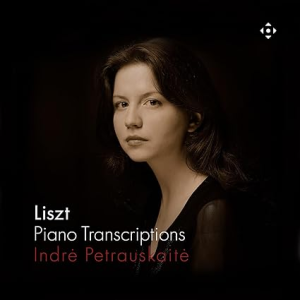
LISZT: Piano Transcriptions = Widmung; Isoldes Liebstod; Spinnerlied; Der Doppelgänger; Ständchen; Der Müller und der Bach; Frühlingsglaube; Soirées de Vienna; Valse de l’opera Faust – Indré Petrauskaité, piano – divine art ddx 21144 (51:57, comprehensive listing below) (12/11/25) [Distr. By Naxos] ****:
Lithuanian pianist Indré Petrauskaité boasts a distinguished pedagogy that includes Peter Flankl, John O’Conor, Robert Levin, Boris Berman, Leif Ove Andsnes, and Paul Lewis. The present all-Liszt-transcriptions album, recorded in 2007, embraces a portion of the Liszt legacy especially attracted to other composers for their potential as creative, virtuoso show-pieces that demonstrate the fecundity of the piano as both a salon and “symphonic” instrument.
Petrauskaité opens the recital with Liszt’s transcription of Robert Schumann’s 1840 lied “Widmung,” a florid arrangement of a love song meant for Clara Schumann, the composer’s newly-wed. The recording by Ruth Slenczynska set a standard that yet endures, and the present rendition projects its own, ardent lyricism, given that Liszt embellishes the left hand with a throbbing ardor and then proceeds, via cascades and daring leaps, to imbue the second half of the song with vehemence worthy of a virtuoso étude that echoes Schubert’s Ave Maria at the coda.
The 1867 transcription of “Isoldes Liebestod” unfolds slowly, in liquid figures under Petrauskaité, the harmonies unwilling to resolve as the tension mounts in symphonic evocations of erotic love and transcendent death. Some pianists prefer Moszkowski’s passionate rendering of this music, but Liszt has a full, titanic grasp of the symbolism of this sustained spasm of emotion, ending with the intertwining of the thumbs, the ivy and the vine. The sparkle and flavor of Petrauskaité’s closing arpeggios more than suggest her capacities in Debussy.
The 1860 transcription of Wagner’s “Spinning Chorus” from The Flying Dutchman flaunts keyboard virtuosity in runs and trills, all executed by a light hand. The influence of Mendelssohn’s A Midsummer Night’s Dream seems no less a presence, elfin and transparent. The layering of the registers as we approach the darting motions of the coda enjoys an astonishing fleetness of execution. A very different affect ensues, in the form of Schubert’s eerie lied after Heine, “Der Doppelgänger,” of 1828. The B minor tonality, as sustained by repetitive, dark chords and tremolos, attains a dire menace, as the narrator gazes upon his old beloved’s home to find it occupied by himself! In this rendition, Dostoyevsky might have found an echo of his reflections on this disturbing motif.
The urge to self-destruction finds grim realization in Schubert’s 1823 “Der Müller und der Bach,“ Liszt’s transcription’s dating from 1846. The recitative-like progression bears the weight of fatal self-reflection; and it is here that, in her liner notes, that Petrauskaité reveals the presence of a new Steinway instrument, a strong sonority long denied the concert halls of her home city, Kleipeda, Lithuania. Emotional consolation follows, in the form of Schubert’s 1820 lied “Frühlingsglaube,” the poem by Uhland set for solo keyboard by Liszt in 1838.
The need for affective calm establishes itself in A-flat major, a lovely parlando that allows Liszt to introduce – within this Spring evocation – improvisatory elements and their assuaging colors. A beautiful transparency illuminates the reading. The last of the Schubert song transcriptions, “Hark, Hark, the Lark” (1826), derives from Cymbeline, Shakespeare’s 1611 Celtic romantic tragedy. Liszt set this song for solo piano between 1837-38. The virtuosity in this piece is most subtle, lying in degrees of touch and inflection rather than bold, stentorian declamations.
In a rather percussive mode, Petrauskaité sails into Schubert’s Soirées de Vienne, arrangements by Liszt of selected Schubert waltzes, which exist in plenty. When the pulverized dust clears, some enchanting dances emerge, swaying, lilting, and darting forward as the impulse requires. Liszt’s idea of improvisation lies in adding fioritura to the waltz in variation, shifting registers and accents while maintaining a basic pulse, a lesson well taught by Chopin. For seven minutes, we bask in the throes – not always gentle but splendidly ornamented – of the salon world well documented by Stefan Zweig in The World of Yesterday.
For her grand coda, Petrauskaité chooses what would offer the most bravura opportunity: Gounod’s Faust waltz as arranged by Liszt. Our artist in her notes mentions Gyorgy Cziffra as among the great exponents of this brilliant piece, but she opts for a lyrically subdued reading, although her instrument projects its own, upper-register pearls. Introspective, the interpretation gives us the meditative Faust, less in the throes of Mephistopheles than of Gretchen (or Marguarite, if you prefer), rippling and advancing by such water drops as we find in the Villa d’Este. Liszt’s own fioritura, of course, must intrude, and we soon feel as though in the grip of one of the more pungent Hungarian Rhapsodies. The last pages serve as cadenza-coda, a super changed plummet above and below, ending with the hammer blows of fate.
—Gary Lemco
Indré Petrauskaité – LISZT: Piano Transcriptions
Widmung, S. 566;
Isoldes Liebstod, S. 447;
Spinnerlied from Der Fliegende Hollander, S. 440;
Der Doppelgänger, S. 560/12;
Ständchen (after Shakespeare), S. 558/9;
Der Müller und der Bach, S. 565/2;
Frühlingsglaube, S. 558/7;
Soirées de Vienna No. 6, S. 427;
Valse de l’opera Faust, S. 407
by Audiophile Audition | Mar 17, 2026 | Jazz CD Reviews, SACD & Other Hi-Res Reviews
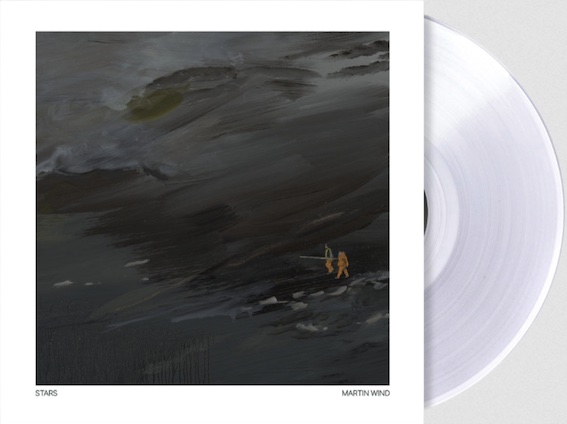
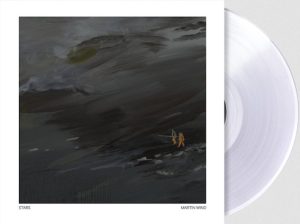
Martin Wind – Stars- “and a good time was had by all…”
Martin Wind – Stars – Newvelle #NV036 – 180 gm vinyl – 2025 – *****
(Martin Wind – bass; Anat Cohen – clarinet; Kenny Barron – piano; Matt Wilson – drums)
Newvelle Records, the exquisite boutique LP label is celebrating their tenth anniversary with their Newvelle 10 series. It consists of five albums to be issued at the beginning of 2026, and every few months, concluding in August.
Each album is getting the deluxe treatment, (just like they have been doing since the label was founded by Elan Mehler!), this time with Stoughton tip-on gate fold jackets, mastering by Matthew Lutthans, and using Quality Record Pressings, on clear white vinyl. The album artwork, was done by Ragnar Kjartansson, and would be suitable for display.
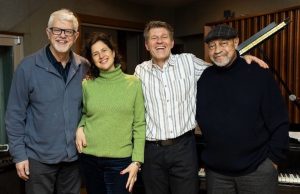
Opening the series is bassist Martin Wind’s Stars. What better way to start the series than teaming Martin with three members, who could each command center stage at Avery Fisher Hall: clarinetist, Anat Cohen; iconic pianist, Kenny Barron; and drummer for all seasons and genres, Matt Wilson.
The song list consists of three Wind originals, and six other tracks, including two by Ellington, one by an Ellington bassist (Aaron Bell), a Brazilian samba, a Bud Powell tune, and a chestnut (“Stars Fell on Alabama”), made famous by Ella and Louis.
What stands out immediately is the ease and sophistication shown by this dream quartet. Anat Cohen’s clarinet tone is glorious and ethereal, as she caresses the melodies, like frosting on the cake. What can you say about Kenny Barron that hasn’t been said in spades over the years? His touch is golden, silky smooth, and this song selection is made for him, whether it be swing, blues, or a bit boppish (on Bud Powell’s “Wail”). Matt Wilson is the perfect drummer for this setting, with great accents, and tasty brush work.
Martin Wind is clearly in heaven, having the chance to finally back Kenny, with Anat and Matt onboard, just to sweeten the pot. Martin’s originals shine, as he provides the pulse on “Life,” honors James Moody, with whom he backed for years, on “Moody,” and helps set a wistful, melancholy mood on “Standing at the Window Waving Goodbye.” He also shows his arco bass chops on the Brazilian samba, “Pra Dizer Adeus,” which was also made to order for Anat Cohen’s love of this idiom.
The Ellington tunes, “Black Butterfly,” and “The Feeling of Jazz,” would do Duke proud, with Cohen providing Johnny Hodges’ sensuousness on the former, the group’s easy going swing bringing a Cotton Club vibe to both.
The closer, “Stars Fell on Alabama” is old school sweetness, and a happy ending to a, “put a smile on your face” pure class session. What a delightful way to celebrate a ten year anniversary. We’ll surely get more chances to honor Newvelle, as the rest of the series unfolds in the next several months!
—Review by Jeff Krow
Martin Wind – Stars – Newvelle
Tracklist:
Side A: Passing Thoughts, Life, Black Butterfly, Moody, Wail
Side B: The Feeling of Jazz, Pra Dizer Adeus, Standing at the Window Waving Goodbye, Stars Fell on Alabama

by Audiophile Audition | Mar 17, 2026 | Jazz CD Reviews
Hard bop jazz is alive in Connecticut…
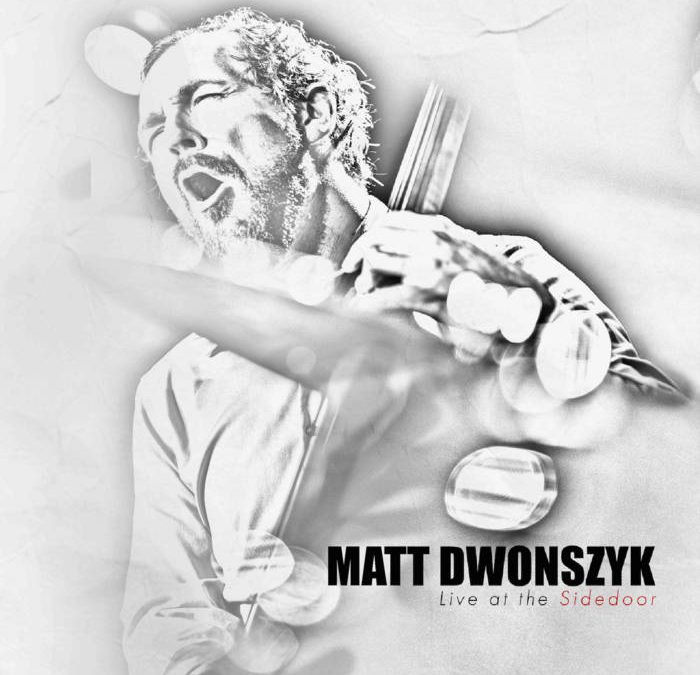
Matt Dwonszyk – Live at the Sidedoor – CD – 73:00 – ****
(Matt Dwonszyk – bass; Josh Bruneau – trumpet; Matt Knoegel – tenor sax; Taber Gable – piano; Jonathan Barber – drums)
Great jazz artists are not just found in the jazz meccas of New York City, Chicago, and Detroit. Many of them, after college, do take a bite (or at least, a nibble) of the Big Apple, to pay their dues. But often, they then return to their hometowns ( often welcomed back as local heroes), and if they are lucky they find work at universities, where they receive health benefits, and tenure if their luck holds out.
Bassist, Matt Dwonszyk, studied at the Jackie McLean Institute of Jazz at the Hartt School, and put in time in New York, before returning to Hartford, Connecticut, where he has reunited with the quartet found on his latest CD, Live at the Sidedoor. The time the group has spent together is quite evident in their polish and ensemble playing, during their live 73 minute set.
It is prime hard bop, and draws an apt comparison to groups like One for All.
Opening with “Morning Dreams,” with Matt’s bass intro, and Taber Gable’s piano lines setting a mood, the two horns take charge. Trumpeter, Josh Bruneau, is a major talent, and he blows hot. We’re off to a great start.
“Frederiksplein” is a mellow blend, with easygoing sophistication. Matt Knoegel’s tenor sax has a soulful solo. You can tell the simpatico between the long time friends in the quintet. “Stage Dive” has a nice energy build up, while the calypso flavored “Mucho Fernet,” is a great change of pace.
“Ms. Smith” is a moody ballad with a late night vibe. The audience strongly reacts with vigor to “Billy’s Den,” with its repeating riffs and fiery trumpet, that would be right at home on a 60s Jazz Messengers Blue Note release.
“Alexandre The Great” provides a jolt of adrenaline, while the closer, “Mode for Rene,” (written as a tribute to Rene McLean), nudges into some “free” territory, especially from Knoegel, and then later, Bruneau, as well.
Lovers of hard bop would do well to check out Dwonszyk and Company on this superb live release. Its purchase can be found on the bandcamp.com website.
—Review by Jeff Krow
by Audiophile Audition | Mar 16, 2026 | Classical CD Reviews
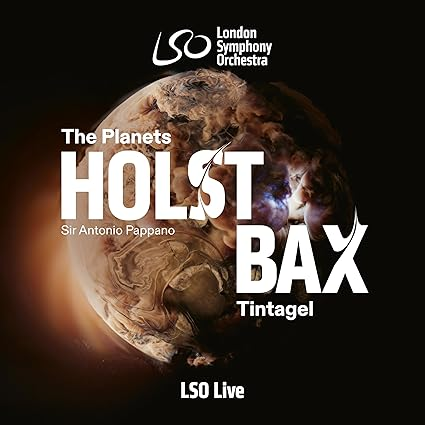
HOLST: The Planets, Op. 32; BAX: Tintagel – London Symphony Orchestra/ Sir Antonio Pappano – LSO LS00904 (69:30) (3/20/26) [Distr. by PIAS] *****:
Sir Antonio Pappano leads yet another performance of Gustav Holst’s 1914-1917 astrological odyssey The Planets from Barbican Hall (12 September 2024), with its superb acoustics. The characterization of the last movement, “Neptune,” the Mystic,” as a siren-song symbol of veiled unity expresses Holst’s individual credo. “Mars,” which opens the suite, had been conceived prior to WW I, and so illuminates “the stupidity of war,” rather than glorifies it. For over sixty years, conductor Sir Adrian Boult achieved a total identification with the score, even in the face of fine interpretations by Sir Malcom Sargent and André Previn. The LSO percussion section projects a luminous, hammered vitality throughout, and we must surrender to the throes of the snare drum in this score, whose only rival in execution might lie in Ravel’s Bolero. The credit for the high production quality falls to Stephen Johns.
The pungency of effect in “Mars,” its five-to-the-bar rhythmic thrust, sets the tone for the entire seven-movement work, with the clash of D-flat and C ensuring a supreme dissonance. When the silences fall, they seem staggering in their intimation of those dire words of Tacitus: “they make a desert and call it peace.” Clarity of line and intonation marks “Venus,” in which, alternately, horn solo, flutes, and solo violin color the texture with the signs of Peace. A delicate, dreamy tracery emerges, with hues from flutes, harps, and cello augmented by the celesta, whose sparkle had come to classical music via Tchaikovsky’s The Nutcracker. Fragmented scalar patterns over pedal points bring the paean to a translucent conclusion.
The scherzo in the suite occurs as “Mercury, the Winged Messenger,” who quicksilver, warbling figurations capture what Holst quipped is “the process of human thought.” The celeste, solo violin, and muted violins conspire to weave a slightly oriental tapestry, potentially explosive, reminding us that Hermes embodies tricksters as well as cosmic messages, a point well made in Joseph Conrad’s The Secret Sharer. Again, a vibrant transparency defines this movement, lithely rendered. And so enter “Jupiter, the Bringer of Jollity,” with his retinue of horns afire, a combination of sturdy dance and then sacred hymn. The folk elements of both impulses shine forth, Pappano having given a glorious patina to the whole, a seamless, towering realization. This is broad, Elizabethan mirth, a song conceived in the mind and heart of Sir John Falstaff.
“Saturn, the Bringer of Old Age,” Holst’s personal favorite among movements in the suite, opens at first suggestive – in twenty-six measures – of the origin of life in syncopated, reluctant chords that could have been conceived by Bartok. That Saturn possesses a Janus-like character comes from Holst’s comment that “Saturn not only brings physical decay but also a vision of fulfillment.” Both martial in middle age and funereal in dotage, the music achieves an epic grandeur and nobility of expression, a maturity of resigned contemplation. The LSO percussion has assumed an awesome presence, assisted by flaring brass, tolling bells, and anguished strings. But the menace evaporates, leaving us with another, veiled sense of illumination, a consummation devoutly to be wished.
“Uranus, the Magician” establishes his authority with a four-note motif, a spell whose lower register grumbles resemble our friend apprentice in Dukas. The twittering energy bursts forth in a resolute swagger of confidence, a mystical brew of mixed major and minor tonalities. A march thunders forward, interrupted by twitters and tumult in the timpani. The music becomes obsessive, a reeling and spasmodic nightmare that breaks off into turbulent echo of itself, with huge, dissonant chords to announce its liquidly eerie evaporation into the aether.
“Neptune, the Mystic” must suffice as Holst’s answer to Zarathustra via Richard Strauss.
Played sempre pp from the outset, the music means to sound distant and glacial, lacking any discernible melody or consistent rhythmic pulse. The sonic texture feels derived from aspects of Debussy, still vibrant with the influence of Neptune. Woodwinds mix with harp filigree and strings in high register. A haunted sense of expectation ligers throughout, and we may see the forerunner of both “space music” and minimalism in the repeated riffs. A wordless female chorus beckons us, insistent, alluring, “subtle and mysterious,” to cite Holst. Cymbals softly pierce the air, played with sticks. While the timpani sound has been wrought by a wooden stick. The female choir becomes mute, and the rest is silence.
Pappano and the LSO recorded Arnold Bax’s 1917 tone-poem Tintagel 15 December 2024 at the Barbican Hall. A strikingly coloristic work, the music depicts a vision of the Atlantic Ocean as seen from the cliffs of Cornwall, where the castle Tintagel dominates the vista. Inspired by Celtic sensibilities, the music of Wagner and Scriabin, Bax constructs a vivid seascape in three sections. The textures churn with Romantic impulses, the colors merging with the same finesse either in Debussy or J.W.N. Turner.
The brass theme, a leitmotif for the ruined castle, evolves in diatonic harmony until it meets the limitless space of the Atlantic, whose power we know from Shelley’s “Ode to the West Wind.” A rising tide eventually subdues all other forces, and so the waves smash themselves “upon the impregnable rocks,” to quote Bax, ushering in a tumult worthy of admired Rimsky-Korsakov, even as strains from Tristan filter into the mix. Pappano induces a thrilling sound from his ardent, responsive ensemble, the brass especially exuberant. Even as the ecstatic chords diminish, we sense that Tintagel, in all its Celtic splendor, resides intact, much as Smetana had set the standard for his own “High Castle.” Credit producer Andrew Cornall for the intensities here preserved.
—Gary Lemco
by Audiophile Audition | Mar 16, 2026 | Jazz CD Reviews
A truly multi-genre masterpiece- Meg Okura & the Pan Asian Chamber Ensemble…
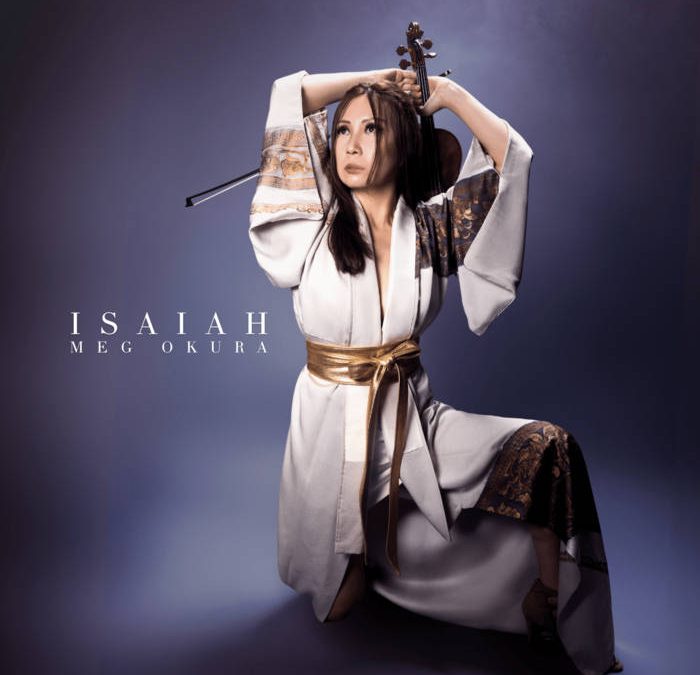
Meg Okura & Pan Asian Chamber Ensemble – Isaiah – Adhyaropa Records #AR00119 – CD – 55:36 – *****
(Meg Okura – violins, erhu, vocal (#2); Anne Drummond – flute; Sam Sadigursky – clarinets; David Smith – trumpet, flugelhorn; Rebecca Patterson – tenor and bass trombone; Riza Printup – harp; John Lee – guitars; Brian Marsella – piano; Evan Gregor – acoustic and electric bass; Peter Kronreif – drums; Specials guests: Randy Brecker – trumpet (#5,6,7,8); Sam Newsome – soprano sax (# 2,5,6,7,8); Remy LeBoeuf – Alto sax, clarinet (#3,9); Rogerio Boccato – percussion (#6,8); Yotam Ishay – organ (#6,7); Naomi Newsome – vocal (#2) )
One of the joys of reviewing jazz CDs is discovering new artists and singing their praises. Such is the case with violinist, Meg Okura, and her Pan Asian Chamber Ensemble. On her new CD, Isaiah, it would be a massive understatement to call their brilliant release just a “fusion” project. Fusion typically means bringing a few musical genres together, often with mixed results. On Isaiah, you can hear jazz, classical, celtic, Americana, and a strong Jewish influence, celebrating her embrace of Judaism. (And I’m sure that I am missing a few other musical references!)
The Pan Asian Chamber Jazz Ensemble has been in existence for 20 years, and I truly need to explore their discography, and if it even approaches the beauty and excitement of Isaiah, then they should be considered a national treasure. I rarely find a CD without either a filler, or weak track, but this CD is superb from beginning to end!
Starting with “Sushi Gadol,” and ending much too soon, with “Will You Hear My Voice,” there is an electric excitement that fascinates, and does not let go. What I found so entrancing is the shifts in tempo, and style, that you seldom find elsewhere. “Rice Country” has a Coplandesque joy, while references to Hebraic motifs jump out on “Blessing,” and on her daughter’s pet “phrase”, a fun “Jubberish.”
The tracks that feature guest trumpeter, Randy Brecker, stand out, especially on an album centerpiece, “African Skies.”
It certainly must be mentioned that Meg’s violin prowess is on full display throughout this CD. Her arrangements and orchestrations show a talent that needs to be shared with a wider audience.
This is truly a Five Star release. I will eagerly await the next project of the Pan Asian Chamber Jazz Ensemble…
—Review by Jeff Krow
Meg Okura & Pan Asian Chamber Ensemble – Isaiah
Tracklist:
Sushi Gadol
Blessing
Isaiah
Rice Country
Afrasia Intro
African Skies
Sunset Belles
Jubberish
Will You Hear My Voice
by Audiophile Audition | Mar 15, 2026 | Jazz CD Reviews
Maria Schneider expresses the need for civility thru orchestral jazz…
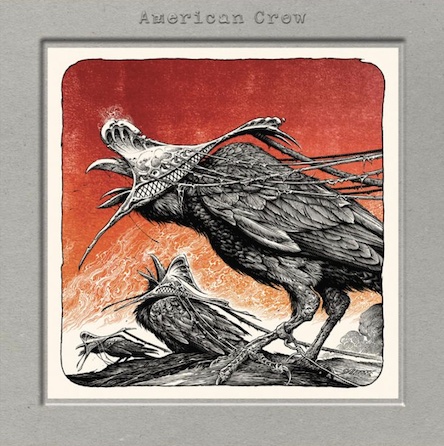
Maria Schneider – American Crow – Artist Share #AS 0245 – CD – 30:02 – *****
(Maria Schneider – composer, conductor; Steve Wilson – alto, soprano, alto flute, flute; Dave Pietro – alto, clarinet, piccolo; Rich Perry – tenor; John Ellis – tenor; Scott Robinson – baritone, bass and contrabass clarinets; Tony Kadleck – trumpet; Greg Gisbert – trumpet; Nadje Noordhuis – trumpet; Mike Rodriguez – trumpet; Keith O’Quinn – trombone; Ryan Keberle – trombone; Marshall Gilkes – trombone; George Flynn – bass and contrabass trombones;
Julien Labro – accordion; Jeff Miles – guitar; Gary Versace – piano; Jay Anderson – bass; Johnathan Blake – drums)
Orchestra leader, Maria Schneider, has never shied away from tackling major issues of the day, in which she uses her brilliant big band jazz orchestra to reach her audience. On her 2020 release, Data Lords, she took on the issue of advocating for artists digital rights, and how “big data” has intruded on our lives and privacy. That release won numerous awards, including both Critics and Readers polls of Downbeat magazine.
On her new CD, American Crow, you couldn’t find a more timely issue than how we have separated in “camps” now in our country, with both sides viewing each other as “enemies.” This division has been enabled by media that feeds division to support revenue. It’s labeled as “left” vs. “right,” with no room, or effort to compromise.
As inspiration for this project, Maria has taken how American crows let out their cacophonous “caws,” when agitated. The sound is shrill and can drown out any communication for those below. In addition, it can be viewed as a warning.
That’s apt for today’s lack of civility. Expressed musically through Schneider’s title track, there is initially a gorgeous horn fanfare. As the piece progresses, there is an extended plaintive trumpet solo from Mike Rodriguez. Soon, however, the trumpets using solotone mutes begin “cawing” signifying unease, and the saxophones up the ante. There is a distinct musical feel of agitation, and competition with Rodriguez holding down the fort, aided by Jeff Miles’ guitar. As the tune ends, there is some lessening of tension, but no resolution. Such it is the case with occasional efforts failing, in our current environment, with lack of trust between people of differing views.
The beautiful hand crafted “stitched” cardboard album packaging includes inspiring quotes from Proverbs, Nelson Mandela, Desmond Tutu, Winston Churchill, and others expressing the need for listening with open minds to our fellow citizens with the hope that we can lower the temperature enough to elicit compromise.
In addition to an alternate take of “American Crow,” there is also a free form guitar driven track, “A World Lost,” revisited from Data Lords, that blends the Americana motifs in which Maria excels, with a distinctive rock feel. There is also a somberness here fostered by the accordion drone from Julien Labro. In addition, Maria also adds a field recording of American crow vocalizations that aid her inspiration for this project.
A special treat that is added to the release is a card that gives the listener, using an online code, access to a video, where Schneider discusses how she came up with the idea for American Crow, as well as rehearsals and other surprise “treats” that inspire and reward listeners.
This CD was funded through contributions on the ArtistShare label (rightfully with a focus on supporting musicians to share their vision without commercial interference.)
This is a “must have” purchase for fans of Maria Schneider, and those that love orchestral jazz, with a heavy dose of Americana bliss. She is truly our present day Aaron Copland, a national treasure.
—Review by Jeff Krow
American Crow
Tracklist:
American Crow
A World Lost
field recordings of American Crow vocalizations
American Crow Revisited (alternate take)
by Audiophile Audition | Mar 15, 2026 | Classical CD Reviews
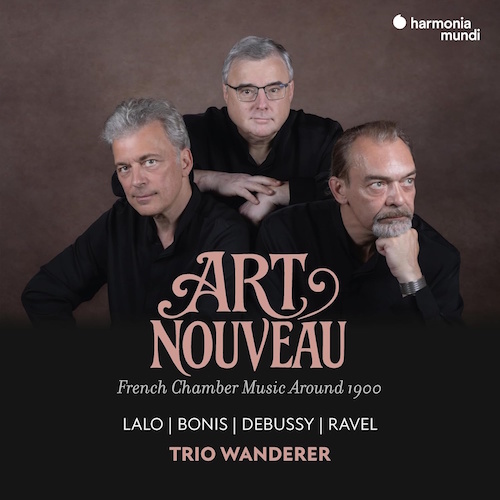
ART NOUVEAU: French Chamber Music Around 1900 = LALO: Piano Trio No. 3; DEBUSSY: Piano Trio; Violin Sonata; Sonata in D Minor for Cello and Piano; BONIS: Soir – Matin, Barcarolle in E-flat Major for Solo Piano; RAVEL: Sonata for Violin and Cello; Piano Trio – Trio Wanderer – Harmonia Mundi HMM 902394.95 (2 CDs = 59:36; 70:37, detailed content listing below) (1/20/26) [Distr. by PIAS] *****:
As a corrective to what composer Camille Saint-Saens noted as a dearth of French chamber music in the late 19th Century, a number of French musicians made a concerted effort to alleviate the situation with a spate of refined works in the genre. Recorded in July 2025, the eight compositions addressed by Trio Wanderer embody a diverse palette of rewarding musical expression by artists well aware of their Gallic heritage.
The gem of the collection appears early, Piano Trio No. 3 in A Minor (1880) by Edouard Lalo (1823-1893). Too often pigeonholed as a “singular success” with his Symphonie Espagnole, we hear in this chamber work French expressivity in the grand manner. The opening Allegro appassionato surges forth in the violin and cello, and then displays powerful alternations of the dramatic home key and the serenity of the relative major in C. The keyboard part, rendered by Vincent Coq, proffers potent octaves that often seem inexorable.
Some years ago, on my radio program, “The Music Treasury,” during my tribute to Ernest Ansermet and his Suisse Romande Orchestra, I aired a fine Scherzo in D Minor for orchestra by Lalo, unsuspecting that this essay in ostinato and marcato rhythm provided the second movement of this Trio. Violinist Phillips-Varjabédien has a fecund arena for his decisive, pungent attacks. Even the middle section bristles with alert pizzicatos. The “very slow’ third movement does not diminish the intensity, although the early, somber harmonies prophesy a journey into darkness. The model here seems to be Franck, especially in the grand keyboard octaves. But the intense melody becomes more lyrical as it progresses, eventually achieving luminescence.
The last movement, marked Allegro molto, evinces a clear resonance with the music of Robert Schumann, rife with dotted rhythms and triplet figures. Even the con fuoco marking does not belie a certain mirth detectable in the course of the movement, which ends in a series of canny “wrong notes” that imbue the cadences with a sense of irreverence. The entire course of this muscular and lyrical composition has been rendered with an undeviating authority and directness of purpose and warrants the price of admission.
The year 1880 found young Claude Debussy in the employ of Madame Nadezhda von Meck, the wealthy Russian aristocrat noted for her support of composer Peter Tchaikovsky. A derivative but sweetly ingratiating work, the four-movement Trio in G Major pays homage to Massenet, certainly, but no less to the circle of Russians, like Borodin and Mussorgsky, led by Balakirev. The haunted sense of melody in the first movement, Andantino con moto allegro, betrays many a touch from Schumann. The second movement, Scherzo: Moderato con allegro in B minor, the Trio in B major, assumes a more exotic color, with pizzicato effects and pentatonic scales, gently but suggestive of those further evolutions when Debussy’s musical character became solidified. The third movement, Andante espressivo, may well have been touched by Debussy’s constant contact with Meck’s idol, Tchaikovsky, and his own penchant for graceful melody. The Finale: Appassionato enjoys a fervent, restless energy, again somewhat recollecting the music of Schumann and Schubert. Occasionally, a modal harmony seeps through, a subtle touch of non-academic rebellion. The flamboyant keyboard part finds a delicate counter in the voices of the strings in high register. The last pages, resolute and grandly poised, urge a sense of drama hard to assign to other influences, and so we must applaud young Debussy’s originality.
Composer Mélanie “Mel” Bonis (1858-1937) has emerged from temporary obscurity to claim her rightful place among those French, male contemporaries who dominate much of the recognition. From Bonis’ prolific catalogue, Trio Wanderer offers two works, the1907 diptych Soir – Matin for piano trio, and the Barcarolle in E-flat Major (1906). Lush harmonies from violin and cello begin an ardent dialogue in the twilight piece, supported by an equally voluptuous keyboard. The liquid warmth of the piece echoes much of Fauré, climaxing in passionate figures. As the cello line evolves, we feel “The Swan” of Camille Saint-Saens lurking in the watery background. Matin evokes Nature’s awakening, but in more liquid medium than we find in Grieg’s “Morning Mood.” The flowing upper line of the piano and the whimsical flight of the violin bestow a sense of frivolous contentment to this brief Andantino. The Barcarolle, also Andantino, occupies a sonic space somewhere in the confluence of Fauré, Scriabin, and several Spaniards. Vincent Coq superimposes right hand fleetness as the left hand creates an arpeggiated cocoon around the melody.
After 1893, Claude Debussy had avoided the chamber music medium; but beginning in 1915, he embarked on a project of six sonatas that would justify his “discovering music,” as he expressed his feelings to conductor Désiré-Émile Ingelbrecht. Debussy’s prolonged illness would frustrate his ambition, allowing him to complete only half the cycle meant to celebrate the age of Couperin and Baroque clavecinistes. The 1917 Violin Sonata in G Minor offers the last of Debussy’s completed works before cancer claimed him. Modally ambiguous, the work evolves in lyrical patches, rhythmically restless from the first, the two instruments competing in 2/4 and 3/4. The first movement conforms to sonata form, but its mood swings from whimsical to sadly melancholy, until its climax seizes Spanish fire.
What the composer called “joyous tumult” continues in the second movement entitled Intermède (Fantasque et léger), a gypsified improvisation that invokes skittish, clownish figures from the commedia dell’arte. The biting sonorities of the keyboard play against the angular melancholy of the violin. Debussy invites the “cyclic” structures into his last movement, using the first motif of movement one, “like a snake biting its own tail.” Spanish gypsy impulses drive forward, gain a militant air, then relent into a dreamy meditation. The keyboard part resembles much in Debussy’s piano suites and preludes, often rippling, thundering, or cascading in various registers. A false ending that halts and then reascends in dire chords that presage the entirely new mode of the composer’s existence.
The 1915 Cello Sonata in D Minor exacts a lyrical approach to its entirety, a baritone troubadour who sings in times of trouble. The first movement, slowly sustained and resolute, casts a grim air of melancholy. The second movement, Debussy calls a Sérénade, again demanding his Fantasque et léger dynamic. Both canny humor and lyric tenderness emerge as competing affects. Once more, the Renaissance figure of Pierrot stumbles forth in irregular rhythmic patterns, disparate tonalities, with long held notes over pizzicatos in both instruments. The light, nervous finale, makes virtuoso demands on cellist Raphael Pidoux, who sails – accompanied by a lithe Vincent Coq – through all and any challenges with classical flair and grace.
Maurice Ravel (1875-1937) approached his 1922 homage to the late Claude Debussy, the Sonata for Violin and Cello, with a sense that his own style had evolved, striving for an “austere sense of melody” that eschewed his former, “impressionistic” sensuality. Zoltan Kodaly had provided a model with his Op. 7 Duo for Violin and Cello in 1914. But despite the new economy of his musical means, Ravel’s sense of color dynamics impresses us with its bristling, acerbic, bitonal textures that exploit the full range of both instruments.
Ravel opens his Allegro with alternating major and minor triads against aggressive seventh chords, the violin’s carrying a scurrying, dance melody while the cello provides a throaty syncopation. That the evolution proves more melodic than harmonically interested makes the sound compelling in its idiosyncratic classicism. The second movement scherzo plays arco passages against biting pizzicatos, the stinging sounds both voluptuous and punishing. The pulsation has a martial energy, a dark procession through insect labyrinths that likes to end glissando. The third movement indulges Ravel’s melodic gift, first through the somber solo cello, a kind of chorale which induces the violin to elaborate. The use of harmonics attaches an eerie beauty to the occasion. A moment of extended turbulence borrows the first movement’s seventh intervals. If a demure chastity has informed the music until now, the Finale, quick, sheds the restraint and offers a throaty, galloping rhythmic impulse that gains color and acerbity in its variety of attacks. Has Ravel borrowed a rhythmic riff or two from Kodaly? The “orchestral” sonority of the two instruments lets s know that Ravel’s control of color proves equal to the master whom he celebrates, the inimitable Debussy. The last chord from our duo lasts forever.
Dedicated to counterpoint teacher Andre Gédalge (1856-1926), Ravel’s Piano trio in A Minor (1914) possesses a unique blend of academic scholasticism and Basque and Eastern exoticism. The opening movement, Modéré, relies on the repetitive 8/8 rhythms from the Basque zortzico, unusual in refusing to modulate for the second, nostalgic theme away from the tonic minor. Pidoux’s cello line proves grippingly rich. The theme moves in small, mysteriously scalar increments until it jumps a fourth as it concludes.
The second movement proves the most original: a pantoum, a Malaysian verse form in
which two themes interlock through lines 2 and 4 of each four-line stanza, to become the first and third of the next stanza. In essence, this haunted movement embodies a scherzo and trio, juxtaposing ¾ injections by the string payers against the long 4/2 notes of the keyboard. Violin and cello execute fiercely quick repeated notes, even in left-hand pizzicato, while the piano seduces us with melody. The coda literally whistles with ecstatic fervor from the Wanderer ensemble.
The slow Passacaglia movement testifies to Ravel’s penchant for Baroque taste. Marked Très Large ¾, the polyphonic technique taught Ravel by André Gadalge manifests itself in an 8-bar, processional theme – appearing first in the piano’s lowest register – reiterated eleven times, a concession to the Great War a step away from his Tombeau de Couperin suite. The pungent last movement Final: Animé, relies on two antagonistic rhythms, 5/4 and 7/4, a Basque construction that has the violin’s having to negotiate, with precision, arpeggios and trills in harmonics. Trio Wanderer performs this demanding but quixotically satisfying music with seamless aplomb. Sound mastering by Hugues Deschaux provides the most reverent fidelity one could require.
—Gary Lemco
Art Noveau – French Chamber Music Around 1900
LALO:
Piano Trio No. 3 in A Minor, Op. 26;
DEBUSSY:
Piano Trio in G Major;
Violin Sonata in G Minor;
Sonata in D Minor for Cello and Piano;
BONIS:
Soir – Matin for Violin, Cello, and Piano, Op. 76;
Barcarolle in E-flat Major for Solo Piano, Op. 71;
RAVEL:
Sonata in A Minor for Violin and Cello;
Piano Trio in A Minor