by Audiophile Audition | Nov 24, 2018 | Component Reviews, Special Features
Memories of RMAF 2018 (Rocky Mountain Audio Festival)
Well, it’s been about a month since RMAF had concluded and most of the review sites have thoroughly whipped up and baked their cakes with every ingredient to put in the mixture of coverage. Best Sound, Best Room, Best Presenters, Best New Look, Best Groomed Designers, etc. Reviewers mention every component and nut and bolt in the display rooms. Good for the review sites/magazines to drum up advertising revenue for mentions. Hey, Audiophile Audition relies on advertising too; we just are not in the game of producing hundreds of pages of pabulum and eye candy in order to satisfy paying a huge staff of writers, along with the overhead of keeping a juggernaut of a mast head published in a magazine. Here at Aud Aud, you get a balanced diet of opinion and reporting.
This edition is called memories of RMAF, because as time goes by, the mind remembers experiences that are “memorable”. It’s like when you go into a HiFi shop and audition multitudes of gear, then go home and dream about the stand out performers. This is exactly what happed with my experience covering RMAF. I had set out to conquer every floor and room at the show, like drafting a Big Rig truck on the highway. Well, I have tons of photo’s and listening notes to describe every audio amoeba in the hotel! However, waiting for the long lasting memories, called for me to become patient and restrained, without regurgitating meaningless boilerplate descriptive terms from the audio dictionary and thesaurus.
So, I decided to follow my compass and remark on issues that I had put forth in my show preview and cover the three most memorable systems and/or components along with the three significant trends in the industry.
Mega System All Out

Von Schweikert Ultra 9 Loudspeaker VAC 450iQ Integrated Tube Amplifier
Wow! Just to think, twenty years ago Albert Von Schweikert and me, then with Spica Speakers shared the same cabinet builder, Ernie. Ernie skipped on us took the money and split to Mexico! Things have changed on a macro scale. Albert is now designer Emeritus with the company and they have birthed the Ultra 9 speaker, employing technology beyond the realm of earthly physics. Its $200,000.00 and not even their top of the line speaker!
Each channel of the ULTRA 9 loudspeaker system is physically time-aligned and consists of a 1,000-watt powered 15″ sealed subwoofer, twin 9″ reinforced ceramic mid-bass drivers, a 7″ reinforced ceramic midrange, a beryllium tweeter, and two 5″ aluminum ribbon super tweeters, one rear firing as part of the ambient retrieval system. The system range goes from: 16 Hz to 45KHz.

Von Schweikert Ultra 9 Integrated Tube Amplifier
Powering the Ultra 9’s was the VAC 450iQ integrated amplifier. I think this must be the most expensive integrated amp I’ve ever seen. It is a standing tower that can produce bountiful amounts of shade in your living room. VAC says the vertical alignment offers better logistical performance of circuit behavior. It uses a flock full of KT 88’s. I did not get the output power rating, but who cares when you hear music floating from a billowy soft cloud in your sound space. It’s priced at $150,000.00.
Notice the tubes are placed sideways on the chassis. Must be a challenge to re-tube the unit? There is also a sensor that indicates when you need to change the tubes. Why not install a sensor that tells you when you need to change your lifestyle too?
Sound impressions were immediate with the system. There were many other gizmos in the system, but you know these two components were the stars of the room. My wandering eyes went directly to them. The fit and finish of the speakers were like a Ferrari sports car. The system was in a large room with plenty of separation between the speakers. Sound was floating around in the room with no discernable point of reference, just as you would hear live music in a large venue. I was looking to see if there were, forgive me, surround speakers, on the sidewalls! The system was effortless in producing the illusion of live music being played. It only took a few minuets to get the full dose of audiophile elixir from that system. They truly were instruments of music reproduction and had ceased to be audio gear.
—Ric Mancuso

Audiophile Audition’s Review Crew…
by Audiophile Audition | Oct 6, 2018 | Component Reviews, Special Features
This upcoming weekend is the annual Rocky Mountain Audio Fest, being held in Denver, Colorado. This is quite the event to attend, with over 400 companies represented, covering the full spectrum of state of the art components.
Audiophile Audition is quite pleased to have one Ric Mancuso attend this event. Ric has been a long-time friend of the site; he enjoys writing—recreationally and professionally; he is quite the avid Audio Enthusiast. Ric is joining the staff of writers at AudAud, with his observations and insights to the ever moving world of audio hardware and system components. When the RMAF draws to a close, he will fill us in on the highlights, along with many of the details.
For more information about RMAF:

And for more info about Ric, please read his following letter of introduction!
Dot Dot Dot. . . (Yes, three dot journalism present)
Hey, who ‘Am I? It’s cool to be invited to contribute as a staff writer and special projects reporter for the Audiophile Audition web magazine. It’s a real honor to be on the roll call.
Ric Mancuso reporting on Ric Mancuso, new staff writer for the Audiophile Audition. Let’s treat me as if I were an audio component up for review.
I’m fairly transparent, and image well. My soundstage is excellent, having done radio shows over the years for large and small stations. My taste in music is an A+ and possess more than a competent knowledge of many genres of music. I’m a musician and know how instruments should sound. I have done special projects for a recording label and know the professional aspects of how it’s done and done well! Grammy Good!
Over the years I’ve worked in several capacities and with many associations in the Audio Industry, running the gamut, from cables, speakers, electronics and accessories. Also beating my chest for High End advocacy internationally. . .
My audio sensibilities tilt to the good to great value for the money audio components, even vintage gear. I love really good cheap eats and also appreciate the exceptional palate bomb $$$$ meal! Oh, and let’s follow it up with worthy wine pairings from $-$$$$. People always ask me, “Are you a good cook?” I say,” I just cook with good ingredients.” This is similar the way I view good audio systems. Look at NAD, for example, I have an original NAD 3020, and it is an amazingly great value, even in today’s market compared to way more $$$$ modern units. It’s like a Julia Child’s recipe for a French omelet. Can’t be beat and simply done.
First assignment: Rocky Mountain Audio Festival takes place in the Denver Tech-Center. October 5th through October 7th.
How Can I Miss You, When You Won’t Go Away?
Recall the song from Dan Hicks and his Hot Licks? Well, it’s been a few years since I have attended an audio show. My ears have rested and my audio pallet has been cleansed of past observances and judgment. Forgetting is renewal to some degree? It’s like returning to the golf course after a long layoff, you play better, because you have forgotten all your mistakes and bad habits! Then you start thinking and not being in the moment, oops, Fore!!
I do miss being away from my passionate and demanding partner. She is called High End Audio. I will be coming into the show with fresh eyes and ears submitting to becoming, vulnerable, impressionable, gullible and swayed by her good looks and charm, All the while, being human and channeling the late Harvey Gizmo Rosenberg. Harvey used to call me frequently, telling me about his modifications to the Spica Angelus he owned. I was running the company for a couple of years with John Bau under the Parasound flag. Harvey said he had run tension wires attached to the speakers to the ceiling rafters and down to the basement to isolate any room vibrations! Miss him greatly.
Looking at the show with new lenses and ears, I will be looking for trends and innovative technologies along with tried and true proven ones too. There is a seminar on the lineage of the LS3/5A speakers, with being able to hear various vintages of them! The rather new Falcon offerings from the UK, will be present to compare. Being a steadfast die hard with that design, I will be looking for Ken Kessler in the wings to chat about his experience. I think he owns two pairs already?
A must check out will be, The Blue Sound products. Familial ties to NAD and Lenbrook Americas in Canada. I will be investigating the RMAF show’s entry-level rock climb from low to mid price selections. Always must have an entry level good value system to show what the benchmarks can be at the strata’s.
I don’t have a drone to follow me around at the show; however, I do have really good radar to sense what sounds good from twenty paces.
Tune in for my RMAF show recap upon my return.
Good listening and Toe Tap!
—Ric Mancuso
by Audiophile Audition | Jan 18, 2018 | Special Features
After a glorious career in Audio of over half a century, John Sunier passed away in January of this year.
John’s incredible energy and drive found a distinctive expression in Audiophile Audition. Starting as a radio show in the 1980s, it transformed into a web site as the 21st century unfolded. Sunier was recognized far and wide as a definitive expert in all matters audio, all matters for audiophiles.
In the last year of his life, John stepped back from his beloved web site, assuming more of a Professor Emeritus role there. He was navigating the challenges of advancing years with the warmth and support of his friends; he was well cared for.
John Sunier is survived by his wife Donna, his cat Melinda, and the memories held by all those who knew him—his colleagues, his friends, and his following throughout the Internet. He will be deeply missed.

Audiophile Audition is creating a collection pictures and reflections honoring the life of John Sunier.
If you have something you would like to share, please write to editor@AudAud.com
Remembrances

by Audiophile Audition | Sep 9, 2026 | Jazz CD Reviews, SACD & Other Hi-Res Reviews
Frank Wess shines on tenor sax and flute ballads…
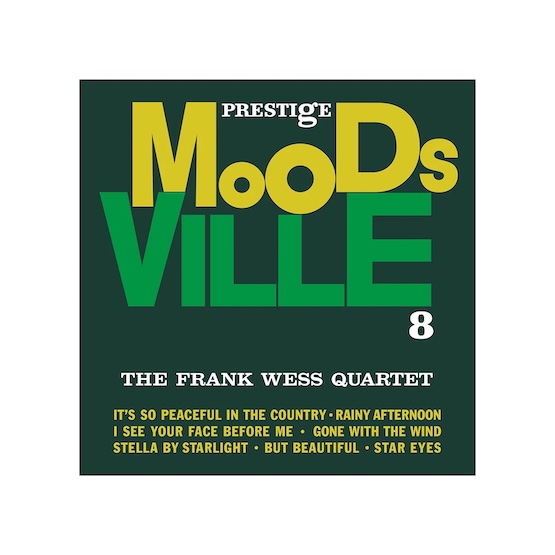
Frank Wess – The Frank Wess Quartet – Prestige Moodsville Vol. 8/ Craft Recordings #CR00959 – 180 gm mono vinyl – 1960 – 37:59 – ****
(Frank Wess – tenor sax, flute; Tommy Flanagan – piano; Eddie Jones – bass; Bobby Donaldson – drums)
The great dual instrumentalist (tenor sax & flute), Frank Wess, a mainstay of the Count Basie bands, was a perfect choice for Prestige Records to use for their Moodsville series of jazz ballads in the 1960s. Wess possessed an old school tenor tone, heavy on the vibrato, and his feathery tone, reminiscent of Lester Young, could be counted on by Basie, on ballad features. In addition, Frank’s talents included flute, which provided even more opportunities to solo.
Craft Recordings is issuing an audiophile remastering of Wess’ 1960 Moodsville quartet date. They used the original master tapes for the lacquers for mastering by Matthew Lutthans. Recorded at Rudy Van Gelder’s iconic studio, the sound mix is spot on, and well mixed, as it doesn’t get much better than having Van Gelder as an engineer.
Tommy Flanagan is a first choice pianist, with his melodic piano lines. He was used often to accompany Ella Fitzgerald. Bassist, Eddie Jones, was also in the Basie band, while Bobby Donaldson, on drums, was used by many during this time period for his time keeping skills.
The seven tracks on the album are mostly well known standards. Wess splits his time almost equally between tenor and flute. The flute features (“So Peaceful in the Country,” “But Beautiful,” and “I See You Before Me”) are dreamy and set a relaxed mood, while the other four tracks mix a combination of upbeat and swing tenor, heavy on Frank’s vibrato. The longest track, “Rainy Afternoon,” a Wess original, is blues driven, and would fit in nicely in the Basie book. “Star Eyes” is given a Latin reading, led by Bobby Donaldson’s cymbal work.
Wess and company were a nice addition to the Moodsville series. Their mastery of ballads is on full display here. Well worth checking out…
—Review by Jeff Krow
The Frank Wess Quartet – Prestige Moodsville Vol. 8
Tracklist:
Side A:
It’s So Peaceful in the Country,
Rainy Afternoon,
Star Eyes
Side B:
Stella By Starlight,
But Beautiful,
Gone With the Wind,
I See Your Face Before Me

by Audiophile Audition | Sep 9, 2026 | Classical CD Reviews
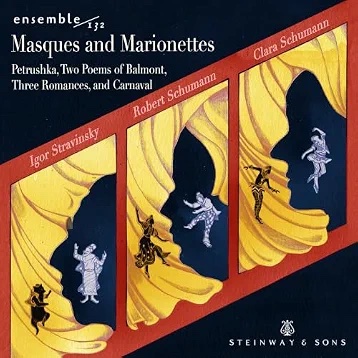
Ensemble 132: Masques and Marionettes – STRAVINSKY: Two Poems of Konstantin Balmont; Petrushka ; C. SCHUMANN: Three Romances; R. SCHUMANN: Carnaval – Maria Ioudenitch and Abi Fayette, violins/ Luther Warren, viola/ Zachary Mowitz, cello/ Sahun Hong. Piano – Steinway & Sons 30254 (75:51) (10/2/26) [Distr. by Naxos] *****:
The Boston-based Ensemble 132 (estab. 2019) follows its guiding principle, that “Great music transcends the confines of instrumentation.” Thus, a large range of interpretive freedom ensues, allowing the musicians to expand upon “official” scores and present them in settings conducive to the fluid abilities and creative whims of the performers. The prime mover of Ensemble 132, pianist Sahun Hong, means to engage the collaborators in projects that expand, even defy, the genres of the original compositions they interpret.
This program opens with a piano quintet arrangement of Igor Stravinsky’s 1911 Two Poems of Konstantin Balmont, “Forget-Me-Not Blossom” and “The Dove.” The violin and cello, respectively, serve as the main storytellers. From the shimmering, tremolo first measures the violin sings a plaint that the flower might inspire ardent devotion in the beloved. The cello intones in high register over an eerie drone bass the mournful loss of the “crimson flower” of love by the white dove once possessed it. Dark dissonances proceed to accompany the mournful tune, the piano especially sternly unsympathetic.
Pianist-arranger Hong has raised the specter of Stravinsky’s original concept for his Petrushka ballet as a quasi-concerto for piano and orchestra. Set at the Shrovetide Fair in the St. Petersburg of the 1830s, the story line involves a hand-puppet character whose roots lie in Commedia dell’arte and Russian folklore. The music relishes a bi-tonal, intervalic rubric (C major – F# major) that captures the very human struggle – here, in a character brought to life by sorcery – for love and acceptance. The immediacy of Hong’s “re-orchestration” loses little by way of kinetic energies, especially conscious of Stravinsky’ own depiction of his character’s capacity to “exasperate the patience of the orchestra with diabolical cascades of arpeggios.” The violin takes up the melancholy plaint of the puppet in “The Magic Trick,” replacing the flute, while the keyboard adds intimations of sorcery.
“The Russian Dance” we know well from the piano solo arrangement the composer created for Artur Rubinstein. Now, it assumes a more stinging character as violin and piano engage in a spirited colloquy. The scene in “Petrushka’s Room” becomes almost unbearably acerbic with violin and piano bravura passages. “The Moor’s Room” clearly establishes the bitonal, perhaps bi-polar, threatening energies in the main character’s loss of love and his resultant fury. The cello takes up the drone for “Petrushka’s Waltz,” the violin and piano adding their respective sense of irony. The four-note pattern asserts a version of a “fate” motif, gathering speed and dissonance as a source of pain and revolt. Suddenly, we are thrust into the kaleidoscope of the Fair, a deliciously raucous exhibition of colors created by Ensemble 132 from which the cello and violin elicit the main, lyrical theme over keyboard ostinatos. The motion becomes increasingly dizzy, often explosive, a paroxysm of longing and despair. The shimmer of the open motives recurs, and the melodic line becomes more strident, more punished, mostly by way of the cello’s unnaturally high register.
With an aggressive, martial assault of rhythm and color, Ensemble 132 makes us hear “The Dance of the Coachmen,” a concoction of competing melodic and metric impulses, testily layered in relentless harmony. Suddenly, the textures break off in a sense of climactic resolve, pulsating and then maestoso chordal, even pentatonic, in character. The progression, now ironic and fatal, cascades to an abrupt, unsentimental collapse.
A mighty, dramatic juxtaposition of effect follows, as cellist Mowitz and pianist Hong perform movement one, Andante molto, from Clara Schumann’s intimate 1853 in a version that deepens the harmonies and colors from the original setting for violin and piano. For the second movement Allegretto, violist Warren joins Hong in music alternately mournful and frolicsome. The third movement, marked “passionately quick,” has realization in its origjnal form by Ioudenitch and Hong. The textural fluency in Schumann’s sense of color allows the two instruments to trade the presentation of the main theme, which soars to a passionate apex in the keyboard, resolves into calm acceptance.
Recast as a piano quartet, Robert Schumann’s opening gambit for his Carnaval, “Preambule,” has all the power of a colossal fanfare, introducing his own, psychological assortment of characters that reside in his fertile imagination. The idea of creating “Little Scenes on Four Notes” attaches not only Robert and Clara’s musical anagrams, but no less invokes the economy Beethoven established in his Fifth Symphony. Again, the Comedia dell’arte enjoys plastic treatment of its various characters, especially the serious and wistfully playful sides of Schumann’s character.
According to the notes by arranger Hong, Schumann’s autobiographical solo piece has gained “a newfound humor and sparkle” by virtue of its added performers. Those who relish this more “orchestral” incarnation likely recall Arnold Schoenberg’s treatment of the Brahms G minor Piano Quartet. Hong’s coy version of “Coquette” and his addition of the oft-omitted “Sphinxes” inserts both theater and gothic drama into a score noted for its lyrical flamboyance. Clara (“Chiarina”) appears in full waltz regalia and Chopin in his especial, nocturnal grandeur. “Reconnaissance” has rarely sounded so ardent in the search for beauty, “Pantalon and Colombine” so mercurial in their treatment of each other, and “Paganini” regains his sonorous diabolism in mincing then aggressive bounds. “Aveu” assumes its rightful integrity as a piano solo. “Promenade” enjoys schwung and dazzling color. Finally, what Hong terms “the scale of intensity” merges full force in the ironical “Pause” and the fiery conclusion, “March of the Davids-Leaguers against the Philistines,” Schumann’s forceful protest against all intellectual mediocrity and self-satisfaction.
What we have here embodies a bold experiment in chamber-music programming, carried off with explosive self-assurance and technical brilliance.
—Gary Lemco
Ensemble 132: Masques and Marionettes
STRAVINSKY:
Two Poems of Konstantin Balmont (arr. Hong);
Petrushka for Piano Quintet (arr. Hong);
C. SCHUMANN:
Three Romances for Violin and Piano, Op. 22;
R. SCHUMANN:
Carnaval, Op. 9 for Piano Quartet (arr. Hong)
Maria Ioudenitch and Abi Fayette, violins/
Luther Warren, viola/ Zachary Mowitz, cello/
Sahun Hong. Piano
by Audiophile Audition | Sep 8, 2026 | Jazz CD Reviews, SACD & Other Hi-Res Reviews
The ballad mastery of Coleman Hawkins…
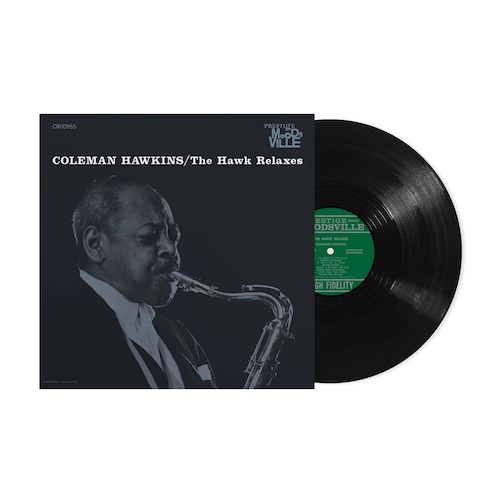
Coleman Hawkins – The Hawk Relaxes – Prestige Moodsville Vol. 15/ Craft Recordings #CR00955 – 180 gm stereo vinyl – 1961 – 37:19 – ****1/2
(Coleman Hawkins – tenor sax; Ronnell Bright – piano; Kenny Burrell – guitar; Ron Carter – bass; Andrew Cyrille – drums)
Long time jazz fans often have a debate over whether they prefer Coleman Hawkins, or Ben Webster, as the greatest master of old school ballads. Both are certainly top rated for their husky, vibrato driven tone. You certainly can’t go wrong with either.
Coleman Hawkins had nearly a five decade long career from the 1920s, with the Fletcher Henderson Orchestra, until the late 1960s. He easily transitioned from swing, to be-bop, and beyond.
Craft Recordings, the boutique label, under their Prestige Moodsville Acoustic Sounds series, has just re-issued, in pristine 180 gm vinyl (using lacquers cut from the original master tapes), the 1961 session, The Hawk Relaxes. It showcases Coleman’s romantic readings of seven ballad standards.
The Hawk is backed by a quartet of (then young) musicians, now known as masters themselves. Guitarist, Kenny Burrell, was 29 years old at that time, and Ron Carter was only 23. Drummer, Andrew Cyrille, now known for his avant garde prowess, was only 21 years old, while pianist, Ronnell Bright, was the oldest at 30.
Their backing of Hawkins here, was deeply respectful of the 56 year old, still vibrant tenor saxophonist. Bright and Burrell are provided opportunities to solo, and Kenny is featured throughout with lush accompaniment.
This is prime late night listening pleasure. Hawkins’ smoky vibrato is on full display. “More Than You Know,” sets the mood for romance, while Coleman’s opening swing solo on “Moonglow,” brings to mind an Ellington tune with Johnny Hodges up front.
“Just a Gigolo,” drips with emotion, while “Speak Low,” is taken in a calypso mood, and Andrew Cyrille’s brush work stands out.
Old school tenor sax ballad lovers will be in heaven listening to this audiophile vinyl visit with a jazz legend. Coleman Hawkins has often been referred to as the “Father of the Tenor Saxophone.” Here, listeners can experience his gentle side.
—Review by Jeff Krow
Coleman Hawkins – The Hawk Relaxes
Tracklist:
Side A:
I’ll Never Be the Same,
When Day is Done,
Under a Blanket of Blue,
More Than You Know
Side B:
Moonglow,
Just a Gigolo,
Speak Low
by Audiophile Audition | Sep 4, 2026 | Classical CD Reviews, Classical Reissue Reviews
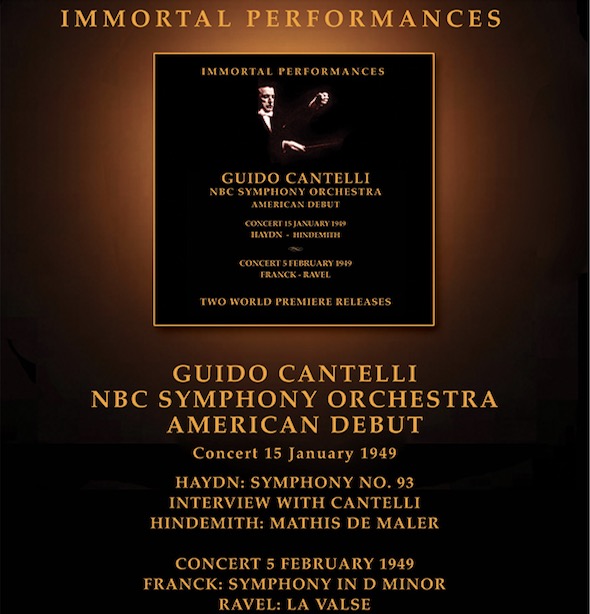
Guido Cantelli NBC Orchestra: American Debut = HAYDN: Symphony No. 93 in D Major; HINDEMITH: Mathis der Maler; Interview with Cantelli; FRANCK: Symphony in D Minor; RAVEL: La Valse – NBC Symphony Orchestra/ Guido Cantelli – Immortal Performances IPCD 1222-2 (2 CDs = 61:00; 58:29) [www.immortalprformances.org] *****:
I have commented often on the subject of Italian maestro Guido Cantelli (1920-1956), whose especial musical gifts, charismatic personality, and supple enthusiasm for his chosen repertory had made him Arturo Toscanini’s heir apparent. Cantelli, however, evolved along his own, inner-directed course, no mere clone of greatness. He embraced scores which often raised hackles in Toscanini as empty rhetoric, and Cantelli bore a flamboyant conducting style close to that of Leonard Bernstein, youthfully acrobatic. In my estimate of Cantelli’s Schumann Fourth Symphony, I found likeness closer to Furtwaengler’s measured approach rather than to any Italianate model. What remains undeniable, besides the fluid musicianship, lies in Cantelli’s passionate sense of focus, his fixed notion of the musical structure at hand. For me, it is this last quality, the impress of the points of emphasis, the curve to a predestined closure, that aligns Cantelli with the Maestro, Arturo Toscanini. Both men bore the torch of musical enlightenment with a solemn dignity and sense of mystery that cannot be taught, only instilled by Nature.
Immortal Classics presents two concerts by the NBC Symphony under Cantelli: the 15 January 1949 debut and the 5 February 1949, concerts that glow with the heat of fertile musical imagination. The opening work, Haydn’s Symphony No. 93 in D Major (1791), the first of the Salomon set of twelve such works. After a 20-measure Adagio of stately temper, Cantelli leads the Allegro assai sonata form with a buoyant clarity that delights all of us who ascribe such bustling ease of balanced execution strictly with Sir Thomas Beecham. The secondar theme in A major almost waltzes across our imagination, for the melody quite approaches a Vienna model we find later in Schubert.
The G major Largo cantabile proceeds with regal dignity, a martial carriage. The extended delicacy of phrase and transparency of motion embraces notable woodwind contributions, supported by arioso strings and ardent tympani. All such genteel politeness, however, dissipates rudely with a discourteous bassoon ff moment of flatulence. A few audience titters testify to the success of Haydn’s rustic humor.
Cantelli moves the Menuetto: Allegro with a robust vigor that keeps a fine line from becoming a scherzo in the Beethoven mold; the ländler, as such, relishes the punctuations between kettle drums and strings. The offbeat accents and energetic fanfares prove grist for the Cantelli color mill. Both sonata and rondo forms define the last movement, Finale: Presto ma non troppo, Cantelli’s idea of “ma non troppo” verges on the “troppo.” The effervescent charm and polished wit of the symphony glow in Cantelli’s suave hands, and an audience previously unacquainted with this new talent acknowledges his mastery.
Guido Cantelli harbored a fondness for Paul Hindemith’s suite from his opera Mathis der Maler,* arranged as an abbreviated, three-movement symphony (1932) at the request of conductor Wilhelm Furtwaengler. The story of German master Matthias Grunewald (c1475-1528) compels Hindemith’s orchestral treatment more than any immediate depiction of the actual panels of the Isenheim altarpiece in Colmar: Matthias (mistakenly) assumed the artist should take a political position, and so joined the Peasants’ Revolt again serfdom, c. 1524. His witness of various wartime atrocities led him back to his natural calling, painting, creating his wonderful altarpiece for the Church of St. Anthony in Isenheim, Alsace. If Hindemith saw the story as emblematic of a stance against Hitler’s regime in Germany, Cantelli may well have embraced the three-panel allegory as resistance against Mussolini’s fascist government in Italy. Virgil Thomson would likely agree that a psychological reaction to the artwork trumps any attempt to limn the panels in music, since he deemed Hindemith “the least pictorial composer alive.”
The opening movement, “The Angelic Concert,” serves as an overture that utilizes the folksong, Es sungen drei Engel, which Cantelli realizes with a studied, shimmering series of figures that bear chorale impulses in the trombones. The musical themes from the opera, wrought in polyphony, progress with a clear blending of the divided, NBC orchestral choirs, the musical arch sustained even as the levels of dynamics alter. Cadences land and erupt with artful, seamless transitions, especially as the NBC brass assert their acoustical dominance.
Drawn from the final moments of the opera, “The Entombment” celebrates the most mournful of events, given at the predella of the altarpiece. A sustained lament evolves, bittersweet with a lyric quality that remains at once agonized and mysterious. Meditative and groping for some sense of exaltation, this music serves as an interlude, a grim presentation of mortality and human vulnerability. The last movement, “The Temptation of St. Anthony,” asks Hindemith to suggest demonic presences, physical and moral. Dissonances and suspended harmonies approach a German equivalent to Mussorgsky, as Saint Anthony must suffer (galloping) personal attacks on his person and his psyche.
Cantelli’s stop-on-the-dime discipline controls metric and dynamic shifts with economy and intimacy. A grueling sense of humanity arises from the rubble of Saint Anthony’s afflicted spirit, music that sounds like Berlin will look by spring of 1945. Modal trumpets announce a triumph of the spirit, since we dare not invoke “the triumph of the will.” Saint Anthony has reclaimed his artistic self and his natural sense of mission, the music’s warm polyphony and chorale fanfare’s now bolstering a refined conscience, for what has not killed Saint Anthony has made him stronger. Listen to that NYC reception!
The three-minute interview reveals Guido Cantelli (with Ben Grauer) in full possession of his English, just having performed with the Boston Symphony. Along with Rossini’s The Siege of Corinth Overture, Cantelli continues with the Haydn 93rd and Hindemith’s Mathis der Maler. Cantelli plans concerts with the New York Philharmonic and concerts in London.
(*Immortal Performances lists the work as Mathis de Maler.)
A Gallic – Franck is Belgian rather than French – program defines the final concert by Guido Cantelli with the NBC Symphony, 5 February 1949, consisting of Franck’s Symphony in D minor (1888) and Ravel’s La Valse (1920). Consistently, commentators and musicians ascribe a “religious” or “mystical” significance to the Franck Symphony; and, while interpreters like Furtwaengler, Monteux, Bernstein, Stokowski, Paray, and Ormandy have rendered grand and luminous renditions, I have yet to experience any transcendent moment, only the periodic resolutions of four-square architecture set in the (here, organ) harmonies established orchestrally by Schumann, Liszt and Wagner. But I do not mean to “profane” Franck’s intent, celestial or otherwise. And I well recall (and admire) Cantelli’s 1955 commercial RCA recording with the NBC Symphony (LM 1852), a potent interpretation.
Cantelli establishes a haunted, lugubrious Lento that contains the (cyclic) seeds permeating the entire work. The breath between the shimmering notes testifies to a grand sense of dramatic design. Extended exposition and sumptuous development sections bequeath no recapitulation; but in the course of the balanced phraseology we hear Franck’s assertion of the organ diapason as the basis of his layered harmony and strident counterpoint. Rarely has the NBC bass line evoked such mournful, serpentine resonance. Cantelli manipulates the various pushes and pulls of the music’s momentum and dynamic shifts, never losing the taut rein of essential pulse and melodic continuity. The insistent energy of the NBC brass will win many adherents to Cantelli’s glamorous sense of peroration, retreating and then building in dark repetitions whose chiaroscuro renders the music in the mode of Caravaggio.
The second movement Allegretto, for all of its initial transparency, economically blends the forms of an intermezzo with a quicksilver scherzo. Harp and pizzicato strings set the tone initially, with a tiny moment of metric shift and the introduction of the oboe theme. Only the slightest hint of portamento lends an old-world sensibility to Cantelli’s otherwise new objectivity. A moment of mystery expands the bucolic gestures of the occasion, then Franck polyphonically synthesizes the two impulses. In a more martial sensibility, the music regretfully fades away, leaving a haunted nostalgia to carry us into the energetic finale, Allegro non troppo.
Cantelli has patiently guided us to a most thrilling finale, punctuated by a kind of fate motif. The cyclic recurrence of former motifs finds balances in the allocation of orchestral voices to enunciate the cornucopia of melodic kernels. The second movement’s sad refrain becomes a prevailing motto countered by variants from movement one, then stratified. Despite triumphant fanfares, Cantelli maintains the meditative flow of the music without having engendered an anti-climax. Brass and tympani collaborate without shattering the sonic homogeneity of the music’s grand gestures, especially from movement two. The coda under Cantelli becomes a kind of epilogue we find in Dvorak, an “and so my children” set in mysterious tones from the prior movements against the urgency of the final Allegro. The afterburners explode the last chords into the stratosphere, where we find the vivid applause of the patrons.
Ravel’s La Valse evokes the world of the 19th Century Vienna ballroom, but the sensibility of Johann Strauss has uneasy harmonies. Like many of the large Ravel dance forms, this one, too, will explode, as though the contemporary world had exhausted the humane message of the past. For Cantelli, the piece serves as an exercise in perpetual color motion, as he will prove in the “impressionist” repertory that includes Debussy and works like the Le martyre de Saint sebastien, which Toscanini did not address on record. The compulsive swirling figures and crashing octaves that mark the eccentric conclusion of La Valse testify to the paroxysm of emotion Cantelli could muster for the music he so cherished. Even Ben Grauer seems caught up in the exhilaration of the Cantelli phenomenon.
—Gary Lemco

by Audiophile Audition | Sep 2, 2026 | Classical CD Reviews
Controversial to be sure, but certainly an eye opener.
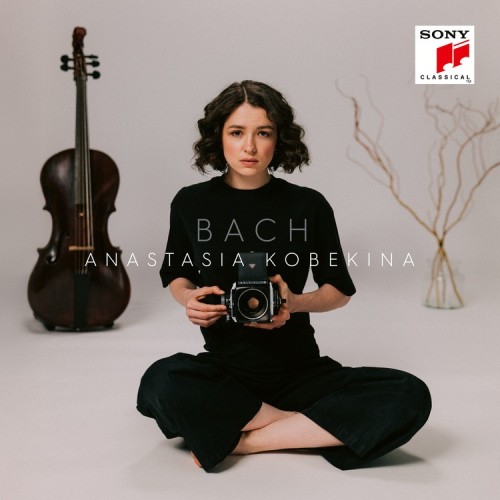
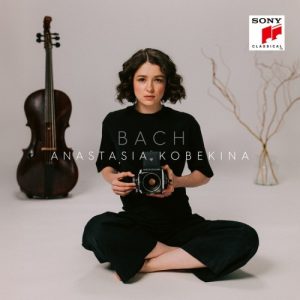
JS BACH: Six Suites for Violincello solo – Anastasia Kobekina, vc – Sony Classical 19802954682, 61:43, 82:52 ****:
Cellist Anastasia Kobekina has certainly been enjoying a huge promotional effort. She was born in Russia and garnered the third prize at the 2019 Tchaikovsky Competition. Recently signed to Sony, we have been flooded with all things Kobekina, especially videos and interviews online. Of course, this is not the first time Sony has signed a young artist to its roster, and we’ll see how long she lasts there—history paints a rather bleak picture in terms of the long-term viability of any musician signing with this company—many are called, but few are chosen.
This album has received very mixed reviews so far, many lauding her obvious talent and boldness of her interpretations, while others are not as favorable, some even disparaging. I think this is going a bit far; while one might argue the viability of what she does, there is no doubt that this is serious effort by a young woman looking at this mountain of a set of suites from a very personal—perhaps too personal—vantage point.
But it must be admitted that the old adage “can’t see the forest for the trees” applies here in spades. Kobekina is all about the moment, sometimes getting too caught up in the beauties and passions of one phrase or even bar, while really not considering its place in the overall suite. If you approach this music as a consistent and well thought out offering in terms of formal structure, with each movement somehow related emotionally to the previous or next one, then this recording will prove bothersome.
It’s hard to determine which approach Bach would prefer, as the cello suites in general are a bit of a mystery. Most likely composed immediately after the Brandenburg Concertos, while he still worked as Capellmeister in Cöthen in the 1720s, this evidently first exploration of the instrument was something unique for the time, as the cello was relegated to a supporting role, and generally thought of no use for anything else. They do seem to disappear from history for quite a while, about 150 years until Pablo Casals spotted them in a secondhand music store. Even then he did nothing with them for 13 more years, and finally recorded them. Lo and behold, suddenly these suites, initially thought by Casals to be a simple collection of rather uninteresting technical studies, blustered their way into the increasingly large Bach pantheon of greatness. Quite a comeback, and we have no idea what Bach’s intentions really were—the absence of the original score doesn’t help.
The earliest manuscripts, done by Bach’s second wife, Anna Magdalena, give us absolutely no idea of how these pieces should be played, and so each performer goes from scratch, hence the predicaments found in the recording under review. It really does depend on how one thinks, individually, that these suites should be performed. Kobekina relishes the note-by-note connections of this music, sometimes speeding up, sometimes delving into an intense legato, and then suddenly putting the brakes on for a moment she finds particularly meaningful.
Unfortunately, her consideration of these works as a blend of Apollonian clarity and Dionysian passion might make for clever philosophical consideration and pseudo-intelligent liner notes, but does not translate into anything palpable in the actual readings. I wish she had just said, “this is how I feel this music, take it or leave it” and let the listener decide on how it works, devoid of any pre-listening prep. If one does indeed use this scheme as a basis for evaluation, there are many good things to be appreciated. She plays her Stradivarius cello from 1698, known as the “De Kermadec-Blass,” as well as the 1717 “Bonamy Dobree Suggia”, five strings in the sixth suite. Tempos are pushed and pulled in really spontaneous ways, and some might be bothered by the not infrequent fingerboard slapping and other extraneous noises that seem to appear. Yet, for all that, these are far from dull or lifeless performances, and her sound is robust, warm, and quite attractive. She employs an array of emotional content, delicacy, humor, unadulterated virtuosity, and pathos-laden slower movements. I can’t think of another recording where you come away feeling like you know the performer as well as the composer.
While I cannot recommend this as a first introduction to the world of Bach’s cello suites, it will serve nicely as a supplement to existing recordings when one feels the need for something a little more adventurous or even wayward. If you are new to these or seek something that has sparking playing and subtle intellect behind every phrase—and want a period instrument approach—get Pieter Wispelwey’s 1990 second recording on Channel Classics.
— Steven Ritter
Amazon
by Audiophile Audition | Aug 30, 2026 | Classical CD Reviews
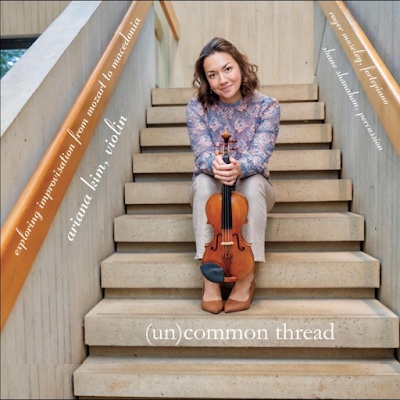
(un)common thread = MOZART: Violin Sonata K. 454; BEETHOVEN Violin Sonata #3; SHANAHAN: Audacity for Violin and Percussion; KIM: Migrating Home for Solo Violin and Looper Pedal – Ariana Kim/Violin – Saffron Soul Records – (74:40, complete contents detailed below) (6/17/26) [Distr. by Saffron Soul Records] ****:
This album’s “uncommon thread” lies in the art of improvisation, both in Western classical music and violinist Kim’s fascination with Eastern music, especially after her five months of studies in India on the subject of Carnatic music. The search to find connections between disparate cultural traditions would appear to embrace a more “global” sense of community through music, illustrating the creative spontaneity each of the diverse genres emanates.
With a piercing, thin-toned instrument, Kim opens with Mozart’s 1784 Violin Sonata in B-flat Major, conceived for virtuoso Regina Strinasacchi, whom Mozart would accompany in Vienna. The demand for improvisation foisted itself upon Mozart, who had not written out his keyboard part at the time of the debut. The first movement, Largo – Allegro, elicits a series of elegant gestures that soon break out into a dynamic, highly embellished dialogue between the instruments, a richly vibrant demonstration of musically clear synergy when two polished participants engage in spirited filigree. The second movement Andante presents a luxuriously chromatic melody, a cantilena set above a slow, parlando keyboard part. The opportunity for ornament seems built into the casual but opulent melodic evolution, a dialogue wherein each player may alternate in his extension of the ardent moment, then conjoin in sumptuous, sometimes meandering, harmony. The last movement, Allegretto, illustrates the fertile, acerbic wit Mozart musters in the course of acrobatic gestures for both instruments. The means by which the two principals manage to coordinate their unison finale must have, at the debut, made an astounding spectacle.
Beethoven dedicated his 1798 set of three violin and pianoforte sonatas, Op. 12, to Antonio Salieri, of which the third, in E-flat major, projects a virtuoso sensibility commensurate with the Italian master’s skills as well as Beethoven’s notable gifts for improvisation. Kim’s wiry, plastic approach to the opening Allegro con spirito has her accompanist in full fettle, and the two sail through Beethoven’s genial, playful figures and striking rhetorical gambits, often in quick canons. In spite of Mozart’s models, Beethoven introduces a degree of ardent passion that may well have intimidated his contemporary audience. The coda may have impressed Brahms, with its suggestion that another development section could evolve at the composer’s least whim.
Beethoven’s second movement, Adagio con molto espressivo, sets us an operatic aria owned by the violin, while the piano strums and sashays in rippling sympathy. The tone becomes a bit darker, more earnest and meditative, advancing by fertile modulations and circuitous routes in the manner of an extended improvisation in mincing steps. The keyboard’s long trill establishes a pedal point over which the violin sings a tearful farewell. The spirited final movement, Rondo: Allegro molto, sets us three motives and a “catchy refrain,” played against contrasting, nervously brilliant episodes that occasionally hint at Beethoven’s capacity for polyphony. .
The musical context shifts precipitously to Raga Aallapana (Bahudari) from Mysore, India, as arranged by violinist Kim. Whining optimistically over a fixed pedal point, the Carnatic melody weaves and meanders in various registers and whimsical metric periods.
We hear three original compositions by Shane Shanahan, the composer-percussionist noted for his association with cellist Yo-Yo Ma and the Silkroad Ensemble. Audacity for violin, djembe, and ocean drum, pays tribute to Barack Obama’s cultural diversity and ambitions for global harmony. The piece blends impulses from Indonesia, Africa, and American jazz. Rather moody and whimsical, proceeds as a series of sonic clusters, engagements of a song with strong African percussion, suddenly breaking off in stride, glissando and pizzicato for the violin. Th piece concludes with an extended raga sensibility.
Oil Field Fires grimly refers to Sadam Houssein’s scorched earth policy of retreat of his troops, as well as various ecological disasters involving the invasion of fossil fuels into earth and waters. Often set as a rhythmic, persistent buzzing, the melodic line and eerie harmonies and African percussion bode badly for our endangered planet.
The most extensive of the Shanahan pieces, Khanda Jog for violin, frame drum, kanjira, and udu, whose impulses derive from South and North Indian Carnatic rhythms, especially common in five beats. A long raga tune sings over a drone bass pedal, it begins to dance more rhythmically, the Jog’s permitting various degrees of improvised interaction.
Kim’s own piece, Migrating Home, announces her debut in composing, utilizing the “uncommon thread” of vintage amp and loop pedal. Often set as a sliding, descending motif for solo violin, the work serves as a lament for the death of George Floyd in the summer of 2020 and the domestic invasions of ICE in Minneapolis in early 2026.
Complementing the assemblage of Classical, contemporary and folk idioms, we have tunes from Macedonia and Bulgaria, each with its eccentric metrics in 7 and 13. The Macedonian folk tune plays intimately, sorrowfully, intimating a vocal accompaniment of longing and unfulfilled desire. The Bulgarian Krivo captures the immediacy of the driving 13/8 rhythm, the word itself, meaning “crooked,” inviting various departures from the dervish insistence of the dance.
An album for the musically and geographically adventurous, quite well done.
–Gary Lemco
(un)common thread – exploring improvisation from mozart to macedonia
MOZART: Violin Sonata in B-flat Major, K. 454;
BEETHOVEN: Violin Sonata in E-flat Major, Op. 12/3;
Raga Aalapana (arranged by KIM): Bahudri for Solo Violin;
SHANAHAN: Audacity for Violin and Percussion; Oil Field Fires for Violin and Percussion; Khanda Jog for Violin and Percussion;
KIM: Migrating Home for Solo Violin and Looper Pedal;
Traditional Macedonian: Lesnoto Cveta Moma Ubava for Violin and Percussion;
Traditional Bulgarian: Krivo Sadovsko Horo for Violin and Percussion
Performing Artists:
Ariana Kim, violin/
Roger Moseley, fortepiano/
Shane Shanahan, percussion

From Saffron Soul Records, Ariana Kim on violin with “(un)common thread – exploring improvisation from mozart to macedonia”. Classical Music Review by Gary Lemco.
by Audiophile Audition | Aug 29, 2026 | Classical CD Reviews
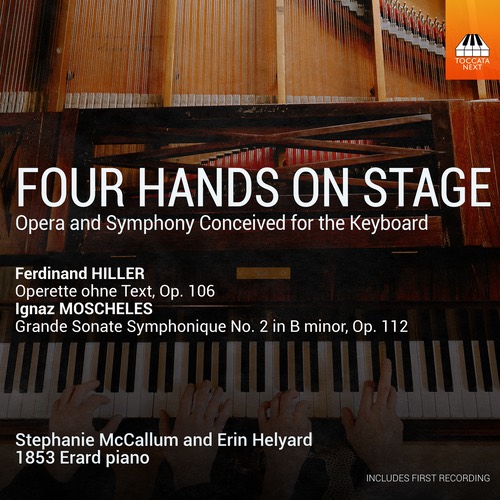
Four Hands on Stage = HILLER: Operette ohne Text, Op. 106; MOSCHELES: Grands Sonate Symphonique No. 2 in B Minor, Op. 112 – Stephanie McCallum and Erin Heyland, Érard piano – Toccata Classics TOCN 0042 (8/21/26) (79:05) [Distr. by Naxos] ****:
Even though the Beidermeier movement (c. 1815-1848) encouraged the European middle class to aspire to artistic aims – mainly in the form of possessing pianos for household music – a tendency to complacent mediocrity set in, blunting the more lofty sensibilities from achieving their fullest expression, as in the case of many communities’ lack of any orchestral ensemble. There also arose a succession of composers intent only on empty bravura display, amassing notes and velocities merely to show off their individual accomplishment.
To compensate for the penchant to trade depth for spectacle, masters of the keyboard began conceiving of their instrument as a medium of “symphonic” potential, especially after the advent of the Érard piano (1777) and its noted development in 1821 of the supple, double-escapement action, allowing for the raid repeat of notes with the delay of the hammers’ return. Besides the huge numbers of transcriptions of large-ensemble pieces, often edited to allow non-professionals technical access, a dedicated cadre of virtuoso composers submitted autonomous scores entirely devoted to the most ample and voluptuous orchestral medium in four-hand piano form, of which Ferdinand Hiller (1811-1885) and Ignaz Moscheles (1794-1870) stand as outstanding examples.
This disc opens with Ferdinand Hiller’s1864 Operette ohne Text, a substantial drama for a pair of accomplished keyboard players. Without recourse to written plot, the music advances in twelve episodes that draw from theatrical tropes in German Romantic opera and French opéra-comique. The Ouverture takes its natural place in a series of fanfares, easily invoking the sound of trumpets. A thoughtful cantabile melody marks the “Romance of the Young Maidens,” a soaring, tender aria for soprano. Poltarie introduces a noisy street scene, a collective tumult similar to the first scene in Shakespeare’s Romeo and Juliet.
The model of the Huntmen’s Chorus from Weber’s Der Freischuetz infltrates the “Hunting Choir and Ensemble,” a jaunty drinking song with a meditative trio. “Romance of the Youths” provides a lyrical balanced to the earlier soprano aria with a male tenor offering. A dialogue follows in literal fashion, the Duettino moves in nervous motion, the agitation easily reminiscent of filigree in Schumann. Trinklied mit Chor, the essential community drinking song, here set in a mocking, satiric tone that E.T.A. Hoffmann might claim.
The last five sections insist on operatic conventions: the Marsch invites comparison to Beethoven, Schumann, and Gounod, at once. The martial tune carries a vague sense of “Waltzing Matilda.” Terzett proffers a vocal ensemble piece, as three voices engage in complex, even canonic exchange. A female chorus, Frauenchor, proceeds in homely terms, the arrangement sounding – as it evolves more maestoso – like diluted Mendelssohn. The penultimate section, Tanz, gathers the social forces together once more; here, a sturdy march-mazurka that often ripples then thunders playfully. A Schubertian graciousness injects a degree of charm into the divertissement. Schlussgesang indicates the final scene, cyclically quoting themes from the Ouverture as so nostalgically serving as an epilogue for communal harmony and cooperation. Whether this ambitious hybrid satisfies the requirements of opera and duo-piano composition shall remain debatable.
Ignaz Moscheles’ 1845 Grande Sonate Symphonique No. 2 in B Minor pays homage both to Felix Mendelssohn and Charles-Valentin Alkan (1813-1888), each of whom expanded the breadth of the orchestral and keyboard media, respectively. Moscheles’ editorial work of transcribing music of Beethoven no less influenced his sense of orchestral sonorities, and the opening tremolandos for the Andante patetico – Allegro agitato command our attention, moving to aerial, melodic tissue indicative of divided strings. Dotted filigree in the manner of punctuated horn motifs surround us with a sense of trombones and woodwinds in the Berlioz manner, especially in potent, rising scalar patterns. Two major thematic groups evolve, the second more breezy and galloping The Andante patetico returns before the intertwined coda coalesces their energies.
Marked Andante espressivo, the second movement reveals Moscheles’ capacities in delicate color combinations, allotting to the primo part an operatic cantilena over strummed effects in the second piano voice. At moments, we may feel a Chopin or Mendelssohn nocturne has whispered to Moscheles. Extended periods of pp or ff pedal proceed in tinted, stately processions. Robert Schumann’s journal, the Neue Zeitschrift für Musik, praised the Scherzo alla tedesca antica for its “classically poised humor,” set in a rather staggered, pesante mode with a percussive trio section.
The big finale opens Andante patetico, with some sweeping filigree and a steady, meditative pace. The effect suggests chorale sensibility, the truth of which asserts itself later on. Moscheles allows in the Allegro con brio the Alkan penchant for the grandiose to assert itself in colors that include organ, orchestra, and chorus – perhaps even an homage to Mendelssohn’s Symphony No. 2, his ‘Song of Praise.” Some colorful exchange between the four hands breaks out voluptuously into dazzling bravura; and here, from McCallum and Heyland, listeners will recall the virtuosity of the Labeque sisters.
Note that this document provides us the first recording of the Hiller piece and the first recording on the Érard instrument of the Moscheles.
–Gary Lemco
Amazon
by Audiophile Audition | Aug 28, 2026 | Jazz CD Reviews, SACD & Other Hi-Res Reviews
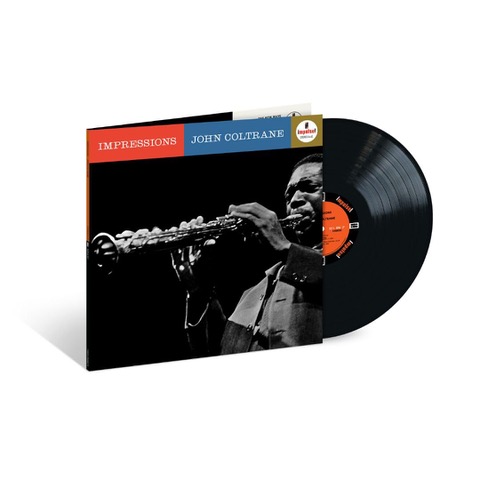
John Coltrane – Impressions – Impulse! A-42 (1963)/Verve/Universal Music Enterprises 199957084635 (2026) Acoustic Sounds Series 180-gram stereo vinyl, 36:40 ****1/2:
A classic John Coltrane free jazz exploration receives an exceptional vinyl upgrade.
(John Coltrane – soprano saxophone; tenor saxophone; Jimmy Garrison – double bass; McCoy Tyner – piano; Elvin Jones – drums; Eric Dolphy – bass clarinet, alto saxophone; Reggie Workman – double bass; Roy Haynes – drums)
Verve/Universal Music Enterprises (Acoustic Sounds series) has released a 180-gram re-mastered vinyl of the 1963 Impulse! album, Impressions. This is a combination of studio and live performances recorded between 1961-1963. It represents Coltrane’s evolving transition from modal jazz to avant-garde/free jazz. The lineup includes the classic quartet (McCoy Tyner, Elvin Jones and Jimmy Garrison), and on the live cuts, Eric Dolphy and Reggie Workman. Drummer Roy Haynes is also featured on one track.
Side A opens with “India”, kicked off by a droning groove by Garrison and Jones. Coltrane enters on soprano saxophone with crisp unrestrained notation and Middle-Eastern motifs. Dolphy introduces harmony as the rhythm section is propulsive. Coltrane pushes the tonal boundaries with furious energy. At the 6:26 mark, Dolphy solos on bass clarinet with equal intensity and free improvisation (especially in the lower register). The arrangement is both piercing and hypnotic. In a significant change of pace, “Up ‘Gainst The Wall” is a brisk post-bop blues jam that clocks in at just over three minutes. Coltrane’s muscular tenor provides a grittier texture. Garrison’s rhythmic bass lines and Jones’ crashing drums propel the momentum.
Switching back to classic quartet modal aesthetics, the title track (recorded live at The Village Vanguard) is incendiary with Coltrane (driven by relentless double bass and drums) executing a passionate extended solo on tenor. He is clearly front and center. Tyner’s chording is understated and cohesive. The finale, “After The Rain” is another stylistic alteration. Coltrane and Tyner intermingle in a wistful, eloquent treatment. It is Tyner’s shining moment on the album and demonstrates the artistic flexibility of this quartet.
Impressions is an audacious translation of non-linear jazz structures. This re-mastered vinyl has a strong, meticulous sound mix, sourced from the original analog tapes (Van Gelder Studios). There is excellent detail with attention to drum cymbals and low-end double bass. There is fluidity in the rendering of Dolphy’s bass clarinet, and the overall separation is more palpable. The reissued pressing (Matthew Lutthans/Mastering Lab QRP) is refined with a quiet soundstage on both the studio and live recordings. A hi-gloss gatefold and protected sleeves are superior.
Highly recommended!
—Robbie Gerson
TrackList:
Side A: India; Up ‘Gainst The Wall
Side B: Impressions; After The Rain
by Audiophile Audition | Aug 28, 2026 | Classical CD Reviews
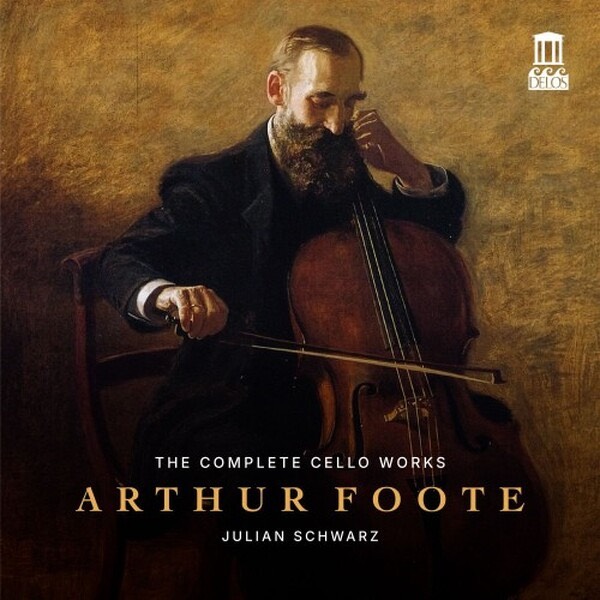
FOOTE: The Complete Cello Works = 3 Pieces, Op. 1; Aubade, Op. 77; Scherzo, Op. 22; Cello Sonata in E Minor, Op. 78; Cello Concerto in G Minor, Op. 33 – Julian Schwarz, cello/ Marika Bournaki, piano/ Buffalo Philharmonic Orchestra/ Gerard Schwarz – Delos DE3619 (8/28/26) (69:50) [Distrib. by Outheremusic] *****:
Arthur Foote (1853-1937) has remained, for me, a “singular success,” known for one piece, his Suite for Strings in E Major, Op. 63, recorded by Serge Koussevitzky and the Boston Symphony on 19 March 1940. A member of the “Boston Six,” Foote held the singular repute for having been trained strictly in the US, his instrument having been the organ. A pedagogue and educator, Foote advocated for both Brahms and Wagner, given his own penchant for Romantic expression. His catalogue boasts considerable opera in chamber music, and his works have gleaned a respect parallel to the reputation of Walt Whitman in poetry.
Cellist Julian Schwarz opens with 3 Pieces, Op. 1 (1881), whose No. 1 (Andante con moto) reflects a Schumann pathos, moving from a simple parlando filigree into a luxurious and virile middle section, then returning to the opening material. The instrument, a 1743 Gagliano, projects a lower range of commanding beauty. No. 2 (Andante) has a Brahmsian cantabile quality, close to the famous Lullaby from Brahms Op. 49. The middle section may remind some listeners of moments in Dvorak before assuming a more aggressive tenor. The piano fioritura, no less rich in sonority, has Bournaki’s Hamburg Steinway B to claim sweet credit. The third of the set proffers an agile tarantella, marked Allegro con fuoco, and fiery it is. The piano writing flows in a Schumann spirit, but let’s not diminish Foote’s innate melodic powers.
The 1912 Aubade celebrates the virtuosity of Alwin Schoeder, principal cellist of the Boston Symphony Orchestra. A gentle sicilienne rocks lullingly, intoning a secondary, breathful melody of ample ascendancy. With the appearance of low notes, the music proceeds with a bariolage cadenza before resuming to the da capo.
Foote’s Scherzo, Op. 22 (1890) presents a bravura moment of active motion which then enters into a folk song of Schubertian attractiveness. Playful and ardently melodic at once, the music flows in a seamless progress, returning to its whimsical opening with the same security that we find in the best pieces by Grieg or MacDowell.
The Cello Sonata in E Minor (1912-1918) has enjoyed relative popularity amongst cello players, due to its skillful combination of melody and chromatic harmony. The first movement, somberly expressive in the cello’s low register, soon sweeps upward to sing, Allegro appassionato. A strong Schumann influence can be felt, but the lyrical spontaneity declares Foote his own man. The secondary tune, more reflective, allows pianist Bournaki her moment in the sun, soon joined by the duo’s expressive, circuitous harmonic routes to develop the rare intimacy and ardent passion of the occasion. The luminous quality of the Gagliano instrument shines even in plucked as well as in arco passages. The coda proves richly fertile in sonority, assertive without exaggeration.
Foote remains noted for his fondness of antique forms within which to express his often-restrained lyricism. The second movement, Andantino con moto, presents an extended cantilena for the cello, to which the keyboard adds lush harmonic context. Meditative and quietly melancholy, the music moves in small gestures, akin to the sequences familiar from Brahms and Schumann. The piano, though, invokes liquid runs reminiscent of Debussy when it occasionally intrudes upon the cello’s solo musings.
The latter part of the movement re-establishes the grand melodic curve that marks this movement for special dispensation. The relatively brief final movement, Vivace assai, enjoy a robust momentum, often verging on the tarantella rhythm, but moving to a more stentorian and expressive exclamation. The suave sense of musical transition keeps us alert to the many striking effects asked of cellist Schwarz, who realizes Foote’s requirements with a hefty aplomb. The extended coda provides a dramatic sense of closure for both participants.
The Cello Concerto in G Minor, Op. 33 (1896), here given its world premiere commercial recording (23-24 March 2024), was dedicated to cello virtuoso Bruno Steindel (1866-1949), then principal of the ensemble that would become the Chicago Symphony under Theodore Thomas. Given the melodic richness and virtuosic tessitura of the solo part, this work should inhabit the same, lofty regions as Victor Herbert’s Second Concerto. Opening much in the mode of the Lalo Concerto, the Allegro ma non troppo first movement immediately offers a cadenza which, in its own way, reminds us of Elgar’s E Minor Concerto. The orchestra enters, only to be silenced by another cadenza, deeply and passionately intoned in multiple stops.
The cantilena extends accompanied by thin orchestral support so that the cello can urge the music forward in shifting, yearning gestures. A new section emerges, lyrically and rhapsodically engaged. The orchestra suddenly looms up in full force, layering the thematic gestures in the manner of Schumann and Liszt. Strong bariolage effects announce the cello’s presence once more, double stopping, and rising on the open strings to bask in melodic kernels for the sheer exuberance of the cello’s glamorous sound. The coda appears to develop its own music that, attacca, leads to the Andante con moto second movement.
This lovely movement possesses its own song momentum, even as the melody is interrupted by a misterioso passage that flowers into a passionate meditation. The scalar motion of the theme, with its transparent accompaniment, enjoys an operatic luminescence, almost a nocturne, as if an alto solo were moving freely in a bucolic, natural setting.
A brusque rondo gesture opens the last movement, Allegro comodo, a swaggering motion enhanced by virtuoso filigree from cellist Schwarz. The music insinuates a folk element that the cello takes up for melodic development. Jaunty gestures from the orchestra maintain the lightness of tone, though the urge to solo bravura proves too tempting to deny. The swirling, robust motion invests all participants with an energy the bariolage of the cello compresses into an explosive force. The rhapsodic nature of Foote’s melodic gift returns, leading to another cadenza, this a dramatic tour de force, rife with pungent, shifting effects and high tessitura, only to maintain a long pedal so the orchestra and Schwarz may savor a last, potent crescendo.
—Gary Lemco
Amazon
by Audiophile Audition | Aug 27, 2026 | Jazz CD Reviews, SACD & Other Hi-Res Reviews
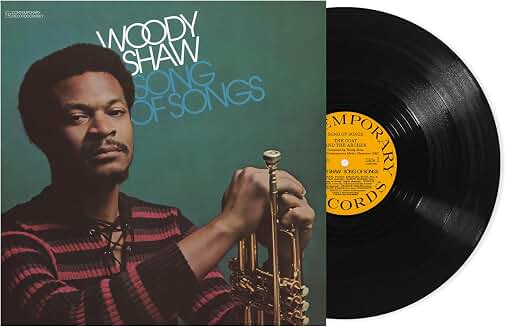
Woody Shaw’s Song of Songs- Reaching new heights on his sophomore release…
Woody Shaw – Song of Songs – Craft Recordings/ Contemporary Records #CR 00971 – 1972 – 180 gm stereo vinyl – ****
(Woody Shaw – trumpet; Emanuel Boyd – flute and tenor sax; Ramon Morris – tenor sax; George Cables – piano & electric piano; Henry Franklin – bass; Woodrow Theus II- drums; Bennie Maupin – tenor sax on “The Ghost and the Archer”)
Craft Recordings on behalf of their Jazz Dispensary Top Shelf Series, is re-releasing the second album that jazz trumpeter, Woody Shaw recorded as a leader. Craft has once again gone first class with 180 gm vinyl, remastered from the original master tapes by Kevin Gray at Cohearant Audio.
Shaw was evolving already into a known force as a fiery trumpeter with creative ideas. This album shows a restless energy, with an entrance into avant garde, post bop leanings. Woody was eager to lead his own sessions after backing numerous other noted artists of that period.
He wrote all four extended tracks, and employed two tenor saxophonists, the already established pianist, George Cables, as well as bassist, Henry Franklin, and drummer, Woodrow Theus II. Sax star, Bennie Maupin, guests on “The Ghost and the Archer.”
Woody states that the title track was based on a five note Indonesian scale. It sets the stage for the free blowing to follow. Emanuel Boyd’s flute adds to the exotic theme. It goes fairly “out” when Ramon Morris’ tenor sax squeals with emotion. George Cables’ piano softens the mood a bit, but Shaw’s force is fully felt.
“The Goat and the Archer,” features Maupin’s Coltrane influence, while Henry Franklin gets solo time on his bass. This track may be the most straight ahead tune on the album, especially with George Cables deeply melodic piano choruses. Woody takes the tune out.
“Love: For the One You Can’t Have,” was written by Shaw after the separation from his wife. There is a strong build up and release of tension throughout. The flute and electric piano provide the release. Shaw shows a introspective side, before closing with a “lights out” blistering run.
The closer, “The Awakening,” is fully a free/modal mix, with the band given free rein to respond. There is heavy percussion with effects, and lots of improvisation.
Woody Shaw’s career soon really took off, with many recordings on Columbia, and other labels. He continued making his presence felt throughout the following two decades. This album shows the maturity that was to more fully blossom as a recording leader.
—Review by Jeff Krow
Woody Shaw – Song of Songs
Tracklist:
Side One:
Song of Songs (11:37)
The Goat and the Archer (7:33)
Side Two:
Love: For the One You Can’t Have (10:03)
The Awakening (8:44)