by Audiophile Audition | Mar 17, 2026 | Jazz CD Reviews
Hard bop jazz is alive in Connecticut…
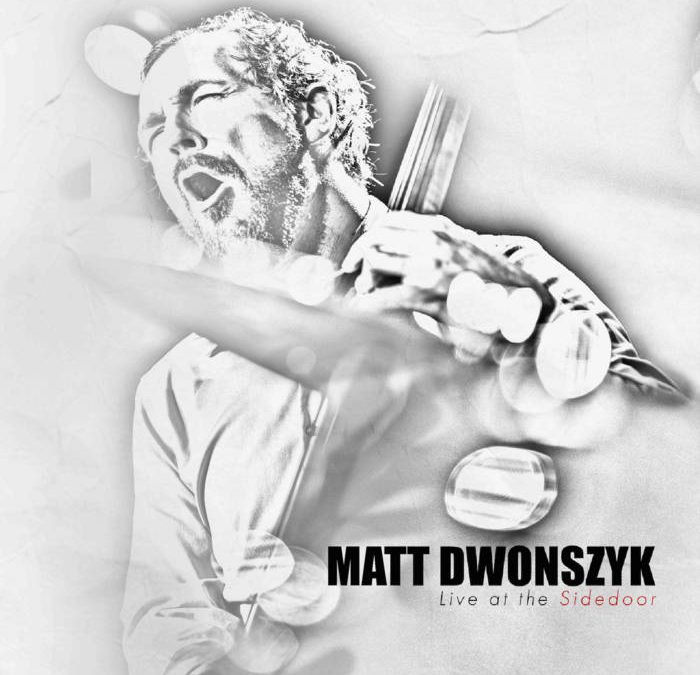
Matt Dwonszyk – Live at the Sidedoor – CD – 73:00 – ****
(Matt Dwonszyk – bass; Josh Bruneau – trumpet; Matt Knoegel – tenor sax; Taber Gable – piano; Jonathan Barber – drums)
Great jazz artists are not just found in the jazz meccas of New York City, Chicago, and Detroit. Many of them, after college, do take a bite (or at least, a nibble) of the Big Apple, to pay their dues. But often, they then return to their hometowns ( often welcomed back as local heroes), and if they are lucky they find work at universities, where they receive health benefits, and tenure if their luck holds out.
Bassist, Matt Dwonszyk, studied at the Jackie McLean Institute of Jazz at the Hartt School, and put in time in New York, before returning to Hartford, Connecticut, where he has reunited with the quartet found on his latest CD, Live at the Sidedoor. The time the group has spent together is quite evident in their polish and ensemble playing, during their live 73 minute set.
It is prime hard bop, and draws an apt comparison to groups like One for All.
Opening with “Morning Dreams,” with Matt’s bass intro, and Taber Gable’s piano lines setting a mood, the two horns take charge. Trumpeter, Josh Bruneau, is a major talent, and he blows hot. We’re off to a great start.
“Frederiksplein” is a mellow blend, with easygoing sophistication. Matt Knoegel’s tenor sax has a soulful solo. You can tell the simpatico between the long time friends in the quintet. “Stage Dive” has a nice energy build up, while the calypso flavored “Mucho Fernet,” is a great change of pace.
“Ms. Smith” is a moody ballad with a late night vibe. The audience strongly reacts with vigor to “Billy’s Den,” with its repeating riffs and fiery trumpet, that would be right at home on a 60s Jazz Messengers Blue Note release.
“Alexandre The Great” provides a jolt of adrenaline, while the closer, “Mode for Rene,” (written as a tribute to Rene McLean), nudges into some “free” territory, especially from Knoegel, and then later, Bruneau, as well.
Lovers of hard bop would do well to check out Dwonszyk and Company on this superb live release. Its purchase can be found on the bandcamp.com website.
—Review by Jeff Krow

by Audiophile Audition | Mar 16, 2026 | Classical CD Reviews
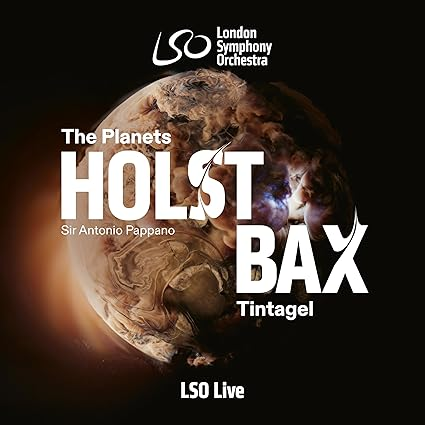
HOLST: The Planets, Op. 32; BAX: Tintagel – London Symphony Orchestra/ Sir Antonio Pappano – LSO LS00904 (69:30) (3/20/26) [Distr. by PIAS] *****:
Sir Antonio Pappano leads yet another performance of Gustav Holst’s 1914-1917 astrological odyssey The Planets from Barbican Hall (12 September 2024), with its superb acoustics. The characterization of the last movement, “Neptune,” the Mystic,” as a siren-song symbol of veiled unity expresses Holst’s individual credo. “Mars,” which opens the suite, had been conceived prior to WW I, and so illuminates “the stupidity of war,” rather than glorifies it. For over sixty years, conductor Sir Adrian Boult achieved a total identification with the score, even in the face of fine interpretations by Sir Malcom Sargent and André Previn. The LSO percussion section projects a luminous, hammered vitality throughout, and we must surrender to the throes of the snare drum in this score, whose only rival in execution might lie in Ravel’s Bolero. The credit for the high production quality falls to Stephen Johns.
The pungency of effect in “Mars,” its five-to-the-bar rhythmic thrust, sets the tone for the entire seven-movement work, with the clash of D-flat and C ensuring a supreme dissonance. When the silences fall, they seem staggering in their intimation of those dire words of Tacitus: “they make a desert and call it peace.” Clarity of line and intonation marks “Venus,” in which, alternately, horn solo, flutes, and solo violin color the texture with the signs of Peace. A delicate, dreamy tracery emerges, with hues from flutes, harps, and cello augmented by the celesta, whose sparkle had come to classical music via Tchaikovsky’s The Nutcracker. Fragmented scalar patterns over pedal points bring the paean to a translucent conclusion.
The scherzo in the suite occurs as “Mercury, the Winged Messenger,” who quicksilver, warbling figurations capture what Holst quipped is “the process of human thought.” The celeste, solo violin, and muted violins conspire to weave a slightly oriental tapestry, potentially explosive, reminding us that Hermes embodies tricksters as well as cosmic messages, a point well made in Joseph Conrad’s The Secret Sharer. Again, a vibrant transparency defines this movement, lithely rendered. And so enter “Jupiter, the Bringer of Jollity,” with his retinue of horns afire, a combination of sturdy dance and then sacred hymn. The folk elements of both impulses shine forth, Pappano having given a glorious patina to the whole, a seamless, towering realization. This is broad, Elizabethan mirth, a song conceived in the mind and heart of Sir John Falstaff.
“Saturn, the Bringer of Old Age,” Holst’s personal favorite among movements in the suite, opens at first suggestive – in twenty-six measures – of the origin of life in syncopated, reluctant chords that could have been conceived by Bartok. That Saturn possesses a Janus-like character comes from Holst’s comment that “Saturn not only brings physical decay but also a vision of fulfillment.” Both martial in middle age and funereal in dotage, the music achieves an epic grandeur and nobility of expression, a maturity of resigned contemplation. The LSO percussion has assumed an awesome presence, assisted by flaring brass, tolling bells, and anguished strings. But the menace evaporates, leaving us with another, veiled sense of illumination, a consummation devoutly to be wished.
“Uranus, the Magician” establishes his authority with a four-note motif, a spell whose lower register grumbles resemble our friend apprentice in Dukas. The twittering energy bursts forth in a resolute swagger of confidence, a mystical brew of mixed major and minor tonalities. A march thunders forward, interrupted by twitters and tumult in the timpani. The music becomes obsessive, a reeling and spasmodic nightmare that breaks off into turbulent echo of itself, with huge, dissonant chords to announce its liquidly eerie evaporation into the aether.
“Neptune, the Mystic” must suffice as Holst’s answer to Zarathustra via Richard Strauss.
Played sempre pp from the outset, the music means to sound distant and glacial, lacking any discernible melody or consistent rhythmic pulse. The sonic texture feels derived from aspects of Debussy, still vibrant with the influence of Neptune. Woodwinds mix with harp filigree and strings in high register. A haunted sense of expectation ligers throughout, and we may see the forerunner of both “space music” and minimalism in the repeated riffs. A wordless female chorus beckons us, insistent, alluring, “subtle and mysterious,” to cite Holst. Cymbals softly pierce the air, played with sticks. While the timpani sound has been wrought by a wooden stick. The female choir becomes mute, and the rest is silence.
Pappano and the LSO recorded Arnold Bax’s 1917 tone-poem Tintagel 15 December 2024 at the Barbican Hall. A strikingly coloristic work, the music depicts a vision of the Atlantic Ocean as seen from the cliffs of Cornwall, where the castle Tintagel dominates the vista. Inspired by Celtic sensibilities, the music of Wagner and Scriabin, Bax constructs a vivid seascape in three sections. The textures churn with Romantic impulses, the colors merging with the same finesse either in Debussy or J.W.N. Turner.
The brass theme, a leitmotif for the ruined castle, evolves in diatonic harmony until it meets the limitless space of the Atlantic, whose power we know from Shelley’s “Ode to the West Wind.” A rising tide eventually subdues all other forces, and so the waves smash themselves “upon the impregnable rocks,” to quote Bax, ushering in a tumult worthy of admired Rimsky-Korsakov, even as strains from Tristan filter into the mix. Pappano induces a thrilling sound from his ardent, responsive ensemble, the brass especially exuberant. Even as the ecstatic chords diminish, we sense that Tintagel, in all its Celtic splendor, resides intact, much as Smetana had set the standard for his own “High Castle.” Credit producer Andrew Cornall for the intensities here preserved.
—Gary Lemco
by Audiophile Audition | Mar 16, 2026 | Jazz CD Reviews
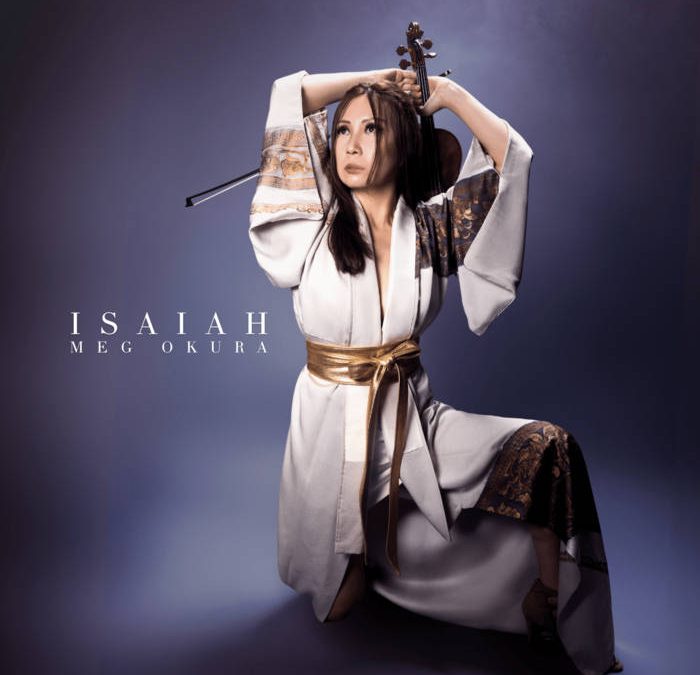
A truly multi-genre masterpiece- Meg Okura & the Pan Asian Chamber Ensemble…
Meg Okura & Pan Asian Chamber Ensemble – Isaiah – Adhyaropa Records #AR00119 – CD – 55:36 – *****
(Meg Okura – violins, erhu, vocal (#2); Anne Drummond – flute; Sam Sadigursky – clarinets; David Smith – trumpet, flugelhorn; Rebecca Patterson – tenor and bass trombone; Riza Printup – harp; John Lee – guitars; Brian Marsella – piano; Evan Gregor – acoustic and electric bass; Peter Kronreif – drums; Specials guests: Randy Brecker – trumpet (#5,6,7,8); Sam Newsome – soprano sax (# 2,5,6,7,8); Remy LeBoeuf – Alto sax, clarinet (#3,9); Rogerio Boccato – percussion (#6,8); Yotam Ishay – organ (#6,7); Naomi Newsome – vocal (#2) )
One of the joys of reviewing jazz CDs is discovering new artists and singing their praises. Such is the case with violinist, Meg Okura, and her Pan Asian Chamber Ensemble. On her new CD, Isaiah, it would be a massive understatement to call their brilliant release just a “fusion” project. Fusion typically means bringing a few musical genres together, often with mixed results. On Isaiah, you can hear jazz, classical, celtic, Americana, and a strong Jewish influence, celebrating her embrace of Judaism. (And I’m sure that I am missing a few other musical references!)
The Pan Asian Chamber Jazz Ensemble has been in existence for 20 years, and I truly need to explore their discography, and if it even approaches the beauty and excitement of Isaiah, then they should be considered a national treasure. I rarely find a CD without either a filler, or weak track, but this CD is superb from beginning to end!
Starting with “Sushi Gadol,” and ending much too soon, with “Will You Hear My Voice,” there is an electric excitement that fascinates, and does not let go. What I found so entrancing is the shifts in tempo, and style, that you seldom find elsewhere. “Rice Country” has a Coplandesque joy, while references to Hebraic motifs jump out on “Blessing,” and on her daughter’s pet “phrase”, a fun “Jubberish.”
The tracks that feature guest trumpeter, Randy Brecker, stand out, especially on an album centerpiece, “African Skies.”
It certainly must be mentioned that Meg’s violin prowess is on full display throughout this CD. Her arrangements and orchestrations show a talent that needs to be shared with a wider audience.
This is truly a Five Star release. I will eagerly await the next project of the Pan Asian Chamber Jazz Ensemble…
—Review by Jeff Krow
Meg Okura & Pan Asian Chamber Ensemble – Isaiah
Tracklist:
Sushi Gadol
Blessing
Isaiah
Rice Country
Afrasia Intro
African Skies
Sunset Belles
Jubberish
Will You Hear My Voice
by Audiophile Audition | Mar 15, 2026 | Jazz CD Reviews
Maria Schneider expresses the need for civility thru orchestral jazz…
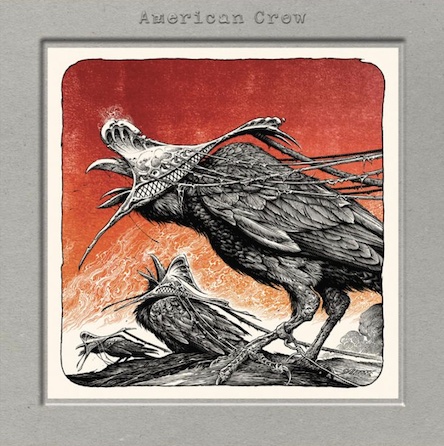
Maria Schneider – American Crow – Artist Share #AS 0245 – CD – 30:02 – *****
(Maria Schneider – composer, conductor; Steve Wilson – alto, soprano, alto flute, flute; Dave Pietro – alto, clarinet, piccolo; Rich Perry – tenor; John Ellis – tenor; Scott Robinson – baritone, bass and contrabass clarinets; Tony Kadleck – trumpet; Greg Gisbert – trumpet; Nadje Noordhuis – trumpet; Mike Rodriguez – trumpet; Keith O’Quinn – trombone; Ryan Keberle – trombone; Marshall Gilkes – trombone; George Flynn – bass and contrabass trombones;
Julien Labro – accordion; Jeff Miles – guitar; Gary Versace – piano; Jay Anderson – bass; Johnathan Blake – drums)
Orchestra leader, Maria Schneider, has never shied away from tackling major issues of the day, in which she uses her brilliant big band jazz orchestra to reach her audience. On her 2020 release, Data Lords, she took on the issue of advocating for artists digital rights, and how “big data” has intruded on our lives and privacy. That release won numerous awards, including both Critics and Readers polls of Downbeat magazine.
On her new CD, American Crow, you couldn’t find a more timely issue than how we have separated in “camps” now in our country, with both sides viewing each other as “enemies.” This division has been enabled by media that feeds division to support revenue. It’s labeled as “left” vs. “right,” with no room, or effort to compromise.
As inspiration for this project, Maria has taken how American crows let out their cacophonous “caws,” when agitated. The sound is shrill and can drown out any communication for those below. In addition, it can be viewed as a warning.
That’s apt for today’s lack of civility. Expressed musically through Schneider’s title track, there is initially a gorgeous horn fanfare. As the piece progresses, there is an extended plaintive trumpet solo from Mike Rodriguez. Soon, however, the trumpets using solotone mutes begin “cawing” signifying unease, and the saxophones up the ante. There is a distinct musical feel of agitation, and competition with Rodriguez holding down the fort, aided by Jeff Miles’ guitar. As the tune ends, there is some lessening of tension, but no resolution. Such it is the case with occasional efforts failing, in our current environment, with lack of trust between people of differing views.
The beautiful hand crafted “stitched” cardboard album packaging includes inspiring quotes from Proverbs, Nelson Mandela, Desmond Tutu, Winston Churchill, and others expressing the need for listening with open minds to our fellow citizens with the hope that we can lower the temperature enough to elicit compromise.
In addition to an alternate take of “American Crow,” there is also a free form guitar driven track, “A World Lost,” revisited from Data Lords, that blends the Americana motifs in which Maria excels, with a distinctive rock feel. There is also a somberness here fostered by the accordion drone from Julien Labro. In addition, Maria also adds a field recording of American crow vocalizations that aid her inspiration for this project.
A special treat that is added to the release is a card that gives the listener, using an online code, access to a video, where Schneider discusses how she came up with the idea for American Crow, as well as rehearsals and other surprise “treats” that inspire and reward listeners.
This CD was funded through contributions on the ArtistShare label (rightfully with a focus on supporting musicians to share their vision without commercial interference.)
This is a “must have” purchase for fans of Maria Schneider, and those that love orchestral jazz, with a heavy dose of Americana bliss. She is truly our present day Aaron Copland, a national treasure.
—Review by Jeff Krow
American Crow
Tracklist:
American Crow
A World Lost
field recordings of American Crow vocalizations
American Crow Revisited (alternate take)
by Audiophile Audition | Mar 15, 2026 | Classical CD Reviews
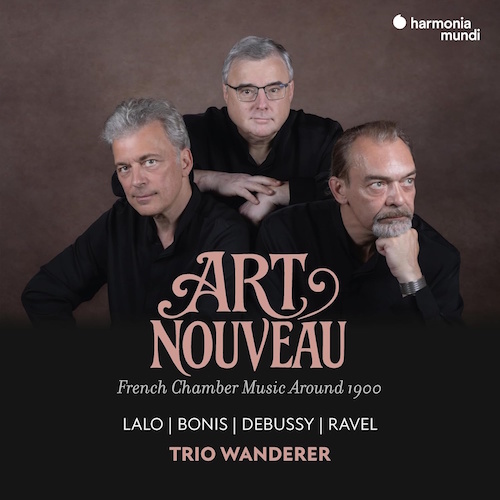
ART NOUVEAU: French Chamber Music Around 1900 = LALO: Piano Trio No. 3; DEBUSSY: Piano Trio; Violin Sonata; Sonata in D Minor for Cello and Piano; BONIS: Soir – Matin, Barcarolle in E-flat Major for Solo Piano; RAVEL: Sonata for Violin and Cello; Piano Trio – Trio Wanderer – Harmonia Mundi HMM 902394.95 (2 CDs = 59:36; 70:37, detailed content listing below) (1/20/26) [Distr. by PIAS] *****:
As a corrective to what composer Camille Saint-Saens noted as a dearth of French chamber music in the late 19th Century, a number of French musicians made a concerted effort to alleviate the situation with a spate of refined works in the genre. Recorded in July 2025, the eight compositions addressed by Trio Wanderer embody a diverse palette of rewarding musical expression by artists well aware of their Gallic heritage.
The gem of the collection appears early, Piano Trio No. 3 in A Minor (1880) by Edouard Lalo (1823-1893). Too often pigeonholed as a “singular success” with his Symphonie Espagnole, we hear in this chamber work French expressivity in the grand manner. The opening Allegro appassionato surges forth in the violin and cello, and then displays powerful alternations of the dramatic home key and the serenity of the relative major in C. The keyboard part, rendered by Vincent Coq, proffers potent octaves that often seem inexorable.
Some years ago, on my radio program, “The Music Treasury,” during my tribute to Ernest Ansermet and his Suisse Romande Orchestra, I aired a fine Scherzo in D Minor for orchestra by Lalo, unsuspecting that this essay in ostinato and marcato rhythm provided the second movement of this Trio. Violinist Phillips-Varjabédien has a fecund arena for his decisive, pungent attacks. Even the middle section bristles with alert pizzicatos. The “very slow’ third movement does not diminish the intensity, although the early, somber harmonies prophesy a journey into darkness. The model here seems to be Franck, especially in the grand keyboard octaves. But the intense melody becomes more lyrical as it progresses, eventually achieving luminescence.
The last movement, marked Allegro molto, evinces a clear resonance with the music of Robert Schumann, rife with dotted rhythms and triplet figures. Even the con fuoco marking does not belie a certain mirth detectable in the course of the movement, which ends in a series of canny “wrong notes” that imbue the cadences with a sense of irreverence. The entire course of this muscular and lyrical composition has been rendered with an undeviating authority and directness of purpose and warrants the price of admission.
The year 1880 found young Claude Debussy in the employ of Madame Nadezhda von Meck, the wealthy Russian aristocrat noted for her support of composer Peter Tchaikovsky. A derivative but sweetly ingratiating work, the four-movement Trio in G Major pays homage to Massenet, certainly, but no less to the circle of Russians, like Borodin and Mussorgsky, led by Balakirev. The haunted sense of melody in the first movement, Andantino con moto allegro, betrays many a touch from Schumann. The second movement, Scherzo: Moderato con allegro in B minor, the Trio in B major, assumes a more exotic color, with pizzicato effects and pentatonic scales, gently but suggestive of those further evolutions when Debussy’s musical character became solidified. The third movement, Andante espressivo, may well have been touched by Debussy’s constant contact with Meck’s idol, Tchaikovsky, and his own penchant for graceful melody. The Finale: Appassionato enjoys a fervent, restless energy, again somewhat recollecting the music of Schumann and Schubert. Occasionally, a modal harmony seeps through, a subtle touch of non-academic rebellion. The flamboyant keyboard part finds a delicate counter in the voices of the strings in high register. The last pages, resolute and grandly poised, urge a sense of drama hard to assign to other influences, and so we must applaud young Debussy’s originality.
Composer Mélanie “Mel” Bonis (1858-1937) has emerged from temporary obscurity to claim her rightful place among those French, male contemporaries who dominate much of the recognition. From Bonis’ prolific catalogue, Trio Wanderer offers two works, the1907 diptych Soir – Matin for piano trio, and the Barcarolle in E-flat Major (1906). Lush harmonies from violin and cello begin an ardent dialogue in the twilight piece, supported by an equally voluptuous keyboard. The liquid warmth of the piece echoes much of Fauré, climaxing in passionate figures. As the cello line evolves, we feel “The Swan” of Camille Saint-Saens lurking in the watery background. Matin evokes Nature’s awakening, but in more liquid medium than we find in Grieg’s “Morning Mood.” The flowing upper line of the piano and the whimsical flight of the violin bestow a sense of frivolous contentment to this brief Andantino. The Barcarolle, also Andantino, occupies a sonic space somewhere in the confluence of Fauré, Scriabin, and several Spaniards. Vincent Coq superimposes right hand fleetness as the left hand creates an arpeggiated cocoon around the melody.
After 1893, Claude Debussy had avoided the chamber music medium; but beginning in 1915, he embarked on a project of six sonatas that would justify his “discovering music,” as he expressed his feelings to conductor Désiré-Émile Ingelbrecht. Debussy’s prolonged illness would frustrate his ambition, allowing him to complete only half the cycle meant to celebrate the age of Couperin and Baroque clavecinistes. The 1917 Violin Sonata in G Minor offers the last of Debussy’s completed works before cancer claimed him. Modally ambiguous, the work evolves in lyrical patches, rhythmically restless from the first, the two instruments competing in 2/4 and 3/4. The first movement conforms to sonata form, but its mood swings from whimsical to sadly melancholy, until its climax seizes Spanish fire.
What the composer called “joyous tumult” continues in the second movement entitled Intermède (Fantasque et léger), a gypsified improvisation that invokes skittish, clownish figures from the commedia dell’arte. The biting sonorities of the keyboard play against the angular melancholy of the violin. Debussy invites the “cyclic” structures into his last movement, using the first motif of movement one, “like a snake biting its own tail.” Spanish gypsy impulses drive forward, gain a militant air, then relent into a dreamy meditation. The keyboard part resembles much in Debussy’s piano suites and preludes, often rippling, thundering, or cascading in various registers. A false ending that halts and then reascends in dire chords that presage the entirely new mode of the composer’s existence.
The 1915 Cello Sonata in D Minor exacts a lyrical approach to its entirety, a baritone troubadour who sings in times of trouble. The first movement, slowly sustained and resolute, casts a grim air of melancholy. The second movement, Debussy calls a Sérénade, again demanding his Fantasque et léger dynamic. Both canny humor and lyric tenderness emerge as competing affects. Once more, the Renaissance figure of Pierrot stumbles forth in irregular rhythmic patterns, disparate tonalities, with long held notes over pizzicatos in both instruments. The light, nervous finale, makes virtuoso demands on cellist Raphael Pidoux, who sails – accompanied by a lithe Vincent Coq – through all and any challenges with classical flair and grace.
Maurice Ravel (1875-1937) approached his 1922 homage to the late Claude Debussy, the Sonata for Violin and Cello, with a sense that his own style had evolved, striving for an “austere sense of melody” that eschewed his former, “impressionistic” sensuality. Zoltan Kodaly had provided a model with his Op. 7 Duo for Violin and Cello in 1914. But despite the new economy of his musical means, Ravel’s sense of color dynamics impresses us with its bristling, acerbic, bitonal textures that exploit the full range of both instruments.
Ravel opens his Allegro with alternating major and minor triads against aggressive seventh chords, the violin’s carrying a scurrying, dance melody while the cello provides a throaty syncopation. That the evolution proves more melodic than harmonically interested makes the sound compelling in its idiosyncratic classicism. The second movement scherzo plays arco passages against biting pizzicatos, the stinging sounds both voluptuous and punishing. The pulsation has a martial energy, a dark procession through insect labyrinths that likes to end glissando. The third movement indulges Ravel’s melodic gift, first through the somber solo cello, a kind of chorale which induces the violin to elaborate. The use of harmonics attaches an eerie beauty to the occasion. A moment of extended turbulence borrows the first movement’s seventh intervals. If a demure chastity has informed the music until now, the Finale, quick, sheds the restraint and offers a throaty, galloping rhythmic impulse that gains color and acerbity in its variety of attacks. Has Ravel borrowed a rhythmic riff or two from Kodaly? The “orchestral” sonority of the two instruments lets s know that Ravel’s control of color proves equal to the master whom he celebrates, the inimitable Debussy. The last chord from our duo lasts forever.
Dedicated to counterpoint teacher Andre Gédalge (1856-1926), Ravel’s Piano trio in A Minor (1914) possesses a unique blend of academic scholasticism and Basque and Eastern exoticism. The opening movement, Modéré, relies on the repetitive 8/8 rhythms from the Basque zortzico, unusual in refusing to modulate for the second, nostalgic theme away from the tonic minor. Pidoux’s cello line proves grippingly rich. The theme moves in small, mysteriously scalar increments until it jumps a fourth as it concludes.
The second movement proves the most original: a pantoum, a Malaysian verse form in
which two themes interlock through lines 2 and 4 of each four-line stanza, to become the first and third of the next stanza. In essence, this haunted movement embodies a scherzo and trio, juxtaposing ¾ injections by the string payers against the long 4/2 notes of the keyboard. Violin and cello execute fiercely quick repeated notes, even in left-hand pizzicato, while the piano seduces us with melody. The coda literally whistles with ecstatic fervor from the Wanderer ensemble.
The slow Passacaglia movement testifies to Ravel’s penchant for Baroque taste. Marked Très Large ¾, the polyphonic technique taught Ravel by André Gadalge manifests itself in an 8-bar, processional theme – appearing first in the piano’s lowest register – reiterated eleven times, a concession to the Great War a step away from his Tombeau de Couperin suite. The pungent last movement Final: Animé, relies on two antagonistic rhythms, 5/4 and 7/4, a Basque construction that has the violin’s having to negotiate, with precision, arpeggios and trills in harmonics. Trio Wanderer performs this demanding but quixotically satisfying music with seamless aplomb. Sound mastering by Hugues Deschaux provides the most reverent fidelity one could require.
—Gary Lemco
Art Noveau – French Chamber Music Around 1900
LALO:
Piano Trio No. 3 in A Minor, Op. 26;
DEBUSSY:
Piano Trio in G Major;
Violin Sonata in G Minor;
Sonata in D Minor for Cello and Piano;
BONIS:
Soir – Matin for Violin, Cello, and Piano, Op. 76;
Barcarolle in E-flat Major for Solo Piano, Op. 71;
RAVEL:
Sonata in A Minor for Violin and Cello;
Piano Trio in A Minor
by Audiophile Audition | Mar 15, 2026 | Jazz CD Reviews, Pop/Rock/World CD Reviews, SACD & Other Hi-Res Reviews
THE Classic album of The Butterfield Blues Band, in the original Mono mix.
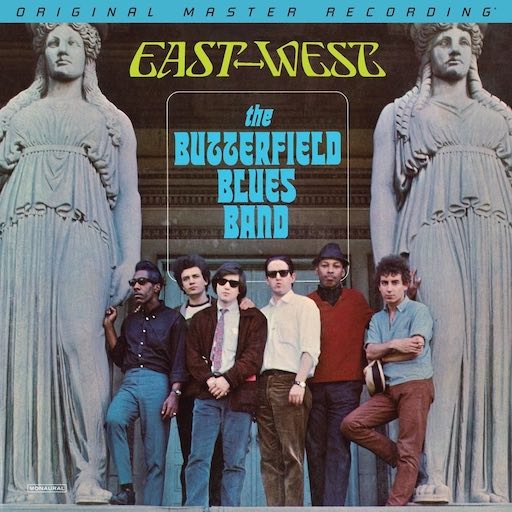
The Butterfield Blues Band – East-West – Elektra/Mobile Fidelity Sound Lab # MFSL1-611 – Mono 180 gm vinyl – 44:55 – 1966 – *****
(Paul Butterfield – harmonica and vocals – Mike Bloomfield – guitar – Elvin Bishop – guitar (and vocal on “Never Say Never”) – Jerome Arnold – bass; Mark Naftalin – organ and piano; Bill Davenport – drums)
The Butterfield Blues Band was arguably the first great fully integrated blues band. East-West was their second album, and considered their masterpiece, both for its inclusion of so many genres of music (acid rock, blues, jazz, and classical Indian motifs), as well as the influence it had for so many upcoming groups, who wanted to explore improvisation in a fearless manner.
Now sixty years after its initial release, the boutique audiophile label, Mobile Fidelity Sound Lab, is bringing back this release in a marvelous mono re-issue. Sourced from the original analog master tapes, and housed in a Stoughton jacket, in a limited numbered edition, it is an opportunity to re-enter the hallowed halls of Chess Records, to experience Butterfield’s great harmonica and vocals, as well as the dueling guitars of Mike Bloomfield and Elvin Bishop. Keyboardist, Mark Naftalin, adds both piano and exploratory organ fills to round out this unique blues band, that went well outside traditional electric Chicago style blues.
The sound mix is superb and the acoustics give an “in the recording studio” experience. Bloomfield left the band a year later (and drug problems contributed to his early death in 1981), while Elvin Bishop went on to a solo career, branching out into country and acoustic work.
East- West is most known for its two instrumental extended tracks, Nat Adderley’s “Work Song,” and its title track which was unique for its time as it covered so much ground, entering acid-rock, jazz, and Indian raga territory. The Grateful Dead would have felt right at home with Bloomfield’s guitar setting a tone for blissful listening. Its modal mix was influenced by Mike’s fascination with John Coltrane and Indian ragas.
Electric blues fans will love the shorter tracks, the classic “Walkin’ Blues,” “All These Blues,” and “Two Trains Running,” with Butterfield’s blues harp, and Mike’s blues guitar lines. Paul was taken in as a teenager by Muddy Waters in Chicago blues clubs, where he honed his singing and harmonica playing.
Elvin Bishop’s plaintive vocals shine on “Two Trains Running.” Solos are aplenty on “Work Song,” as its given a hard bop reading. Mark Naftalin’s spacey organ is featured here as well. A nice novelty track is “Mary, Mary,” which was written by The Monkees’ Mike Nesmith, and the band gives it a psychedelic vibe.
If you want the definitive version of this classic album, this is it… Don’t delay as it is likely to sell out quickly…
Review by–Jeff Krow
The Butterfield Blues Band – East-West
Tracklist:
Side One: Walkin’ Blues, Get Out of My Life Woman, I Got a Mind to Give Up Living, All These Blues, Work Song
Side Two: Mary, Mary, Two Trains Running, Never Say No, East-West
by Audiophile Audition | Mar 14, 2026 | Classical CD Reviews, Classical Reissue Reviews
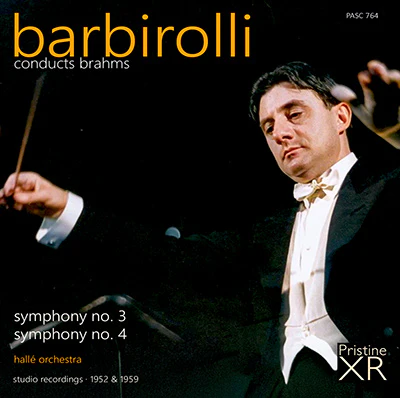
BRAHMS: Symphony No. 3 in F Major, Op. 90; Symphony No. 4 in E Minor, Op. 98 – Hallé Orchestra/ Sir John Barbirolli – Pristine Audio PASC 764 (71:59) [www.pristineclassical.com] ****:
Andrew Rose and Pristine restore two persuasive readings of the Brahms symphonies three and four led by Sir John Barbirolli (1899-1970), recorded 7-10 May 1952 (Op. 90) and 18-19 September 1959 (Op. 98) at the Free Trade Hall, Manchester. Andrew Rose does not refer to the Bluebird Classics (LBC 1042) incarnation of the F Major Symphony which had its UK release in 1953, so I suppose this performance, notable for its lyrically intense energy, differs from that American issue. The E Minor Symphony, recorded in stereo sound, receives a full, even lush, response in terms of weight and instrumental texture.
Barbirolli’s approach to the first movement Allegro con brio of the 1883 Symphony No. 3 in F Major seems to combine the linear, literal drive of Toscanini with the natural warmth of Bruno Walter, a fierce rhythmic alertness and a grand, singing line. The essential waltz pulse finds a nostalgia, though esoteric, in the (Schumann-influenced) F-A-flat-F motif that persists in an uneasy balance of major and minor. The Hallé woodwinds carry the burden of interior syncopation with warm clarity, while the string line neither sags nor yields to maudlin phraseology. We recall that the Brahms conception of classical architecture, its “unity of effect” (to cite Poe), made this symphony the very model of such writing for Edward Elgar.
The second movement, Andante in C major, endures as among the composer’s most beautiful, nostalgically bucolic, movements, opening as a 4/4 cassation or wind serenade. The beguiling warmth of the Hallé strings soon blends in and evolves a throbbing, heartfelt melody capable of sweet passion. That the rocking music lies in modified sonata form never occurs to us, since the seamless evolution of melody and transparent textures proceeds in a meditative, persuasive course that constantly hints at the motifs from the symphony’s outset. The third movement, Poco allegretto in C minor, projects a wistfully modified waltz in 3/8, which first made its impact on this listener in the movie Undercurrent, with Taylor, Hepburn, and Mitchum. Again, Barbirolli savors the long lines that flow over a pulsing and flowery bass and woodwind texture. The middle section has its moment of lyrical mystery before returning, on a diminuendo pedal point and horn entry, to the opening waltz.
The last movement Allegro – Un poco sostenuto (2/2) resolves issues among Brahms, Schumann, and Beethoven, tying all the intimations of his opening subject together in a “fateful” mix that includes Beethoven’s “fate“ motif and Schumann’s Rhenish Symphony. At the last, the Hallé’s muted violas will bring the mighty course of this movement to a close, entirely cyclical, as the opening motif rears up once more, softly but eloquently. Barbirolli’s is a generous performance, rich in texture and sympathy, though not an “epic” account on the level of Furtwangler, Klemperer, and Toscanini, but singularly warm in it embrace of a great composer.
The 1959 reading of the E Minor Symphony has broad tempos and an elastic, dramatic approach in the opening Allegro non troppo that renders the many “thirds” intervals into a seamless, tragic evocation in crepuscular colors. The Hallé woodwinds virtually whistle their transparent lines against the falling motif of the strings, a touch of wistful nostalgia in the course of a mighty, unbending line to the counterpoints that signal the composer’s epic resolutions. The transition to the recapitulation enjoys a tearful nostalgia, informed by the alert, syncopated counterpoints. The wind and brass regimen utter martial, if resigned, declamations, moving inexorably to a sterling memory of bucolic rapture. The dark undercurrents soon emerge to claim their due, the Hallé timpani in full throttle, and the coda unleashed by Barbirolli releases a gravitas worthy of the finer Brahms interpreters.
The Andante moderato in E major, 6/8, imparts its nostalgia early, in the opening horn solo set in the Phrygian mode of E, that likes to modulate (via clarinet and pizzicato strings) into B major for a series of yearning variations. The sonic ambiance here projects a particularly rich tone. Nobly intimate, the procession will acquire a spiritual largesse from the upper strings and cello line, molded by Barbirolli in warm, plastic, colors. At moments, the aura becomes devotional, a bucolic hymn in the form of a serenade. Some moments of dazzling polyphony, and the music asserts itself with epic vigor in martial terms. Then, the broad theme of ardent reconciliation, a huge breath from Barbirolli. The procession, in hushed tones, returns, this time with added, tremolo filigree, arpeggiated, a coda of intense, valedictory pathos.
The third movement Allegro giocoso, 2/4 in C, remains the unique scherzo in the Brahms symphonic oeuvre. But who else writes scherzos in sonata form? The music buoyantly moves into a hurtled G major, alert and rhythmically articulate from Barbirolli.
What passes for a Trio section, so abruptly, eases the tension a mite, only to tumble once more into the dervish antics of the da capo, rife with colors from triangle and bass drum. A whiplash coda, still wanting to demonstrate its “learned” propensities, gallops to a decisive, final note, a blazing three thumps.
The famous final movement, Allegro energico e passionato, offers a contradiction in terms endemic to the Brahms character: an extended treatment of an 8-messure theme from Bach’s Cantata 150, it plays as an antique Chaconne or Passacaglia in thirty-two, diverse color variants. The romantic impulse somehow endures through the scholastic procedure, often assuming an intimate or ecstatic energy. The tension between E minor and C major increases with mounting potency, suddenly bursting forth with a resolve that reminded me of my first audition of this mighty work, under Serge Koussevitzky. The alter playing of the Hallé flute finds equal pungency in the brass and strings. The final C major interlude once more sounds like a transparent serenade, until the heavy strings urge us to the peroration, the brass chaconne against the huge impulses from the exuberant strings, brass syncopes. Finally, the urgent rush to judgment of the coda, the composer’s swan-song to the symphonic genre which only slowly gestated in his erudite consciousness to achieve grand expression
—Gary Lemco
by Audiophile Audition | Mar 12, 2026 | Jazz CD Reviews
One thing is for certain, Art Pepper never “mailed it in” …
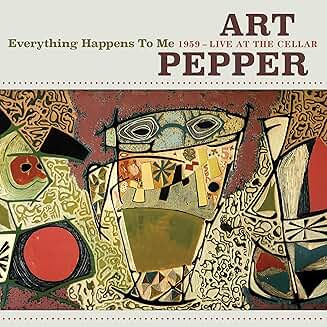
Art Pepper – Everything Happens to Me: Live at the Cellar – Omnivore Recordings/ Widows Taste Music # OVCD-607/810075115475 – 4 CD – 1959 – ****
(Art Pepper – alto and tenor saxophone; Chris Gage – piano; Tony Clitheroe – bass; George Ursan – drums)
Art Pepper crammed a lot in, during his 56 years of sometimes hard living.
There were so many highs and lows. Not all the “highs” were pleasant. His hard drug dependency led to stays at San Quentin, certainly not a “country club” prison. But Art was a survivor. What kept him going was his love of playing his saxophone, where he poured out his heart, never content to take it easy.
It began in his teens playing in south central LA, where as a young white player, he had to earn credibility. The need to continue to “prove himself” was a constant throughout his lifetime. Pepper wore his “heart on his sleeve,” and it showed, especially on his passionate reads on ballads.
Art went through several phases in his career. Beginning with a stay with Stan Kenton’s big band, he was a mainstay on the West Coast, exploring the “cool” period in the 1950s. There were interruptions in the both the mid 50s and early 60s, for incarceration. The comebacks were welcomed in the jazz community. The influence of John Coltrane was felt, and he then returned to his concentration on bop and blues, that remained his focus to the end of his life.
The boutique independent Omnivore Recordings, working with Art’s widow, Laurie Pepper, has just issued a four CD set, from Art’s extended stay in Vancouver, B.C., in the Summer of 1959. The Cellar, a small jazz club, was a perfect venue for Art, backed by a trio of relatively unknown musicians (to US audiences), to explore mostly standards.
Several tracks ( “Holiday Flight,” “Over the Rainbow,” “Yardbird Suite,” and “Allen’s Alley) were recorded over different nights. It was nice to hear Pepper make changes on them depending on his mood.
The one constant throughout all four CDs is a heavy concentration on exploring blues changes. Also, like during all times of his career, Art digs in on ballads. (I have reviewed many of Pepper’s box sets, especially during his later period in the late 70s and early 80s, when he was holding on for dear life, and I will never tire of him playing “Over the Rainbow.”)
Here on this box set, remastered and restored by Michael Graves, with tape transfers by Jay Graves, Art seems relaxed and excited to play for an appreciative live audience. There are no extended intros, and some tracks are incomplete, as likely the tape ran out.
Bassist, Tony Clitheroe, and pianist, Chris Gage back with intuitive skill, and along with drummer, George Ursan, are given time to explore, but, of course, it was Art’s room to blow, and impassioned blues dominated multiple evenings.
“Yardbird Suite,” is taken both as a stroll, and then later done at a much faster tempo. “The Way You Look Tonight,” is given a shot of adrenaline, while “Lover Man,” and “Everything Happens to Me,” drip with emotion. The one original, “Brown Gold,” a variation of “I Got Rhythm,” provides a nice bluesy piano solo for Chris Gage. Art re-imagines two Gershwin tracks, “Strike Up the Band,” and “Somebody Loves Me.”
Laurie Pepper continues to find unreleased live dates to share with Pepper fanatics. This latest box set just whets the appetite for more.
—Review by Jeff Krow
Everything Happens to Me: Live at the Cellar
Tracklist:
Disc One: When You’re Smiling, Cherokee, Over the Rainbow, All the Things You Are, Indiana(Back Home In Indiana), Lover Man, Yardbird Suite, Sweet Georgia Brown
Disc Two: What is This Thing Called Love, Yardbird Suite, Band Intros, What’s New, Holiday Flight, Stompin’ at the Savoy, Allen’s Alley, These Foolish Things (Remind Me of You)
Disc Three: Holiday Flight, Tangerine, The Way You Look Tonight, Everything Happens to Me, Bernie’s Tune, I Surrender Dear, Over the Rainbow, Allen’s Alley
Disc Four: Brown Gold, Holiday Flight, Strike Up the Band, Somebody Loves Me, There Will Never Be Another You (Parts 1 & Two), Allen’s Alley, Walkin’
by Audiophile Audition | Mar 12, 2026 | Jazz CD Reviews, SACD & Other Hi-Res Reviews
This Craft Recordings vinyl is a superb introduction to vintage Miles Davis.
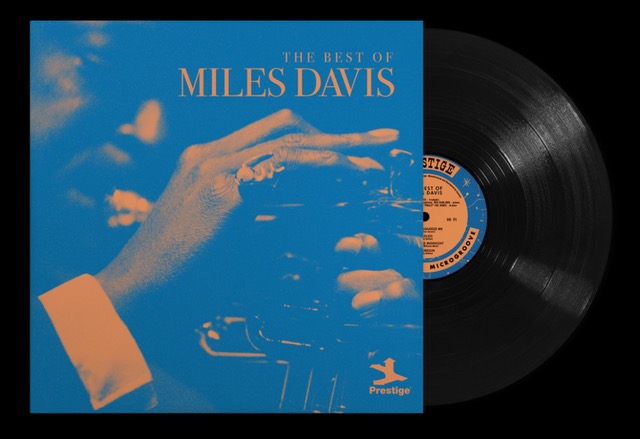
Miles Davis – The Best Of Miles Davis – Prestige (1955/1956)/Craft Recordings [3/13/2026] CR00931, 47:16 ****1/2:
(Miles Davis – trumpet; John Coltrane – tenor saxophone; Red Garland – piano; Paul Chambers – double bass; “Philly” Joe Jones – drums)
The career of Miles Davis has reached several crescendos. One of his earliest successes came in the mid 1950’s at Prestige Records. In one stretch (just under a year), Davis cut 32 tracks at Rudy Van Gelder’s Hackensack, New Jersey studio. This was the genesis of first Miles Davis Quintet featuring Red Garland (piano), Paul Chambers (double bass), Philly Joe Jones (drums) and John Coltrane (tenor saxophone/replacing Sonny Rollins). These cuts would appear on albums like The New Miles Davis Quintet Cookin’, Relaxin’, Workin’ and Steamin’.
This era of Miles Davis’ catalog has been reissued in various formats. Craft Recordings has released a new single vinyl, The Best Of Miles Davis. Eight tracks consisting of popular and jazz standards, are performed in hard bop and balladry arrangements. Side A opens with Duke Ellington’s “Just Squeeze Me”. Davis’ lyrical interpretation is glowing on muted trumpet. As the rhythm section anchors the jam with a deliberate tempo, Coltrane offers a forceful, restrained solo, before handing it off to Garland. His bluesy, expansive run is smooth. With bebop resonance, “Oleo” is propelled by Chambers’ lithe, percolating runs. Davis returns on mute with his trademark no-vibrato tonality. Coltrane cuts loose with abandon as the band matches the intensity, Garland percolates with left hand walking riffs. Davis returns with articulate notation and pushes the tonality.
A certain highlight is the creative version of Monk’s ‘’’Round Midnight”. Davis’ exquisite melodic lead captures the introspective melancholy of Monk. At the 2:33 mark, the ensemble shifts to gentle swing mode with Coltrane adding grittiness. A deft maneuver back to balladry concludes the number. As Davis was creating new jazz styles, he remained deeply rooted in bebop/swing. Sonny Rollins’ “Airegin” is explosive (up to 250 B.P.M.), as Garland, Chambers and Jones establish a frenzied groove. Davis and Coltrane begin with a bold harmonic intro as Garland adds a bluesy vamp. Davis (no mute) delivers an incendiary, bristling lead and solo. He hands it off to Coltrane for more dynamic improvisation. The arrangement is complex and the quintet’s cohesion is palpable.
Side B kicks off with one of Davis’ revered milestones, “My Funny Valentine”. This song was a Broadway show classic by Rodgers and Hart, and now is a jazz touchstone. After Garland’s sinewy intro, Davis enters gracefully on muted trumpet. He distills the moody essence of the piece with clarity and tenderness. At 2:23, the group shifts into finger-snapping cool swing with Garland exuding buoyancy and nimble elocution. Things slow back down for the second chorus, showcasing Davis’ technical expertise and artistic vision.
Another Monk composition (“Well You Needn’t”) is a celebration of hard bop aesthetics. This version is more melodic than Monk’s. After the rollicking opening with Coltrane, Davis glides on his brisk runs. Trane keeps up the intensity and Garland is “down ’n’ dirty” on piano. Chambers has an interesting bowed solo and the bridge has unique chord changes. Reprising slower aesthetics, “You’re My Everything” radiates a sensual feel, fueled by muted trumpet. There is a laid-back groove that Coltrane joins with a deft touch. Philly Joe Jones drives the quintet on the finale, “Four”. This is classic hard bop with Davis’ angular play injecting a raw urgency that is mirrored by Coltrane and Garland.
The Best Of Miles Davis is a bona fide introduction to a jazz icon. This new vinyl is excellent with very little surface noise. Van Gelder’s original meticulous sound is intact.
Highly recommended!
—Robbie Gerson
The Best of Miles Davis
TrackList:
Side A: Just Squeeze Me; Oleo; ‘Round Midnight; Airegin
Side B: My Funny Valentine; Well, You Needn’t; You’re My Everything; Four

by Audiophile Audition | Mar 9, 2026 | Classical CD Reviews, Classical Reissue Reviews
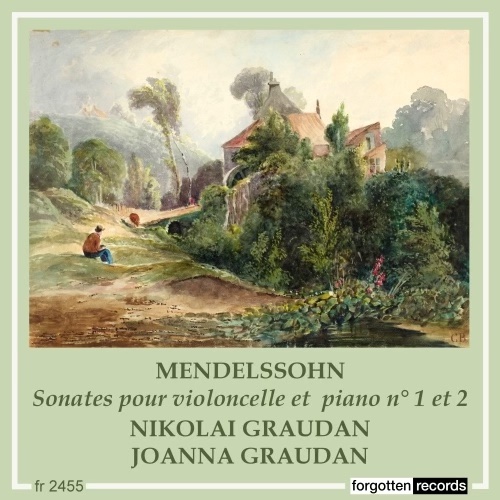
MENDELSSOHN: Cello Sonata No. 1 in B-flat Major, Op. 45; Cello Sonata No. 2 in D Major, Op. 58 – Nikolai Graudan, cello/ Joanna Graudan, piano – Forgotten Records FR 2455 (47:05) [www.forgottenrecords.com] ****:
Forgotten Records revives the 1949 performances (on Vox) of the two Mendelssohn cello sonatas, as performed by Nikolai Graudan (1896-1964) and his wife Joanna Graudan (1905-1993), a couple whose musicianship has been credited with “probity” by Harold C. Schonberg of The New York Times in 1951. Both husband and wife enjoyed the support of conductor Dimitri Mitropoulos: Nikolaus, as principal cellist of the Minneapolis Symphony Orchestra, and Joanna as the soloist for the MSO recording of Mendelssohn’s Capriccio brillant.
The program opens with Mendelssohn’s 1838 Cello Sonata in B-flat Major, originally conceived for the composer’s younger brother Paul, a banker and amateur cellist. The Allegro vivace theme appears divided into octaves between the participants and projects an austerely heavy tread, with Nikolai Graudan “as steady as a blockhouse,” to quote Schonberg’s 1951 assessment. The mood of this big first movement lightens though with fierce energy, much of the piano arpeggios quite voluptuous. The tune in dotted rhythm has Mendelssohn’s characteristic martial attractiveness. Mendelssohn’s model remains clearly Beethoven, who virtually invented the cello sonata genre. Nikolai Graudan’ tone, thin and piercing at times, becomes more sensuous when he allows the bow a long cantilena. The coda cascades with warm authority.
Dotted rhythm dictates the course of the second movement Andante, a delicate dance set in the minor mode. The atmosphere, courtly in character, has the keyboard proceed in canon over a drawn pedal. The secondary melody shows Nikolai Graudan to more lyrical, songful effect. A gently martial development places the piano against the cello’s pizzicato before the roles reverse, sending the cello into lower, throaty register. The march eventually slows its momentum, ending quietly in a manner reminiscent of Beethoven.
The last movement, Allegro assai, returns to the solemn opening of the sonata, but with new harmonization it becomes a lively, ardent romance in rondo form. Now we hear Joanna Graudan’s contribution to the Capriccio brillant in lithe colors. Mendelssohn has saved his virtuoso potential for this last movement, and the gruff exclamations from Nikolai play against the quicksilver runs of Joanna. Having achieved considerable sweep, the music accumulates a symphonic girth that gently cedes to quietly liquid motion from the keyboard. A bit of graininess of the original Vox LP is audible.
The more familiar Cello Sonata No. 2 in D Major (1842) results from Mendelssohn’s association with Count Mateusz Wielhorski, a Polish-Russian nobleman and accomplished amateur cellist who owned a Stradivarius instrument. Commentators note that the opening movement, Allegro assai vivace derives from an unpublished piano sonata in G major, but the musical material owes more to the Italian Symphony and its boisterous, spontaneous energy. Joanna Graudan’s repeated notes carry the sunny impulse while Niklai’s cello adds a dark color to the broad contour of the melody. Joanna’s percussive notes ring with clear authority, while Nikolai’s bass tones and pedal effects shimmer resonantly. A symphonic explosiveness characterizes their recap of the music in sonata form, vehement and ardently articulate.
No coincidence informs the second movement, Allegretto scherzando, conceived at the same time Mendelssohn worked on his amazing, elfin, incidental music for A Midsummer Night’s Dream. Set in B minor, the virtuosic caprice opens to a more lyrical melody in the middle section, another of the composer’s “songs without words.” The da capo proves a mite more incisive than it had at first, especially given Joanna speed of execution.
The Adagio in G major pays homage to Mendelssohn’s deep, abiding veneration of J.S. Bach. Starting with hymnal, organ riffs from the keyboard, Mendelssohn alludes to “Es ist vollbracht” from Bach’s St. John Passion. The cello carries the melodic urgency of the movement in recitative marked appassionato ed animato. The keyboard shares the sweetness of the melodic occasion before the consoling coda that openly quotes the recitative from Bach’s Chromatic Fantasy and Fugue in D minor, BWV 903.
The last movement, Allegro assai, capitalizes on the equality of instrumental parts: we encounter a bustling tour de force virtuosic and restless whose intensity heightens with each passing repetition of the main theme. Joanna Graudan’ s runs and staccato notes resonate, even as her husband sings in a most declamatory fashion.
–Gary Lemco